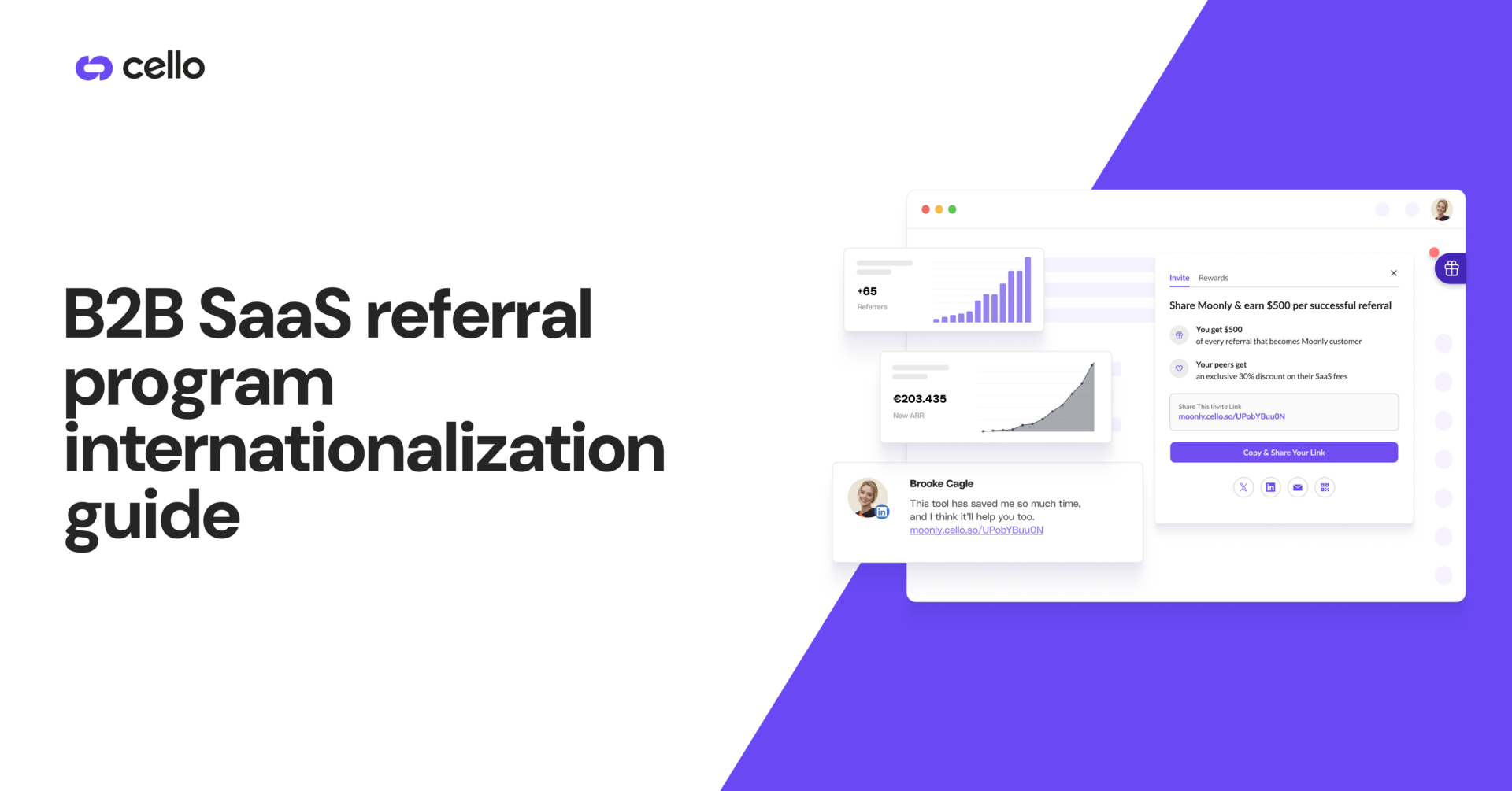

Running a referral program across multiple regions sounds straightforward until you realize the widget your German users see is still in English, your Brazilian referrers are getting dollar-denominated rewards and your GDPR consent copy was written for a US audience. Each of those is its own friction point, and they compound. This post walks through what it actually takes to localize a referral program properly, from locale injection and currency pairing to per-region campaign configuration.
- Why referral programs stall when companies expand internationally
- The connection between UI language and referral activation
- Choosing which languages to support first
- Localizing a referral widget: what it actually requires
- Locale injection and SDK architecture for multi-language referral widgets
- Regional reward design: aligning incentives with local context
- How Cello handles internationalization out of the box for B2B SaaS
- Final thoughts on building a multi-language referral program that actually performs
TL;DR
- Cello ships ten interface languages via SDK initialization, writes attribution server-side to Stripe or Chargebee metadata, and covers cross-border payouts in 63 countries through Merchant of Record infrastructure: a single setup instead of separate regional builds.
- Cookie-based attribution breaks in high-consent markets: a German user who declines the consent banner never writes the tracking cookie. Cello writes the referral code to the billing customer object at link click, so consent opt-outs, device switches, and cookie expiry cannot remove what was already recorded server-side.
- Untranslated referral widgets tend to suppress share rates: users are less likely to recommend a product whose invite prompt is in a language their colleagues don't read. The widget language is part of the conversion path, not decoration.
- A single global reward figure is calibrated for one market and wrong for the rest. Purchasing power parity requires per-region campaign configuration; Cello's multi-campaign architecture lets you set distinct reward amounts, payout methods, and eligibility rules per market inside one account.
- Before launching in any new market, four compliance checks apply: GDPR legal basis for EU referral data, CCPA privacy policy disclosure for California, 1099-MISC tax-form collection for US referrers earning over $600, and referral disclosure requirements across multiple jurisdictions.
Why referral programs stall when companies expand internationally
Referral programs built for a single market carry hidden structural debt. The widget copy says "Invite your friends" in English, the reward email fires in one currency, and the terms link to a policy written for one jurisdiction. When the company expands to Germany, Japan or Brazil, none of that infrastructure travels cleanly.
Three friction points compound each other. First, untranslated referral widgets produce lower share rates because users hesitate to recommend a product that surfaces in a language their colleagues don't read. Second, single-currency reward logic breaks when referrers expect payouts in euros or reais instead of dollars. Third, consent and disclosure requirements differ by market, so copy that is legally adequate in the US may need material changes for GDPR-covered regions.
The result is a program that technically runs globally but practically underperforms in every non-English market. Choosing global referral software with multilingual UI is the structural fix.
The connection between UI language and referral activation
Referral activation rates drop when the widget speaks a different language than the product surrounding it. The mechanics of a B2B referral program depend on reducing every friction point in the share path. A user working through your product in German who encounters an English-language invite prompt has to context-switch, and that friction reduces the likelihood they share. The language of the referral surface is part of the conversion path, not decoration.
Cello ships ten interface languages out of the box, so the widget inherits the locale of the logged-in session without any copy management from your team.
Choosing which languages to support first
The right language to add first is the one spoken by your highest-value users who aren't sharing yet. Four signals narrow that shortlist quickly:
- Locale distribution from product analytics: where are your signed-up users actually located? Most analytics tools expose this without custom instrumentation.
- Revenue concentration by region: a market generating 15 to 20% of ARR but near-zero referral volume signals a localization gap, not a demand gap.
- Activation rate by locale: if users in a given country are enrolled but rarely share, language friction is a likely cause worth testing before any other variable.
- Widget complexity for the target language: non-Latin scripts and right-to-left layouts require additional QA before shipping, so factor that into your sequencing.
Start where the gap between user density and referral activation is widest. That gap is your ROI argument: referral program ROI measurement for SaaS is measurable before you write a single line of translated copy.
Localizing a referral widget: what it actually requires
Translation handles strings. Localization handles what happens to the widget when those strings change shape.
Four issues compound when you move a referral widget across languages:
- RTL layout flips the entire widget mirror-image when Arabic or Hebrew is selected, so button alignment, progress bars and copy containers all need directional overrides, beyond translated text alone.
- String expansion means German or Finnish copy routinely runs 30 to 40 percent longer than English, breaking fixed-width button containers if they aren't built to flex.
- Number, date and currency formatting must match locale conventions, or reward values read as broken to the user even when the underlying payout is correct.
- Font display varies enough across scripts that a single typeface chosen for Latin characters will produce unreadable output in Japanese or Korean without a fallback stack.
Locale injection and SDK architecture for multi-language referral widgets
Cello's widget reads the locale token from your existing auth session on initialization, so there is no separate language-detection step for your engineering team to build. The SDK pulls the locale field from the JWT you already issue at login, maps it to one of the ten supported interface languages, and loads the widget accordingly. This session-aware initialization keeps the localization logic on Cello's side instead of your codebase.
If a user's locale falls outside the supported set, the widget defaults to English to keep the referral surface intact. Your team configures the fallback language once in the dashboard.
What locale injection looks like in practice
Three SDK parameters control the full localization setup:
userLocalepasses the ISO 639-1 language code from your session token directly into the widget, so a German-signed-in user sees German copy without any additional logic on your side.fallbackLocalesets the language displayed when an unsupported locale is detected, keeping the widget functional across every market you serve.rewardCurrencypairs with locale so a Brazilian user sees BRL reward values, not USD, without a separate currency-formatting build.
Widget copy, reward labels, CTA buttons and legal disclaimer text all update from the same locale token. There is no per-market widget instance to maintain.
Regional reward design: aligning incentives with local context
A $30 reward motivates differently in Germany than in Brazil. Purchasing power parity changes what reads as meaningful, and a single global reward figure will be calibrated for one market and wrong for the rest.
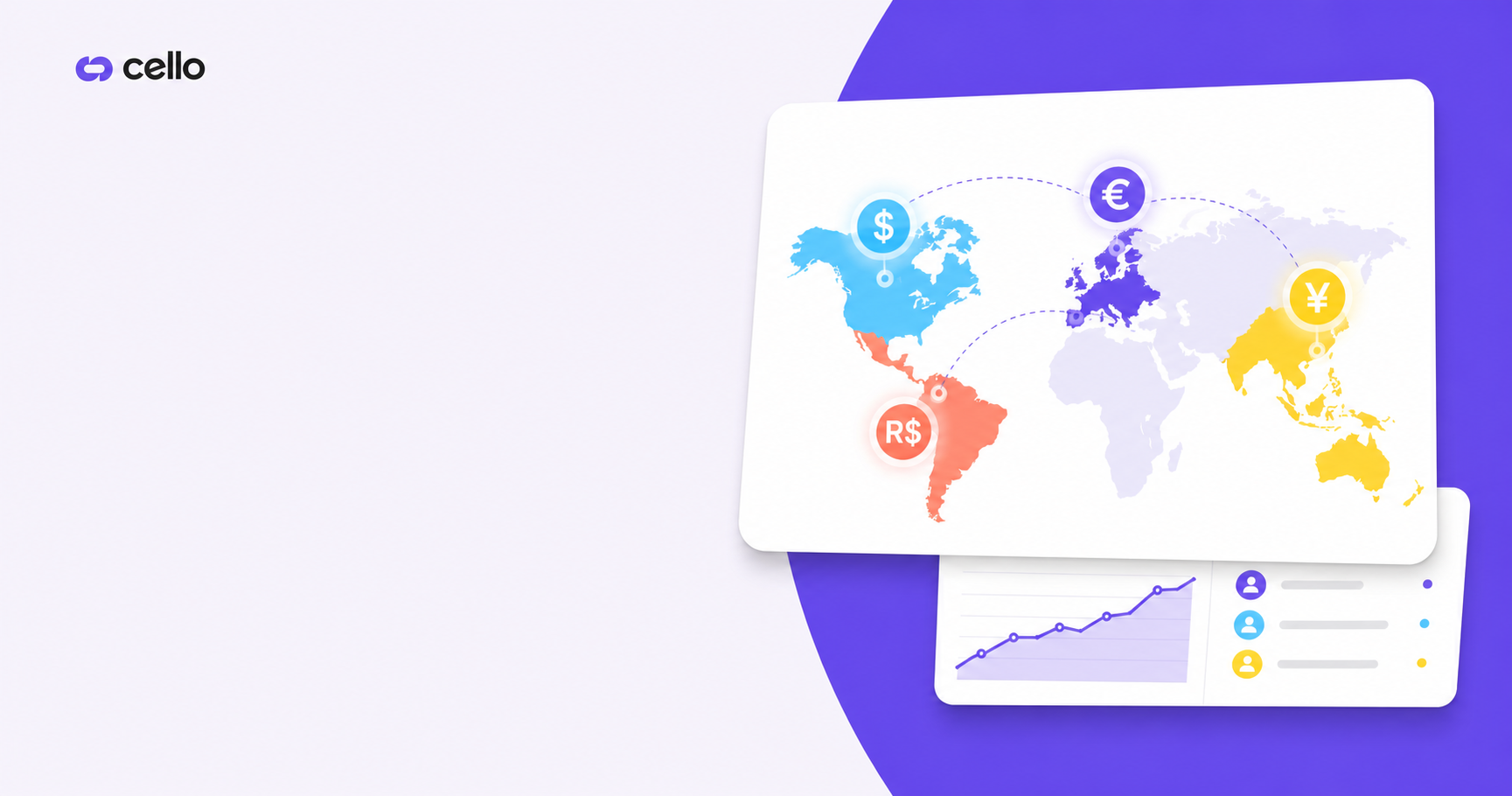
Preferred payout methods differ by region too. Referral software with PayPal payouts covers most Western markets; UPI is the functional path for Indian referrers. Cello's multi-campaign architecture lets you configure a DACH campaign at one reward level and a LATAM campaign at another, inside the same account.
Cross-border payout mechanics and reward delivery
Paying referrers across multiple countries means handling currency conversion, payout thresholds, tax-form collection and sanctions screening before a single reward clears. Cello's Merchant of Record for SaaS referral payouts infrastructure covers payouts in 63 countries, absorbing the per-jurisdiction compliance work that would otherwise land on your finance team.
Reward structures vary by market too. Cash equivalents work well in regions with mature banking rails, while gift cards or account credits often see higher redemption in markets where international wire transfers carry friction or fees.
- Tax-form validation runs automatically: W-9 for US-based referrers, W-8BEN for non-US individuals and W-8BEN-E for foreign entities, with no payout releasing until the form clears.
- OFAC and EU consolidated-list sanctions screening fires on every payout, including repeat transactions.
- Reward thresholds prevent micro-payouts that cost more to process than they're worth, particularly across currency pairs with high conversion spreads.
Data privacy and legal compliance for international referral programs
Before launching in a new market, four compliance checks apply in practice.
|
Regulation |
Jurisdiction |
Requirement |
Who handles it |
|---|---|---|---|
|
EU / EEA |
Document a legal basis (consent or legitimate interest) for referred prospect emails and referral attribution data before processing begins for any EU country |
Your legal team; Cello's EU-native infrastructure operates within a GDPR-compliant data architecture | |
|
CCPA |
California (US) |
Disclose referral data collection explicitly in your privacy policy; California users have opt-out rights on personal data sharing through referral flows |
Your legal / privacy team must update the policy before the program goes live in California |
|
1099-MISC |
United States |
US referrers earning more than $600 in a calendar year trigger a tax filing obligation; tax-form collection (W-9, W-8BEN, W-8BEN-E) required before any payout clears |
Cello's Merchant of Record infrastructure handles form collection and filing automatically |
|
Referral disclosure |
Multiple jurisdictions |
Commission-based recommendations require disclosure when a financial relationship exists; product copy alone does not satisfy this requirement |
Legal review per market is the only reliable path; no vendor can substitute for per-jurisdiction counsel |
Attribution across borders and privacy regimes
Referral tracking software for B2B SaaS teams must account for the fact that cookie-based attribution fails in high-consent markets because users who decline tracking cookies break the attribution chain at the browser layer. A German user clicks a referral link, dismisses the consent banner, and the cookie that would have matched their signup to the referring partner never writes. The referral goes uncredited.
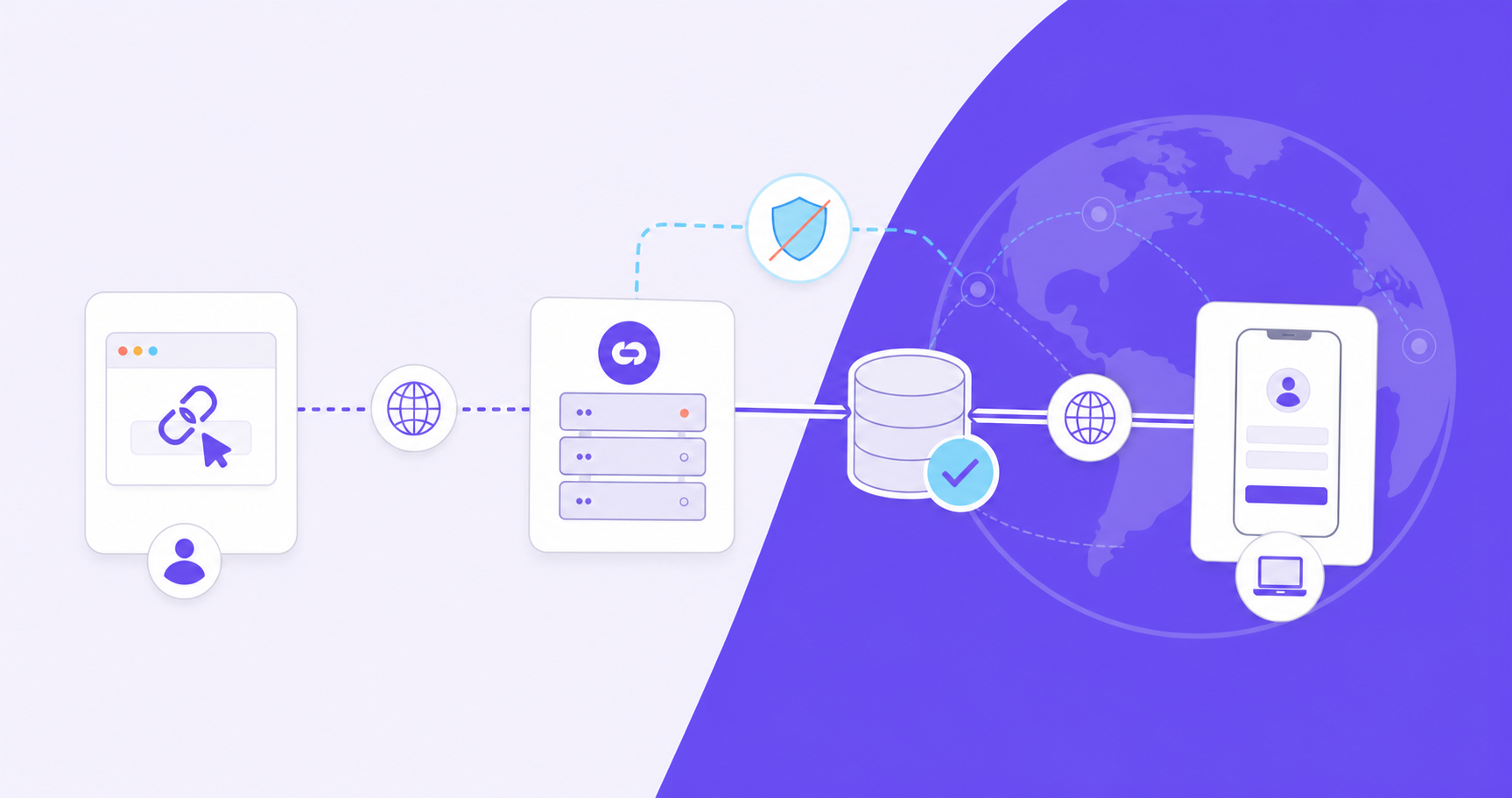
Cello writes the referral code to the billing customer object at the moment of link click, not at signup. By the time the referred user converts, the attribution is already in the Stripe or Chargebee metadata record. Cookie expiry, device switches and consent opt-outs cannot remove what was written server-side before the browser made any decision.
Running parallel regional campaigns from a single program
Each regional campaign runs as an isolated configuration with its own reward amount, payout method, eligibility rules and user-attribute targeting, all inside one account. Adding a market means adding a campaign, not duplicating infrastructure.
Per-campaign analytics filtering is what makes multi-market management tractable at scale. You can isolate signup rate, sharing rate and conversion data for a single market instead of reading aggregate performance across regions. That separation lets you identify whether a German campaign's low sharing rate is a reward-amount problem or a placement problem, without a higher-performing program distorting the signal. Each market gets its own optimization loop, and the verdict from one region does not bleed into another. This isolation is what makes referral tracking software for B2B SaaS teams compound over time instead of averaging out.
How Cello handles internationalization out of the box for B2B SaaS
Ten interface languages ship in Cello's SDK initialization without additional engineering: English, German, Spanish, French, Dutch, Italian, Portuguese, Japanese, Danish and Slovak.
Geographic segmentation runs through the multi-campaign architecture, where distinct reward structures per region sit inside one account with per-campaign analytics keeping market performance readable without cross-contamination from higher-volume programs.
EU-first, GDPR-native infrastructure and Merchant of Record payout coverage across 63 countries absorbs the compliance and payout mechanics that would otherwise require per-jurisdiction work before a single reward clears internationally, all factors worth considering when selecting the best referral program software for SaaS.
Final thoughts on building a multi-language referral program that actually performs
A referral program that runs in ten markets but converts in one is a localization problem, not a growth problem. The structural gaps, untranslated widgets, single-currency reward logic and cookie-based attribution in high-consent markets, are each measurable against your existing product analytics before you write a single line of translated copy. Fix the widest gap first, and the ROI argument builds itself from real numbers. Start with Cello to see how locale injection, regional campaigns and Merchant of Record payouts work as a single setup instead of separate builds.
What's the fastest way to localize a referral widget for a new market without rebuilding it per region?
Pass the ISO 639-1 locale code from your existing auth session JWT into Cello's `userLocale` SDK parameter — the widget maps it to one of ten supported languages and renders accordingly, with no separate language-detection build required. Set `fallbackLocale` once in the dashboard for unsupported locales, and pair `rewardCurrency` with the locale so referrers see reward values in their local currency. The entire localization setup runs from three SDK parameters, not per-market widget instances.
How do I identify which international markets to localize my referral program for first?
Cross your product analytics locale data against per-region referral activation rates — any market generating 15–20% of ARR but near-zero referral volume signals a localization gap worth testing before any other variable. Start where the gap between user density and referral activation is widest, because that gap is measurable before you write a single line of translated copy.
Does server-side attribution still hold when a referred user in Germany declines the cookie consent banner?
Yes — Cello writes the referral code to the Stripe or Chargebee customer object at the moment of link click, not at signup. By the time the referred user converts, the attribution is already in the billing metadata record, so cookie expiry, device switches and consent opt-outs cannot remove what was written server-side before the browser made any decision.
Running parallel regional campaigns in one account — how do you stop a high-volume market from distorting performance data for a smaller one?
Each regional campaign in Cello's multi-campaign architecture carries its own analytics filter, so you can isolate signup rate, sharing rate and conversion data for a single market rather than reading aggregate performance across regions. A German campaign's low sharing rate can be diagnosed as a reward-amount or placement problem without a higher-performing program contaminating the signal.
What handles cross-border payout compliance so my finance team doesn't process it jurisdiction by jurisdiction?
Cello's Merchant of Record infrastructure covers payouts in 63 countries, absorbing tax-form validation (W-9 for US referrers, W-8BEN for non-US individuals, W-8BEN-E for foreign entities), OFAC and EU consolidated-list sanctions screening on every payout, and reward threshold enforcement to prevent micro-payouts across currency pairs with high conversion spreads — none of that lands on your finance team.
What languages does Cello's referral widget support out of the box for an international referral program?
Cello ships ten interface languages via SDK initialization — English, German, Spanish, French, Dutch, Italian, Portuguese, Japanese, Danish and Slovak — with no copy management required from your team. The widget reads the locale token from your existing auth session and renders the correct language automatically; unsupported locales fall back to English.
Should I run separate referral campaigns per region or one global campaign with localized reward values?
Run separate regional campaigns inside one Cello account. Each campaign carries its own reward amount, payout method, eligibility rules and per-campaign analytics filter, so a DACH campaign at one reward level and a LATAM campaign at another stay fully isolated — a high-volume market cannot distort performance data for a smaller one, and you get a clean optimization loop per region.
Can I build a multi-language referral program without maintaining separate widget instances per market?
Yes — Cello's SDK reads a single locale token from your existing session JWT and maps it to the correct interface language, so there is no per-market widget instance to maintain. Three SDK parameters handle the full localization setup: `userLocale` for the language, `fallbackLocale` for unsupported locales and `rewardCurrency` to pair the reward display with the user's regional currency.
How do I localize referral widget for Germany specifically, given GDPR consent banners that can block cookies?
Cello writes the referral code to the Stripe or Chargebee customer object at the moment of link click, not at signup, so the attribution is already in the billing metadata before any consent banner decision is made. German users who decline cookie consent still have their referral correctly attributed because the server-side write happens at click time and survives opt-outs, ITP and device switches.
What payout methods are available for an international referral program beyond PayPal, specifically for India?
Cello supports UPI (Unified Payments Interface) as a payout method for the Indian market, addressing the regulatory context and lower PayPal adoption in India. For other markets, PayPal covers 63 countries under Cello's Merchant of Record infrastructure; SEPA, Wise and crypto are not currently supported.
How does Cello handle tax-form collection and sanctions screening across different countries so my finance team doesn't build per-jurisdiction workflows?
Cello's Merchant of Record infrastructure runs tax-form validation automatically — W-9 for US-based referrers, W-8BEN for non-US individuals and W-8BEN-E for foreign entities — and no payout releases until the form clears. OFAC and EU consolidated-list sanctions screening fires on every payout, not only the first, and reward thresholds prevent micro-payouts across currency pairs with high conversion spreads.
Does ad blocker or tracking prevention interference affect referral attribution when running programs across markets like Germany or Japan?
Ad blockers and tracking prevention tools do not break Cello's referral attribution because the primary attribution path is server-side — the referral code is written to the Stripe or Chargebee customer object at click time, not at the browser layer. Client-side cookies serve only as a fallback for return-visit handling; the server-side write survives ITP, ATT opt-out and ad blocker interference.
When should I use a user referral campaign versus a partner program when expanding into a new international market?
Use a user referral campaign when your target market has active logged-in users who can share from inside the product. Switch to a partner program — using Cello's standalone Partner Portal — when referrers in the new market are external intermediaries (agencies, brokers, influencers) who do not hold product accounts and need to share referral links outside the authenticated product experience.
How do I adjust referral reward amounts for purchasing power parity when scaling an international referral program across regions?
Configure a distinct campaign per region inside Cello's multi-campaign architecture, each with its own reward amount calibrated to local purchasing power and preferred payout method. A $30 reward motivates differently in Germany than in Brazil, and per-campaign analytics let you measure whether a reward-amount change in one market is producing the expected lift without cross-contamination from higher-performing regions.
What CCPA and referral disclosure requirements apply before launching a referral program for California users?
California users have opt-out rights on personal data sharing through referral flows, so your privacy policy must explicitly cover referral data collection before the program goes live. Commission-based referral recommendations also require disclosure in many jurisdictions when a financial relationship exists — product copy alone does not satisfy this, and legal review per market is the reliable path rather than a single blanket disclaimer.