
The HubSpot affiliate program pays 30% recurring commission for up to a year, which looks strong on paper. What changes the calculation is what it doesn't pay. The gaps matter: no commission after month 12, none on upgrades, and none if another affiliate's link is clicked last. If you're weighing whether to build content around it, or thinking about structuring a SaaS affiliate program of your own, the mechanics here are worth a close read before you commit.
- What the HubSpot affiliate program is
- How the HubSpot affiliate program works
- HubSpot affiliate program tiers
- How to join the HubSpot affiliate program
- What HubSpot affiliates actually earn: commission math
- Drawbacks of the HubSpot affiliate program
- Affiliate program vs referral program: key differences
- How to build your own SaaS affiliate program
- Setting your commission structure and payout rules
- Attribution, tracking and fraud prevention
- How Cello approaches referral and partner programs for B2B SaaS
- Final thoughts on the HubSpot affiliate program
TLDR:
- HubSpot pays affiliates 30% recurring commission for up to 12 months, with a 180-day cookie window, via Impact.
- Commission stops at month 12 regardless of customer tenure, and upgrade revenue pays nothing to affiliates.
- Cookie-based attribution breaks on device switches and privacy browsers; server-side tracking fixes this at the backend.
- SaaS affiliate commissions typically range from 5% to 30%, with most programs capping payouts at 20 to 30% of monthly subscription fees.
- Cello builds referral infrastructure around existing product users, stamping referral codes to the billing object so attribution survives cookie deletion and browser restrictions.
What the HubSpot affiliate program is
The HubSpot affiliate program is a performance-based program where content creators, software reviewers, online educators and businesses with relevant audiences earn recurring commission for referring new paying HubSpot customers, according to HubSpot's affiliate program page.
The global affiliate marketing industry grew from $27.8 billion in 2023 to nearly nearly $32.3 billion in 2024, roughly 16% year-over-year, making SaaS affiliate programs a mainstream acquisition channel. HubSpot's program targets audiences already producing content for growing businesses: CRM comparisons, marketing software reviews and HubSpot integration content.
How the HubSpot affiliate program works
HubSpot pays affiliates 30% recurring commission, 180-day cookie window. The program runs through Impact, a third-party affiliate network that hosts affiliate links, tracks performance and processes payments via direct deposit (EFT) or PayPal, with a $10 USD minimum balance required before withdrawal.
Two policy constraints matter before you apply. HubSpot runs last-click attribution, so if a referred customer clicks two affiliate links, the final one takes the commission. And upgrades don't pay out: if that customer later moves to a higher-tier plan, you earn nothing on the expansion revenue.
HubSpot affiliate program tiers
The program structures affiliates into three tiers, each adding support on top of the base 30% recurring commission.
|
Tier |
Signup Threshold |
Key Benefits |
|---|---|---|
|
Affiliate |
Entry level (no minimum) |
400+ marketing assets; up to $80 welcome bonus in first 30 days |
|
Super Affiliate |
100+ monthly signups |
All Affiliate benefits + website audits, guest blogging opportunities, quarterly raffles |
|
Elite Affiliate |
200+ monthly signups |
All Super Affiliate benefits + regular check-ins, performance reports, co-branded landing pages |
Progression requires signups to stay consistent across a three-month window before HubSpot advances your tier. Generating 100 to 200 qualified signups every month for a full quarter puts this squarely in high-traffic publisher territory. Most individual content creators will stay at the entry level.
How to join the HubSpot affiliate program
Joining is free, with no minimum sales required to earn commission.
The process runs through Impact:
- Click the sign-up link on HubSpot's affiliate page
- Complete a short five-minute form via Impact
- Agree to the affiliate contract and create your Impact account
- Wait for HubSpot to review your application in 2 to 3 days
A live website with relevant business content is the clearest approval signal. YouTube or TikTok-only applicants need a substantial library of business-focused content to be considered. Once accepted, you get access to 400+ marketing assets (banners, email templates and a copy bank), all managed inside your Impact dashboard.
What HubSpot affiliates actually earn: commission math
HubSpot plans range from $50 to $3,200 per month, so affiliates can earn $15 to $960 per month per referred customer across a 12-month window. A mid-tier referral on a $400/month Marketing Hub plan generates roughly $120 per month, or $1,440 over the full year.
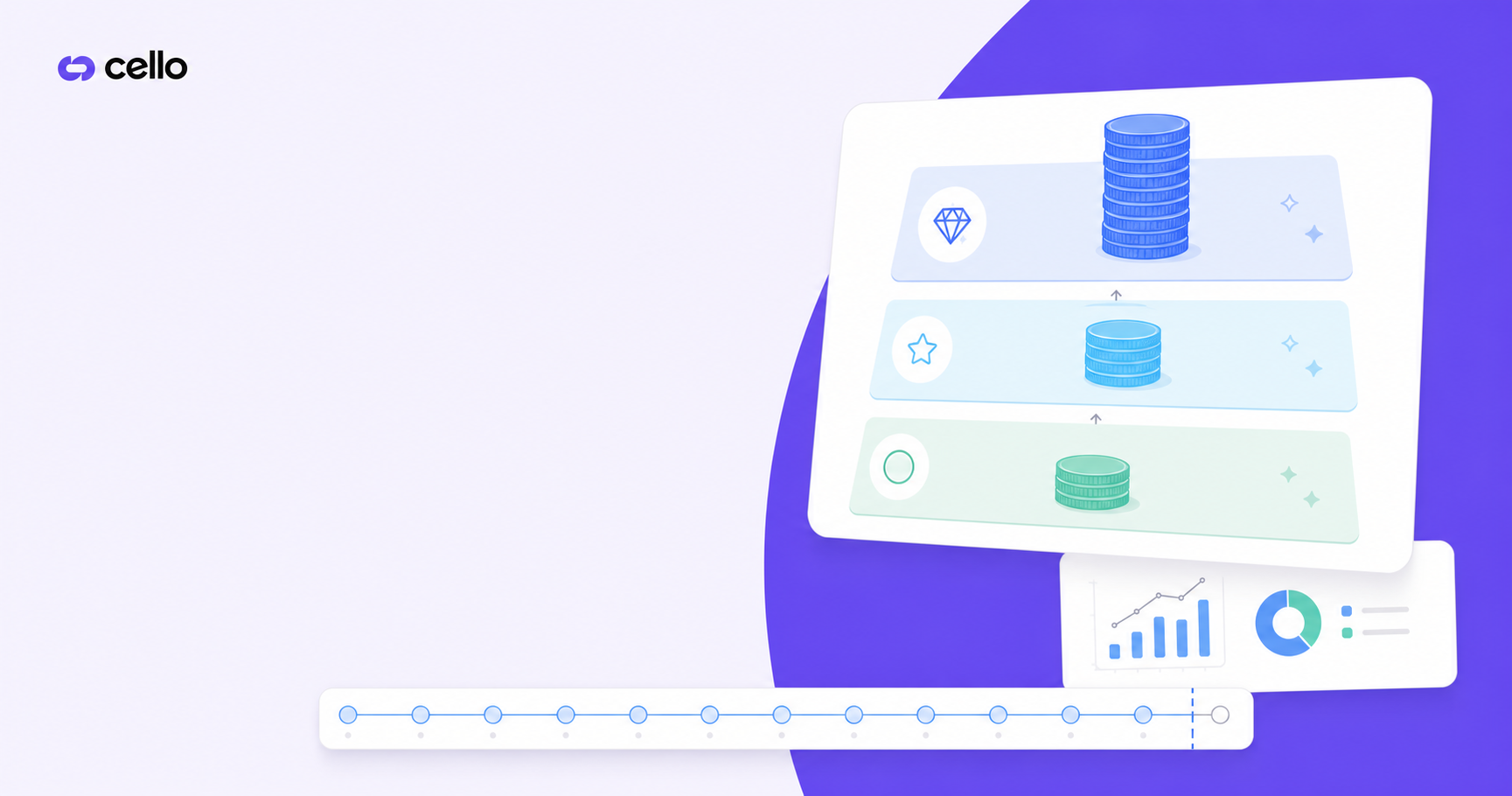
Enterprise referrals carry the highest ceiling but are the hardest to generate: buyers at that price point run their own evaluation and are unlikely to arrive via a review article. Most affiliates will see payouts in the $15 to $150 per month range per customer.
New affiliates can earn up to $80 as a welcome bonus within their first 30 days, a small but concrete offset against early-stage traffic costs.
The hard ceiling: once 12 months pass, commission stops regardless of how long the customer stays on HubSpot. Actual earnings depend on audience size, content relevance and which plans referred customers choose.
Drawbacks of the HubSpot affiliate program
Four constraints are worth weighing before you commit to building content around HubSpot's program.
- The 12-month commission cap. Unlike programs that pay lifetime recurring commissions, HubSpot stops paying after 12 months regardless of how long that customer stays. A five-year HubSpot customer generates no additional income after month 12.
- No upgrade commissions. If a referred customer moves from Starter to Enterprise, you earn nothing on that expansion.
- Competitive niche. CRM and marketing software is one of the most crowded affiliate categories. Standing out requires either high-authority SEO or a paid traffic budget most individual creators won't have.
- Geographic and device restrictions. Eligibility can vary by region and device, so review the qualifying regions and device rules in HubSpot's program policies before you commit.
For a publisher with a strong audience of business decision-makers and existing HubSpot-adjacent content, the program's economics hold up well. For creators building from scratch in a general marketing niche, the combination of competitive content pressure and a hard revenue ceiling at 12 months makes the long-term payoff less predictable than it first appears.
Affiliate program vs referral program: key differences
Affiliate programs and referral programs operate through different mechanisms and reach different audiences.
An affiliate program recruits external publishers, creators and reviewers who promote a product to their own audiences in exchange for commission. The promoter may have never used the product. A referral program activates existing customers to introduce peers within their trusted networks, where the referrer recommends from direct experience.
That trust gap affects lead quality. A referred prospect arrives via someone they know personally. An affiliate-driven prospect arrives via content found through search. Both channels work, but they require different program infrastructure.
One distinction worth clarifying for anyone researching HubSpot's options: HubSpot runs two separate programs that are commonly confused. The Affiliate Program is for content creators and publishers earning commission by promoting HubSpot to their audiences. The Solutions Partner Program is for consultants and agencies who actively implement HubSpot for clients. If you help clients set up their CRM, the Solutions Partner Program is the right fit, not the Affiliate Program.
How to build your own SaaS affiliate program
Four foundational decisions shape a SaaS affiliate program before you write a line of code or send an affiliate invite.
Define your conversion event first. Most B2B SaaS referral programs trigger commission on paid subscription activation and not on free signup, protecting unit economics so rewards only fire when revenue is realized. Demo-attended commissions work better for sales-led products with long cycles; signup-based commissions suit PLG products where trials convert quickly.
Choose recurring versus one-time commission. Recurring commissions attract affiliates who want compounding income and motivate ongoing promotion. One-time flat fees are simpler to budget and still competitive if the payout is meaningful. SaaS affiliate commissions typically range from 5% to 30% of sale value.
Set a cookie window that matches your sales cycle. Most SaaS programs use 60 to 90 days. Measure your median time from first click to paid activation, then add a buffer. Affiliates promoting to enterprise or mid-market buyers need headroom.
Decide on open versus curated recruitment. An open model scales affiliate count fast but brings low-quality traffic and brand risk. A curated model takes longer to build but produces affiliates whose audiences match your ICP. Whichever approach you choose, supply creative assets upfront: banners, approved copy, product screenshots and a brief explaining your value proposition. Affiliates promoting without guardrails produce off-brand content that harms more than it helps.
Setting your commission structure and payout rules
Recurring commissions are the SaaS standard for a clear reason: they give affiliates a reason to keep promoting beyond a single conversion. A referral vs paid acquisition ROI comparison shows why recurring models outperform flat fees over time. A flat $50 payout closes the loop; a 20% recurring commission keeps generating income as long as the referred customer stays active, aligning affiliate incentives with your retention curve as well as your signup funnel.
Start the rate calculation with gross margin. Most programs cap affiliate commission at 20 to 30% of the monthly subscription fee, keeping customer acquisition cost well below lifetime value. Run the math per plan tier: a $30/month plan at 25% commission pays $7.50/month; a $500/month enterprise plan pays $125. Both must be profitable across average retention.
Three payout mechanics determine whether your program runs cleanly. For teams assessing referral software with HubSpot integration, these mechanics shape which tools fit.
- Minimum payout threshold: set a floor of $50 to $100 before processing a withdrawal, which reduces transaction costs and prevents micro-payout cycles.
- Refund window delay: hold commissions for 30 to 60 days post-conversion to cover cancellations and chargebacks before any payout clears.
- Clawback rules: define upfront what happens when a referred customer cancels within 90 days: claw the commission back, pause future payments, or accept the loss above a defined threshold.
Flat-fee commissions suit products with large plan-tier variance, where percentage math produces wildly uneven payouts and you want a predictable cost-per-acquisition budget. Percentage-based models suit subscription SaaS with consistent ARPU, where revenue sharing scales naturally with plan value. The structure that matches your pricing architecture creates the fewest reconciliation problems downstream.
Attribution, tracking and fraud prevention
Cookie-based attribution writes a tracking code to the browser when a visitor clicks an affiliate link, then reads it back at conversion. It breaks when users switch devices, clear cookies, or run privacy-hardened browsers.
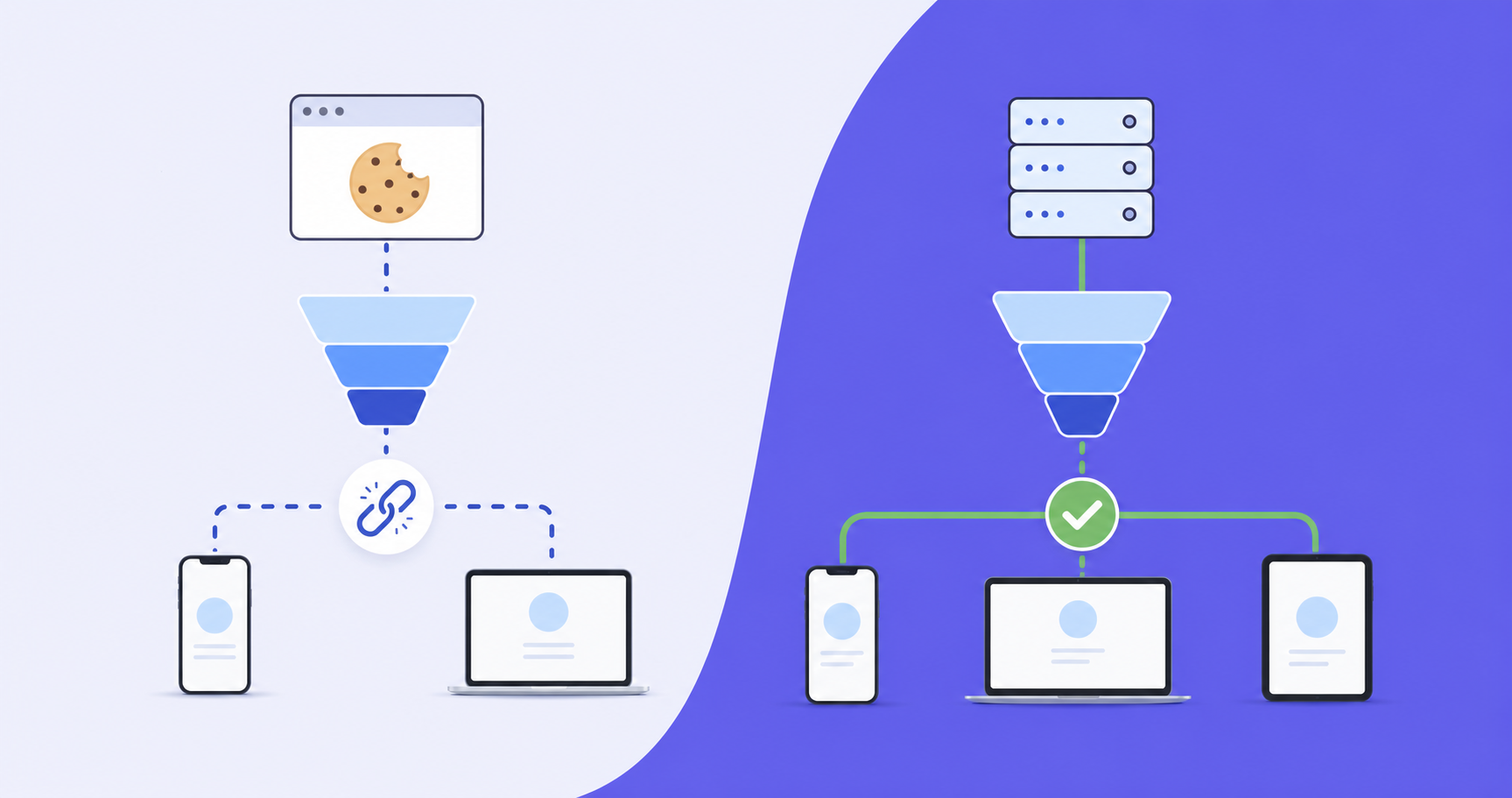
Safari's Intelligent Tracking Prevention and Firefox's Enhanced Tracking Protection strip third-party cookies before conversions register, per Apple's WebKit Tracking Prevention Policy. Affiliates see clicks in their dashboard that your program never credits. Server-side tracking fixes this by attaching the referral code to a backend record at click time, so device switches and cookie deletion don't interrupt attribution.
Fraud prevention requires three explicit handling rules:
- Self-referrals: compare the referrer identity against the converting customer and block matches before any commission clears.
- Duplicate signups: flag multiple accounts from the same IP or device fingerprint for manual review instead of auto-approving them.
- Unusual signup spikes from a single affiliate: apply a review hold instead of clearing payouts immediately.
When two affiliates refer the same prospect, you need a deduplication rule in place before disputes arise. HubSpot uses last-click attribution, crediting the final affiliate link clicked. First-click models reward whoever introduced the product. Either works; document the choice in your program terms upfront.
How you handle SaaS referral payouts compliance affects whether global affiliates can receive funds at all. Affiliates who receive accurate payouts on a predictable schedule stay active. Those who see unexplained gaps between their click counts and credited conversions leave.
How Cello approaches referral and partner programs for B2B SaaS
Cello operates on a different surface than external affiliate programs: the users already inside your product.
HubSpot built its affiliate program on Impact, managing external creators with cookie-based tracking and a third-party dashboard. Cello gives B2B SaaS operators comparable B2B referral software infrastructure: reward configuration, automated payouts, fraud detection, attribution and analytics, all built for referrers who already know and use the product.
The attribution architecture reflects this. Cello stamps the referral code to the billing customer object at the moment of link click, so device switches, cookie deletion and browser privacy restrictions don't break the attribution chain.
Cello also unifies user referrals and partner programs in a single system. Published case study outcomes show what this produces: Softr saw a 5x conversion lift after migrating from PartnerStack, VEED achieved 90.4% lower CAC versus paid acquisition and Moss recorded 650% year-over-year Referral ARR growth.
Your existing user base is already the highest-trust acquisition channel available. The question is whether you have the infrastructure to run it.
Final thoughts on the HubSpot affiliate program
For creators with the right audience, the HubSpot affiliate program is a straightforward way to earn recurring income from content you would probably write anyway. The 30% commission rate and 180-day cookie window give you a reasonable window to convert, and the barrier to entry is low. The 12-month cap is the main constraint worth planning around, since your best referrals will likely stay on HubSpot long after your commission stops. If you want referral economics that grow with your retention curve beyond month 12 without a hard cutoff, Cello is built for exactly that.
What's the difference between the HubSpot affiliate program and building your own referral program for a SaaS product?
The HubSpot affiliate program recruits external publishers and content creators who promote HubSpot to their own audiences, often without ever using the product. A SaaS referral program activates existing customers to introduce peers from direct experience, which produces higher-trust leads. The infrastructure requirements differ too: affiliate programs need cookie-based tracking, a third-party network like Impact, and commission structures built around content-driven traffic, while in-product referral programs need server-side attribution, reward logic tied to billing events, and a referral surface embedded inside the authenticated product session.
What is last-click attribution in the HubSpot affiliate program, and what does it mean for your earnings?
Last-click attribution credits the final affiliate link a referred customer clicked before converting, not the first one that introduced them to the product. For HubSpot affiliates, this means if a prospect clicks your review article, then later clicks a competitor's link before signing up, the other affiliate takes the commission regardless of your role in the introduction. Programs using server-side attribution stamp the referral code at the moment of first click rather than reading a browser cookie at conversion, which means device switches and cookie deletion cannot strip your attribution before the conversion fires.
Should I build my own SaaS affiliate program on PartnerStack or Impact, or use a platform like Cello?
PartnerStack and Impact are built for external affiliate networks where promoters may have no relationship with your product. Cello is built for B2B SaaS teams whose highest-trust referral source is the existing user base, running the referral surface inside the authenticated product rather than through an external portal. If your acquisition strategy centers on external publishers and content creators, PartnerStack or Impact fits. If your goal is activating existing customers and partners inside a single system with server-side attribution, reward automation and fraud detection, Cello is the purpose-built option — Softr saw a 5x conversion lift after migrating from PartnerStack, and VEED achieved 90.4% lower CAC versus paid acquisition.
How do you set commission rates and cookie windows when building a SaaS affiliate program?
Set your commission rate by starting with gross margin per plan tier: most SaaS programs cap affiliate commission at 20 to 30% of the monthly subscription fee, keeping acquisition cost well below lifetime value. For cookie windows, measure your median time from first click to paid activation, then add a buffer — 60 to 90 days covers most PLG products, while enterprise or mid-market sales cycles may need longer. Set a minimum payout threshold of $50 to $100 before processing a withdrawal to reduce transaction costs, and hold commissions for 30 to 60 days post-conversion to absorb cancellations and chargebacks before any payout clears.
What's the best way to handle referral attribution when users switch devices or clear cookies before converting?
Cookie-based attribution breaks in this scenario because the tracking code lives in the browser session, not the backend record. Server-side attribution fixes this by writing the referral code to the billing customer object at the moment of link click, so it is already present when the conversion event fires regardless of which device the user converts on or whether their cookies have expired. This architecture is what separates referral programs that accurately credit affiliates from programs where affiliates see clicks in their dashboard that the program never pays out on.
Does the HubSpot affiliate program pay commission on plan upgrades after a customer converts?
No — HubSpot's affiliate program does not pay commission on upgrade revenue. If a referred customer moves from Starter to Enterprise after signing up, you earn nothing on that expansion, which means your income is capped at the initial plan value regardless of how much that customer's spend grows over time.
What conversion event should a SaaS affiliate program trigger commission on — free trial signup or paid activation?
Commission should trigger on paid subscription activation, not free trial signup, to protect program unit economics. Rewarding trial signups creates payout liability for users who never convert to paid plans; tying the reward trigger to a billing event such as a confirmed invoice payment ensures commission fires only when revenue is realized.
How is an in-product referral program different from a traditional affiliate program that lives outside the product?
An in-product referral program surfaces the sharing experience inside the authenticated product session, so existing users share from direct experience at moments of high engagement. A traditional affiliate program routes external publishers and creators through a separate portal or network, where the promoter may have never used the product and attribution relies on browser cookies that break across device switches and privacy browsers.
Can a referral platform support both a user referral program and a partner or affiliate program at the same time with different reward structures?
Yes — a platform that unifies both motions lets you run distinct incentive structures for each in parallel. In-product user referrals can pay percentage-based recurring rewards tied to billing events, while a partner or affiliate program can run flat-fee or tiered commissions through a standalone portal, with separate attribution, fraud detection and payout logic per campaign.
Can a referral platform support both a user referral program and a partner or affiliate program at the same time with different reward structures?
Yes — a platform that unifies both motions lets you run distinct incentive structures for each in parallel. In-product user referrals can pay percentage-based recurring rewards tied to billing events, while a partner or affiliate program can run flat-fee or tiered commissions through a standalone portal, with separate attribution, fraud detection and payout logic per campaign.
What happens to referral attribution when Safari's Intelligent Tracking Prevention strips the affiliate cookie before a referred user converts?
Cookie-based attribution loses the referral code entirely in this scenario, so the affiliate earns nothing despite driving the conversion. Server-side attribution resolves this by writing the referral code to the billing customer record at the moment of link click rather than reading a browser cookie at conversion, so ITP, cookie deletion and device switches cannot break the attribution chain.
Should I use recurring commissions or a one-time flat fee when building a SaaS affiliate program?
Recurring commissions align affiliate incentives with your retention curve and motivate sustained promotion, making them the standard for subscription SaaS. One-time flat fees work better when plan-tier variance is wide and percentage math produces unpredictable payouts, or when you need a fixed cost-per-acquisition budget — the trade-off is that affiliates have no ongoing income motive after the initial conversion.
How do I prevent self-referral fraud when running a SaaS affiliate or referral program?
ompare the referrer identity against the converting customer at the attribution layer and block matches before any commission clears. Automated fraud detection should also flag duplicate signups from the same IP or device fingerprint for manual review and apply a payout hold window of at least 30 days post-conversion to absorb chargebacks and quick cancellations before rewards are released.
What is the difference between the HubSpot Solutions Partner Program and the HubSpot Affiliate Program?
The Affiliate Program is for content creators, software reviewers and publishers who earn commission by promoting HubSpot to their own audiences. The Solutions Partner Program is for consultants and agencies who actively implement HubSpot for clients — if you help clients configure their CRM or run their marketing stack, the Solutions Partner Program is the correct fit, not the Affiliate Program.
Can high-performing referrers in an in-product user program be identified and moved into a separate affiliate or partner tier with enhanced rewards?
Yes — referral platforms that track individual referrer performance let you identify users generating the most signups or revenue, then enroll them in a dedicated partner program with higher commission rates, a standalone portal and richer analytics. This two-tier approach lets you run a broad in-product user program while treating top advocates as formal partners without rebuilding your attribution infrastructure.
What refund window delay should I set before releasing affiliate commissions, and why does it matter?
A 30 to 60 day hold after conversion is the standard range, long enough to absorb cancellations, chargebacks and trial reversals before any payout clears. Releasing commissions before this window closes means paying out on revenue that has already been refunded, which creates negative-margin referral economics and requires clawback workflows that damage affiliate relationships.