

Not all referral program software handles the same program. A tool built for consumer e-commerce will lose attribution on B2B deals that take months to close, miss org-level tracking, and have no answer for compliance-sensitive reward structures. We compared twelve tools across attribution method, reward flexibility, payout automation and more so you can find the one that fits your actual motion.
- What referral program software actually does
- Key features to assess in any referral program software
- How referral program software handles attribution
- Reward structures: what referral software lets you configure
- Pricing models across referral program software
- Running user referrals and partner programs on a single tool
- Final thoughts on referral program software for B2B SaaS teams
TLDR:
- Server-side attribution writes the referral code to Stripe or Chargebee at click time, surviving device switches and cookie deletion that break cookie-based tools.
- Word of mouth drives 20 to 50% of B2B purchasing decisions, so lost attribution on long-cycle deals is a material revenue leak, not a rounding error.
- Consumer-first tools like ReferralCandy and Viral Loops fail B2B programs because they track by user ID, not org, and have no CRM integration for sales-led funnels.
- Reward timing matters as much as reward type: tie triggers to
invoice.paidevents, not signups, to avoid negative margins on freemium programs. - Cello runs user referrals and partner programs from one attribution engine and reward ledger, with compliant payouts across 63 countries and no percentage cut on referred conversions.
What referral program software actually does
Referral program software handles the execution layer between a user sharing a link and a reward reaching their account. Without it, that chain breaks at multiple points: attribution fails when cookies are blocked, rewards get calculated in spreadsheets, payouts require manual bank transfers and fraud goes undetected until it has already cost you money.
The software covers five core functions:
- It generates unique referral links per user and tracks who shared what.
- It attributes signups and purchases back to the correct referrer, even across devices and browser sessions.
- It calculates reward amounts based on your program rules.
- It distributes payouts automatically to referrers in supported countries.
- It monitors for self-referrals, duplicate accounts and other abuse patterns before rewards clear.
Miss attribution and you cannot pay anyone accurately. Miss fraud detection and your reward budget drains to bad actors. Miss compliant payouts and you are manually wiring money across jurisdictions with no tax documentation. Each of these jobs, handled separately, accumulates engineering debt that compounds every time you add a new market or reward type.
Key features to assess in any referral program software
Tools in this category vary more than their feature lists suggest. The variables below separate a referral program software pick from one that leaks revenue or breaks at scale.
- Attribution method. Cookie-based tracking loses a material share of conversions to Safari's Intelligent Tracking Prevention (ITP), ad-blockers and consent opt-outs. Server-side attribution writes the referral code to the billing record at click time, so it survives device switches and cookie deletion.
- Reward flexibility. Can you configure percentage-based, flat-fee and tiered rewards across different user segments simultaneously? Most tools handle basic cash rewards; fewer support non-cash incentives like subscription credits or feature unlocks.
- Payout automation. Manual reward processing creates administrative overhead fast. Look for direct payout integrations and automatic tax-form collection for cross-border programs.
- Fraud detection. Self-referrals and duplicate signups quietly drain reward budgets. Automated risk-factor monitoring for unusual usage patterns catches these before payouts clear.
- Billing and CRM integrations. Attribution accuracy depends on how closely the tool connects to Stripe, Chargebee, Salesforce or HubSpot. Poor integration means manual reconciliation.
- Analytics depth. Referrer-level performance data and benchmark comparisons let you diagnose underperforming programs; aggregate metrics alone are not enough.
- Compliance handling. Cross-border programs require tax-form collection and sanctions screening before payouts clear. Without this, your finance team carries the compliance burden.
The 12 referral program software platforms compared
Given the breadth of tools here, the table below organizes each by primary use case, a key strength and a confirmed limitation to help you match the tool to your actual program design.
|
Tool |
Built for |
Key strength |
Key limitation |
|---|---|---|---|
|
Cello |
B2B SaaS user and partner referrals |
In-product embed with server-side attribution; unified user and partner program on one ledger |
No native affiliate discovery or gift card payouts |
|
Referral Rock |
SMB customer and employee referral programs |
Supports in-widget contact-input forms; broad reward type coverage |
External portal instead of in-product embed; limited B2B attribution depth |
|
GrowSurf |
Developer-led SaaS referral programs |
Strong API and webhook architecture; plug-and-play embed options |
Lighter analytics compared to enterprise tools; less suited to partner programs |
|
Friendbuy |
E-commerce and DTC referral programs |
Deep Shopify integration; strong A/B testing for consumer incentives |
Extended onboarding with dedicated solutions architects; weaker fit for B2B SaaS billing models |
|
Extole |
Enterprise consumer loyalty and referral |
Highly configurable reward logic; strong brand customization |
Heavy implementation cycles; pricing reflects enterprise-only positioning |
|
SaaSquatch (impact.com) |
Mid-market and enterprise referral programs |
Flexible reward engine; multi-campaign segmentation |
Complex setup; now part of impact.com's broader partnership suite, adding scope you may not need |
|
Rewardful |
Indie SaaS affiliate and referral tracking |
Stripe-native; fast setup for sub-$1M ARR teams |
Cookie-based attribution only; no in-product embed; limited customization at scale |
|
Referral Factory |
No-code referral program builder |
Fast campaign creation without engineering involvement; broad template library |
Attribution relies on client-side tracking; limited billing system integration depth |
|
Tapfiliate |
SaaS and e-commerce affiliate tracking |
Good multi-currency support; clean affiliate dashboard |
Affiliate-first positioning; in-product user referral surface is not a core capability |
|
ReferralCandy |
E-commerce refer-a-friend programs |
Purpose-built for Shopify and WooCommerce; simple reward setup |
Consumer-only framing; no B2B attribution or CRM integrations |
|
Viral Loops |
Viral campaign and waitlist referral mechanics |
Pre-built viral campaign templates; fast launch for consumer growth loops |
No server-side attribution; not designed for subscription billing environments |
|
PartnerStack |
Partner and affiliate relationship management |
Partner marketplace for affiliate discovery; strong PRM workflows |
Takes a marketplace cut on referred revenue; external portal breaks in-product flow; weaker on peer-to-peer user referrals |
A few patterns worth noting before choosing. Referral software for product-led SaaS options like Rewardful and GrowSurf suit early-stage teams that need something running quickly without a large engineering lift. Friendbuy, Extole and SaaSquatch target larger consumer or mid-market programs with longer implementation timelines. PartnerStack fits teams whose primary need is managing a broad affiliate or reseller network, provided the marketplace cut model makes sense at their B2B referral program volume. ReferralCandy and Viral Loops serve consumer and e-commerce motions and are a poor fit for subscription SaaS. Cello sits in a distinct position: it runs inside the authenticated product instead of redirecting users to an external portal, and it handles user referrals and partner programs from a single dashboard instead of requiring two separate tools.
How referral program software handles attribution
Cookie-based attribution captures the referral code at signup, inside the browser session. If the referred user clicks a link on Monday and signs up on Friday from a different device, or if Safari's Intelligent Tracking Prevention (ITP) has cleared the cookie in between, the referral is lost. In B2B SaaS, where evaluation cycles regularly run weeks or months, that gap is common enough to matter.
Server-side attribution solves this by writing the referral code to the billing customer record at the moment of the link click. The code sits in Stripe or Chargebee metadata, surviving cookie deletion, device switches and ad-blocker interference. When the invoice fires, the attribution is already there.
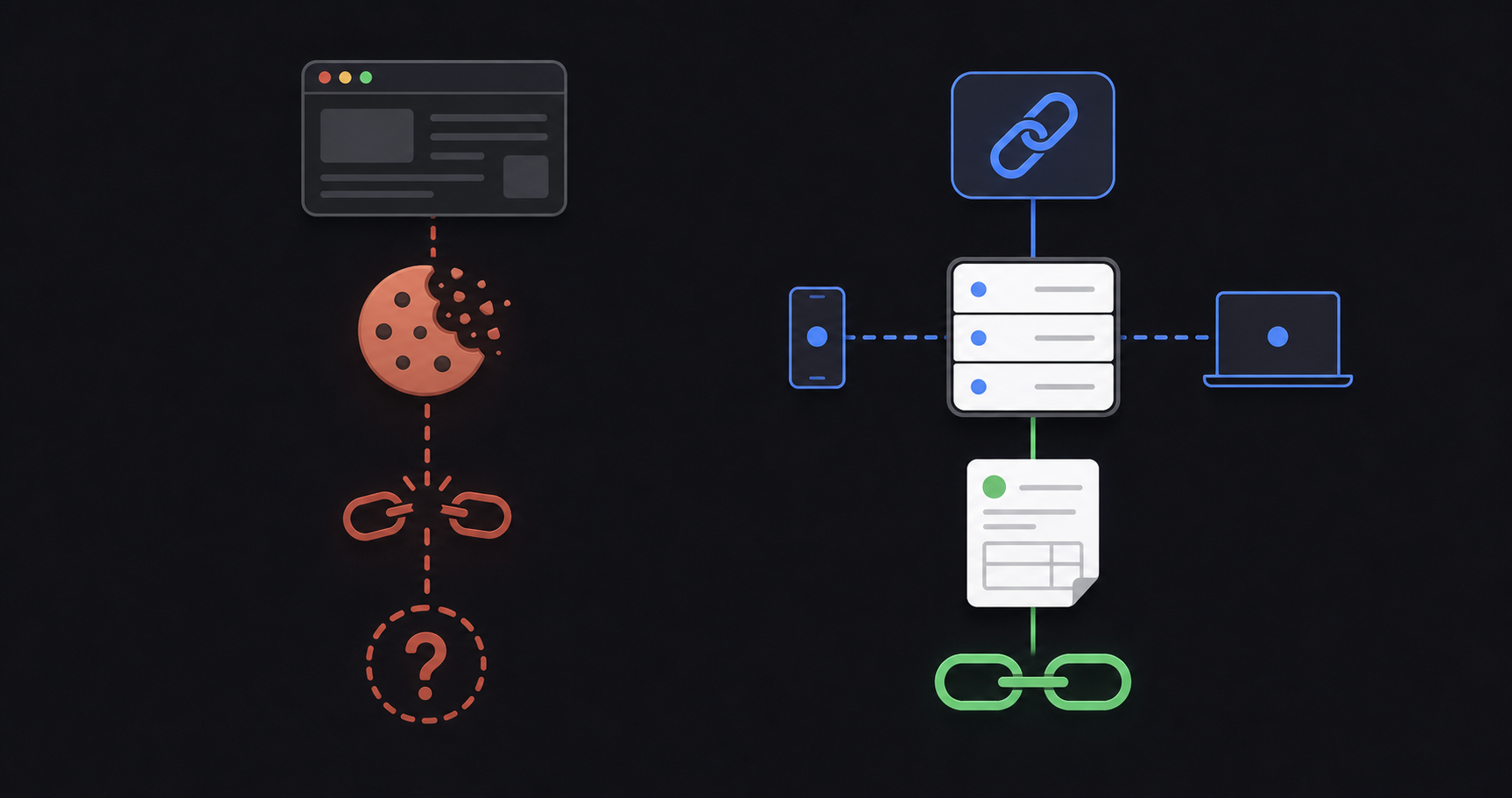
According to the Haus Advisors B2B referral marketing research, word of mouth drives 20-50% of all purchasing decisions in B2B. For a deeper look at referral marketing for B2B SaaS, strategy and reward design matter as much as attribution. Losing attribution on a meaningful share of those conversions is not a rounding error.
When assessing a tool, ask three questions: where is the referral code written (browser or server)? At what point in the funnel (click, signup or purchase)? And does attribution survive a device switch between click and conversion? A vendor that cannot answer all three clearly is almost certainly using client-side tracking.
Reward structures: what referral software lets you configure
Reward design determines whether your referral economics work or quietly drain budget. The reward type affects who participates, when they share and whether the program generates positive ROI.
The main structures available across referral tools:
- Percentage of attributed revenue. Scales with deal size, which suits high-ACV B2B products where a flat fee would undercompensate referrers.
- Flat-fee per conversion. Simpler to explain and easier to budget, particularly when billing systems do not expose granular revenue data.
- Two-sided discounts. Referee gets a discount at checkout; referrer earns a reward. Common in self-service SaaS where removing price friction at conversion matters.
- In-app or subscription credits. Better than cash for usage-based products where credits are native currency. Requires a credits wallet integration, not payout infrastructure.
- Non-cash rewards. Training vouchers, feature unlocks, free months. Useful in compliance-sensitive environments where individual cash payments raise procurement concerns.
- Drip-fed reward schedules. Distribute payouts incrementally as the referred customer remains active, protecting ROI against early churn.
Trigger timing matters as much as reward type. Firing a reward at signup instead of at paid conversion creates negative margins on freemium programs, a problem that referral program ROI measurement frameworks help you catch early. For self-service SaaS, tie reward triggers to invoice.paid events, not to the new-signup event. For sales-led funnels, reward triggers can attach to demo attendance or CRM deal closure.
Most tools support cash rewards. Fewer handle non-cash structures natively, and fewer still support drip-fed schedules or compliance-grade reward exclusions for enterprise accounts.
Pricing models across referral program software
Pricing in this category splits across four models, and the one that costs least at launch often costs most at scale.
- Fixed monthly subscription: a flat fee per tier regardless of referral volume. Predictable, but tiers often gate features like fraud detection, multi-campaign support and analytics behind higher plans.
- Usage-based or Referral ARR caps: you pay based on how much revenue your referral program generates. Costs can accelerate faster than expected once a program gains traction.
- Marketplace take-rate: a percentage cut on every referred conversion, on top of any subscription fee. PartnerStack operates this way, and understanding the referral vs affiliate program tradeoffs helps clarify whether a take-rate model makes sense at your volume.
- Free tiers: most tools offer a free plan, but these typically cap referral volume, restrict reward types or limit campaigns to one. Functional for a pilot, not a production program.
Where costs catch teams off guard: payout fees charged separately from the subscription, per-reward processing fees on partner payouts and overage charges when Referral ARR exceeds the plan cap. Cello User Referrals have 0% transaction and currency conversion costs. Partner Referrals have 0% currency conversion costs and tier-specific transaction costs: 5% on Free, 3.5% on Plus and Pro, and 2% on Enterprise.
The right question is total cost at your expected referral volume, not the entry-level plan price.
Global payouts and tax compliance in referral software
Cross-border payouts stall more referral programs than attribution failures do. Once a program grows beyond a single country, the practical questions shift from "who referred whom" to which tax forms to collect, which currencies to support and how to screen for sanctions before a payment clears.
A compliant payout chain involves several distinct steps: collecting the correct tax documentation (W-9 for US-based referrers, W-8BEN for foreign individuals, W-8BEN-E for foreign entities), running sanctions screening against OFAC and EU consolidated lists (steps covered in depth for GDPR-compliant referral programs in European fintech), and calculating withholding tax plus filing 1099-NEC or DAC7 recipient documentation at year-end. Without automation, those jobs land on your finance team.
Most referral tools handle payout delivery but leave compliance to the operator. That split works at low volume and breaks at scale. The question to ask any vendor is whether it collects and validates tax forms before releasing rewards, or assumes the operator handles that documentation separately.
Cello covers 63 countries via PayPal, Venmo and UPI; verify coverage against your referrer geography before committing. SEPA, Wise and direct ACH bank transfers are not currently supported. In regions where PayPal adoption is low, payout gaps can surface, so growth teams should verify coverage against their referrer geography before committing.
B2B vs consumer referral software: choosing the right fit
The structural difference comes down to where conversion happens and who controls it.
Consumer referral programs track an individual clicking a link and buying within hours. B2B SaaS deals involve multiple stakeholders, weeks of evaluation and a purchase made by someone who may never have clicked the original referral link. A tool built for the first motion will leak attribution in the second one.
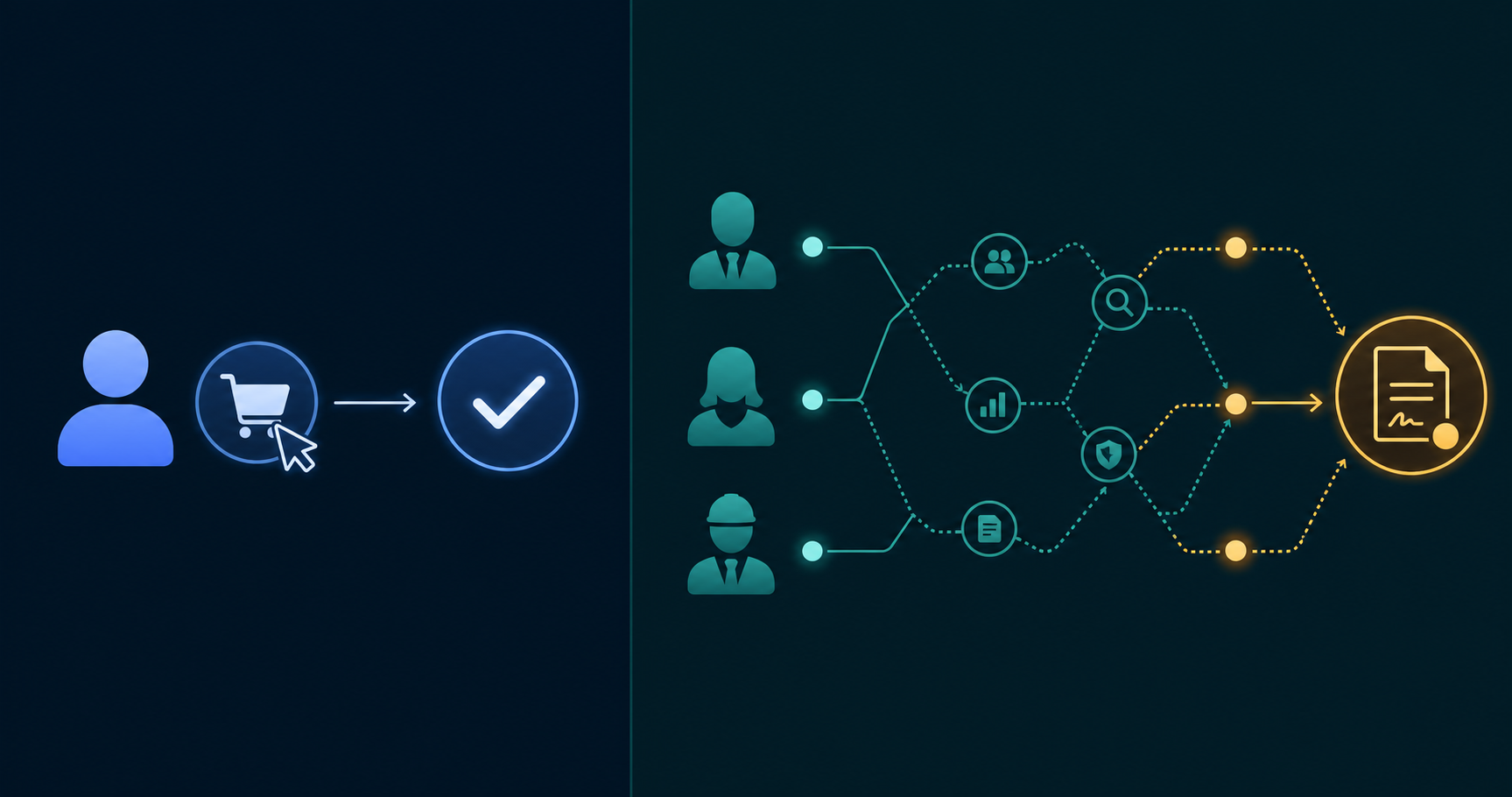
Four specific gaps appear when consumer-first tools are applied to B2B SaaS referral programs:
- Org-level attribution. In B2B, the referral originator and the contract signer are often different people. Consumer tools track by user ID; B2B attribution requires mapping to an organization identifier so the referral credit survives the handoff from champion to procurement.
- CRM integration depth. Sales-led funnels need attribution events tied to Salesforce opportunity stages or HubSpot deal progression, beyond billing webhooks alone. Without CRM integration, rewards cannot trigger on demo attendance or closed-won events.
- Long-cycle attribution windows. A referred prospect who signs a contract 90 days after clicking a link will fall outside cookie-based attribution entirely. Server-side attribution, writing the referral code at click time and not at signup, is the only way to capture this reliably.
- Enterprise compliance on cash incentives. Individual cash rewards to employees who influence a purchase decision can raise procurement concerns in larger organizations. B2B tools need support for non-cash reward structures and org-level incentives as alternatives.
ReferralCandy and Viral Loops are purpose-built for Shopify and short-cycle DTC conversion. They handle single-purchaser attribution well. That same architecture fails when the referred user is a product champion inside a 200-person company whose finance team signs the contract two months later.
Running user referrals and partner programs on a single tool
Most tools handle one motion well. User referral tools embed inside the product and target existing customers; partner and affiliate platforms manage external relationships through a separate portal. Running both means two contracts, two attribution systems, two reward ledgers and two sets of analytics to align.
The overhead compounds. When a referred user comes through both channels simultaneously, duplicate attribution can fire rewards twice. Resolving that manually requires cross-referencing two dashboards, which most growth teams cannot maintain.
Dedicated partner relationship management (PRM) tools carry more affiliate discovery, commission tiering and partner communication tooling than a unified tool typically matches. Teams reviewing automated payouts in referral software will find the compliance layer matters just as much as payout delivery. If affiliate sourcing is a core requirement, a dedicated PRM may outperform on those dimensions. If neither motion requires an enterprise PRM layer, the savings from a single dashboard, single billing line and shared attribution infrastructure tend to outweigh the feature gaps.
Cello runs both programs from one portal. User referrals embed inside the product via SDK; partner and affiliate programs run through the standalone Partner Portal with no product integration required. Both feed the same attribution engine, fraud detection module and reward ledger.
How to activate users who don't frequently return to your product
For infrastructure products, API tools and episodic-engagement SaaS where sessions happen weekly or monthly at best, organic launcher discovery is not a realistic activation path. The strategy has to travel to where the user is.
Four alternative distribution paths apply:
- Email-based distribution reaches users without requiring a login. Referral links embedded in lifecycle emails still run attribution server-side; the widget is not required for link generation or tracking.
- Deep-linking from push notifications or Intercom uses a
?cello-open=trueparameter to open the referral widget directly from an external touchpoint, skipping the discovery step entirely. - Sales-team-distributed links let account managers generate and share referral links on behalf of customers, useful when the primary relationship runs through a CSM and not a product dashboard.
- Behavioral trigger timing ties referral prompts to positive outcomes such as a successful hire, a completed project or a milestone event, reaching users when sharing intent is highest.
How to increase referral program engagement and active rate
Low active rate is almost always a placement problem before it is a messaging problem. If enrolled users cannot find the referral launcher, sharing never starts.
Four levers move active rate in practice:
- Launcher placement. A widget buried in a settings dropdown will underperform one surfaced in the primary navigation or a dashboard header. Placement is a first-order configuration decision, not a UI detail.
- In-app announcements. Callout messages anchored to the launcher drive discovery on web without requiring users to stumble across it. Mobile implementations currently do not support announcement tooltips, so email-based prompts are needed for mobile-first products.
- Behavioral trigger timing. Surfacing the referral prompt immediately after a positive product outcome or a completed milestone reaches users when sharing intent is highest. According to Haus Advisors B2B referral research, 73% of B2B marketing executives rank word of mouth and peer recommendations as the most influential factor in vendor consideration, making satisfied, successful users a high-value activation target.
- Segmentation by user type or usage tier. Targeting your highest-engagement users produces a better active rate than broadcasting to your entire base indiscriminately. Multi-campaign architecture lets you configure distinct prompts and reward structures per segment without touching the base program.
A number below your industry benchmark signals a launcher visibility or timing problem, not a reward design problem.
How to handle referral incentives in compliance-sensitive B2B environments
Cash rewards to individuals who influence a B2B purchase decision create a procurement concern: if a product champion earns $200 for recommending a vendor to their own employer, many organizations treat that as a conflict of interest. Enterprise compliance teams raise it. Compliance-driven industries enforce it.
The practical answer is to move toward reward structures that do not cross that line. Most B2B referral software supports several alternatives:
- Organizational credits applied to the referring company's subscription, so the benefit flows to the business and not to the individual employee.
- Feature unlocks or plan upgrades that give the referring account access to higher-tier functionality.
- Free months or subscription extensions credited at the account level.
- Conference tickets, training vouchers or professional development access, which read as professional benefits instead of personal compensation.
Framing matters alongside structure. Programs that position the reward as a thank-you for a successful introduction, and not as a commission for influencing a purchase, tend to clear internal review more cleanly. Transparent terms visible to the referred party also reduce the perception of a hidden incentive.
For accounts where any individual incentive is prohibited, exclusion logic at the organization level lets you suppress the referral surface for specific enterprise accounts while keeping the program active for the rest of your base, without creating exceptions you have to manage manually per account.
Cello: referral program software built natively for B2B SaaS
Cello is built for B2B SaaS teams running referrals inside the product, not through an external portal. Three architectural choices separate it from the broader category.
The referral surface loads inside the authenticated product session via the Cello JS SDK, or native iOS, Android, React Native and Flutter SDKs on mobile. Users share from inside the product where engagement is highest, without being redirected to a third-party page.
Attribution writes the referral code to Stripe or Chargebee customer metadata at link click, not at signup. Device switches, cookie deletion and ITP enforcement between click and conversion do not break the attribution chain. VEED reduced CAC by 90.4% versus paid acquisition (VEED case study) after switching to Cello's in-product embed. Softr saw a 5x conversion lift after migrating off PartnerStack (Softr case study).
User referrals and partner programs run from one portal, one attribution engine and one fraud detection module. No separate PRM contract, no duplicate reward ledgers to cross-reference.
Published Cello customer examples include Hera going live in two days and Butter going live in under five hours, but these are customer-specific outcomes rather than a universal estimate. For teams with EU users or cross-border referrer bases, Cello's EU-first, GDPR-native data posture and compliant payouts across 63 countries cover the compliance requirements without a separate payout vendor. Cello MCP adds a read-only AI access layer: developers can retrieve current documentation, check integration health, and inspect recent events, while growth teams can review program trends, available benchmarks, top referrers, and recommendations. Program changes remain in the Cello Portal. See how it compares on best referral software with native SaaS integrations.
Final thoughts on referral program software for B2B SaaS teams
Choosing referral software is mostly a question of where your conversions happen and who controls the purchase decision. Consumer tools handle single-user, short-cycle purchases well; B2B attribution requires org-level tracking, CRM integration and long attribution windows that cookie-based systems cannot cover. Getting the structural fit right matters more than any individual feature. If you want both user referrals and partner programs on one attribution engine without a separate PRM contract, Cello is worth a look.
Can Cello handle both a user referral program and a partner/affiliate program without a separate tool?
Yes — Cello runs both from one portal, one attribution engine and one fraud detection module. User referrals embed inside the authenticated product via SDK; partner and affiliate programs run through the standalone Partner Portal with no product integration required. Both feed the same reward ledger, so there is no duplicate attribution to reconcile across two systems
Which referral program software platforms handle global tax compliance automatically, so my finance team is not doing it manually?
Most referral tools deliver payouts but leave tax documentation to the operator. Cello handles W-9 collection for US-based referrers, W-8BEN and W-8BEN-E for international referrers, OFAC and EU consolidated-list sanctions screening, and 1099-NEC and DAC7 year-end filing as part of its compliant payout infrastructure across 63 countries. SEPA, Wise and direct ACH transfers are not currently supported, so teams with referrer bases in regions where PayPal adoption is low should verify geographic coverage before committing.
How do I activate referral program participation when users rarely return to the product after initial setup?
For infrastructure and API products with low session frequency, in-product launcher discovery is not a reliable activation path. Four distribution paths work without requiring a login: embedding referral links in lifecycle emails with server-side attribution still intact; deep-linking from push notifications or Intercom using a `?cello-open=true` parameter to open the widget directly; having account managers generate and distribute links on behalf of customers through sales-assisted workflows; and triggering referral prompts at behavioral milestones like a successful integration or first API call, when sharing intent is highest
Why is our referral program active rate low, and what actually moves it?
Low active rate is almost always a placement problem before it is a messaging or reward problem. The active rate metric — active referrers divided by enabled referrers — drops when users cannot find the launcher, not when they decline to share. Four levers move it in practice: moving the launcher from a settings dropdown into primary navigation or a dashboard header; configuring in-app announcement tooltips to drive web discovery without requiring users to stumble across the widget; timing referral prompts to follow positive product outcomes when sharing intent peaks; and targeting your highest-engagement users through segmented campaigns rather than broadcasting to your full base. On mobile, announcement tooltips are not currently supported, so email-based prompts are the alternative for driving discovery.
How do I position a referral incentive program to B2B customers in compliance-driven industries who believe recommendations should be based on product quality alone?
Move away from individual cash rewards and toward reward structures that do not cross procurement lines. Organizational credits applied to the referring company's subscription, feature unlocks, free months at the account level, and professional development access such as conference tickets or training vouchers read as professional benefits rather than personal compensation. Framing the reward as a thank-you for a successful introduction rather than a commission for influencing a purchase also clears internal review more cleanly. For accounts where any individual incentive is prohibited, organization-level exclusion logic lets you suppress the referral surface for specific enterprise accounts while keeping the program active for the rest of your base.
What is the difference between a user referral program and a partner or affiliate program, and how does Cello compare to PartnerStack for B2B SaaS teams?
A user referral program turns existing product users into referrers through an in-product surface; a partner or affiliate program manages external relationships with non-users through a standalone portal. Cello runs both from one attribution engine and reward ledger without a separate PRM contract, while PartnerStack operates a marketplace model with a percentage cut on referred revenue and routes all referral activity through an external portal rather than embedding inside the product.
Can referral reward triggers fire on non-subscription events like wallet top-ups, first charge or demo attendance instead of invoice.paid?
Yes — Cello supports three conversion event types: new-signup, invoice-paid and demo-call-attended. Demo attendance covers sales-led funnels where the first measurable conversion is a scheduled call rather than a self-service purchase, and webhook-based custom triggers can fire on non-standard billing events such as first charge or onboarding completion for products with usage-based or wallet-top-up monetization models.
How does referral attribution work for mobile apps when Apple's App Tracking Transparency limits device-level data collection?
Cello's server-side attribution writes the referral code to the Stripe or Chargebee customer object at the moment of the referral link click — not at signup — so attribution is anchored to the billing record rather than a device identifier or cookie. This means ATT opt-out and cross-device gaps between click and conversion do not break the attribution chain, because the referral code is already present in the billing metadata before the conversion event fires.
Can I launch a referral program using the Partner Portal now without a full in-app SDK integration, and migrate to an in-product widget later?
Yes — the standalone Partner Portal requires zero SDK integration and can serve as a complete first-phase referral program launch: it handles partner enrollment, referral link generation, attribution, payouts and reporting immediately. All referral activity and partner data captured during this phase carries over when transitioning to a full in-app Referral Component implementation, so the two phases are additive rather than requiring a restart.
How flexible is referral reward timing — can payouts be delayed until after a free trial converts, structured as recurring revenue share or drip-fed over several months?
Cello supports all three structures. Payout delays can be configured to hold rewards until a referred user converts from free trial to paid subscription, tying the trigger to the invoice.paid billing event rather than the new-signup event. Recurring percentage-based revenue share pays out on each subscription renewal. Drip-fed schedules distribute rewards incrementally as the referred customer remains active, protecting program ROI against early churn. Note that the delay window itself must be set by the Cello support team rather than self-configured in the portal.
How should referral launcher placement and in-app announcement best practices be adapted for a mobile-only product?
Mobile SDK implementations support the referral widget and sharing mechanics but do not include the notification dot indicator or in-app announcement tooltips that drive launcher discovery on web. For mobile-first products, the recommended alternatives are email-based referral prompts with deep-link parameters that open the widget directly, push notification triggers using the cello-open URL parameter, and behavioral milestone triggers tied to positive product outcomes where sharing intent is highest.
What payout methods does Cello support for international and European referral programs, and is SEPA available?
Cello supports automated payouts via PayPal across 63 countries, Venmo for US-based referrers and UPI for India. SEPA, Wise and direct ACH bank transfers are not currently supported; direct bank transfer via ACH is on the roadmap but has no confirmed delivery date. Teams with referrer bases in regions where PayPal adoption is low should verify geographic coverage against their referrer geography before committing to the platform.
What are the real engineering and operational costs of building a referral program in-house versus using third-party referral program software?
Building in-house gives a team full control over its interface and data model, but it also makes that team responsible for attribution edge cases, payout retries, fraud-rule maintenance, tax-form handling, sanctions screening, and ongoing regulatory changes. A third-party platform reduces that recurring operational burden. Cello MCP can further help developers retrieve current implementation guidance, check integration health, and inspect recent events, but it does not eliminate implementation work or guarantee a fixed delivery time.
How does referral attribution work when a user clicks a referral link, fills out a HubSpot form and only creates an account days or weeks later?
Cello's write-at-click architecture stamps the referral code (cello_ucc) onto the Stripe or Chargebee customer object at the moment the referral link is clicked — not at the moment of form submission or account creation. For HubSpot form flows, the referral code is captured at landing, passed through the CRM workflow and then read from the billing metadata when the conversion event fires, regardless of how much time passes between the initial click and the eventual account creation
Can referral rewards be conditioned on the referrer or referee still being an active paying customer at the time the reward is released?
Cello supports configurable payout delays that hold rewards until a referred customer has remained active for a defined retention period before the commission is released, protecting programs from paying out on customers who churn early. However, Cello cannot automatically claw back or cancel a reward if the referrer's own subscription lapses during a payout delay window — that is a confirmed product boundary. The available mitigation for referrer-churn scenarios is manually deactivating the churned referrer's link to prevent future referrals, which does not affect rewards already earned.