
Your referral workflow treats a booked demo as a conversion, even though the contract and payment are still weeks away. Buyer changes and partial invoice payments leave you patching reward calculations by hand. You can keep referrals inside your normal sales process without paying too early. Tie credit to the account, separate sales milestones from payout approval and calculate payable rewards from collected revenue.
- How referral programs work in sales-led SaaS
- Sales-led and product-led referral programs compared
- Define eligible referrals and program ownership
- Map the referral flow from introduction to payment
- Preserve account-level attribution across the buying committee
- Connect CRM stages to verified referral events
- Design incentives and staged payouts around collected revenue
- Handle manual invoices and bank-transfer payments
- Promote referrals and set a sales follow-up SLA
- Set approval, fraud and cross-border payout controls
- Test attribution and payout behavior before launch
- Measure referral pipeline, acquisition cost and payback
- Choose a referral setup that fits the CRM stack
- Apply the workflow with Cello
- Key takeaways
TLDR:
- Tie your sales-led SaaS referral credit to accounts so buyer-contact changes preserve attribution.
- Base staged payouts on finance-confirmed collections, not closed-won deals or booked demos.
- Deduplicate sales-stage events and track milestones per opportunity to prevent repeat rewards.
- Test account merges, refunds and manual payments before launching your referral pilot.
- Confirm Cello's manual-payment events and support-configured payout delays before implementation.
How referral programs work in sales-led SaaS
A sales-led growth SaaS referral program brings customer introductions into your normal sales process. Keep the referral record linked to the account through qualification, procurement and payment, even as contacts change.
Customer referrals come from users recommending you to peers. Partner introductions come through business relationships; affiliates promote tracked links to an audience.
Before launch, confirm customer willingness to refer, define qualification criteria and assign a program owner.
Sales-led and product-led referral programs compared
|
Program detail |
Sales-led |
Product-led |
|---|---|---|
|
Referral origin |
Email introduction or demo request |
In-app sharing |
|
Next step |
Sales conversation |
Signup or trial |
|
Conversion milestones |
Qualified opportunity, paid contract |
Activation, paid subscription |
|
Reward timing |
After verified collection |
After checkout payment |
|
Assessment window |
Sales cycle plus payment terms |
Trial-to-paid cohorts |
Sales-led referrals need no self-service checkout, a key distinction in any sales-led vs PLG referral program comparison. For hybrid businesses, set separate reward rules for assisted contracts and self-service purchases.
Define eligible referrals and program ownership
Publish referral eligibility rules and assign owners before participants share.
- Specify who can refer, which accounts qualify and what introductions must contain. Exclude self-referrals and accounts with existing opportunities.
- Assign customer success to explain eligibility, sales to accept referrals, RevOps to resolve ownership disputes and finance to approve rewards, consistent with the referral program categories for B2B SaaS.
- Define attribution windows, duplicate-claim resolution, renewal reward eligibility and treatment of pending referrals and earned rewards when the program closes.
Map the referral flow from introduction to payment
Separate referral, opportunity and reward statuses. A booked demo never earns commission. Log the introduction and referral code, capture the contact in customer relationship management (CRM), then have sales confirm eligibility and link the opportunity.
Keep payment confirmation separate from reward fulfillment. Finance verifies the receipt in billing, approves eligibility and records payout confirmation in the reward ledger. Show the referrer payment confirmation only after collection and mark the reward paid only after fulfillment.
Preserve account-level attribution across the buying committee
Keep referral credit tied to the account when the purchaser changes. Capture the referral code and referrer ID server-side, then link contact, account, opportunity and billing customer IDs as they become available. Preserve mappings through lead conversion and old-to-surviving IDs after account merges. Match another purchaser through the shared account.
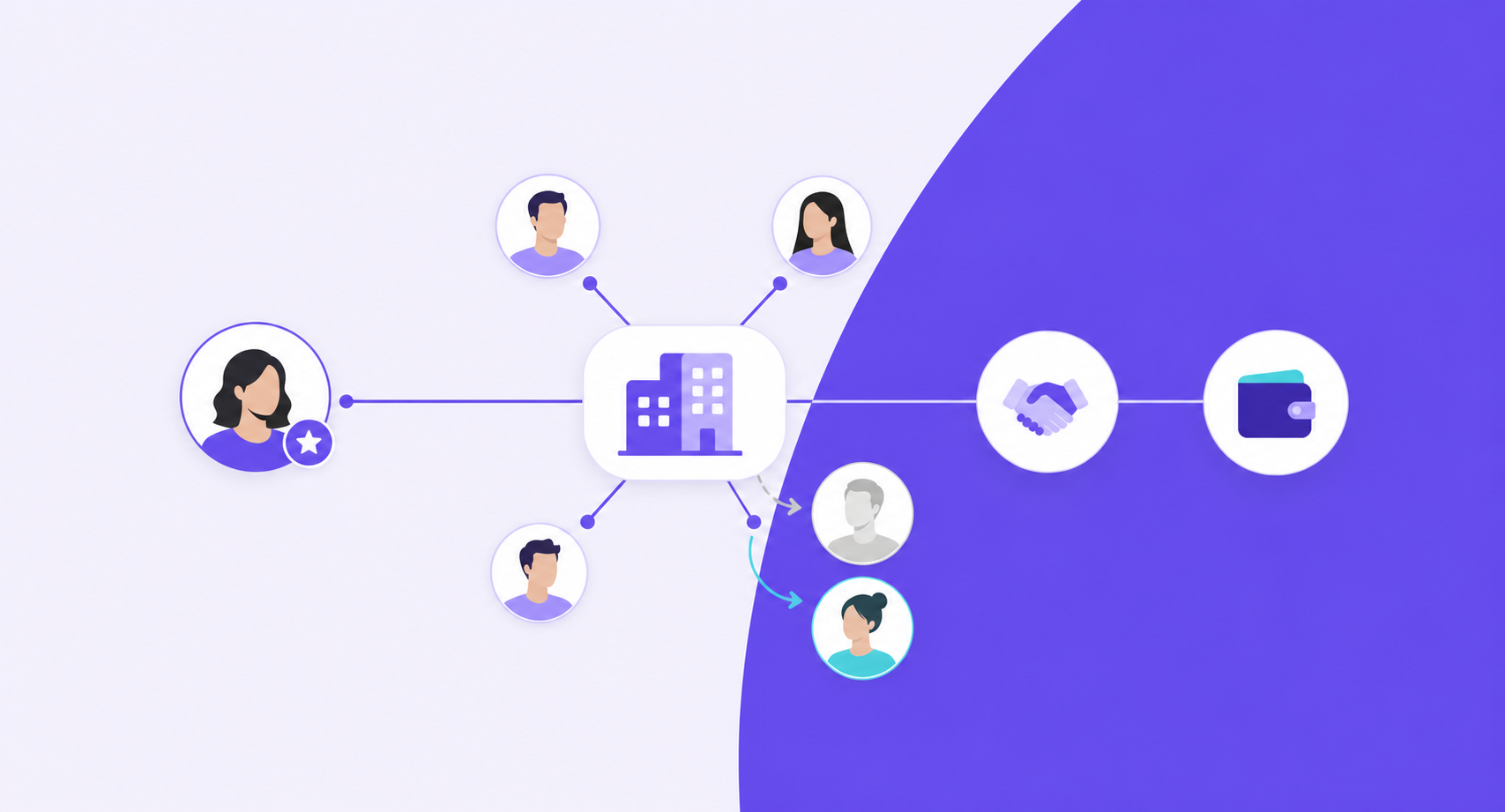
Server-side storage preserves captured relationships. Cross-device attribution requires an identity link; anonymous visitors cannot be matched automatically.
Connect CRM stages to verified referral events
Require evidence before customer relationship management (CRM) stage changes become referral milestones. Sales confirms eligibility at acceptance, documents fit and intent at qualification and records actual demo attendance instead of a booking. An executed contract supports closed-won status; only finance-confirmed collections support payment confirmation.
Send referral, account, opportunity and event IDs plus timestamps through workflows or middleware, similar to the pattern in a Salesforce integration setup. Deduplicate events and record milestones per opportunity to prevent repeat rewards after stage reversals.
Design incentives and staged payouts around collected revenue
Match incentives to deal economics and participant needs.
- Fixed bounties offer predictability; cap them against acquisition margin, a tactic used in B2B referral programs that convert.
- Recurring revenue share tracks collections and customer spend.
- Organizational benefits suit procurement restrictions on personal rewards.
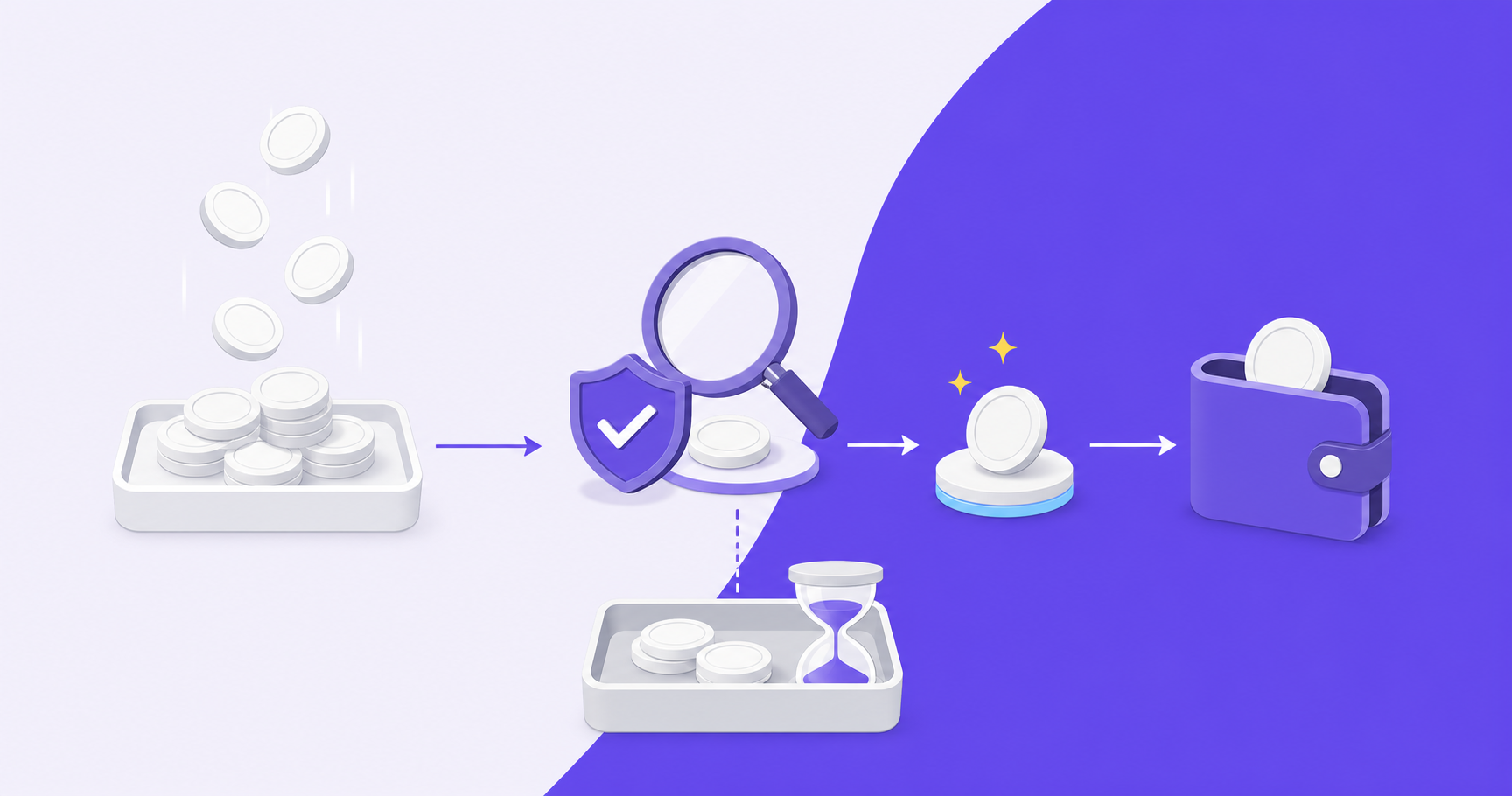
Accepted opportunities can create pending rewards. Collections set payable value; release follows review. Milestones create entitlements; installments divide earned rewards. Document partial-payment proration, refund reversals, cancellation treatment and exclusions for taxes or pass-through charges.
Handle manual invoices and bank-transfer payments
For bank transfers or manual invoices, trigger rewards from finance-confirmed receipts through approved application programming interface (API) events or controlled imports. Record invoice ID, account ID, amount collected, currency, receipt date and referral relationship.
Submit only newly collected amounts for partial settlements. Allocate consolidated receipts to invoice lines and eligible accounts before calculating rewards. Give finance scoped submission access, not unrestricted database access, a tradeoff worth weighing against the build vs buy decision for a referral program. Closed-won updates are not payment evidence.
Promote referrals and set a sales follow-up SLA
Ask for referrals after customers see product value, through account managers, customer success conversations, email, Slack Connect or in-app messaging.
Set a follow-up service-level agreement (SLA) with named reps, acknowledgment deadlines, missed-response escalation and referrer updates. For example, require the assigned rep to acknowledge each introduction by the end of the next business day, escalate missed deadlines to the sales manager and notify the referrer when sales accepts or declines the referral.
Slow or missing lead response is a documented pattern, not a new one. Treat any single study as directional and use it to support explicit ownership, not as a current SaaS benchmark.
Set approval, fraud and cross-border payout controls
- Check self-referrals, duplicate accounts and competing claims. Log evidence, reviewer, decision and timestamp for manual approvals.
- Separate fraud reviews from payment delays. Provide a dispute contact and a reviewer authorized to correct attribution or rewards.
- Before payout, finance should verify eligibility, countries, payment methods, currencies, fees and tax documentation. Assign retry and escalation owners.
- Restrict customer relationship management (CRM) access by role; hide confidential deal values from participants.
Test attribution and payout behavior before launch
Pre-launch tests must cover each of these cases:
- Buyer changes and account merges: attribution survives without creating extra rewards.
- Missing-code exceptions: review each one and confirm the outcome is explainable.
- Duplicate events: replay them and confirm no extra entitlement appears.
- Reversed sales stages: move opportunities backward and confirm no extra entitlement appears.
- Refunds: confirm they follow the adjustment policy.
- Manual payments: confirm reward calculations match finance receipts.
Test retries and duplicate-safe recovery against Stripe webhook delivery handling.
Launch a limited pilot only after attribution passes, rewards match finance records and exceptions have explainable outcomes.
Measure referral pipeline, acquisition cost and payback
Use acceptance-date cohorts, except for participation, which uses invitation-date cohorts, part of a broader set of B2B referral program KPIs.
|
Metric |
Calculation |
|---|---|
|
Participation |
Referrers / invitees |
|
Acceptance |
Accepted / submitted referrals |
|
Qualified pipeline |
Qualified opportunity value |
|
Win rate |
Wins / closed opportunities |
|
Time to close |
Acceptance-to-win days |
|
Collected revenue |
Payments received from referred customers |
|
Customer acquisition cost |
Program acquisition costs / new referred customers |
|
Return on investment |
(Attributable gross profit − costs) / costs |
Include rewards, software and labor. Separate sourced from influenced revenue. Compare mature cohorts after sales cycles finish, following sound referral ROI measurement practices for SaaS companies.
Choose a referral setup that fits the CRM stack
Choose by reporting needs and workflow complexity, not company size.
- CRM-only tracking suits programs where staff review every reward and finance handles payouts manually, an approach common in referral programs for sales-led SaaS.
- CRM plus middleware suits custom event routing with engineering-owned maintenance.
- Dedicated referral software suits repeatable rewards and participant reporting.
Assess account-level attribution, event flexibility, payout controls, auditability, security and maintenance. Require demos covering manual invoicing and buyer-contact changes, separating native features, custom work and support-dependent settings.
Apply the workflow with Cello
Cello connects B2B SaaS referrals to organization-level attribution, sales-led conversion tracking and reward management, bringing User-Led Growth into your sales process.
Before implementation, confirm CRM stage mapping, manual-payment events and support-configured payout delays against official documentation with our team, as outlined in the complete guide to your B2B referral program.
Cello's campaign payout rules cover percentage-of-revenue rewards, a maximum reward per referral and bonus rewards on signups or purchases, with one active campaign at a time. Payouts trigger on confirmed events and purchases, not calendar dates. Confirm with Cello whether stacked fixed-fee milestone rewards within one campaign or fixed quarterly payout schedules require custom work. Book a workflow-mapping demo to separate supported paths from custom work and configuration dependencies.
Key takeaways
- A signed deal is not proof of payment. Keep rewards grounded in collected revenue.
- Review pilot results before expanding.
Can you use Cello while keeping referral payouts under your finance team's control?
Cello supports manual reward processing, so your finance team can retain control of reward fulfillment while Cello handles attribution and reward tracking. Confirm the handoff process, approval records and payout-status updates with Cello before launch so participants receive accurate reward information.
Should you send both Stripe and CRM payment events to Cello for the same deal?
Use one authoritative payment event for each collection to avoid paying twice for the same receipt. Your customer relationship management (CRM) system can report sales milestones while Stripe reports collected payments; if both systems report payment, your integration should match them to the same receipt and suppress the duplicate.
How do you preserve Cello attribution if your Stripe customer record is created after the referral introduction?
Store the referral code against a durable prospect or account record first, then pass it to the Stripe customer metadata when your integration creates or links that customer. Do not assume Stripe can recover an earlier anonymous click; confirm the field mapping with Cello and test the delayed customer-creation path before launch.
Can you run a sales-led SaaS referral program if customers pay by bank transfer and never use checkout?
Yes, referral rewards can follow finance-confirmed bank receipts without a self-service checkout. Link each receipt to its invoice, account and referral record, then submit the collected amount through an approved event or controlled import. Confirm the manual-payment event format and integration path with Cello before implementation.
What's a practical way to keep your referrers engaged when deals take months to close?
Give referrers proof of progress without paying commissions before revenue arrives. Send acceptance and deal-stage updates, explain what makes a reward payable and provide a contact for stalled referrals. Keep confidential deal values out of participant updates.
Should you choose a fixed bounty or capped revenue share for high-value SaaS referrals?
Choose a fixed bounty when predictable acquisition cost matters most, or capped revenue share when customer spend varies widely. Test either structure against acquisition margin and release rewards only after verified collection and review. For fixed bounties, publish how partial payments affect the amount payable.
What's the simplest way to promote your referral program if customers rarely log into your product?
Use account-manager outreach and customer email campaigns at moments when customers have seen product value. Include a referral link, a short explanation of eligible introductions and clear payment terms. Assign a sales owner to acknowledge each introduction so referrals do not sit unanswered.
What can you offer referrers when their company prohibits personal cash rewards?
Consider company-level benefits or a tracking-only referral arrangement, subject to the customer's policy and legal review. Service access or training can be options, but non-cash rewards still require approval. Exclude accounts whose rules prohibit participation.
Should your self-service signups and sales-assisted contracts use the same referral reward rules?
Use separate reward rules when billing terms, margins or payment timing differ between the two sales motions. Self-service rewards can follow verified checkout payments, while assisted contracts need account-linked collection records and finance review. Define which rule applies if a referred prospect moves from self-service into a sales-assisted deal.
How do you calculate referral rewards when a customer pays an invoice in installments?
Calculate each payable portion from newly collected eligible revenue, not the full invoice balance. Apply the agreed rate or bounty-proration rule, exclude taxes and pass-through charges covered by your policy and track cumulative rewards against the cap. Never resubmit earlier collections as new revenue.
How do you handle a customer refund after the referral reward has already been paid?
Record a reward adjustment under your published refund policy, but do not assume an issued payout can be recovered automatically. Cancel or reduce any unpaid portion where the terms permit it. Finance should review already-paid amounts against the program terms and available recovery process.
How do you preserve referral credit when your sales team merges duplicate accounts?
Keep a mapping from each retired account ID to the surviving account and retain the original referral claim. Reconnect opportunity and billing records, then check whether the merged accounts contain competing claims or prior rewards. Route conflicts to RevOps before approving further payouts.
When should you judge referral program ROI if your sales cycle is still longer than the pilot?
Judge revenue ROI after the referral cohort has had time to complete the sales cycle and payment terms. During the pilot, use acceptance, qualified pipeline and follow-up completion as interim signals, without treating pipeline as collected revenue. Compare mature acceptance-date cohorts and include rewards, software and labor in costs.