

You’ve found polished designs, but you still can’t tell which ones fit a prospect arriving through a colleague’s invitation. A screenshot alone won’t tell you whether the offer survives signup or whether the page serves buyers at all. We’ll compare referral page options by visitor, invitation context and next action, while keeping documented features separate from unproven conversion claims.
TLDR:
- Match your referral page to referred prospects, not users sharing links or partners enrolling.
- Keep the invitation offer consistent through signup and check attribution from click to conversion.
- Treat rankings as B2B SaaS fit, not conversion proof. Test against your own signup results.
- Verify undocumented features before comparing tools. Missing evidence does not mean missing features.
- Cello shows referrer names through inline personalization or a no-code banner on existing pages.
What is a referral page?
A referral page explains an invitation or referral offer and directs visitors to the next action, such as starting a B2B SaaS trial or booking a demo.
Separate the audiences when reviewing referral landing page examples.
- A referral signup page helps the referred prospect act on an invitation.
- An existing user’s sharing interface provides a referral link to send through User Referrals.
- A partner enrollment page accepts applicants for B2B SaaS referral programs under Partner Programs.
- An affiliate enrollment page recruits promoters who distribute tracked links to their audiences.
Match each page’s copy and call to action to its visitor.
How we ranked referral page examples
Referral page examples rank by B2B SaaS fit, not proven conversion performance.
- Identify whether the page serves a referrer, referred prospect or prospective partner.
- Check whether the offer and personalization match the invitation received.
- Trace the promised benefit through signup and note friction.
- Review product context and attribution continuity from click to conversion.
Customer outcomes alone do not prove page quality. Compare competitors using documented page examples and confirm current features and availability before choosing a tool.
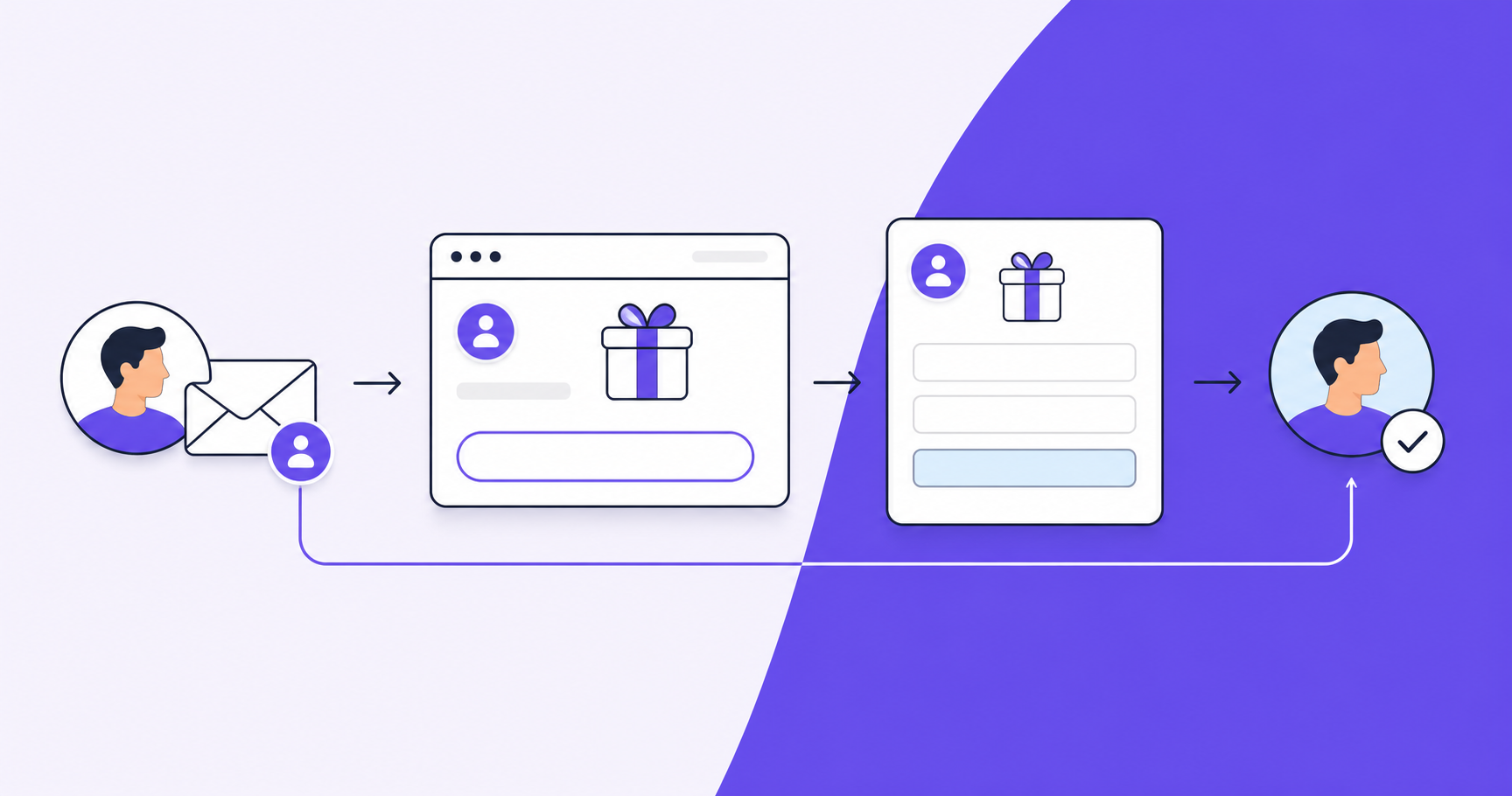
Best overall referral page experience: Cello
Cello keeps the invitation recognizable on the referral page by showing the referrer's name. Its two referral personalization options connect the page visitors reach with the person who invited them.
What they offer
- Inline personalization places referral context in a landing page headline or another page element.
- The New User Banner provides no-code personalization once the Cello attribution script is installed on the landing page and the banner is enabled in the portal. It is a personalization layer, not a complete hosted page builder.
Keep the invitation recognizable after the click.
Choose inline personalization for context within page elements or the banner for a no-code addition to an existing page.

Extole
Extole is an enterprise consumer referral platform serving retail, financial services and travel brands, with no focus on B2B SaaS signup flows. A credit card provider is a customer example, placing its referral use case in consumer credit cards, not software trials. That customer relationship alone does not verify the page’s offer wording, form fields or destination after a referral click. For a page-level comparison, distinguish the cardholder’s invitation-sharing screen from the referred applicant’s entry page. Then check eligibility messaging and the handoff into the application. Cello’s inline personalization and New User Banner meet a different requirement by showing referrer context on an existing page before a referred prospect signs up. Consider Extole for consumer acquisition requirements, but request a documented referred-visitor page before comparing its invitation context and conversion path with Cello’s B2B SaaS experience.
What they offer
- Offer wording and call to action remain unconfirmed.
- Page customization options need current source evidence.
Good for a use case supported by page evidence; no audience recommendation is assigned yet.
Limitation remains unassessed without a documented product constraint.
Friendbuy
Friendbuy is a loyalty and referral platform built for B2C e-commerce and retail brands, with customers including Casper and Spanx. Its referral surfaces include website pop-ups, modals and post-purchase confirmation pages, placing referral participation within the shopping experience instead of creating a B2B SaaS signup flow. A post-purchase referral prompt shows the audience distinction in this comparison: it invites an existing buyer to share, while the referred prospect needs a separate entry experience that explains the benefit and next action. These supported formats do not confirm what a specific customer’s referred-visitor page displays, so offer wording, required fields and the destination after the click remain unconfirmed here. For a SaaS evaluation, request a walkthrough that follows the recipient’s link, checks whether the benefit persists through account creation and verifies attribution when the trial becomes a paid subscription. Shortlist Friendbuy for commerce-led referral participation; require that referred-prospect evidence before comparing it with Cello’s B2B SaaS referral experience.
What they offer
The available evidence does not confirm Friendbuy’s visitor-facing offer or signup presentation. A page-level assessment needs to distinguish prospects accepting invitations from existing customers sharing them.
Implementation timing and tracking restrictions also remain unverified.
For Friendbuy, assess the referred shopper’s entry page separately from the post-purchase sharing prompt.
Referral Factory
Referral Factory is a no-code, template-driven referral campaign builder for small businesses across sectors including gyms, insurance and e-commerce. Its visual editor supports hosted landing pages, pop-up overlays, sticky bars and website widgets, giving teams a choice between a standalone campaign page and participation on an existing website. These formats show where a visitor can encounter the campaign, but the available evidence does not verify a named template’s invitation copy, form fields or post-submission destination. For a B2B SaaS signup assessment, request a referred-visitor template and follow the recipient’s link to check whether the page explains the invitation benefit and leads to product account creation instead of referrer enrollment. Complete a test signup and paid conversion to confirm that the promised benefit persists and the original referrer receives attribution; a campaign form submission alone does not confirm either outcome. Shortlist Referral Factory for marketing-led campaigns that need a no-code page builder, using our Referral Factory comparison for broader context, but require that recipient walkthrough before recommending it for a SaaS signup flow.
What they offer
- Landing page layout remains unverified, including the intended visitor and next action.
- Branding and form controls need confirmation through template documentation.
Campaign fit and a comparison with Cello’s personalized referral entry point remain unresolved, similar to open questions raised by teams considering Rewardful alternatives. Review a documented Referral Factory template before judging its suitability for converting referred users.
Viral Loops
Viral Loops offers template-based referral campaigns through hosted pages or website widgets, according to Viral Loops’ Universal Template page. That page documents invitee settings that send invited friends to a homepage, a signup page or a customizable Viral Loops page for lead capture, and it associates each invited friend with the referrer. It also lists purchases and subscriptions as referral goals, plus a multi-step customer journey that can require a paid upgrade before a referral counts. The page describes these routing options but does not document the referred visitor’s page copy, form fields or signup handoff, so those details remain unverified.
What they offer
- Hosted campaign pages give teams a standalone referral page; widgets keep participation within an existing website.
- Templates cover waitlists, newsletters and customer referrals.
Good for teams that want a template-based campaign entry page.
Limitation: waitlist participation does not prove paid SaaS conversion performance or show which format converts better.
Choose Viral Loops for template-based campaign entry. For referred prospects who need recognizable referrer context before signup, consider invitation personalization at Cello.
FirstPromoter
FirstPromoter is an affiliate and referral tracking platform for SaaS teams managing external affiliates, content creators and partners. Its documented referral surface is a separate, customizable affiliate dashboard, with participants registering as affiliates instead of sharing from inside the SaaS product. That portal shows an affiliate-facing experience, not the page a referred buyer sees after clicking an invitation; a specific public signup page, its offer wording and its form fields remain unverified here. Good for SaaS marketers who want a standalone portal for external affiliate participation, FirstPromoter merits a shortlist for that motion, not a recommendation based on buyer-page conversion performance. Before selecting it for referred-prospect acquisition, request a recipient-link walkthrough that shows the landing page, the handoff into product signup and attribution through a paid subscription. Use our FirstPromoter alternative comparison for broader context, and distinguish its external affiliate workflow from Cello’s in-product user sharing when choosing which audience to serve.
What they offer
- Page purpose and the intended visitor action remain unconfirmed.
- Customization and enrollment controls still require source confirmation.
An affiliate application supports enrollment but provides no evidence about the page buyers see after clicking a referral link, which matters once you build a referral program for your SaaS.
Bottom line: withhold FirstPromoter’s audience recommendation pending verification. For user referrals, distinguish Cello’s sharing interface inside the authenticated product from the page a referred prospect visits before signup.
Feature comparison table of referral page examples
|
Comparison field |
Cello |
Extole |
Friendbuy |
Referral Factory |
Viral Loops |
FirstPromoter |
|---|---|---|---|---|---|---|
|
Documented surface |
Personalized elements or banner |
Unverified |
Unverified |
Unverified |
Hosted pages or widgets |
Unverified |
|
Visitor served |
Referred prospect |
Unverified |
Unverified |
Unverified |
Template-dependent |
Unverified |
|
Inline personalization |
Yes |
Unverified |
Unverified |
Unverified |
Unverified |
Unverified |
|
No-code banner personalization |
Yes |
Unverified |
Unverified |
Unverified |
Unverified |
Unverified |
|
Signup CTA and destination |
Unverified |
Unverified |
Unverified |
Unverified |
Unverified |
Unverified |
Unverified cells indicate missing evidence, not absent features. Confirm those capabilities before choosing a tool. The comparison does not confirm conversion performance, and screenshots show page design but do not prove customer outcomes.
Why Cello is the best fit for a B2B SaaS referral page
Choose Cello when your B2B SaaS team needs referral context on an existing referral page, turning new users into active referrers. Inline personalization suits teams that can edit page elements; the New User Banner offers a no-code option.
Test the chosen format against your own signup results without assuming a conversion lift. Review our web referral experience to plan your next step toward Referrals on Autopilot.
Key takeaways
- Match your referral page to its audience first.
- Check the offer and path to signup.
How should you shortlist Cello, Viral Loops and Referral Factory for your referral page?
Start with whether you need a new hosted page or referral context on an existing page. Cello supports existing-page personalization, while Viral Loops offers hosted campaign pages and widgets; request a current Referral Factory template before judging its fit. Test each candidate against the same invitation, offer and signup action.
What should you check with Extole, Friendbuy and FirstPromoter before committing to a referral page?
Request a live referred-prospect page and a walkthrough from referral click to completed signup. Check that the promised benefit survives the signup flow and that the conversion retains referral attribution. An affiliate application or customer sharing widget alone cannot validate the buyer experience.
How should you choose between Cello and Viral Loops if your team has limited development support?
For an existing page, Cello’s New User Banner provides no-code personalization; for a standalone campaign page, review Viral Loops’ hosted templates. Ask for a setup walkthrough covering page edits, signup routing and tracking before estimating launch effort, since a no-code page surface does not prove the full referral flow needs no development work.
How can you test whether Cello, Viral Loops or Referral Factory improves paid SaaS conversion?
Run a controlled page test with the same referral audience and incentive, then measure completed signups and paid conversions separately. Check attribution through purchase before trusting the results. Waitlist entries, page screenshots and overall customer outcomes do not prove that a referral page increases paid conversion.
Can you personalize a referral page with the referrer's quote or product results, not simply their name?
Cello supports referrer-name personalization, but support for quotes and custom product-result fields needs separate confirmation. Before planning those elements, ask which fields the page can receive and how missing data is handled. Use approved quotes and verified results only.
Can you keep your referral page on your own domain with your existing branding?
You can keep your existing website and branding when adding Cello's inline personalization or New User Banner. Your website controls the surrounding layout; confirm the referral element's styling controls before committing to an exact design
Do you still need a public referral page if your product already has an in-app sharing widget?
You still need a destination for referred prospects, but it can be an existing website or signup page. The in-app sharing widget serves authenticated users sending invitations; the public destination explains the offer to people accepting them.
What's the safest referral page greeting if you don't collect your users' first names?
Use a neutral greeting such as 'You've been invited' when a referrer's name is unavailable. Confirm the fallback behavior before launch so visitors never see an empty name field or broken greeting.
Should you send referred prospects to a trial signup or a demo booking page?
Choose trial signup when prospects can get value through self-service; choose demo booking when purchase requires a sales conversation. Match the invitation's wording to that next step and state which action qualifies for any referral benefit
Your referral page gets clicks but few signups. What should you fix first?
Start with the gap between the invitation and the page, then check the signup form for friction. Confirm that visitors can immediately recognize the promised benefit, understand the product and find the signup button. Use form analytics to locate abandonment before changing the reward.
How do you show a referred user's discount before signup?
Place the discount beside the signup action and state its duration, eligible plans and any conditions. Repeat those terms during signup and checkout, and verify that the billing system applies the promised benefit; page copy alone does not apply a discount.
How do you preserve referral attribution when someone signs up on your page but pays through Stripe later?
Save the referral code with the new account and connect it to the Stripe customer record before processing the purchase. For a Cello integration, map the code to the cello_ucc metadata field and verify that the later payment event credits the original referrer.
What's the safest setup if your referred users start on a web page but finish signup in a mobile app?
Use a web-to-app handoff that preserves the referral code and ties it to the completed account. Test installed-app and new-install paths separately, including the final signup event. A working web referral page does not prove that attribution survives an app-store handoff.
How do you recruit partners through a referral program page on your own website?
Publish a separate partner recruitment page with eligibility criteria, reward terms and an application action. Keep it separate from the page referred buyers visit, then route approved applicants into your partner enrollment process. A partner dashboard does not replace a public recruitment page.