
For B2C & B2B SaaS Companies, Cello, acts as Merchant of Record for all payouts, and is the top referral marketing choice due to its native in-product experience, which drives higher engagement. Its documented attribution flow combines referral-code capture with signup and purchase tracking. Payout automation can pause when cases need clarification. For large partner ecosystems, consider PartnerStack.
TL;DR
- Last updated: May 2026
- Referral marketing platforms should be selected around program type, qualification rules and reward operations.
- Cello provides an embedded referral experience for web and mobile SaaS, with attribution and conversion tracking configured separately.
- Compare user referrals, affiliate programs and channel partnerships as different operating models.
- Build a cost model that separates software charges, rewards, provider fees and team time. Validate payout and legal responsibilities before launch.
Top Referral Marketing Software for SaaS
According to Nielsen's Trust in Advertising study, 92% of consumers trust recommendations from people they know more than any other form of advertising (Source). These referred customers are also more valuable, with a study from the Wharton School of Business finding their lifetime value to be 16% higher than non-referred customers (Source).
This means focusing on platforms that deliver high performance, robust automation, and pinpoint tracking accuracy. The best solutions seamlessly embed into your product, automate complex tasks like payouts and compliance, and provide reliable attribution that works beyond browser-based cookies.
Here are the top contenders for 2026:
Cello
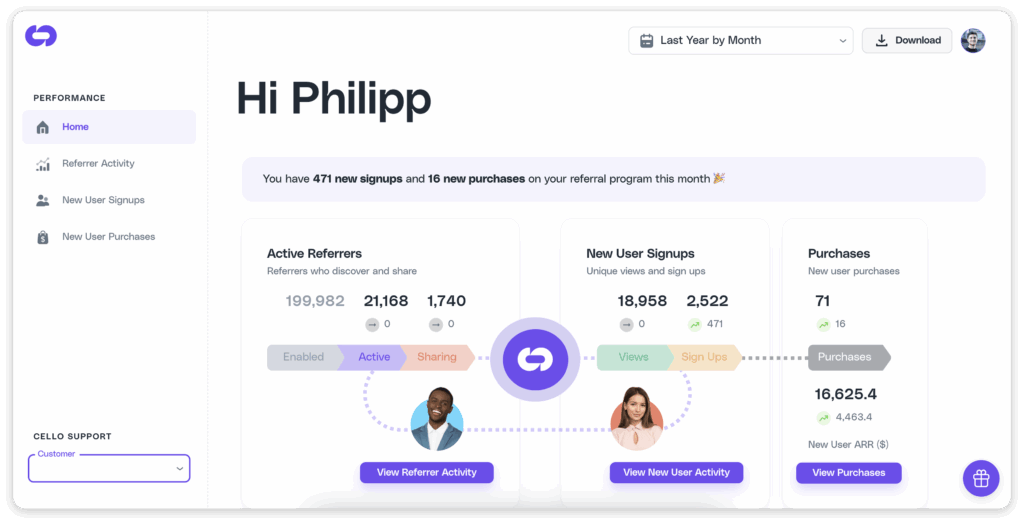
Cello is a referral marketing platform purpose-built for B2B and B2C SaaS companies. Its core architecture is designed for in-product referrals, creating a seamless user experience that drives significantly higher engagement and conversion rates. Cello specializes in native in-app referral flows, automated engagement journeys, server-side tracking, and fully integrated payout systems.
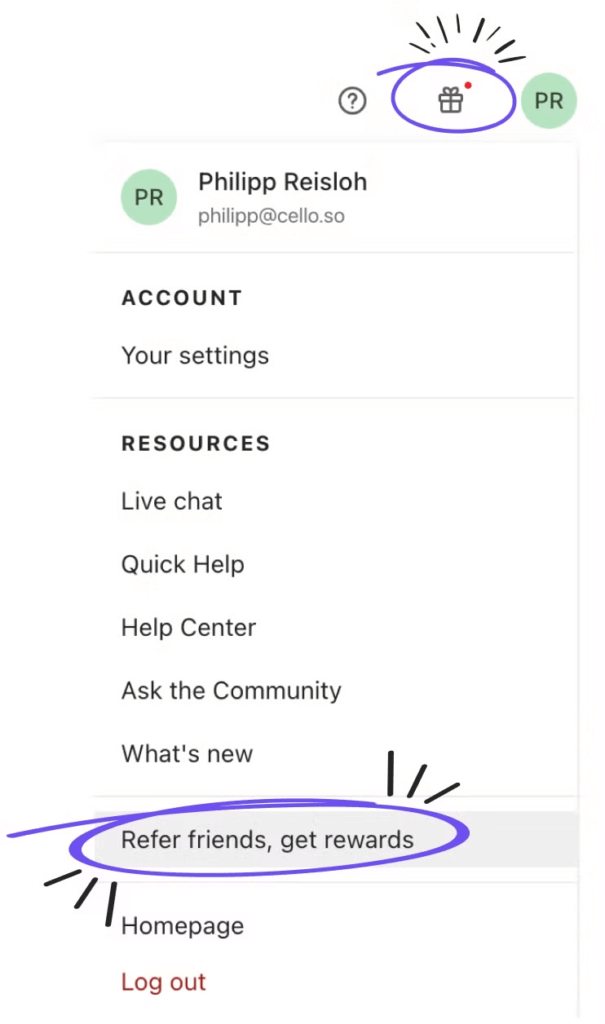
In-product Referral as Core Architecture: Cello was built from the ground up for native, in-app referral experiences. Its Referral Component functions as a first-class part of your product’s UX, allowing your users to share, track progress, and redeem rewards without ever leaving your interface. This integrated approach makes the referral program feel like a core feature, not a third-party add-on.
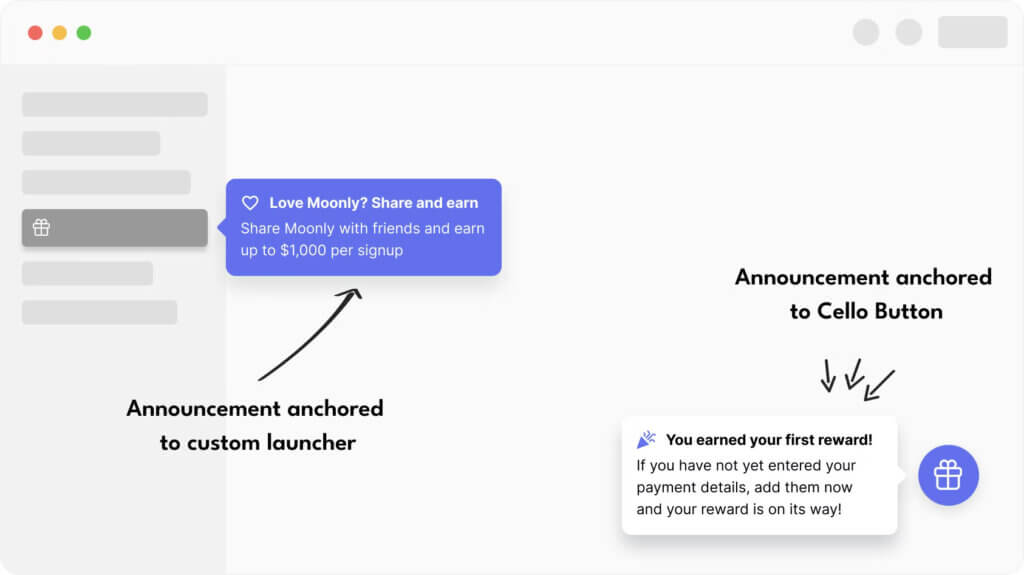
Notifications & Engagement Journeys: The platform delivers coordinated in-app and email journeys to keep users engaged. Cello has built-in badges, alerts, and lifecycle emails triggered by key referral milestones (e.g., first share, reward earned). Default notification journeys are documented, while behavior-based announcements require reporting product events to Cello and defining the announcement with the Cello team.
Attribution: Client vs. Server Tracking: Cello combines referral-code capture with signup identity and backend purchase events; the documented web flow uses Attribution JS and first-party cookies.
| Topic | Cello | Competitors |
|---|---|---|
| Tracking model | Web referral-code capture uses Attribution JS and first-party cookies; signup identity and purchase events connect conversions to referrals. | Client-side cookie tracking by default. Support API-only mode, but require custom setup. |
| Conversion flow | Ties captured referral codes and user identity to payment events through billing metadata or API payloads. Mobile flows require separate attribution setup. | Attribute sales by matching customer emails from client-recorded leads to billing events. Sensitive to missing cookies or mismatched emails. |
| Resilience | Web capture and the Referral Component use JavaScript. Mobile implementations require SDK, attribution and conversion tracking setup. | Dependent on browser state; cookie-less tracking requires custom logic. |
Cello uses transaction events to determine rewards under configured campaign rules, but automation can pause for unclear cases. Payouts are primarily via PayPal, with Venmo available in the US on request; eligibility depends on the supported payout country. Additionally, Cello supports credit-based rewards, a pricing model gaining popularity with AI and usage-based SaaS companies.
Where Cello outperforms:
- Embedded referral UX: A native in-app component versus an external affiliate portal.
- Automated engagement: Built-in in-app and email journeys; custom behavior-based announcements require event integration.
- Server-side reliability: Referral-code capture and user identity connected to backend conversion events; web capture uses Attribution JS.
- Unified reward logic: Campaign rules include revenue-percentage rewards, signup or purchase bonuses, and new-user discounts that must be applied in your billing integration.
- Integrated payouts: Users can enter payout details in the embedded referral experience; cash payouts use supported PayPal or Venmo accounts.
Where Cello might lack: Not suitable for companies looking for a highly sophisticated Partner Relationship Management (PRM) platform for managing complex channel sales.
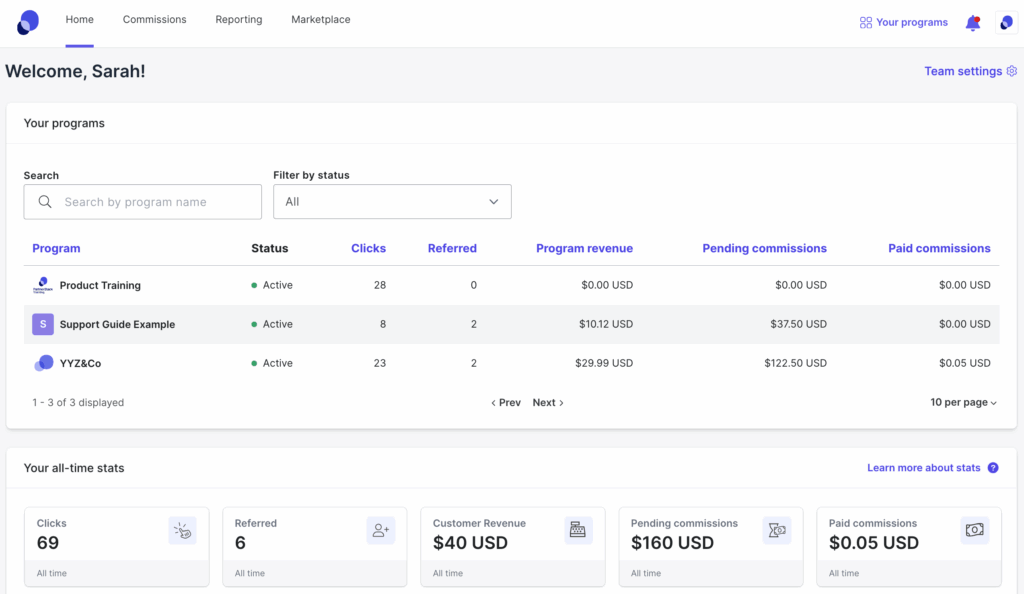
PartnerStack is a powerful platform focused on managing a complete partner ecosystem, including resellers, affiliates, and channel partners. It's an enterprise-grade solution well-suited for larger SaaS companies that need to manage various types of partnerships beyond simple customer referrals.
However, PartnerStack’s experience lives in an external portal. This means your users are forced to leave your product and go to a separate dashboard just to grab a link or track their progress. That extra step creates friction and can kill engagement, leading to a lower-performing program compared to Cello's seamless in-app component. Because its tracking is primarily JavaScript-based, it can be less reliable in privacy-restricted environments where scripts might be blocked.
Furthermore, all notifications are handled via webhooks and external email triggers, requiring manual work to build custom user journeys.
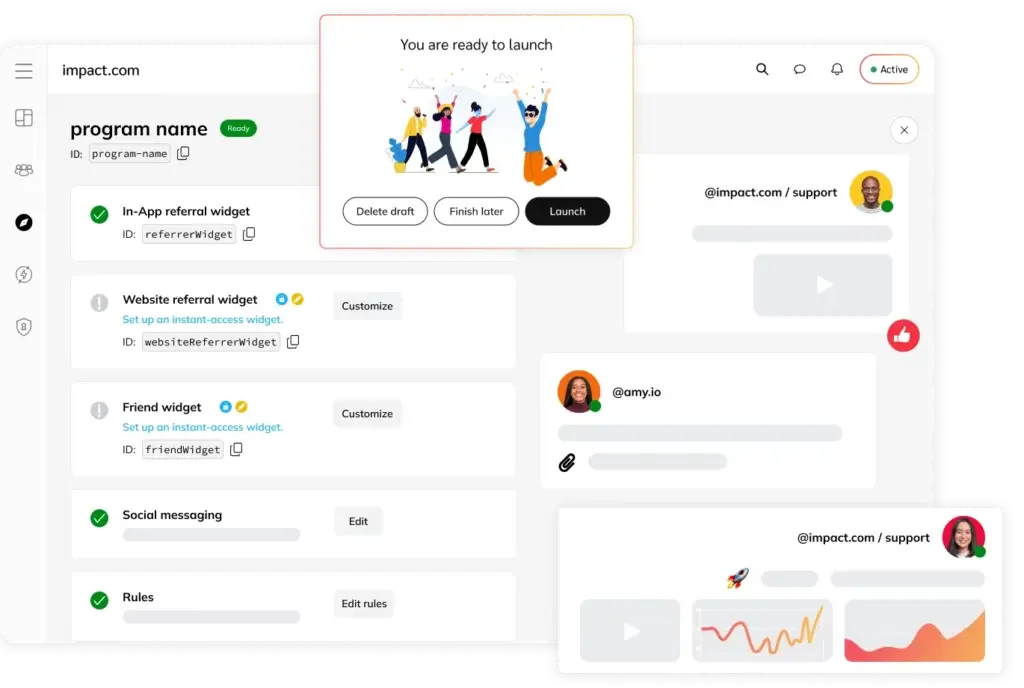
Impact Advocate (formerly SaaSquatch) is an enterprise-grade platform known for its scalability, advanced attribution modeling, and comprehensive partnership management features. It’s designed for large companies that need to manage complex loyalty, referral, and affiliate programs under one roof.
Advocate provides embeddable widgets via squatch.js. While customizable, these are external components loaded into your page, not native UI. Achieving a seamless look and feel often requires significant design and development work.
Like other platforms, Advocate lacks a native in-app notification framework, relying on event webhooks and external systems to create engagement loops.
While it can be configured for server-side tracking, its default setup is more client-dependent than Cello’s, requiring more manual configuration to achieve the same level of reliability.
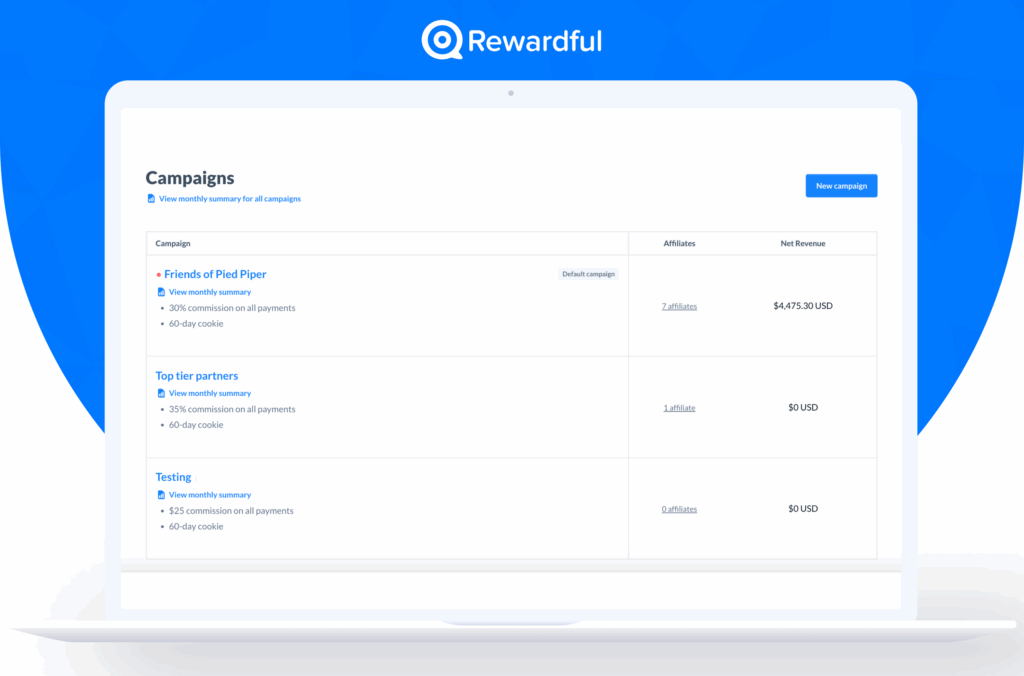
Rewardful is a simple and straightforward platform that is particularly popular among smaller SaaS teams and those using Stripe. Its direct integration with Stripe makes it incredibly easy to set up for subscription-based businesses. The focus is on simplicity and affiliate management.
However, its reliance on a JavaScript snippet and an external portal means the referral experience is not deeply integrated into the product. This can lead to attribution gaps in environments with script blockers, and its client-side tracking is inherently less accurate than Cello's server-to-server approach.
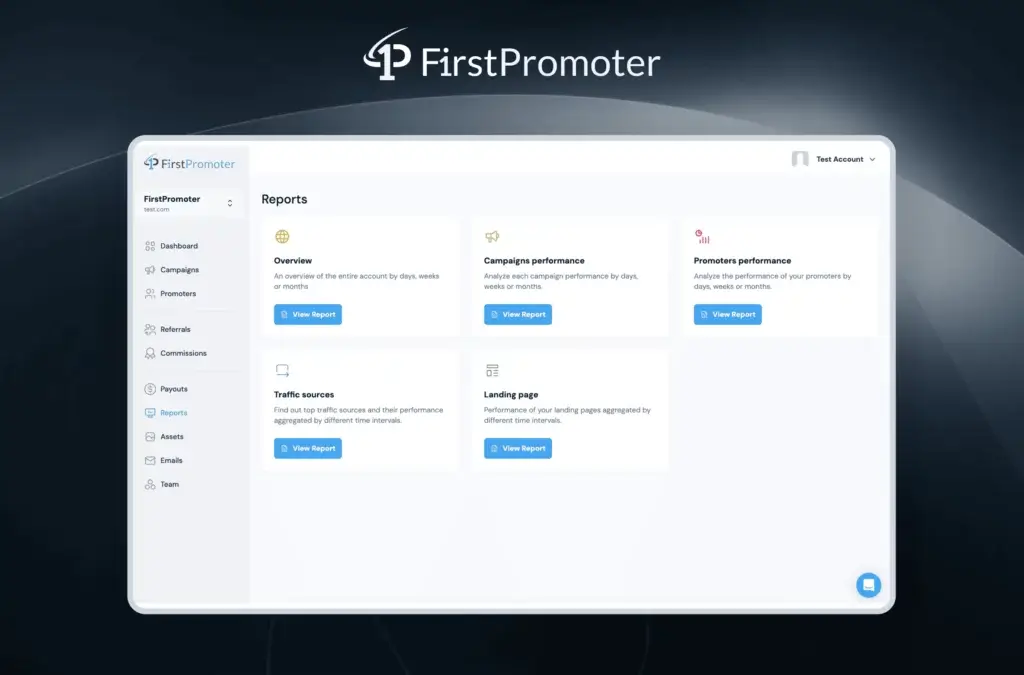
FirstPromoter is a developer-friendly platform with a strong focus on affiliate program management. It offers features like lifetime deal tracking and a robust API for custom integrations.
It provides a hosted affiliate portal, but like many others, it lacks a pre-built in-product UI, requiring developers to link out or embed the portal.
Notifications are handled via email and webhooks, meaning any in-app engagement must be custom-built. Payouts are aggregated in its dashboard and must be executed manually by an administrator.
Tapfiliate
Tapfiliate is a versatile affiliate and referral marketing software that offers powerful features like multi-tier marketing, where affiliates can recruit other affiliates.
It provides white-label options, allowing businesses to customize the affiliate portal to match their brand. Its strength lies in its comprehensive reporting dashboard and flexibility for creating complex commission structures.
ReferralCandy
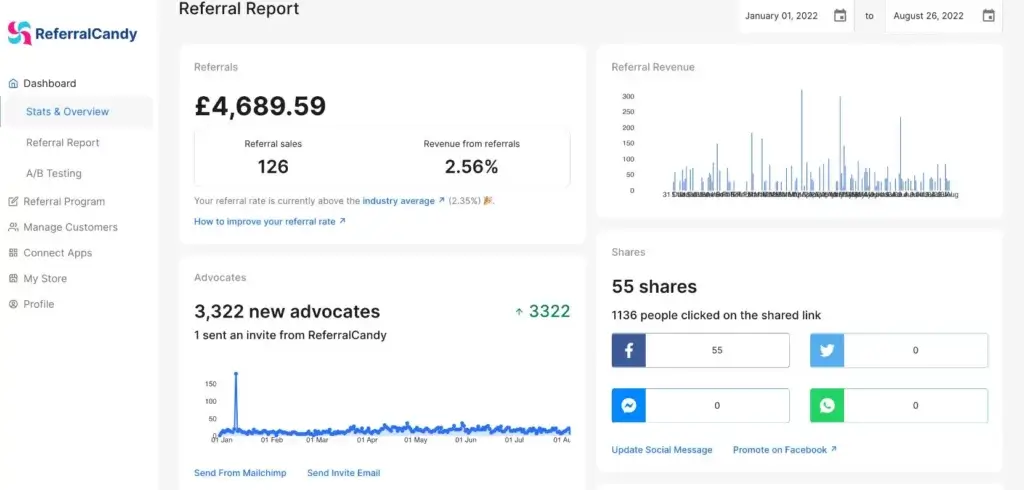
With roots in e-commerce, ReferralCandy has adapted its platform for SaaS companies. It is known for its simplicity and "set it and forget it" approach, powered by automated email campaigns.
For businesses looking for a straightforward, Shopify-style experience for their referral program, ReferralCandy is a strong contender. However, it may lack the deep customization and B2B-specific features required by more complex SaaS products.
GrowSurf
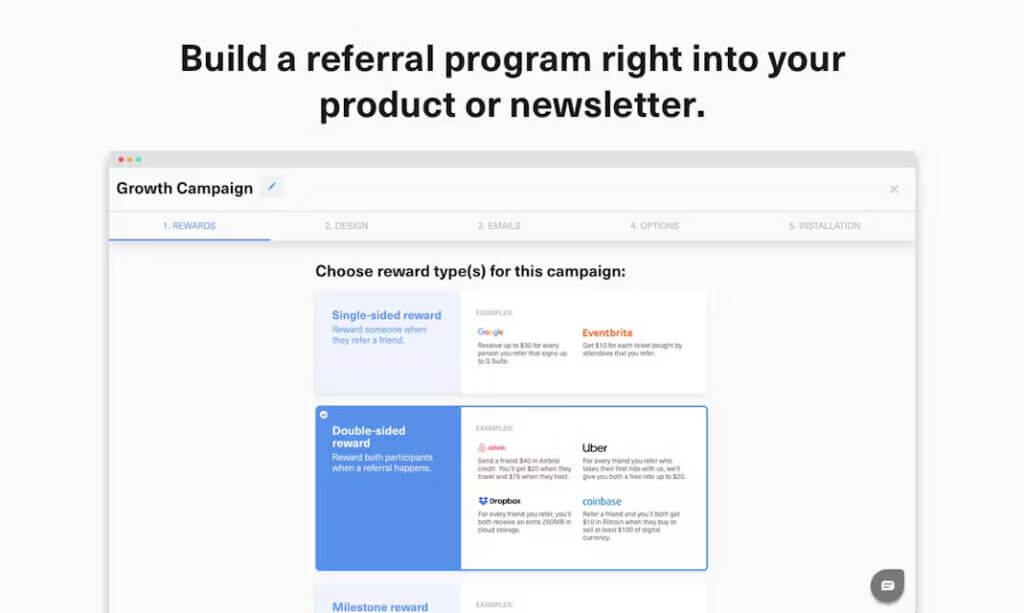
GrowSurf is a modern referral marketing platform designed to help businesses create viral loops. It has a clean user interface and is particularly popular with startups due to its friendly pricing and focus on growth hacking techniques.
It provides tools to optimize sharing and track viral coefficients, but its core architecture is not as deeply embedded in-product as specialized SaaS solutions.
Quick Comparison Table of Referral Marketing Platforms
| Platform | Decision question for your evaluation |
|---|---|
| Cello | Does an embedded web/mobile component fit the authenticated user journey, and who will configure attribution and billing events? |
| PartnerStack | Does the partner team need onboarding, deal and commission workflows beyond customer referrals? |
| Impact Advocate | How will the proposed referral experience, qualification events and reward rules work in your stack? |
| Rewardful | Does Stripe-connected affiliate management fit the program, and which payout service is included in the quote? |
| FirstPromoter | Which plan supports the intended embedded dashboard and payout workflow? |
| Tapfiliate | How will the proposed commission rules, portal experience and tracking be demonstrated for your program? |
| ReferralCandy | Does the proposed referral journey and reward model match your product and billing setup? |
| GrowSurf | How will the proposed sharing experience, qualification event and CRM connection be tested? |
Ask every vendor for current pricing that identifies currency, billing cadence, usage limits and optional services. Compare total program cost, including rewards, provider fees and team time. This table deliberately excludes unverified starting prices, setup-time promises and scored performance rankings.
What if you need partner relationship management instead?
Referral marketing platforms focus on customer, user, and affiliate-led acquisition. SaaS companies managing complex channel partnerships, resellers, ISVs, and co-selling workflows may need a dedicated partner relationship management platform instead.
Journeybee
Journeybee is a headless PRM platform for B2B SaaS teams managing complex, multi-channel partner programmes. It is a relevant option for companies working with channel partners, resellers, affiliates, ISVs or co-selling motions that need dedicated partner portals, onboarding, enablement and deal-registration workflows.
Its flexible data and workflow layer allows teams to tailor partner experiences by partner type, tier and region. Journeybee also positions its MCP-agnostic engine around helping teams access partner data and workflows through the tools they already use. Readers can also find third-party buyer feedback on Gartner Peer Insights.
Key Features That Matter for SaaS Referral Marketing
SaaS referral programs have different needs than their e-commerce counterparts. Longer sales cycles, higher customer lifetime values, and strict compliance requirements demand a more sophisticated feature set.
Referral Performance
A referral program's performance can vary dramatically based on the platform you choose. The user experience is paramount. An intuitive, in-product referral widget can increase activation by up to 400% compared to an external portal because it reduces friction and keeps the user engaged within your product ecosystem (source).
Referral Tracking Accuracy
Referral attribution depends on preserving the referral code and user identity through signup and purchase. Cello's documented web flow uses first-party cookies for returning visitors and backend billing events for conversion tracking. Cookies last three months and do not cross different root domains automatically. Test your actual browser, domain and device flows rather than assume every referral will be captured.
Automated Payouts and Tax Compliance
Manually processing payouts is inefficient and risky. A top-tier platform automates payouts in multiple currencies and handles tax compliance by generating required documents like 1099s. This saves countless administrative hours and ensures you remain compliant as your program scales globally.
Fraud Detection and Security
Referral fraud can devalue your program. Essential security features include IP blocking, velocity checks to monitor the rate of referrals from a single source, and manual review triggers for suspicious activity. Advanced platforms use machine learning to detect fraudulent patterns automatically.
In-Product Widget and API Flexibility
A native user experience is critical for SaaS. The ability to embed a referral widget directly into your application drives much higher engagement than linking out to an external landing page. A flexible API is also crucial for creating custom integrations and workflows tailored to your product.
Multi-Tier and Usage-Based Rewards
SaaS referrals often warrant more complex reward structures. Multi-tier programs can reward advocates for the initial referral and subsequent milestones. Usage-based rewards, where payouts are tied to the referred customer's consumption (e.g., API calls, data storage), are becoming increasingly popular for PLG and AI companies.
CRM and Billing Integrations
Seamless integration with your existing tech stack is a must. Critical integrations include your CRM (Salesforce, HubSpot) for tracking leads and your billing system (Stripe) for accurate conversion attribution. These connections ensure data flows automatically, providing a single source of truth for program performance.
Benefits of Automated Referral Programs Over In-House Builds
While building a referral program in-house may seem appealing, the "build vs. buy" decision often favors a specialized platform for several reasons:
- Speed to market: Launching with a dedicated platform can take weeks, whereas custom development can take many months of precious engineering resources.
- Compliance handling: Pre-built platforms come with support for tax (1099s) and privacy regulations (GDPR, CCPA), mitigating significant legal and financial risks.
- Plays nice with your existing tools: Cello documents pre-built webhooks for Stripe and Chargebee. Its integrations overview identifies HubSpot, Salesforce, Paddle and Recurly as examples for the REST API route; plan and test the required field mapping and event delivery.
How to Choose the Best Referral Marketing Software for Your SaaS
Follow this framework to evaluate and select the right platform for your business.
Define Growth Goals and KPIs
Start by identifying what you want to achieve. Are you focused on reducing customer acquisition costs (CAC), increasing referral conversion rates, or improving customer lifetime value (LTV)? Clear KPIs will help you measure program ROI.
Map Mandatory Integrations
Audit your existing tech stack. Identify the must-have integrations, such as your CRM, billing platform, and marketing automation software. Ensure the platform you choose has robust APIs for any custom needs.
Evaluate Compliance and Security Needs
Assess your regulatory requirements. Do you need to be GDPR or CCPA compliant? Do you serve enterprise customers who require SOC 2 certification? Ensure the platform meets your data residency and security standards.
Emerging Trends in Referral Marketing Software
The referral marketing landscape is constantly evolving. Moss, a B2B spend management platform, achieved 650% referral ARR growth and 50% lower CAC using Cello's referral automation. Here are the key trends to watch.
Credit-based rewards
With the rise of usage-based pricing in AI and other SaaS sectors, credit-based rewards are becoming essential. Instead of cash, advocates are rewarded with credits that can be applied to their own subscriptions, which boosts retention and reduces cash payouts. Cello is the first referral marketing platform to offer credit-based rewards, in line with growing industry trends.
AI-Powered Fraud Detection
Platforms are increasingly using machine learning algorithms to identify and prevent referral fraud. AI can recognize complex patterns of abuse in real-time, providing more robust protection than manual rule-based systems.
Multi-Currency Payout Automation
As SaaS companies become global from day one, the need to support international advocates is critical. Modern platforms are integrating with global payment providers to automate payouts in multiple currencies, handling conversion rates and compliance seamlessly.
Privacy-First Tracking Without Cookies
With the deprecation of third-party cookies, privacy-first attribution is the future. Server-to-server tracking, which relies on first-party data and direct integration with billing systems, is becoming the gold standard for accurate and compliant referral attribution.
Implementation Checklist for Launching a Referral Marketing Program
Follow these steps to ensure a smooth launch.
1. Connect Billing and CRM Data Sources
Choose the documented webhook or API route for your billing platform and CRM. Cello provides pre-built Stripe and Chargebee webhooks and a REST API route for other systems. Capture the referral code, map user identity and test signup and purchase events; if your billing customer is created only at purchase, send signup events through the Cello API.
2. Configure Reward Logic and Limits
Define the rules of your program. Set the payout amounts, specify the qualification criteria (e.g., a referred customer must be active for 30 days), and configure fraud prevention rules and budget caps.
3. Embed Referral Widget or API
Work with your development team to implement the referral component. Whether you use a pre-built embeddable widget or the platform's API, focus on creating a seamless and intuitive user experience that feels native to your product.
4. Test Attribution End-to-End
Thoroughly test the entire referral flow. Create test accounts to simulate different scenarios, such as a user clicking a link, signing up, and converting to a paid plan. Verify that the referral is tracked accurately at every step.
5. Launch and Monitor Real-Time Dashboards
Once you go live, closely monitor your program's performance using the platform's real-time dashboards. Track your KPIs and be prepared to iterate on your reward structure, messaging, and promotion strategy to optimize results. Cello customers can schedule regular calls with Cello's Customer Success and Growth teams to optimize their referral marketing performance.
Accelerate Growth With User-Led Referrals Powered by Cello
Stop settling for referral programs that feel disconnected and don't deliver. Cello is built for how modern SaaS companies grow: from within the product itself. With a seamless user experience, tracking that actually works, and automation that saves you time, Cello delivers a powerful growth engine that you can launch in hours, not weeks.
Does the in-product referral experience require us to build the UI from scratch?
No. Cello provides a prebuilt Referral Component that you embed in your application. The documented setup includes loading the SDK, generating a server-side identity token and initializing user details. Portal settings include launcher options, component position, and brand colors; copy changes go through Cello support. Confirm the integration scope rather than assume unlimited styling or a fixed implementation time.
How does Cello capture referrals and attribute billing events?
Cello's documented flow captures the referral code from the landing page, stores it in first-party cookies, links it to signup identity, and uses purchase events or billing metadata for attribution. The integration must pass that information correctly. This is not a promise of 100% tracking accuracy, immunity to ad blockers or automatic compliance with every privacy law.
Can Cello support both existing-user referrals and external partners?
Cello documents an embedded Referral Component for product users and a Partner Portal for external partners. The partner guide describes exclusive reward structures. Confirm your campaign setup and account capabilities with Cello before promising simultaneous segmented campaigns or specific commission and discount configurations.
Can we offer in-product credits or free months instead of cash rewards?
Cello documents an early-access in-product rewards flow in which it calculates credits after an attributed referral and your application processes and applies the reward through the Rewards API workflow. Do not assume Cello automatically changes a referrer's billing subscription. New-user discounts are separate and must be implemented in your billing integration. Confirm availability and the work needed for free-month or feature benefits before offering them.
What should we confirm about tax documentation before offering cash rewards?
Confirm the current tax-documentation and reporting workflow with Cello and your legal and finance advisers before launch. Cello's support documentation states that referrers remain responsible for their own tax obligations and that payout statements or credit notes may be provided. The reviewed sources do not establish a universal promise to collect every tax form or generate every required filing automatically.
Can Cello attribute a referral when a sales cycle lasts several months?
Preserve the referral code and customer identity through your sales and billing process, then send the documented conversion events. Once referral information is correctly associated with the billing customer, later payments can be processed against that record. Do not assume every original click is retained indefinitely: the support FAQ describes a three-month attribution-cookie lifetime, so test delayed conversions and any device changes in your actual flow.
What does the Stripe integration require?
Follow the Stripe webhook setup guide, configure the required events and signing secret, and add the referral code and new user ID to the Stripe customer metadata at the documented stage of signup or purchase. Validate the relevant scenarios, including subscription and one-time payments. Connecting a webhook alone does not replace referral capture, identity wiring or integration testing.
How does Cello handle potential self-referrals and fraud?
Cello documents automated detection of potential self-referrals and fraudulent activity, with configurable handling and manual review in Referrals > Review. Its risk factors can change, and the full list is available on request. Confirm current controls with Cello rather than assume specific IP, device or payment fingerprinting methods or configurable velocity limits are included.
What should we verify before migrating an existing referral program to Cello?
Review participant identities, reward terms, historical attribution and existing referral links with Cello before migration. The partner guide describes transferring existing partners and using new Cello links; complex migrations are handled with the Cello team. Do not promise that every old link or historical record will carry over, or that migration guarantees an immediate performance lift, without an agreed migration plan.