You've signed up partners, but your team is still doing all the selling. A signed agreement doesn't tell you whether a partner can bring qualified buyers, close deals or support customers. Channel partnerships need clear responsibilities and a way to measure paid sales, not portal registrations. Start small, agree on who does what and use the pilot to check whether the arrangement earns its keep.
TLDR:
- Channel partnerships use outside businesses or individuals to sell or deliver your products.
- Referral partners introduce buyers; resellers close sales; distributors supply resellers.
- Assign account ownership, support duties and payment rules before you launch.
- Pilot with a small partner group; expand only when sales meet your profitability targets.
- Cello handles SaaS referral tracking, reward calculation and payouts, not distributor management.
What channel partnerships are
Channel partnerships are commercial relationships in which another business or individual helps market, sell, distribute or deliver a company’s products or services.
In sales, channel partners introduce prospects or help close deals. Direct selling uses the company’s own sales team; indirect selling involves an outside partner. A channel partner need not be an employee, distributor or equity holder.
How channel partnerships work
Channel partnerships follow an agreed sequence.
- Sign terms and onboard the partner.
- Identify opportunities and qualify prospects.
- Close the sale and deliver the product or service.
- Pay commissions or retain the resale margin.
In referral arrangements, vendors typically close and bill customers; resellers may collect payment directly.
Diagram each arrangement before launch, assigning ownership of customer relationships, support and payments.
Types of channel partners
Partner type | Contribution | Involvement | Revenue |
|---|---|---|---|
Referral partner | Introductions | Handoff | Fees |
Affiliate | Promotion | Limited | Commission |
Reseller | Sales | Transaction | Margin |
Value-added reseller | Services | Setup | Margin/fees |
Distributor | Supply | Indirect | Margin |
Managed service provider | Management | Support | Subscriptions/fees |
Systems integrator | Integration | Delivery | Consulting |
Tech alliance/OEM partner | Joint/embedded offering | Variable | Licensing/revenue share |
Companies can fill multiple roles. Professional referrals use business relationships; customer referrals involve users, part of the broader category of b2b saas referral programs. Integrations become channels through joint selling.
Channel partner vs distributor
A distributor is a channel partner supplying resellers who sell to end customers. Wholesalers generally sell in bulk. Unlike referral partners, which introduce buyers and hand off the sale, distributors handle supply to resellers and can provide credit and fulfillment. Resellers close sales with end customers, while distributors focus on supplying and supporting those resellers. Managed service providers take responsibility for ongoing customer operations and support instead of primarily supplying products for resale.
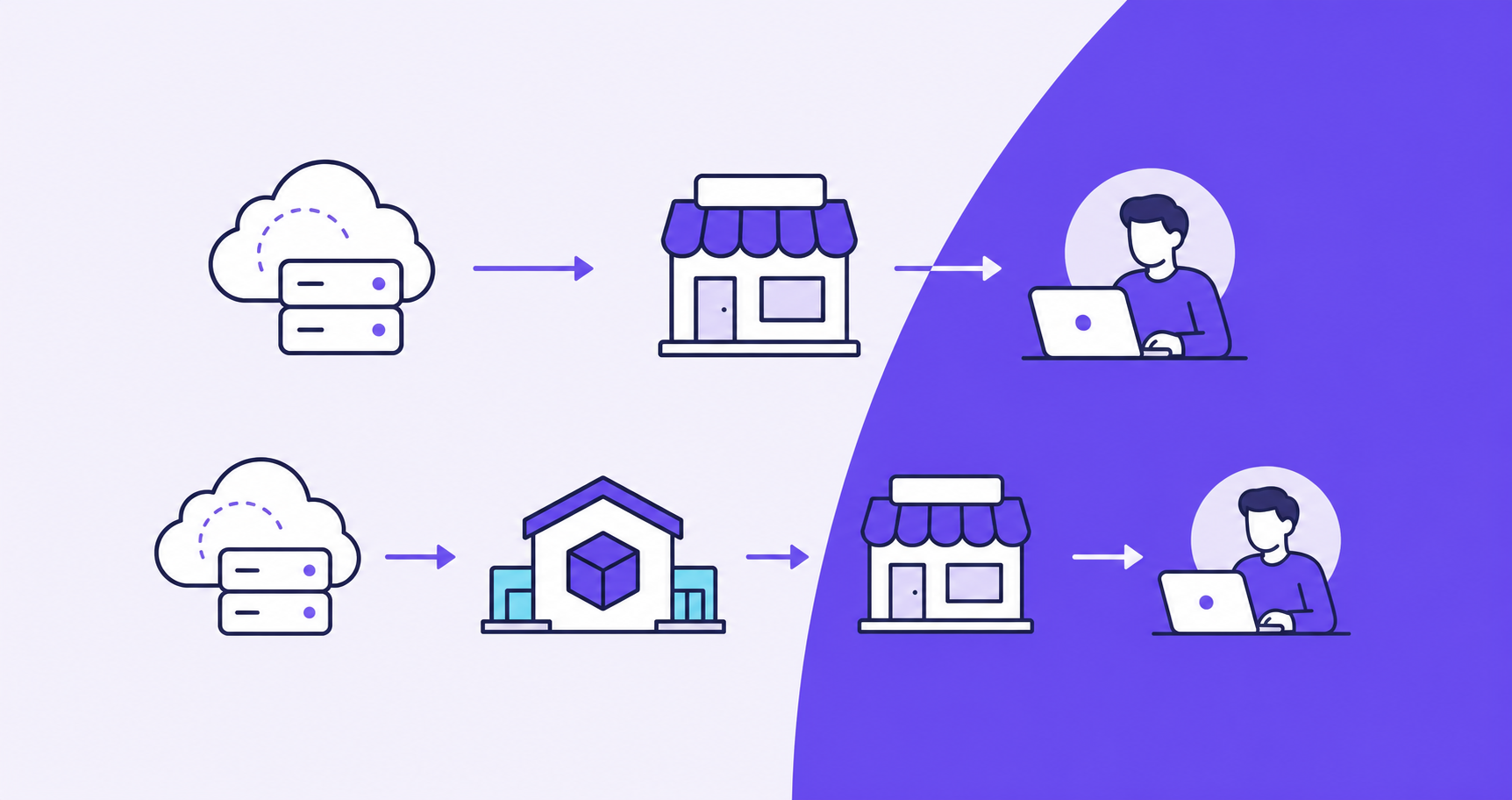
- Vendor → reseller → customer gives vendors direct reseller access and supply responsibility.
- Vendor → distributor → reseller → customer can add fulfillment, credit and training.
Software distribution can cover licensing and billing without inventory. Authorized channel partners have vendor approval for specified activities under program-specific requirements, similar to the structure outlined in a b2b referral program.
Channel partnerships examples across business models
These hypothetical channel partnerships examples show how responsibilities differ.
Model | Finds buyer | Closes sale | Delivers | Revenue |
|---|---|---|---|---|
SaaS referral (b2b saas affiliate programs) | Consultant | Vendor | Vendor | Subscriptions; referral fees |
IT reseller | Reseller | Reseller | Vendor software; reseller implementation | Licensing; margins; services |
Managed services | Provider | Vendor | Vendor software; provider support | Subscriptions; support fees |
Distribution | Reseller | Reseller | Distributor supply; reseller delivery | Successive sales |
Integrated product | Both | Lead vendor | Both | Contracted shares |
Benefits of channel partnerships
Channel partnerships can expand reach and delivery capacity through partners’ customer relationships and specialist expertise.
For historical context, Canalys’ November 2024 forecast projected partner-delivered IT at 70% of the total IT market in 2025. This is not a measured 2026 result or evidence of current SaaS channel partnership benefits.
Compare access to buyers and skills against shared margins and program costs before assuming indirect sales will lower acquisition costs.
Common channel partnership challenges
- Channel conflict requires account ownership rules for overlapping buyers, a challenge that also shapes the referral vs affiliate program decision.
- Competing priorities require qualification for commercial fit and capacity.
- Inactive partners need shared performance reviews and agreed next steps.
- Inconsistent customer experiences need written support responsibilities and escalation paths.
- Revenue concentration requires recruiting beyond top-producing partners.
Long B2B sales cycles involve multiple decision makers. Qualify introductions for authority, need and timing; revenue remains uncertain until deals close.
How to build a channel partnerships strategy
Set a commercial objective, target customer and coverage gap. Match channel partnerships to buyers’ purchasing habits.
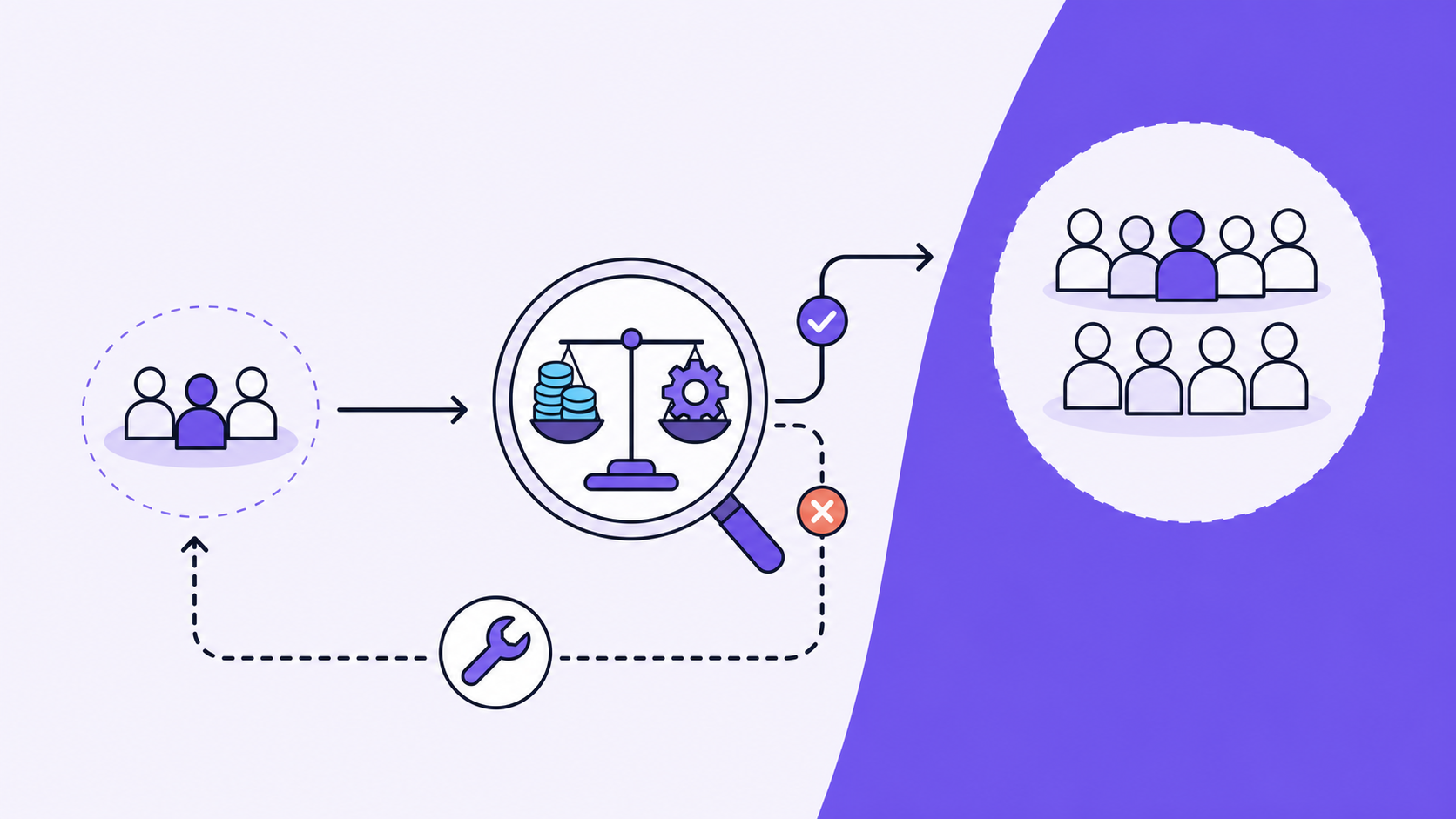
Check readiness before recruitment:
- Confirm product demand.
- Prepare repeatable sales messaging.
- Provide onboarding and implementation support.
- Check margins cover partner compensation and program costs.
Pilot with a small cohort and fixed review date. Expand when sales meet agreed profitability thresholds; stop if support exceeds budget or demand fails, following the same logic used when affiliate programs work well.
How to find and assess channel partners
Build a channel partners list from customer interviews, industry associations, directories, complementary service providers and existing relationships.
Score candidates on:
- Customer overlap with target buyers
- Access to new markets
- Technical competence for delivery
- Reputation among customers
- Sales capacity for joint opportunities
- Willingness to commit time and resources
Shared audiences can hide direct competition. During qualification calls, clarify competing offers and what each partner expects to gain, a step worth revisiting alongside any broader gtm strategy for b2b referral programs.
Agreements and incentives that support partner economics
Channel partnership agreements define territories, exclusivity, opportunity registration, account ownership, pricing authority, support obligations, data access and termination.
Compensation depends on work:
- Referral commissions reward qualified introductions or conversions.
- Reseller margins reflect purchase/resale prices.
- Recurring revenue shares cover eligible subscription payments.
- Service fees pay for implementation or ongoing work.
Define qualification, collection triggers, refund reversals, renewal eligibility and attribution dispute procedures, much like the structures used in referral programs for sales-led SaaS. Seek legal review.
How to onboard and equip channel partners
Train partners to qualify buyers, explain product fit and run demos. Practice implementation tasks and routing unresolved issues to the right team.
Provide marketing partners with approved sales materials and plan joint campaigns. Define co-selling lead handoffs; use regular check-ins to resolve stalled opportunities.
Measure onboarding progress through qualified opportunities or completed sales, a discipline central to b2b referral programs that convert. Training attendance and portal registration track participation, not partner productivity.
How to measure channel partnership performance
Partner-sourced revenue originates with partners; partner-influenced revenue reflects partner help on existing deals. Deduplicate by opportunity ID.
Track:
- Active partners divided by enrolled partners
- Time to first opportunity
- Win rate
- Sales cycle length
- Customer retention
- Contribution margin after commissions and support costs
Define activity thresholds, denominators and attribution windows. Compare cohorts by tenure and customer segment. Track sales-led deals through collected payment, not clicks.
Channel partnerships manager responsibilities and compensation
Channel partnerships managers recruit and train partners, create joint plans, review pipelines and resolve conflicts. Directors own broader strategy and budgets.
“Channel partner salary” can refer to employee pay or independent partners’ commercial earnings. U.S. News’ $138,060 sales manager median covers the broader U.S. occupation. It is a comparison point, not a channel partnerships manager salary benchmark.
Tools for managing channel partnerships
Match channel partnership tools to partner responsibilities and required records.
- Customer relationship management software supports co-selling opportunity sharing.
- Partner relationship management software handles reseller registration and access.
- Learning systems track training; shared libraries store sales materials.
- Commission tools calculate earnings; referral tools track conversions.
Restrict access by role, minimize customer data and log changes and payments. Assign integration owners. Pilots can use spreadsheets and shared folders.
Where Cello fits in a SaaS channel partnerships strategy
Cello supports the referral side of a B2B SaaS channel partnerships strategy. “Referrals on Autopilot” combines tracking, reward calculation and payouts in one system, with a Partner Portal for professional referrers. User Referrals involve customers; Partner Programs involve professional relationships; Affiliate Programs involve promotion.
You source your own partners, similar to how the Cello partner program works. Use separate tools for distributor management and broader channel-management workflows.
Final Thoughts on Channel Partnerships Strategy and Execution
Channel partnerships work when the commercial terms are clear before the first deal, not after. Agree on who qualifies a lead, who closes it and who supports the customer, then let a pilot run long enough to produce real sales data. Expand what works, stop what does not and track contribution margin rather than partner count. If referrals are part of your indirect mix, Cello handles the tracking, reward calculation and payouts so you can focus on the partner relationships.
Cello can support sales-led partner referrals, but manual payments need a custom tracking path. Connect the referral record to your customer relationship management system and pass confirmed conversion or payment events to Cello through an integration. For bank-transfer deals, verify collected payment before releasing commissions; a closed deal alone does not prove revenue was received.
You can manage both in Cello, but keep their participation rules and reward economics separate. User Referrals serve product users, while Partner Programs serve professional referrers through a separate Partner Portal. Use distinct campaigns for self-service purchases and sales-led contracts, with reward triggers that match each sales process.
Distribute referral links through your own email campaigns or account managers instead of relying on portal visits. Give partners a clear explanation of who qualifies, when rewards become payable and where they can check referral progress. Cello does not provide partner broadcast email, so plan ongoing communications through your existing email tools.
Start with referral partners when your team must control demos, pricing and closing. Give partners a clear buyer profile and handoff process; consider resellers once they can run sales independently and their margin covers that work.
Channel partnerships can work in niche markets when partners have trusted relationships with the right buyers. Qualify introductions for buying authority, need and timing, then set a pilot review period that reflects your actual sales cycle. Use qualified opportunities as early evidence, but reserve profitability judgments for paid sales.
Use transparent incentives approved by the participating organizations, or offer an unpaid referral arrangement. Keep product fit central to the recommendation and disclose compensation where required. Company-level benefits also need policy review; changing the recipient does not automatically remove compliance concerns.
A small pilot can start with a shared tracking sheet and controlled access to sales materials. Record partner ownership, opportunity status, commission terms and payment history from the start. Move to dedicated software when duplicate claims, access controls or payment checks become difficult to manage reliably.
Review buyer access and sales capacity before offering more training or higher commissions. Ask each partner to propose a prospecting action with an owner and completion date, then check whether it produces qualified conversations. Pause partners that cannot commit resources so your team can support those actively selling.
Avoid unconditional exclusivity before a partner proves it can sell and support customers. If exclusivity is necessary, tie it to a defined territory, performance commitments, a review date and termination rights. Have legal counsel review the terms before you limit other routes to market.
Keep one revenue record per opportunity and record partner involvement separately. Mark existing deals as partner-influenced when a partner contributes, and reserve partner-sourced credit for opportunities the partner originated. Define commission eligibility independently so reporting labels do not create accidental payment obligations.
Share only the records and fields each partner needs for its assigned work. Use role-based access, keep access logs and remove permissions when the relationship ends. For referral partners, deal status can provide useful progress updates without exposing contract values or unrelated customer records.
Divide partner acquisition spending by the number of new paying customers attributed to partners over a matching period. Include commissions, recruitment, onboarding, co-marketing, software and staff time instead of counting commissions alone. Track delivery and ongoing support costs separately when checking customer contribution margin.
Start by asking customers which consultants, agencies and service providers already influence their buying decisions. Shortlist those firms by customer fit, competing offers and willingness to make introductions before sending outreach. Cello tracks and rewards SaaS referrals, but you must source your own partners.