
B2B SaaS customer acquisition costs have climbed steadily for years, and if you're feeling it in your board metrics, you're not alone. When paid channels get expensive, the instinct is to spend more carefully on those same channels. But a referral program to lower your blended CAC works differently: every referred customer added to the denominator pulls your number down without touching your ad spend. This post covers how to structure that program so the math actually works.
- Why paid acquisition keeps getting more expensive
- What blended CAC is and why it belongs in your board deck
- Why referral programs are the lowest-CAC channel available
- Why referred customers improve your unit economics beyond acquisition
- How to structure a SaaS referral program step by step
- Choosing the right reward structure for B2B SaaS
- Where and when to ask for referrals
- Metrics that tell you if your referral program is working
- What doesn't work in SaaS referral programs
- How Cello helps B2B SaaS teams run referrals as a permanent acquisition channel
- Final thoughts on running a SaaS referral program that reduces acquisition costs
TLDR:
- Referrals cost B2B SaaS companies $150 per acquisition versus $802 for paid search, per published benchmarks.
- Referred customers churn at 20% lower rates and pay back 40% faster, moving both sides of the LTV:CAC ratio.
- Tie payout triggers to
invoice.paid, not trial signup, and fire referral prompts at moments of realized value inside the product. - Five failure modes kill most programs: email-only launches, underpriced rewards, paying on signup, skipping fraud prevention and running referrals as a campaign.
- Cello runs referrals as a permanent acquisition channel; VEED cut CAC by 90.4% and Softr recorded a 5x conversion lift after migrating from an external portal to an in-product widget.
Why paid acquisition keeps getting more expensive
Paid acquisition is structurally more expensive than it was three years ago. B2B SaaS customer acquisition costs have climbed 222% over eight years, with a 40 to 60% jump since 2023 alone, driven by bid density, stricter privacy regimes and rising ad rates.
The damage concentrates in the channels growth teams rely on most:
- Google Ads CPC rose 164% from 2019 to 2024, pricing mid-market SaaS out of keywords they used to win cheaply.
- Many SaaS categories have dozens of tools bidding on the same high-intent terms, compressing CPM headroom across LinkedIn and paid social.
- Buyer journeys have lengthened, so each conversion requires more touches and more retargeting spend per opportunity.
If blended CAC is creeping up while pipeline stays flat, the channel mix is the diagnosis, not the creative.
What blended CAC is and why it belongs in your board deck
Blended CAC is total sales and marketing spend divided by every new customer acquired in the period, regardless of channel. Paid CAC isolates a single channel; blended CAC tells you what it costs the business to add a customer.
That distinction matters once a low-cost channel enters the mix. Add a thousand referred customers at near-zero marginal spend and the denominator grows while the numerator barely moves. Paid CAC stays flat; blended CAC falls.
Three numbers share the same board page:
- Blended CAC: total S&M spend divided by new customers acquired.
- LTV:CAC ratio: the SaaS health bar sits at 3:1 or better.
- CAC payback period: months of gross margin to recover blended CAC, with 12 months or fewer as the growth-stage benchmark.
Move blended CAC and both ratios move with it.
Why referral programs are the lowest-CAC channel available
Paid search costs B2B SaaS companies an average of $802 per acquisition versus $150 for referrals, a 5x gap that holds across most growth-stage benchmarks.
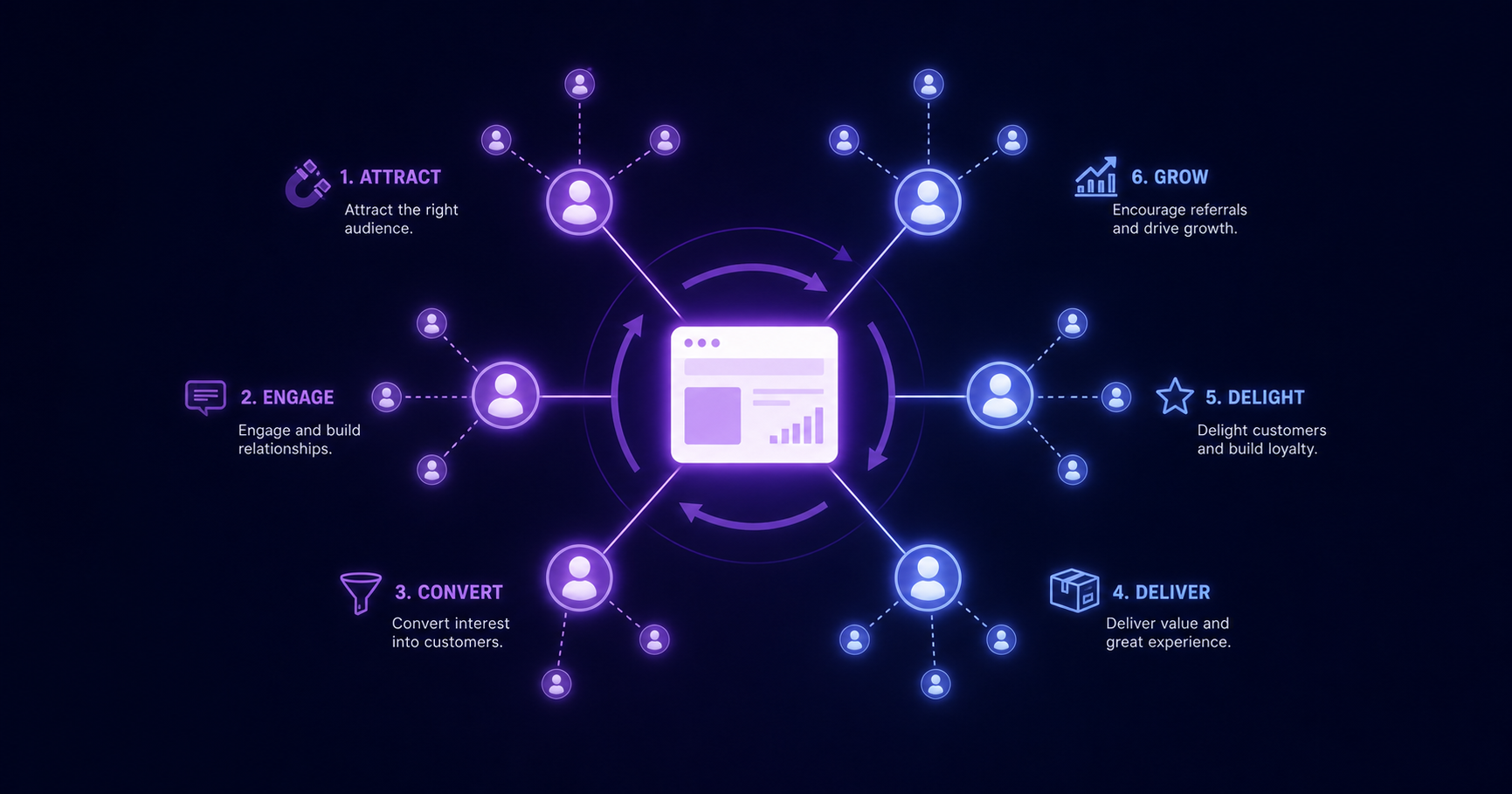
Three structural factors move the cost curve in your favor, and B2B referral program examples across SaaS categories bear this out consistently:
- The referrer does the discovery and qualification work paid channels burn ad spend on. Targeting happens inside a peer relationship, not an auction.
- Rewards trigger on verified conversion events, not clicks or impressions. You pay for outcomes, not exposure.
- Every new customer is a potential next referrer, so the channel compounds. Paid volume resets to zero the moment budget pauses.
Why referred customers improve your unit economics beyond acquisition
Lower CAC is half the story. Referred customers stick around longer and pay back faster, which moves both sides of the LTV:CAC ratio at once.
The SaaS referral benchmarks compiled by GrowSurf quantify the gap:
- Referral-acquired SaaS customers have a 40% shorter CAC payback period than paid-channel customers.
- Top SaaS companies hit 3.5:1 CLV-to-CAC overall, while referral channels alone often clear 5:1.
- Referred customers churn at 20% lower rates, and users who refer are measurably less likely to churn themselves.
The mechanism is trust transfer. A referred prospect arrives pre-filtered by a peer who knows the use case and will not stake credibility on a bad fit. Time-to-value compresses, early churn drops, and ROI compounds on both sides of the equation.
How to structure a SaaS referral program step by step
A workable program follows a fixed sequence. Skip a step and the math breaks downstream, usually at payout.
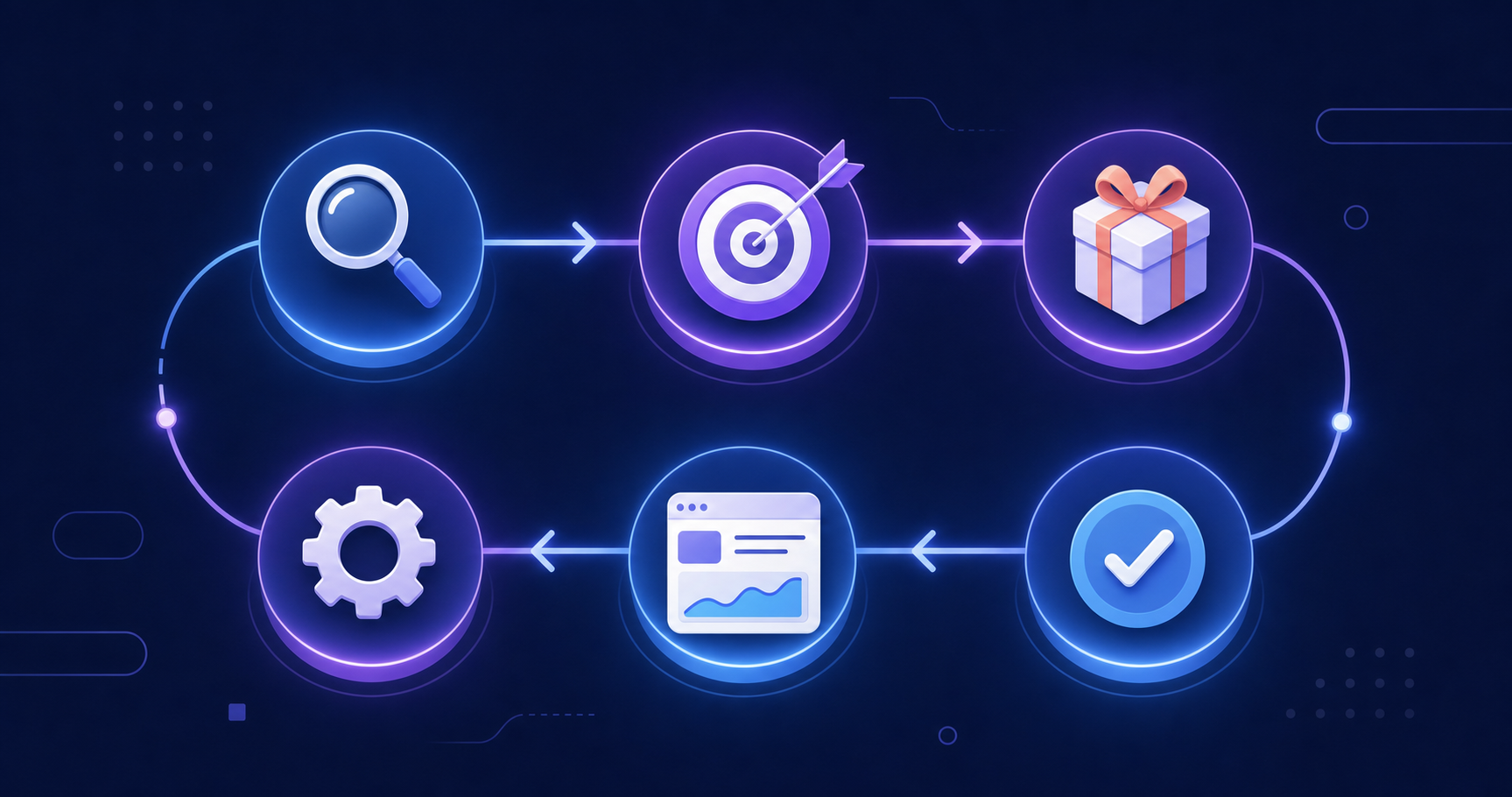
- Audit existing organic referrals first. Pull six months of signups and tag records sourced through customer introductions. The baseline rate, segments introducing, and deal sizes define what a structured program scales.
- Set a goal tied to blended CAC. A target like "referrals contribute 15% of new ARR at one-third the CAC of paid" gives you a number to optimize against.
- Decide one-sided or two-sided rewards. Two-sided rewards lift conversion on the referred side at the cost of margin.
- Define the qualifying conversion event. Signup, paid conversion (
invoice.paid), or demo attended. Paying on signup breaks unit economics the moment trial-to-paid rates drop. - Embed the request in the product journey. Referral intent peaks after a user hits a milestone or sees a result. A launcher hidden in settings collects nothing.
- Automate calculation and payout. Reward math, fraud checks, tax handling, and the transfer should fire on the billing event. Manual payouts are where programs quietly die.
Choosing the right reward structure for B2B SaaS
Reward design decides whether a program produces sharing behavior or dies in the product. The right structure depends on ACV, buyer persona, and margin per acquisition: the same variables that shape referral incentives for B2B SaaS.
|
Reward type |
When it fits |
Watch out for |
|---|---|---|
|
Two-sided cash |
Self-serve SaaS, sub-$5K ACV, individual buyers |
Margin compression at scale |
|
Account credits |
Usage-based or PLG products where credits compound product value |
Lower appeal if referrers do not control billing |
|
Free months |
Subscription tools with annual plans |
Capped at the referrer's own subscription value |
|
Tiered escalating |
Power-user segments and creator communities |
Adds complexity; harder to model payback |
|
Non-cash (vouchers, event passes) |
Enterprise accounts where cash creates procurement concerns |
Slower fulfillment, harder to standardize |
Timing matters as much as type. Tie the payout trigger to invoice.paid or a 60 to 90 day retention milestone, not signup, so rewards survive churn and refunds. For B2B SaaS with strong product retention, in-product credits usually beat cash on engagement and skip the cross-border payout overhead.
Where and when to ask for referrals
Placement and timing are where most programs leak conversion, even when rewards and attribution are set up correctly.
In-product placement beats external portals and standalone emails for three reasons. Users sit inside a high-engagement context where sharing intent is already high. Friction of locating a separate portal disappears. Attribution is cleaner because the link generates inside an authenticated session, tied to a known user ID.
Fire prompts at moments of realized value, after a user ships a project, hits a usage threshold, or sees a measurable result, not at a fixed N days post-signup. Once, at the right moment, then stop. Repeat-until-dismissed patterns train users to ignore the surface.
For products with low daily active use, in-product alone under-collects. Email distribution from your own infrastructure fills the gap, with the same link logic and server-side attribution running underneath, so a quarterly customer who never opens the dashboard still has a path in.
Metrics that tell you if your referral program is working
Five metrics tell you where the program is healthy and where it leaks.
- Referral rate: share of active users who share at least once. Low signals placement or reward, not demand.
- Invitation acceptance rate: clicks per invite sent. Low signals copy or sender context.
- Signup rate on referred traffic: signups divided by unique link clicks. Low points at the landing page or new user offer.
- Activation rate of referred users: a low number is an onboarding problem, not a referral one.
- Referral CAC: reward cost plus tooling, divided by referred customers acquired.
Track referral CAC on its own line. It is the only way to quantify what the channel contributes to blended CAC. For a full breakdown of how to measure program health, see the B2B referral program KPIs guide.
What doesn't work in SaaS referral programs
Five failure modes show up repeatedly in post-mortems on programs that stalled:
- Launching email-only. A one-off blast produces a spike, then nothing. Without an in-product surface tied to moments of realized value, there is no compounding loop.
- Underpricing the ask. If the reward is smaller than the effort to draft an intro, sharing rates collapse. Calibrate against ACV and time-to-refer.
- Paying on trial signup. When trial-to-paid drops, reward cost outruns realized revenue. Tie payouts to
invoice.paidor a retention milestone. - Skipping fraud prevention. Self-referrals and disposable-email signups inflate the dashboard while torching margin. Risk-factor monitoring for unusual usage patterns and a review window are table stakes.
- Running it as a launch, not a channel. Programs treated as a quarterly campaign decay the moment the team rotates off.
How Cello helps B2B SaaS teams run referrals as a permanent acquisition channel
Cello runs referrals as a channel, not a campaign. That is the gap it fills for B2B SaaS growth teams.
The CAC outcomes track the structural argument:
- VEED reduced CAC by 90.4% versus paid acquisition after embedding referrals in-product.
- Moss cut CAC by 50% versus inbound while growing referral ARR 650% year over year, per Cello's published Moss case study.
- Softr cut referral CAC to one-tenth of paid and recorded a 5x conversion lift after migrating from an external portal to Cello's in-product widget.
The widget runs on server-side attribution tied to Stripe or Chargebee events, automated payout and tax handling on invoice.paid, risk-factor monitoring for unusual usage patterns and an AI Assistant grounded in portal data. User-Led Growth in practice, pulling blended CAC down each quarter the program stays live.
Final thoughts on running a SaaS referral program that reduces acquisition costs
Rising paid CAC is a structural problem, and swapping creatives or adjusting bids does not fix a structural problem. Referrals work differently because the targeting happens inside a peer relationship, the cost triggers only on a verified conversion, and each new customer extends the channel instead of consuming budget. Your blended CAC, payback period and LTV:CAC ratio all move when the program is set up correctly and maintained as a real acquisition channel. That is the compounding effect paid channels simply cannot replicate. Sign up for Cello to start building a referral channel that pulls those numbers in the right direction.
What's the fastest way to lower blended CAC when paid channels are getting too expensive?
Referrals are the lowest-cost acquisition channel available to B2B SaaS teams, with published benchmarks putting referral CAC at roughly $150 per acquisition versus $802 for paid search. The mechanism is structural: the referrer handles discovery and qualification work that paid channels burn ad spend on, rewards trigger on verified conversion events rather than clicks, and every new customer becomes a potential next referrer — so the channel compounds while paid volume resets to zero the moment budget pauses.
How do I structure referral rewards to protect unit economics in B2B SaaS?
Tie payout triggers to `invoice.paid` or a 60 to 90 day retention milestone, not trial signup — paying on signup breaks unit economics the moment trial-to-paid rates drop. For products with strong retention, in-product credits typically outperform cash on engagement and avoid cross-border payout overhead; for higher-ACV self-serve SaaS with individual buyers, two-sided cash rewards lift referred conversion rates at the cost of margin compression at scale.
Should I use an in-product referral widget or an external portal for my SaaS referral program?
An in-product widget outperforms an external portal on both conversion and attribution. Softr recorded a 5x conversion lift after migrating from an external portal (PartnerStack) to an in-product widget, and the structural reason is straightforward: users share inside a high-engagement context, friction of locating a separate portal disappears, and attribution is cleaner because the link generates inside an authenticated session tied to a known user ID.
Which metrics tell me if my referral program is actually pulling down blended CAC?
Track referral CAC on its own line — reward cost plus tooling, divided by referred customers acquired — as the only metric that quantifies what the channel contributes to blended CAC. Support it with four funnel metrics: referral rate (low signals placement or reward, not demand), invitation acceptance rate (low signals copy or sender context), signup rate on referred traffic (low points at the landing page or new user offer), and activation rate of referred users (a low number is an onboarding problem, not a referral one).
What causes SaaS referral programs to stall after launch?
The most common failure mode is running referrals as a launch campaign rather than a permanent channel — a one-off email blast produces a spike, then nothing, because there is no in-product surface tied to moments of realized value. Four other patterns consistently break programs: underpricing the reward relative to the effort to draft an intro, paying on trial signup rather than `invoice.paid`, skipping fraud prevention so self-referrals inflate the dashboard while burning margin, and hiding the referral launcher in settings where users never find it.
What's the difference between user referral programs and affiliate or partner programs, and when should a SaaS team use each?
User referral programs turn existing logged-in customers into referrers through an in-product widget, while partner programs give external affiliates, influencers or agencies their own standalone portal without requiring a product account. Run user referrals when your ICP has an active daily or weekly product session and sharing intent peaks inside the app; run partner programs when referrers are non-users — brokers, agencies or investors — who drive acquisition from outside your product entirely. Both motions can run in parallel on a single platform, sharing attribution infrastructure, fraud detection and payout logic.
Does referral link attribution still work when referred users have ad blockers or Safari Intelligent Tracking Prevention active?
Yes — Cello's primary attribution path is server-side, matching the referral event to the new account at the identity layer rather than the browser, so Safari's Intelligent Tracking Prevention (ITP) and ad blockers do not break the attribution chain. The Attribution JS SDK writes two first-party cookies as a fallback for return-visit handling, but those cookies are not required for conversion credit to fire. For strict GDPR environments, server-side attribution via billing system metadata on Stripe or Chargebee customer objects removes cookie-consent dependency entirely.
How does referral tracking work for a sales-led B2B SaaS with long enterprise cycles where conversions happen through CRM, not self-service checkout?
Cello supports demo-call attendance as a tracked conversion event type, meaning referrers earn credit when a referred lead books and attends a product demonstration rather than self-service checkout being required. For multi-stage enterprise funnels, Salesforce Apex Triggers can push Opportunity stage transitions — SQL qualification, demo completed, closed-won — to Cello's API without exposing deal amounts, letting referrers track pipeline progression in real time. HubSpot deal stages pass back to referrers through the same attribution system, giving sales-assisted teams a closed-loop referral channel that maps to their actual funnel mechanics.
At what ARR stage or scale does it make sense to replace a custom-built referral system with a dedicated referral program tool?
The crossover point is typically when engineering maintenance tickets for reward logic, fraud rules, FX handling, payout retries and tax-form validation start competing with product roadmap priorities — a pattern most teams hit well before $5M ARR. A custom build delivers a referral surface that matches your design tokens, but it also owns every downstream job: cookie-blocked attribution handling, chargeback-triggered reward cancellation, W-9 and W-8BEN collection, sanctions screening, and regulation-driven updates every time you enter a new market. Switching to a purpose-built tool moves those recurring infrastructure jobs off your engineering backlog and reduces the integration to a one-time SDK installation, identity token wiring and webhook configuration.
Can we show different referral campaigns with different reward structures to different user segments based on subscription tier or role?
Yes — Cello's multi-campaign architecture supports running multiple independent campaigns in parallel, with targeting based on user attributes including subscription tier, job title, organization size, geographic region and custom attributes. A self-serve monthly user can see a percentage-based cash reward while an annual enterprise customer on the same instance sees non-cash credits or a tiered escalating structure, all configured per campaign without cross-contamination. Segmentation applies across the in-product Referral Component, email notifications and partner campaigns, so incentive structures align with the economics of each customer cohort.
What reward types beyond cash are available for B2B referral programs, and when do they perform better than direct payouts?
Non-cash reward structures supported include in-app credits, free subscription months, trial extensions, training vouchers, conference tickets, feature unlocks, service-tier upgrades and organizational-level account credits. These outperform cash in two scenarios: enterprise accounts where individual cash incentives raise procurement or ethics concerns, and usage-based or PLG products where platform credits compound product value in a way a PayPal transfer does not. Reward type is configured per campaign, so cash and non-cash structures can run in parallel within the same product for different user segments.
How does referral attribution work for infrastructure or API products where users rarely return to the dashboard after initial setup?
For episodic-engagement products, in-product launcher placement alone under-collects because users do not log in frequently enough to encounter the widget. Referral links can be distributed via email campaigns sent from your own email infrastructure, with the same server-side attribution logic running underneath, so a quarterly-login customer still has a path into the program. Sales teams or account managers can also generate and distribute links directly on behalf of customers via CRM workflows, with conversion credit tied to billing events rather than in-app session activity.
How do you prevent fraud and self-referrals from inflating referral program metrics and destroying margin?
Cello runs automated risk-factor monitoring for unusual usage patterns across a 30-day review window, flagging self-referrals, duplicate signups and reward-threshold manipulation before a payout clears — no manual fraud analyst is required. Pending rewards cancel automatically when Stripe fires a charge.refunded event, so refunds and chargebacks do not produce paid-out commissions. A manual review workflow lets you accept or reject flagged referrals, and payout delays can be configured to hold rewards until a referred customer has remained active for a defined retention period, aligning reward cost with realized customer lifetime value.
Referred customers have lower CAC, but how do they compare on LTV and churn versus customers from paid channels?
Referred customers churn at 20% lower rates than paid-channel customers, and users who have referred others are three times less likely to churn themselves, according to benchmarks compiled by GrowSurf. The CAC payback period for referral-acquired customers is 40% shorter than for paid-channel customers, which means both sides of the LTV:CAC ratio move simultaneously — acquisition cost drops and customer lifetime extends. The mechanism is trust transfer: a referred prospect arrives pre-qualified by a peer who knows the use case and stakes their own credibility on the fit, compressing time-to-value and reducing early churn.
Can we manage both in-product user referrals and external affiliate partners in the same referral program tool, or do we need two separate systems?
Both motions run inside a single Cello instance, sharing one attribution engine, fraud detection layer, payout infrastructure and reporting dashboard — no second system or integration overhead is required. The in-product Referral Component handles peer-to-peer user referrals through the embedded widget, while the standalone Partner Portal gives external affiliates, influencers and investors their own dashboard with referral link generation, funnel analytics and reward tracking, all without requiring a product account. Running both from one platform removes the attribution gaps and reconciliation work that come from stitching two disconnected tools together.