
Your vendor offered you market development fund budget and you're not sure what it covers or how to get approved. MDFs are co-funded marketing budgets vendors share with channel partners (resellers, distributors, MSPs, system integrators) to generate pipeline, reimbursing 50 to 100% of approved spend after you submit proof of performance. The mechanic runs as a gated cycle: you propose a campaign, the vendor approves it, you execute and document results, then you get reimbursed. This breakdown covers how the cycle works, which activities qualify, what eligibility criteria vendors apply, and when MDFs aren't the right fit for your distribution model.
- What market development funds are and how they work
- How market development funds work (the four-step cycle)
- What MDFs are typically used for (eligible activities)
- MDF vs co-op funds vs affiliate programs vs user referral programs (comparison table)
- MDF best practices for vendors and partners
- Common MDF challenges (and how to solve them)
- Who is eligible for market development funds
- How partners can apply for and secure MDF approval
- When MDFs aren't the right fit (and what to consider instead)
TLDR:
- MDFs are co-funded budgets vendors give channel partners to run campaigns that generate pipeline
- Partners submit proposals, get approval, execute the activity, then submit proof to receive reimbursement
- Eligible activities include co-branded campaigns, trade shows, webinars, digital ads and lead generation
- MDF funds channel partners marketing efforts; user referrals reward existing customers who refer new users
- Most vendors budget 2-6% of channel revenue to MDF, weighted toward high-performing partners
What market development funds are and how they work
Market development funds (MDFs) are budgets vendors allocate to channel partners (resellers, distributors, MSPs, system integrators) to co-fund marketing activities that generate pipeline. Vendors reimburse a portion of approved spend after partners submit proof of execution.
The mechanic is straightforward. Vendors want demand in a specific region, vertical, or product line. Partners bring local relationships and execution capacity. Both sides agree on the activity, the spend cap, and proof of execution before money changes hands.
That places MDF inside the channel motion, distinct from two adjacent mechanics:
- User referral programs reward existing customers for introducing new users from inside the product.
- Affiliate programs pay third-party publishers a commission per converted lead or sale.
MDF is co-investment between two companies. Referrals and affiliates are pay-for-performance arrangements with individuals or publishers. Different audience, different attribution model, different ROI math.
How market development funds work (the four-step cycle)
MDF runs as a gated cycle, not a discretionary handout. Each step has documentation requirements, and skipping one usually means the partner doesn't get paid.
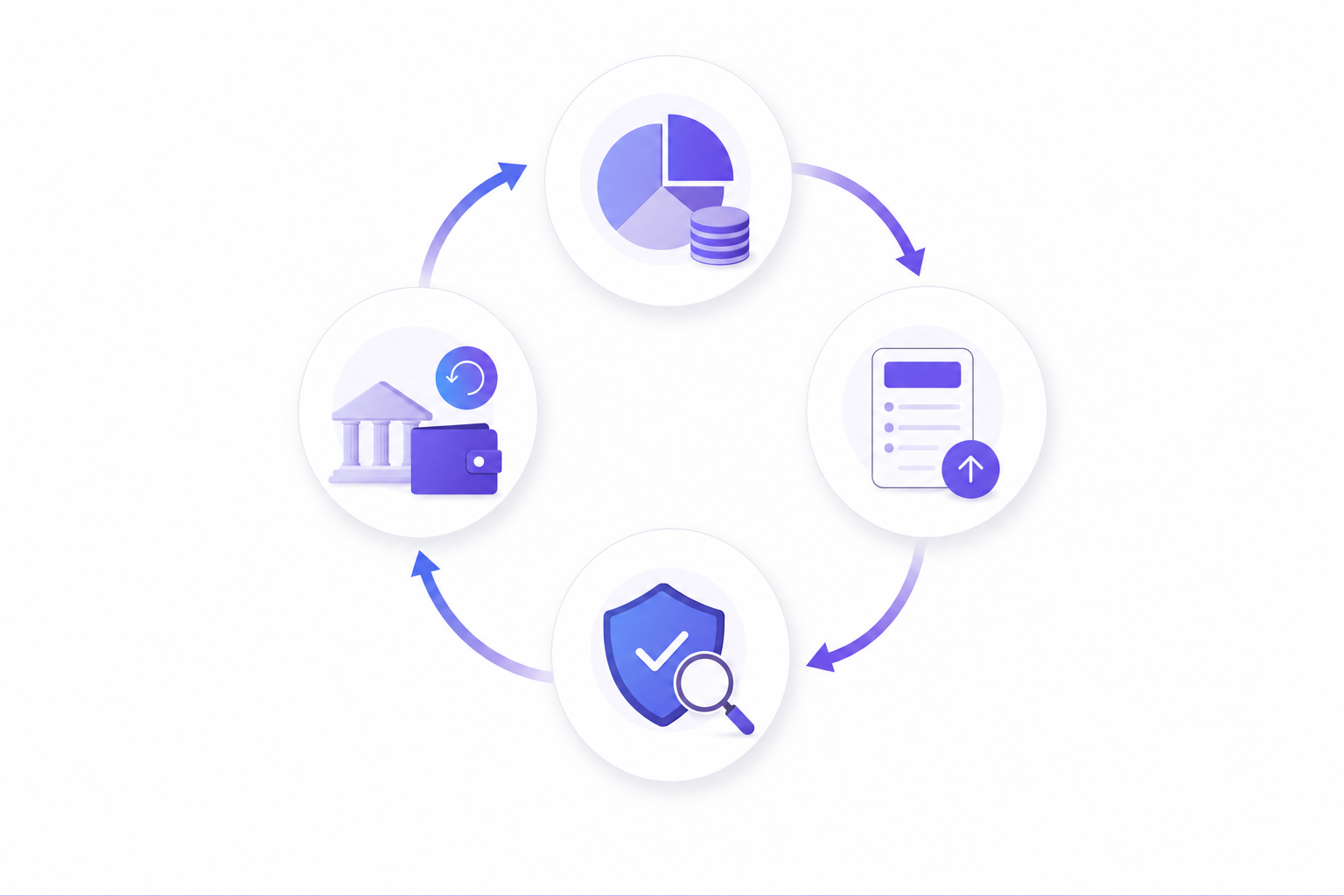
- Allocate budget. Vendors fund MDF in one of three ways: accrual-based (a fixed percentage of partner purchases), discretionary (assigned by strategic fit), or hybrid.
- Submit a proposal. Partners outline the activity, budget, timeline, target audience, and expected pipeline contribution.
- Review and approve. Vendors check eligibility and confirm funding in writing before any spend.
- Execute and reimburse. Partners run the activity, submit proof of performance (invoices, attendee lists, campaign reports), and receive reimbursement against the approved cap.
What MDFs are typically used for (eligible activities)
Eligibility varies by vendor, but the same nine activity categories appear across the majority of programs. Knowing what qualifies before writing a proposal is the difference between same-week approval and a back-and-forth that kills the campaign window.

- Co-branded campaigns: joint email, direct mail, or integrated demand programs carrying both logos.
- Trade shows and events: booth space, sponsorships, executive dinners, regional roadshows.
- Webinars and training: hosted sessions selling the joint value prop to a warm audience.
- Digital advertising: paid search, display, paid social, retargeting against a defined ICP.
- Content development: whitepapers, case studies, datasheets co-authored with the vendor.
- Lead generation: gated assets, intent data buys, outbound sequences tied to a campaign.
- ABM: named-account plays combining ads, content, and sales outreach.
- Partner enablement: certifications, playbooks, SE workshops that lift partner-led pipeline.
- Content syndication: distributing co-branded assets through third-party publishers.
The throughline is pipeline contribution. Activities producing attributable leads, registered opportunities, or measurable brand lift clear approval faster than general awareness spend.
MDF vs co-op funds vs affiliate programs vs user referral programs (comparison table)
The four models get blurred in vendor decks, but the funding source, executor, and audience differ in each case. Picking the wrong one costs you a quarter.
|
Model |
Who funds it |
Who executes it |
Audience |
Success metric |
|---|---|---|---|---|
|
MDF |
Vendor (discretionary) |
Channel partner |
Partner's prospects |
Sourced pipeline |
|
Co-op |
Vendor (% of partner sales) |
Channel partner |
Installed base and prospects |
Activity vs accrued balance |
|
Affiliate |
Vendor (commission per conversion) |
Publishers, creators |
Publisher's audience |
CPA, conversion rate |
|
User referral |
Vendor (reward per referred customer) |
Existing users |
Referrer's peers |
Referral ARR, CAC |
MDF allocates forward against a plan; co-op accrues backward against sales. Affiliate pays publishers you don't work with directly. user referrals activate existing customers as acquirers, which reshapes the trust signal and CAC profile entirely.
MDF best practices for vendors and partners
MDF utilization rates are often well below their potential. The gap isn't partner apathy. It's process friction: unclear eligibility, slow approvals, and reimbursement lag. Best practices remove that friction without losing accountability.
- Publish clear eligibility criteria and pre-approved activity types so partners stop guessing.
- Ship ready-to-run campaign kits (templates, landing pages, ad creative) to cut execution time.
- Set an approval SLA of 5 to 10 business days and hold channel managers to it.
- Track leads, pipeline, and influenced revenue, not spend against budget.
- Tier partners by performance and weight allocations accordingly.
- Run quarterly checkpoints to reclaim unused budget and redeploy it.
- Position channel managers as growth advisors, not receipt reviewers.
Common MDF challenges (and how to solve them)
Most MDF problems are process-driven, not strategic. The fixes are well documented; vendors just under-invest in process.
- Cumbersome proposals and reimbursement: replace email and spreadsheets with dedicated MDF software that handles submission, approval, and proof of performance in one workflow.
- Partners lacking marketing capacity: ship co-branded templates and pre-built campaign kits so smaller partners execute without hiring agencies.
- Unclear eligibility: publish pre-approved activities with fixed reimbursement amounts to shrink approval cycles.
- Slow approvals and payouts: enforce SLAs (5 to 10 business days for approval, 30 days for reimbursement) and report them inside the partner portal.
- Attribution gaps: connect MDF spend to CRM and deal registration so every funded activity links to sourced and influenced pipeline.
Who is eligible for market development funds
Eligibility gates MDF apart from open-access models. Authorized channel partners with a signed agreement qualify: resellers, VARs, distributors, MSPs, and system integrators. Meeting the baseline, though, requires more than a signed agreement.
Typical criteria vendors apply:
- Partner tier (Silver, Gold, Platinum) tied to revenue contribution or certifications held.
- Minimum trailing sales threshold over the prior 12 months.
- Strategic fit with a target region, vertical, or product line.
- Marketing capability: in-house marketer, agency relationship, or completed campaigns.
- Willingness to co-invest budget or execution time alongside vendor funding.
Most vendors allocate 2 to 6% of channel revenue to MDF, then concentrate it on partners most likely to return measurable pipeline. Open-access models like user referrals invert that posture: anyone meeting the baseline can participate, and performance sorts itself after the fact.
How partners can apply for and secure MDF approval
Approval rates climb when partners treat MDF as co-investment, not a grant. Vendors fund proposals that map to their priorities and measure cleanly afterward.
The five-step path most channel teams follow:
- Read the vendor's quarterly priorities (target verticals, hero products, regions) and shape activities to match.
- Confirm fund availability, fiscal calendar, and eligibility tier before drafting.
- Review guidelines for qualifying activities, required documentation, and approval timelines.
- Submit a proposal with objectives, target audience, budget breakdown, timeline, and success metrics tied to pipeline.
- Report results back: leads, MQLs, sourced opportunities, closed revenue. Transparent reporting compounds into easier approvals next quarter.
When MDFs aren't the right fit (and what to consider instead)
MDFs assume a channel motion. If your distribution model doesn't include resellers, distributors, MSPs, or system integrators between you and the buyer, the funding mechanic has nothing to attach to.
Three scenarios where MDF is the wrong investment:
- Self-serve or product-led SaaS where users sign up directly and convert inside the product.
- Companies whose users are also their buyers, with no intermediary reselling.
- Growth motions focused on activating existing customers as referrers, not subsidizing third-party marketing.
In each case, the better fit is user referral infrastructure. Sharing embeds inside the product, conversions attribute server-side against billing, and rewards pay on closed revenue instead of reimbursing campaign spend upfront. That's the model Cello powers referrals as a measurable channel without a channel layer in between.
What is the difference between MDF and co-op funds?
MDF is discretionary and forward-looking, allocated against an approved plan. Co-op funds accrue as a percentage of past partner sales.
What percentage of revenue do vendors allocate to MDF?
Most vendors budget 2 to 6% of channel revenue, weighted toward higher-tier partners.
Are MDFs taxable to the partner?
Treatment varies. MDF is generally booked as vendor marketing spend rather than partner income, but partners should confirm with local tax guidance.
What activities are eligible for MDF?
Co-branded campaigns, trade shows, webinars, digital ads, content creation, lead generation, ABM plays, and partner enablement.
What's the difference between MDF and a referral program?
MDF funds channel partner marketing. Referral programs reward existing users for introducing new users from inside the product.
Can I run MDF if my SaaS product is self-serve or product-led?
No. MDF requires a channel partner layer (resellers, VARs, MSPs, or system integrators) between you and the buyer. If users sign up directly and convert inside the product, the funding mechanic has nothing to attach to. In that case, user referral infrastructure is the better fit—it embeds sharing inside the product, attributes conversions against billing, and pays rewards on closed revenue instead of reimbursing campaign spend upfront.
Can I use market development funds for employee training or internal sales enablement?
Most MDF programs don't reimburse internal training or sales enablement unless it's customer-facing or produces measurable pipeline. Vendors prioritize activities that generate demand (webinars, campaigns, events) over internal capability-building. Partner enablement that improves deal velocity or attach rates can qualify, but you'll need to propose it explicitly and tie it to pipeline metrics.
How long does it take to get MDF approval once I submit a proposal?
Most vendors target 5 to 10 business days for approval, but reality varies. Programs with clear eligibility criteria and pre-approved activity types move faster. If your proposal sits for weeks, escalate through your channel manager or ask for a written SLA.
What happens to unused MDF budget at the end of the fiscal year?
Unused budget typically expires or gets reclaimed and redistributed. Most vendors run quarterly checkpoints to identify inactive allocations and redeploy them to higher-performing partners. If you have approved budget sitting idle, execute the campaign or risk losing the allocation.
Do I need to co-invest my own budget to qualify for MDF?
Many programs require partners to co-invest cash or execution time alongside vendor funding. Co-investment signals commitment and improves approval rates. If you can't contribute budget, document the in-house marketing or sales hours you're committing to the campaign.
Can I combine MDF from multiple vendors for a single campaign?
Yes, if each vendor approves co-branding and their guidelines allow multi-vendor plays. Regional events, industry webinars, and ABM programs are common contexts for blended funding. Disclose the structure upfront in each proposal to avoid approval delays or reimbursement disputes.
What proof of performance do vendors typically require for reimbursement?
Vendors want invoices, attendee lists, campaign reports, and lead or opportunity data tied to the activity. The more you can link spend to sourced pipeline, the faster reimbursement clears. Missing documentation is the most common reason reimbursement stalls.
Can I apply for MDF retroactively after I've already run a campaign?
Most programs require pre-approval before any spend. Retroactive requests usually get rejected unless the vendor explicitly allows it or you have a standing agreement. Submit the proposal before launching the campaign, not after.
How do I know if my company qualifies for MDF if we're a new partner?
Check the vendor's published eligibility criteria: authorized partner status, minimum revenue threshold, tier level, and marketing capability. New partners often start at lower tiers with smaller allocations. Build a track record with smaller campaigns first, then scale into larger MDF requests as your tier advances.
What's the best way to track MDF spend and ROI internally?
Connect MDF spend to your CRM so every funded activity links to sourced and influenced pipeline. Tag leads by campaign, track opportunity progression, and report closed revenue back to the vendor. Partners who report transparently get easier approvals next quarter.
MDF vs user referrals—which one should I prioritize if I have limited bandwidth?
If you have authorized channel partners executing co-branded campaigns in defined regions or verticals, prioritize MDF. If your model is direct-to-user and your best acquisition path runs through existing customers, prioritize user referral infrastructure. MDF assumes a channel layer; referrals don't.