
TL;DR
- "Build vs buy" is the decision to build referral-program infrastructure in-house or buy a pre-built platform like Cello.
- Building costs 8–16 weeks of engineering time before go-live, then indefinite maintenance for attribution, fraud, and tax compliance.
- Buying launches in hours to one week, with attribution tracking, fraud detection, and cross-border payouts included.
- The real cost isn't the launch. It's five ownership lines that never close: build time, attribution drift, fraud monitoring, tax compliance, and maintenance.
- Companies that bought pre-built infrastructure report fast, measurable results, e.g. Butter went live in under 5 hours; Moss saw 650% YoY referral-driven ARR growth.
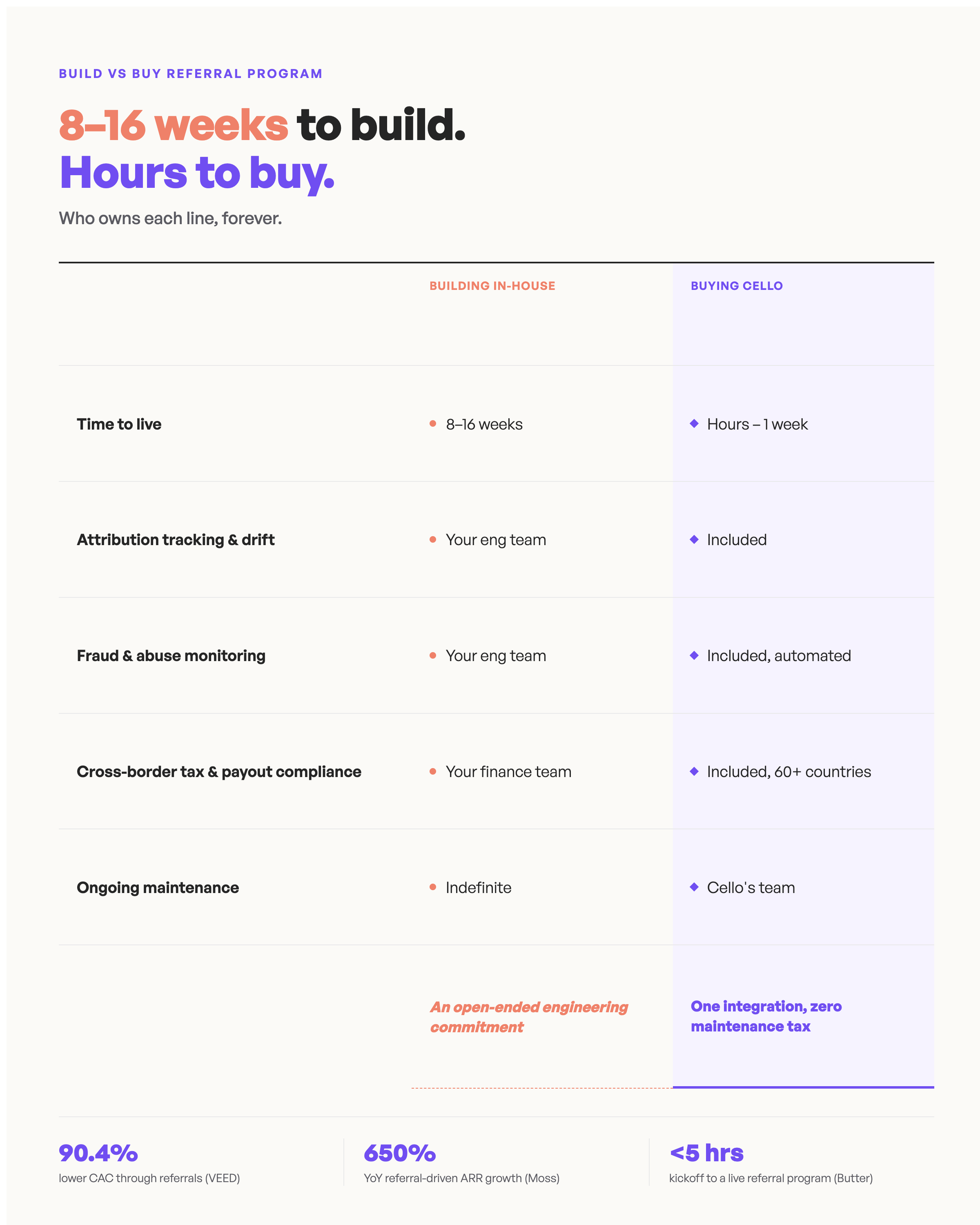
The itemized bill: who owns each line, forever, building in-house vs. buying Cello.
The definition
"Build vs buy" is the decision a B2B SaaS team makes when launching a referral program: build the tracking, reward, fraud-detection, and payout infrastructure in-house, or buy a pre-built platform (like Cello) that plugs into the product via an SDK. The decision isn't really about the referral widget itself: most engineering teams can build a basic "invite a friend" form in days. What differs is who owns the parts that break later: attribution when cookies get blocked, fraud when someone loops referral links, and tax/payout compliance across dozens of countries.
When building actually makes sense
Build when referrals are a product differentiator you sell against and you have surplus engineering capacity to permanently own fraud rules, tax filing, and integration upkeep. For most B2B SaaS companies below $50M ARR, referrals sit in the same infrastructure category as payment processing: critical to operate, but rarely a competitive moat worth the ongoing maintenance cost.
When buying makes sense
Buy when the team asking for a referral program (marketing, growth, RevOps) isn't the team that would maintain it (engineering), when speed to launch matters more than custom control, or when the company sells across borders and doesn't want to build tax/payout logic from scratch. Buying also shifts CAC reduction earlier: attribution works from day one instead of after a multi-month build.
Start Your Build vs Buy Decision with Cello
Cello is the AI-powered referral platform built for B2B SaaS companies. It integrates with Salesforce, HubSpot, Stripe, and Chargebee, with automated global payouts in 60+ countries, built-in fraud detection, and GDPR compliance.
Can I build a referral program without engineering resources?
Yes. Buying pre-built referral software launches in hours to days instead of months. The vendor handles attribution tracking, fraud detection, payout rails and tax compliance while your team configures reward rules, placement and messaging through a dashboard. Building requires 8-16 weeks of engineering time upfront plus permanent maintenance for webhook changes, fraud patterns and regulatory updates.
What's the biggest hidden cost when building a referral program in-house?
Permanent maintenance load after launch. Billing providers ship webhook changes, fraud patterns evolve, tax thresholds adjust, and fields get deprecated. Each change generates tickets for the team that built the system. Engineering capacity never frees up; it compounds into ongoing operational debt most teams underestimate by 70-80% during initial planning.
When does building a referral program actually make sense?
Build when referrals are a product differentiator you sell against and you have surplus engineering capacity to own fraud rules, tax filing and integration upkeep permanently. For most B2B SaaS below $50M ARR, referrals sit in the same infrastructure category as payment processing: critical to operate but not a competitive moat worth the maintenance cost.
What's the fastest way to launch a referral program without engineering bottlenecks?
Buy pre-built referral software with native SDKs and billing integrations instead of building in-house. Cello launches in hours via web and mobile SDKs with server-side attribution that reads conversion events from billing webhooks, removing the 8–16 week engineering cycle plus the permanent maintenance load for fraud rules, webhook drift and tax compliance.