
You’re weighing customer referrals against formal partnerships, and it’s easy to blur the two. Existing users recommend software from experience; external partners work under a commercial arrangement and don’t have to be customers. That difference shapes who you recruit and what you ask them to do. A useful partner program starts with clear roles, then connects those roles to support, rewards and measurable outcomes.
TLDR:
- A partner program sets rules for external partners to refer, sell, implement or connect products.
- Choose partners whose customers match your target buyer; audience fit matters more than size.
- Define attribution, conversion criteria, refund treatment and payment terms before launch.
- Track partner-sourced and partner-influenced revenue separately to avoid inflated totals.
- Cello’s referral tooling excludes reseller contracting, certification and integration development.
What is a partner program?
A partner program is a structured arrangement in which external businesses or individuals recommend, sell, implement or connect a company’s products. The business sets eligibility rules, defines partner responsibilities and offers benefits in exchange for customer introductions, sales activity or product expertise.
In B2B SaaS, a partner program provides rules for repeatable collaboration. It differs from an individual partnership agreement, which records terms with one partner, and from program management software, which handles tasks such as referral tracking and reward calculations, terms covered in the growth marketing glossary.
Two related terms clarify how partner programs work. A channel partner helps bring a vendor’s products to customers. Partner enablement gives participants resources for that work, including technical training and sales materials. TechTarget’s partner program definition describes the vendor strategy and lists partner resources including technical training, sales enablement, incentives and discounts, deal registration, marketing assets and partner portals.
Partner program + types and requirements
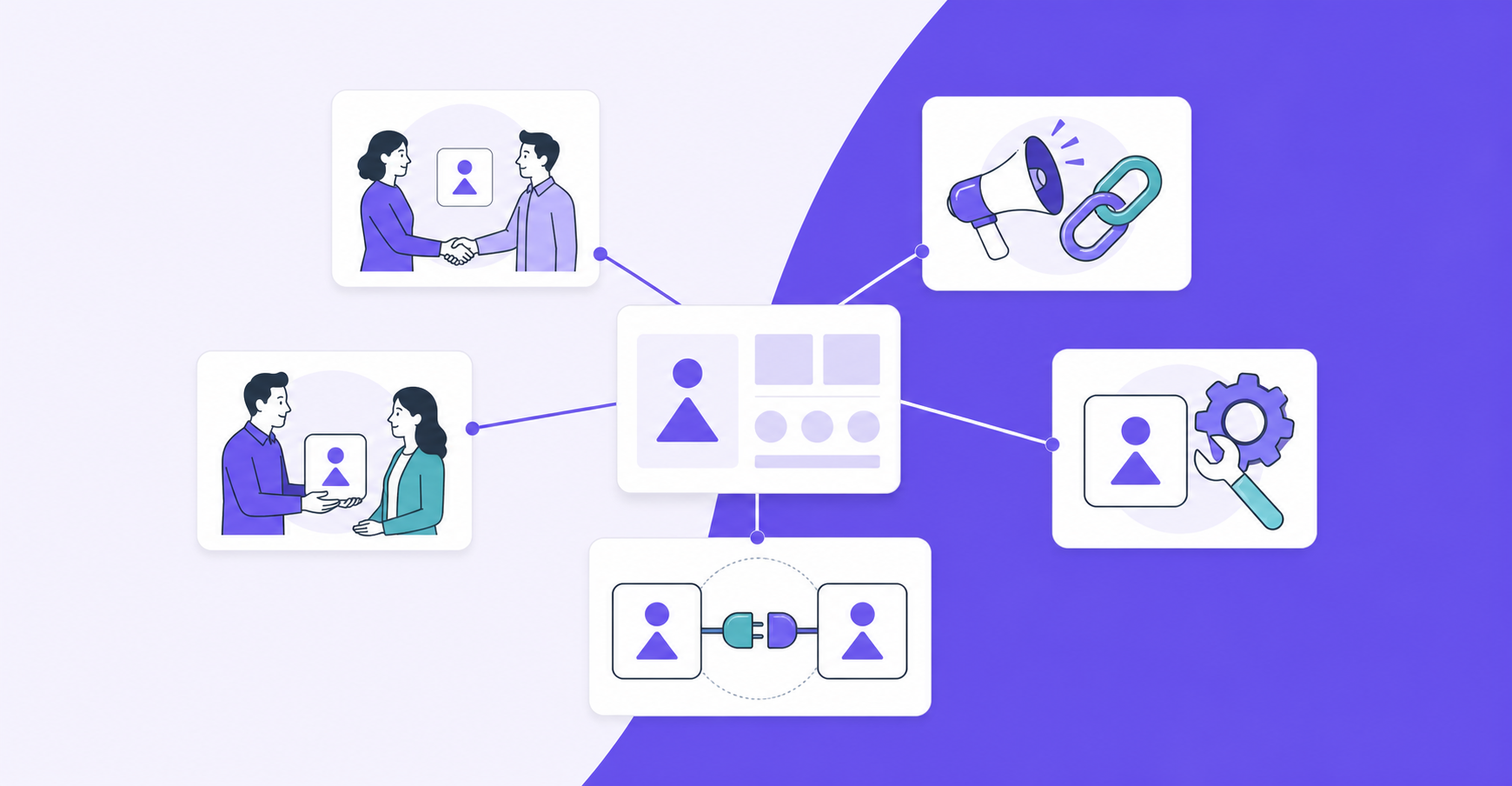
A partner program’s type depends on the work participants perform. Roles can overlap under separate terms, such as an agency implementing software and referring clients. User referrals remain distinct from formal partnerships. Existing users recommend products through their product experience; formal partners have a commercial relationship and need not be customers.
|
Program type |
Participant’s role |
Illustrative SaaS use |
|---|---|---|
|
Referral partner |
Introduce potential customers |
A consultant recommends software to a client |
|
Promote through attributable content or links |
A specialist publisher refers qualified subscribers | |
|
Reseller |
Sell under agreed commercial terms |
A regional provider sells software with support |
|
Services partner |
Implement or support the product |
An agency configures a customer’s account |
|
Tech partner |
Connect complementary products |
Two software businesses maintain an integration |
Admission requirements should match each partner’s responsibilities. Check audience fit and relevant expertise during application review, then require acceptance of program conditions before participation begins. Services partners might need account-configuration training; affiliates may need guidance on approved product claims and promotion methods, while user referral programs rely on separate incentives for B2B SaaS referral programs.
Certification and membership levels are optional. Use them only when written progression criteria connect to added responsibilities or benefits. A services partner might move up a level after completing a set number of supervised implementations, gaining co-selling support in return. Levels without written criteria lead to disputes over who qualifies and why.
Partner program + examples
The first three partner program examples below are illustrative scenarios showing how SaaS companies divide sales and implementation work with partners. The fourth is a named vendor program.
- An accounting consultant introduces a client to accounting software after identifying a need to replace spreadsheet-based bookkeeping. The consultant contributes knowledge of the client's requirements; the software company handles the sales conversation.
- An agency implements a project-management tool, configures project templates and trains the client's team. Its contribution continues after purchase. The program agreement should clarify who owns setup and ongoing support.
- A payroll software company and an HR tool maintain an integration that syncs employee records between them. Each lists the other in its app directory. The agreement assigns who fixes sync errors and who answers customer questions about the connection, so support requests do not bounce between vendors.
- Dell EMC's partner program sorts channel partners into Authorized, Gold, Platinum, Titanium and Titanium Black tiers, while Nutanix's program uses Pioneer, Master and Scaler tiers. Partners move up by hitting revenue targets, earning certifications or both, a pattern TechTarget describes in its tiered partner program examples.
Searches for the YouTube Partner Program, Twitch Partner Program, FF partner program or Free Fire partner program registration concern named creator programs with their own rules. Twitch describes its program as intended for streaming creators with an engaged audience. Its official partner application page states that meeting minimum criteria does not guarantee partnership.
For registration, use the relevant official partner program website and check its current instructions. A SaaS affiliate publishing videos on YouTube has a separate relationship with the software vendor, a distinction covered in the B2B SaaS affiliate referral guide. Publishing there alone does not confer membership in YouTube's own partner program, which operates differently from channel partnerships in B2B SaaS.
Partner program + setup and measurement
Start your partner program with partners whose customers match your target buyer. Before launch, define attribution rules, competing-claim resolution, conversion criteria, refund treatment and payment conditions.
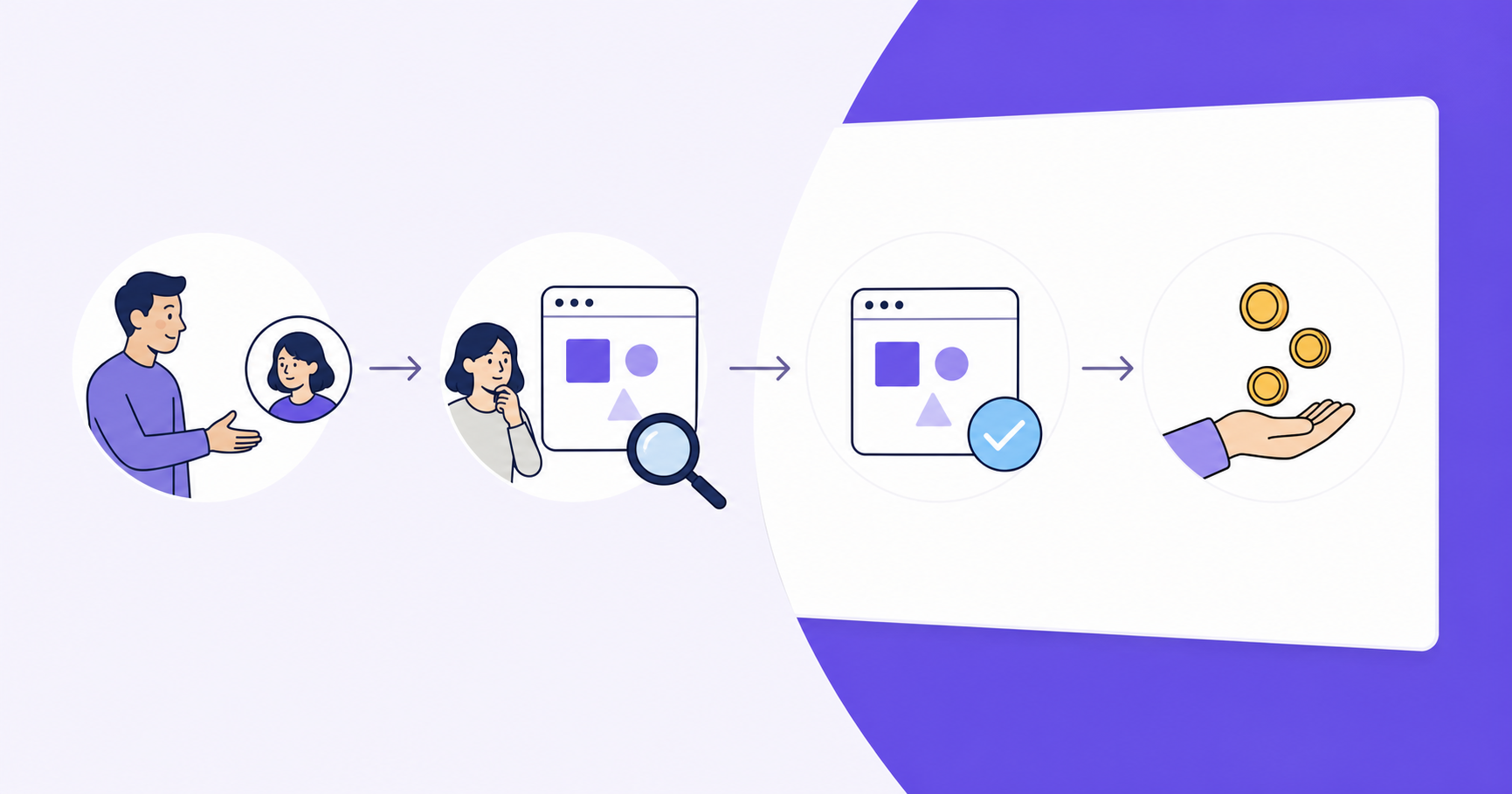
- Onboard partners with a named contact and instructions for submitting introductions.
- Record referrals, validate conversions against agreed criteria and pay rewards.
- Test the full sequence with a sample referral before accepting prospects.
Your public partner program website should explain eligibility, participant responsibilities, benefits and how to apply. Enrolled partners need a private dashboard for links and referral progress. Cello’s partner program setup guidance covers its partner-facing portal; the Cello product overview provides product context. Reseller contracting, technical certification and integration development sit outside Cello’s referral tooling. A recruitment page or dashboard does not replace conversion-tracking configuration; consult referral tracking software for B2B SaaS teams when planning that work.
Measure activation as the share of enrolled partners completing a defined first action, such as sending a qualified referral. Track qualified referrals, paid conversions and partner-sourced revenue separately. If few referrals convert, review lead fit and sales follow-up before increasing rewards. Calculate customer acquisition cost from commissions, software fees, staff time, training and sales materials, figures that vary across the referral program categories for B2B SaaS. Divide by acquired customers and compare periods long enough to reflect your sales cycle.
Why partner program matters in B2B SaaS
A partner program can add qualified pipeline and support product adoption through partners’ customer relationships and implementation work. Judge its value by paid conversions, customer usage and full acquisition cost instead of partner enrollment alone.
- Reach relevant buyers through partners with existing customer relationships in your target market. Choose participants whose clients need your product and can buy it. A larger partner program adds little when audience fit is weak, a lesson echoed in the complete guide to your B2B referral program.
- Support adoption through implementation and training agreements. Define handoffs and customer support responsibilities so buyers receive help after signing. Measure whether partner-supported customers put the software to use.
- Diversify acquisition beyond direct sales and advertising. Partners add another route to customers, but lower customer acquisition cost depends on execution, much like building B2B referral programs that convert. Compare the full program cost against customers acquired before increasing investment.
- Separate partner-sourced revenue from partner-influenced revenue. Sourced revenue comes from opportunities a partner originated; influenced revenue involves assistance on an existing opportunity. Agree on attribution rules and conversion definitions to prevent overlapping contributions from inflating totals.
- Complement User-Led Growth, where existing users introduce new users through structured referrals. Give customers in-product referral experiences through a referral platform and external partners appropriate partner-facing participation tools. Keep user referrals and partner relationships distinct while using both alongside product-led, marketing-led and sales-led acquisition.
Key takeaways
- Choose referral partners for introductions, affiliates for promotion, resellers for sales, services partners for implementation and tech partners for integrations.
- Define partner responsibilities, attribution rules, conversion criteria, refund treatment and payment terms before launch. Test the full referral process before inviting partners.
- Keep partner-sourced revenue separate from partner-influenced revenue so overlapping contributions do not inflate totals.
- Measure partner activation, qualified referrals, paid conversions and customer usage instead of enrollment alone.
- Start small and assess returns before expanding. Include commissions, software fees, staff time, training and sales materials in customer acquisition cost, then compare results over periods that reflect your sales cycle.
Should you start with user referrals or a Cello partner program if your team has limited time?
Start with the group already making qualified introductions: existing customers for user referrals or external consultants and agencies for a partner program. Pilot one motion first so your team can test attribution, sales handoffs and reward costs before managing both.
Can you launch a Cello partner program before adding referrals inside your product?
You can start with Cello’s standalone Partner Portal without first adding the in-product referral widget. Conversion tracking still needs configuration, so separate the partner dashboard launch from the work required to record signups, validate purchases and calculate rewards.
How do you test your Cello partner program before inviting partners?
Run a sample referral through the full process and check that the correct partner receives credit, the conversion meets your rules and the reward matches your payment terms. Test competing referral claims and refunded purchases too, then confirm that your team can explain each outcome to the partner.
Can you manage user referrals and a partner program in one tool without mixing their results?
Cello supports user referrals and partner referrals in one system, with separate campaigns and participation experiences. Keep eligibility, reward rules and reporting separate so customer recommendations and external partner activity remain measurable as distinct acquisition channels.
What's a practical way to find SaaS partners when you don't have a dedicated partner manager?
Start with consultants and agencies your customers already trust, then assign one team member to recruitment and follow-up. Ask customers who helps them select or implement software and invite candidates whose clients match your target buyer; Cello does not supply a partner recruitment network.
Can your external advisors join a referral partner program without buying your software?
External advisors can participate without purchasing your software or holding a product account. Cello's Partner Portal gives non-user partners access to referral links, referral progress and reward tracking through a separate partner login.
Should you pay partners for trial signups or wait until referred customers pay?
Use verified paid conversion as the default reward trigger when your goal is subscription revenue. Track trial signups separately to measure funnel activity and state whether refunds or early cancellations affect commission eligibility before partners begin referring.
What should you do if partners join your program but never send a referral?
Check whether partners know which buyers qualify and how to make their first introduction before raising commissions. Give inactive partners a buyer-fit checklist, a sample introduction message and a named contact, then ask what is blocking their first referral.
How should you change partner commissions when old referral links are still in videos or blog posts?
Set a clear effective date and document which commission terms apply to existing referrals and future conversions. Preserve working links where possible, notify partners before the change and confirm how your tracking tool handles historical attribution and unpaid rewards.
How do you screen applicants through your partner program website?
Ask applicants about their customer profile, relevant expertise and planned promotion methods, then review those answers against written acceptance criteria. Publish participant responsibilities and reward terms beside the application so unsuitable candidates can assess fit before applying.
How do you resolve attribution when a partner refers a prospect already in your sales pipeline?
Apply a written existing-opportunity rule that states whether the introduction qualifies for commission or only influence credit. Check the opportunity creation date and documented partner contribution, then record the decision without counting the same revenue twice.
Can you use partner referral links at trade shows where prospects can't click a link?
You can turn each partner's unique referral URL into a QR code for booth signage, printed flyers or business cards. Keep the partner identifier intact and check that the destination page works on mobile; a scan alone should not count as a qualified referral or paid conversion.
How do you measure partner program profitability when your sales cycle lasts several months?
Group referrals by the period they entered your pipeline and assess each group after enough time has passed for deals to close. Include commissions, software fees, staff time and training costs, then compare acquired customers and collected revenue for the same group instead of matching this month's costs against unrelated sales.