
Your customer cancels an annual subscription, and you're left deciding whether the referrer keeps the commission. Cancellation alone doesn't reverse earned rewards, and a refund request isn't a completed refund. Upgrades bring a separate question about which extra payments qualify. Clear rules for collected revenue, reward status and permitted recovery let you decide what changes next without treating every billing event as a reason to undo past payouts.
- How SaaS referral commissions respond to subscription changes
- Define the commissionable revenue and payment trigger
- Upgrades and added seats increase eligible revenue when payment is collected
- Downgrades and credits require separate commission adjustments
- Cancellations stop future commissions without automatically reversing past rewards
- Refunds and chargebacks depend on whether the commission was paid
- Annual subscriptions need explicit earning and payout schedules
- Failed payments and pauses should not be treated as collected revenue
- Keep account-level attribution intact through billing changes
- Separate commission approval from payout delivery
- Put subscription-change rules in the commission agreement
- Test and cross-check the full subscription lifecycle
- Manage subscription-linked referral rewards with Cello
- Key takeaways
TLDR:
- Base your revenue-share commissions on eligible collected payments, not invoice totals.
- Pay upgrade commissions on eligible net charges after credits, not the full new plan price.
- Stop recurring commissions when eligible payments end. Cancellation alone keeps past rewards intact.
- Adjust pending commissions for refunds; recover paid rewards only under agreed terms.
- In Cello, Stripe refunds cancel pending rewards but do not automatically recover paid commissions.
How SaaS referral commissions respond to subscription changes
Referral commission payouts depend on your agreement, eligible payments and whether rewards are pending or paid. One-time fees follow qualifying events; recurring shares follow payments until caps or eligibility periods end.
|
Subscription change |
Future commissions |
Prior rewards |
|---|---|---|
|
Upgrade |
Can increase |
Unchanged unless terms require adjustment |
|
Downgrade |
Can decrease |
Review credits separately |
|
Cancellation |
Stop when eligible payments end |
Retained unless reversal applies |
|
Refund |
Reduced payment base |
Adjust pending rewards; recover paid rewards under agreed terms |
Define the commissionable revenue and payment trigger
Collection-based referral commissions use money received, not the listed subscription price or invoiced amount.
Commission = eligible collected revenue x agreed commission rate, subject to caps and adjustments.
Define eligible revenue after discounts, excluding taxes and specified pass-through charges. Explain how credits reduce the base without double deductions.
A signup, issued invoice or closed-won deal does not prove collection, which matters when structuring pay per action CPA models. For manually invoiced sales, require a receipt matched to the invoice before approving commission.
Upgrades and added seats increase eligible revenue when payment is collected
Upgrades, added seats and paid add-ons increase recurring commissions when the agreement covers expansion revenue and payment is collected.
In Stripe's worked proration example, upgrading from $10 to $20 halfway through a billing period creates a $5 unused-time credit and a $10 remaining-time charge.
Apply the commission rate to the $5 eligible net adjustment, not the full new plan price. Do not count the upgrade as another customer acquisition.
Downgrades and credits require separate commission adjustments
A renewal-date downgrade lowers the commission base from the next eligible payment. An immediate downgrade with a credit requires an adjustment linked to the original transaction.
- An unpaid-invoice reduction lowers the collectible amount, a case that automated payout software should flag for review.
- A future-service credit reduces a later bill.
- A cash refund returns collected money and requires commission review.
Log the credit ID, original invoice and commission adjustment. Record whether it affects prior earnings or a later payment to prevent double deductions.
Cancellations stop future commissions without automatically reversing past rewards
Under a collection-based revenue-share agreement, commissions normally stop when eligible payments stop. A cancellation request can precede the effective end of service; record both dates before changing reward eligibility.
Past commissions follow the agreement’s reversal terms. Cancellation alone does not reverse earned rewards, including when a prepaid annual subscription remains nonrefundable.
For reactivation, specify whether the original referrer retains attribution, how much eligibility remains and whether the commission term resumes or restarts.
Refunds and chargebacks depend on whether the commission was paid
A refund request should trigger review until the payment outcome is settled.
- After a full refund, remove the transaction’s pending commission. For partial refunds, subtract the eligible refunded portion before recalculating.
- For disputed payments, hold pending commission or record a provisional adjustment. Reverse the adjustment if the merchant wins.
For paid commissions, use contractually permitted offsets against future earnings or repayment requests. Recovery needs a separate process; do not promise automatic clawbacks.
Annual subscriptions need explicit earning and payout schedules
Upfront referral commission payouts on annual subscriptions pay referrers sooner but expose more paid rewards to later refunds. Installments spread payouts over time. Specify when each installment becomes earned and payable, separately from accounting revenue recognition.
For monthly-to-annual switches, match unused-service credits to previously rewarded payments before calculating the eligible annual balance, especially when free months and credit rewards are part of the program. Carry forward commissions already counted toward the cap to prevent duplicate rewards on the same subscription value.
Failed payments and pauses should not be treated as collected revenue
Trials and failed renewals earn no referral commission under a collected-revenue model. A recovered payment can qualify once within the remaining eligibility period; failed attempts cannot. For example, a renewal fails because the customer's card has expired, then a retry collects payment after the customer updates the card. Record the pending commission against that successful collection, not the original renewal date, provided the payment still qualifies. Apply the agreed payout hold and release schedule from there; repeated failed attempts create no additional rewards.
During billing pauses, suspend commissions for periods without qualifying collections. Resume commissions when an eligible payment occurs.
Before approving an invoice marked paid, check settlement records. Credits can clear balances without new cash; manually recorded payments require receipt evidence. Match both to prior adjustments before calculating rewards.
Keep account-level attribution intact through billing changes
Keep the original referrer linked to a stable organization ID when the signup user and payer differ. Map billing customer IDs and subscriptions to that organization through seat changes, subscription replacements and billing-system migrations.
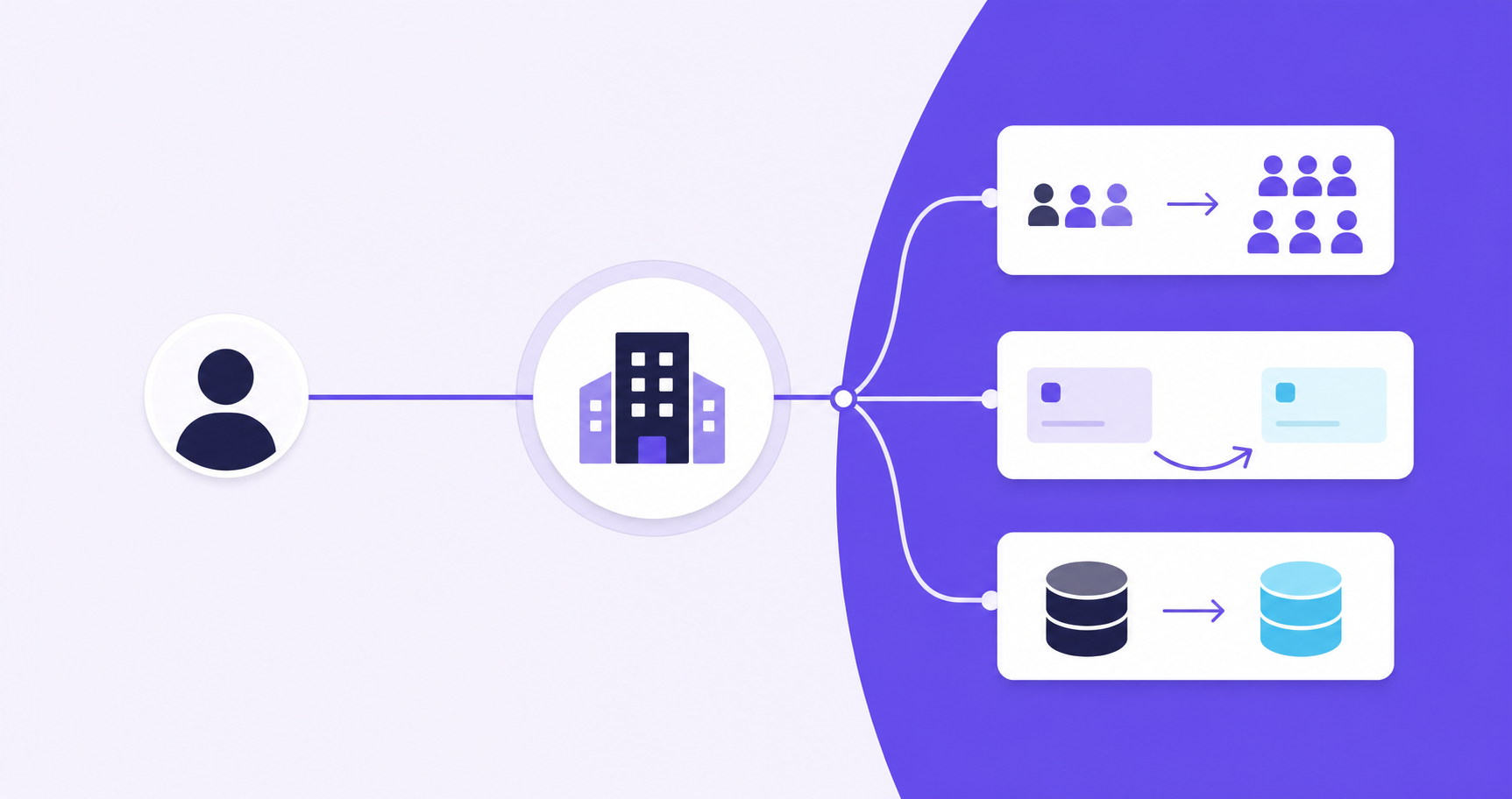
- Attach each commission to its source transaction and retain historical mappings, a principle that applies even under a referral attribution setup without Stripe.
- Deduplicate events using stored event and transaction IDs before creating rewards.
- Define ownership rules for competing referral claims so renewals and upgrades retain one commission owner.
Separate commission approval from payout delivery
Track commission approval separately from payout delivery.
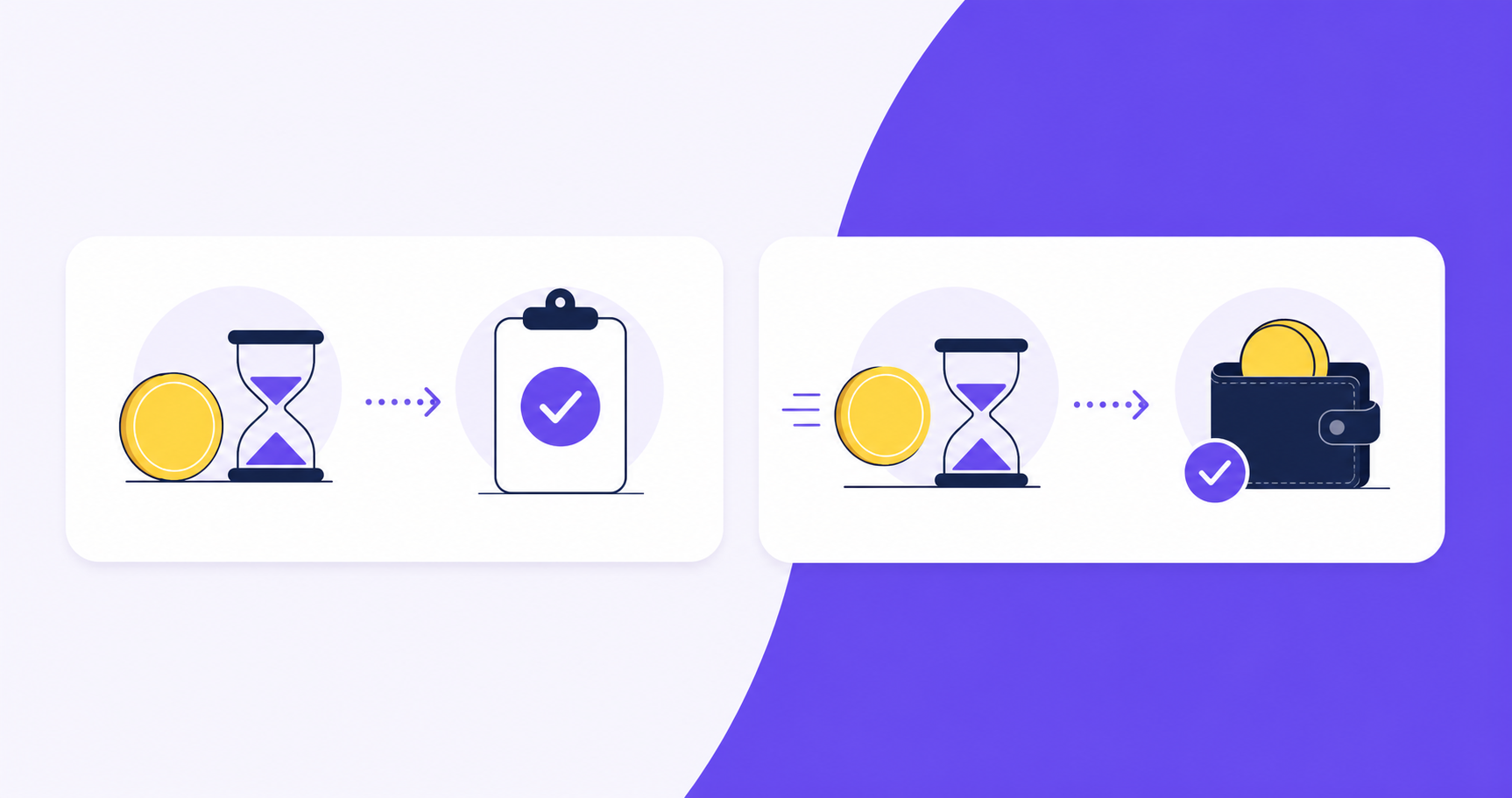
- Pending commissions await eligibility checks; approved rewards await submission.
- Submitted transfers await confirmation; mark paid only after successful delivery.
- Rejected commissions need a reason; failed or returned transfers need investigation.
PayPal states that unclaimed payouts return after 30 days. Submission does not confirm receipt.
For international payouts, check recipient eligibility, supported payment methods and currency conversion, requirements central to running GDPR-compliant referral programs for European fintech. Confirm the previous transfer’s final status before retrying to prevent duplicates.
Put subscription-change rules in the commission agreement
Use separate agreements for user referrals, partner programs and affiliate programs, with eligibility defined for each. Document how SaaS subscription changes affect referral commission payouts, which should align with your chosen referral reward structure, covering:
- Commission basis and eligible expansion revenue from upgrades
- Earning duration and payout holds
- Cancellation treatment and refund adjustments
- Post-termination obligations, including who pays outstanding rewards
Give advance notice of policy changes and preserve existing entitlements where required. Have legal counsel review repayment and offset provisions before use.
Test and cross-check the full subscription lifecycle
Test referral commission payouts across SaaS subscription changes before launch. Cover mid-cycle upgrades, downgrades, partial refunds, annual cancellations, recovered payments and duplicate or out-of-order billing events. Include a refund after the referrer receives payment. Define the expected commission entry, approval state and payout outcome for each case.
Regularly compare billing records, the commission ledger and payout-provider records, data that also feeds referral program ROI measurement. Route mismatches to an exception queue with a named owner and a plain-language explanation for the referrer.
Manage subscription-linked referral rewards with Cello
Cello connects event-based campaign rules to recurring percentage rewards and caps, the same logic covered in our guide to automating Stripe referral tracking. Referrals on Autopilot automates this workflow while keeping exceptions open for review. Building equivalent automation and exception-review controls in-house adds ongoing engineering maintenance to weigh in any build vs buy referral program decision.
Stripe refund events cancel pending rewards, but do not automatically recover paid commissions. Custom payout delays require Cello support.
Before launch, validate how SaaS subscription changes affect referral commission payouts with us. Test upgrades, cancellations and refunds, including partial-refund handling and any required manual adjustments.
Key takeaways
- Clear rules help you explain each reward as subscriptions change.
- Keep your billing records and payout status in step.
Can you use Cello to calculate referral commissions but keep payout control with your finance team?
Cello supports manual reward processing, so your finance team can retain control of reward fulfillment while Cello handles attribution and reward calculation. Agree on the handoff before launch, including who approves adjustments, records completed payments and resolves failed transfers.
Should you ask Cello for a longer payout delay if your annual subscriptions have a long refund window?
A longer payout delay makes sense when your refund window extends beyond your current reward hold, but it cannot eliminate refunds after payout. Ask Cello support to configure the delay and test refunds on both sides of the release date. Keep a separate recovery policy for paid commissions, with any offsets or repayment requests reviewed by legal counsel.
How do you test partial-refund commission adjustments in Cello with Stripe?
Test a partial Stripe refund against a known commission and compare the resulting reward with the remaining eligible collected revenue multiplied by your agreed rate. Run the test once while the reward is pending and again after payment, checking that the refund is deducted only once. Confirm partial-refund behavior and any manual adjustment steps with Cello before launch; automatic cancellation of pending rewards does not prove proportional recalculation or recovery of paid commissions.
Can you pay referral commissions on manually invoiced deals without treating HubSpot closed-won as proof of payment?
You can base commissions on a verified receipt matched to the manual invoice, keeping HubSpot closed-won as a sales milestone. Pass the collected amount, invoice ID and referral identity into your commission workflow only after finance confirms payment.
Can you stop a pending Cello payout if the referrer cancels their own subscription?
Cello cannot automatically withhold an already-earned reward because the referrer's subscription lapses before payout. You can manually deactivate their referral link to prevent future tracked referrals, but this does not cancel existing earned rewards.
Should you choose upfront commissions or installments if annual customers can cancel but cannot get a refund?
Upfront commissions fit a collected-revenue agreement when the annual payment remains nonrefundable; installments spread payment to the referrer over time. Define whether installments are already earned or depend on continued customer eligibility, since cancellation alone does not erase an earned balance.
Should you pay extra commission on a subscription upgrade if the referral has already reached its reward cap?
An upgrade should not create extra commission once the applicable referral cap has been reached, unless your agreement expressly provides a separate expansion allowance. Carry the accumulated commission balance across plan changes so a replacement subscription does not reset the cap.
What's the fairest way to handle referral commissions if your canceled customer comes back on a different plan?
Keep the original referral attribution and apply the reactivation terms agreed before cancellation. State whether the earning period pauses or keeps running, then apply any remaining eligibility and cap to new collected payments without treating reactivation as another acquisition.
What should you do with unpaid referral rewards before closing your program or leaving Cello?
Document who will fund and deliver every earned but unpaid reward before closing the program. Confirm any Cello wind-down processing in writing, retain transaction and payout records and tell referrers how outstanding rewards will be handled.
How do you calculate referral commission when subscription credits clear an invoice without new cash?
An invoice cleared entirely by credits creates no new commissionable collection under a collected-revenue model. Check where the credit came from and whether the original payment already earned commission before recording any adjustment.
How do you prevent duplicate referral commissions when Stripe events arrive twice or out of order?
Store billing event IDs and source transaction IDs, then check both before creating a commission entry. If a refund arrives before its payment event, retain the refund against that transaction and check the current payment state before approving a reward.
When should you retry a referral payout that the referrer says never arrived?
Retry only after the payout provider confirms that the original transfer failed or returned. A submitted or unclaimed transfer can still be unresolved, so check its final status and recipient details before sending another payment.
Should you restore a referral commission if you win a chargeback dispute?
Restore a held commission or reverse its provisional deduction once the dispute outcome confirms that the payment remains eligible. If the commission was already paid and never recovered, update the dispute record without issuing another reward.