
You're ready to recruit agencies, but your signup process sends them straight into a product trial. They need a way to refer clients and follow their commissions, not another customer workspace to manage. A separate partner portal or managed email process can handle that work, though sensitive records still need authentication. Build from that separation, with clear commercial terms, named sales owners and commissions tied to collected revenue.
- What an agency partner program means for B2B SaaS
- Choose the right agency partnership model
- Build an offer agencies have a reason to join
- Define your ideal agency partner and program owner
- Recruit agencies through a focused application process
- Set commissions around sustainable agency economics
- Let agencies participate without a SaaS product account
- Equip agencies to refer and co-sell confidently
- Track referrals at the client account level
- Define approval controls and international payout requirements
- Choose software that matches the partnership model
- Pilot the program and measure agency contribution
- Run agency referrals outside your product with Cello
- Key takeaways
TLDR:
- Use a separate portal or secure email workflow for agency referrals without product accounts.
- Choose your partner model based on who contracts, bills and supports clients.
- Track agency referrals by client account, not individual contacts or last click.
- Define eligible collected revenue, commission duration and refund rules before offering terms.
- Cello's Partner Portal requires individual partner accounts; shared agency accounts are unsupported.
What an agency partner program means for B2B SaaS
An agency partner program for B2B SaaS is a commercial relationship where agencies recommend, sell or deliver services around software for clients. Agencies connect software selection to implementation or ongoing account management.
Individual affiliate referral program participants promote through their own channels; existing-user referrers recommend software they use. Agencies work through client relationships and service delivery.
Agencies do not need a SaaS product account to participate, though referral links and reporting may require a separate partner login.
Choose the right agency partnership model
Choose based on who contracts, bills and supports clients.
|
Model |
Client ownership |
Billing |
Agency compensation |
Support |
|---|---|---|---|---|
|
Referral |
Vendor |
Vendor |
Commission |
Vendor |
|
Vendor |
Vendor |
Tracked commission |
Vendor | |
|
Reseller |
Agency |
Agency |
Resale margin |
Agency first-line |
|
Co-sell |
Shared |
Vendor |
Agreed commission |
Shared |
|
Implementation |
Agency services |
Each bills scope |
Service fees |
Agency implementation; vendor product |
Use links for introductions and deal registration for negotiated opportunities. Service delivery may require client administration or product access.
Build an offer agencies have a reason to join
When you decide between a referral vs affiliate program structure for agencies, offer implementation revenue, client retention support or co-marketing opportunities for qualified demand. Promethean Research estimates agencies influence just over $850 billion in software, cloud and media spending. That measures purchasing influence, not the SaaS partner market.
Give prospective partners a scorecard beyond commission.
- Client fit example: businesses replacing spreadsheet-based sales tracking, referred by agencies with a documented customer relationship management (CRM) implementation project.
- What commercial terms apply?
- What training will you provide?
- Who handles technical support?
- Who owns leads and the ongoing client relationship?
Define your ideal agency partner and program owner
Choose agencies with overlapping clients, relevant services and buyer access. Match implementation capacity to expected delivery work and geographic coverage to your sales and support reach.
Assign named owners before outreach.
- Partnerships owns recruitment.
- Sales owns lead handoffs and follow-up.
- A technical lead owns agency training and delivery support.
- Finance checks commissions against collected revenue.
Before recruiting, ask product and support leads to confirm reliability for intended client use cases and agency support capacity.
Recruit agencies through a focused application process
Recruit agencies already serving your customers, then search specialist directories and professional communities. Tie outreach to a relevant service or client use case.
Keep the application short.
- Services the agency offers
- Typical client size and industry
- Relevant project experience
- Intended partnership model
Assess fit using anonymized project summaries, public case studies and a clear view of how Cello's affiliate program handles partner tracking. Ask how the agency would introduce or implement your software for a typical client. Exclude confidential client lists from the application.
Set commissions around sustainable agency economics
Fixed referral fees make acquisition costs predictable; recurring revenue share follows subscription receipts, a structure covered in more depth in our SaaS affiliate program build steps. Reseller margins reflect purchase and resale prices; agency service revenue pays for delivery work, while other agencies prefer pay per action CPA models tied to qualified actions.
Document payment rules before offering terms.
- Define eligible collected revenue and commission duration.
- State whether renewals and expansion earn credit.
- Specify refund treatment.
Check affordability after discounts, delivery costs and administration. Separate agency compensation from personal incentives to client employees. Disclose commercial relationships to buyers.
Let agencies participate without a SaaS product account
Agencies can participate through a standalone portal or managed email workflow for applications, agreement acceptance, referral submissions, progress updates and payment details. Use secure authenticated forms for sensitive steps in email-led programs.
No product login does not mean no authentication. Restrict confidential client records and payment information to authorized partner contacts.

Grant implementation partners separate demo access for training and client-approved workspace access for delivery. Keep permissions separate from referral administration and limited to assigned work.
Equip agencies to refer and co-sell confidently
Give agencies a compact referral kit.
- Qualification criteria and positioning guidance
- Demo materials and implementation scope
- A named escalation contact
Assign each accepted opportunity a sales owner, handoff steps and follow-up timing. Stay connected through email or training; base co-marketing on shared client needs as part of a broader partnership marketing strategy.
Gartner’s 2025 survey identifies unhealthy conflict within B2B buying teams, a broader B2B observation, not an agency-program benchmark. Prepare separate materials for budget owners and technical reviewers.
Track referrals at the client account level
Tie agency referrals to client accounts, not individual contacts. Carry the agency ID from its link or introduction into the customer relationship management (CRM) opportunity, customer organization and collected payment record. Match contacts, users and payers to that organization; retain dated introduction evidence through long sales cycles.
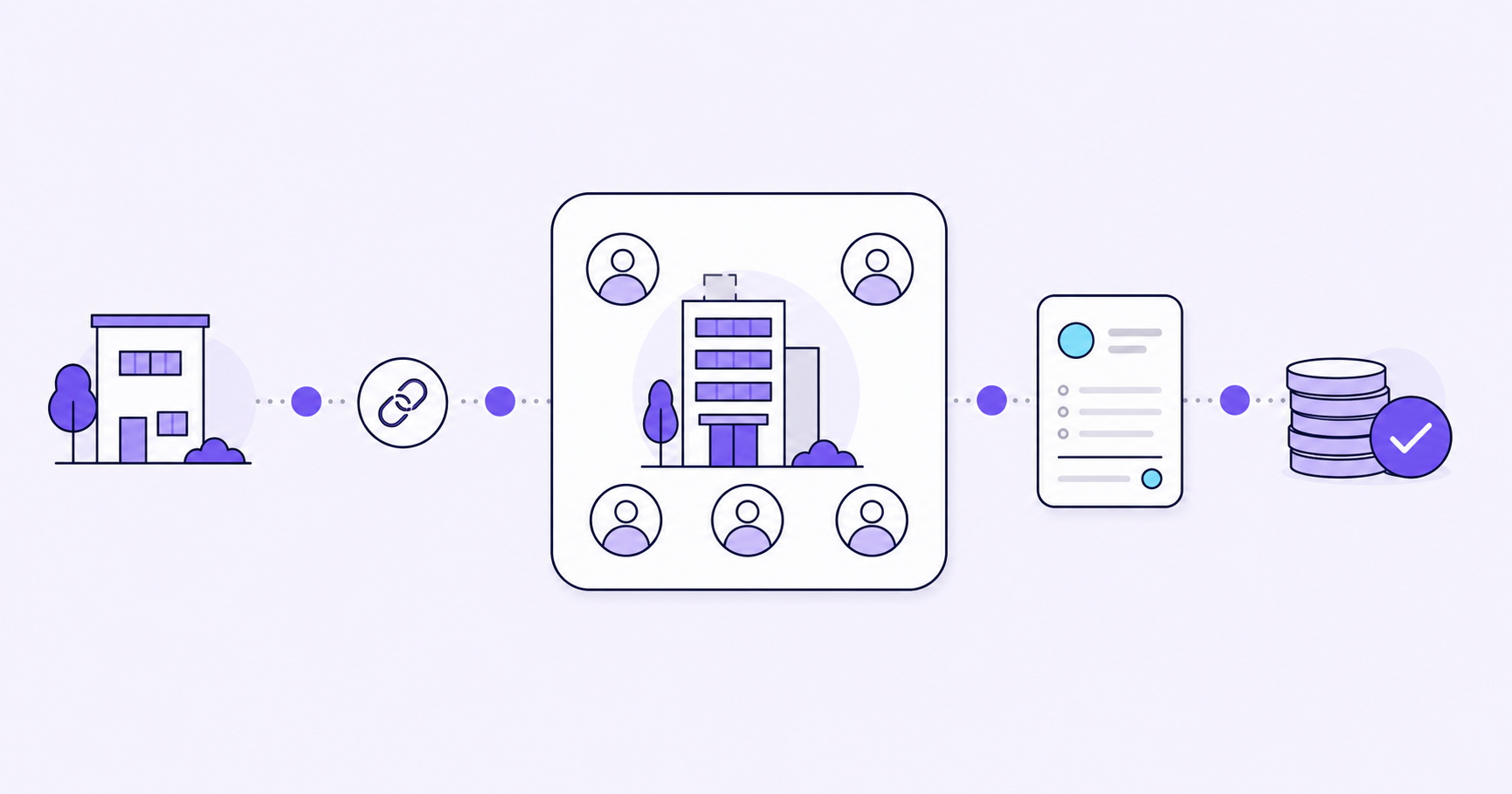
Document attribution windows, existing-opportunity eligibility and duplicate-claim rules. Separate partner-sourced from partner-influenced revenue. Assign a dispute reviewer and evidence requirements; decide ownership by those rules, not last click.
Define approval controls and international payout requirements
Keep commission calculation, approval and disbursement separate. Before releasing funds, check self-referrals, duplicate claims, refunds and suspicious activity.
Give finance a payout verification checklist.
- Confirm recipient countries, supported payment methods and business-payee eligibility.
- Check currencies and conversion fees.
- Verify required tax documentation and failed-payment handling.
Document payment timing, program changes and treatment of earned commissions after termination in the contract. Assign jurisdiction-specific legal and tax review before launch.
Choose software that matches the partnership model
|
Requirement |
Manual pilot |
Referral software |
Partner management |
|---|---|---|---|
|
Partner access |
|
Portal |
Portal |
|
Team permissions |
Manual |
Check roles |
Check hierarchy |
|
Deal registration |
Custom |
Check availability |
Test approvals |
|
Account attribution |
Manual |
Check mapping |
Check sync |
|
Reporting |
Custom |
Referrals |
Pipeline, partners |
|
Payout controls |
Finance |
Test rules |
Check connections |
|
Integration |
Transfers |
Conversion events |
System mapping |
Use a manual pilot while a named owner can cross-check every referral, payment and commission without delaying partner updates or payouts. Choose referral software when recurring tracking and payout work exceeds that capacity, and test account matching and refund handling before committing. Choose partner management software when co-selling requires deal approval workflows, agency team permissions and shared pipeline reporting; verify those workflows against a real opportunity before purchase. Portals still need conversion events from sales or billing systems, so comparing partnership tracker software options matters. Recruitment, training and client delivery may require separate tools.
Pilot the program and measure agency contribution
Pilot with a small agency cohort and explicit lead acceptance criteria, much like building B2B referral programs that convert for individual referrers. Test account matching, commission approval and failed-payment recovery before expanding.
Count qualified introductions as activation. Track:
- Time to first qualified referral
- Accepted pipeline and win rate
- Collected revenue and client retention
- Contribution after commissions, support and program costs
Review by cohort and partnership model. Revise recruitment for weak referrals, training for stalled handoffs and terms for poor margins. Separate incremental acquisition from influenced revenue.
Run agency referrals outside your product with Cello
Cello’s Partner Programs give independently recruited agencies a separate Partner Portal without SaaS product accounts, distinct from in-product User Referrals. Referrals on Autopilot still requires connected conversion events.
Check fit before purchase.
- The Partner Portal is English-only.
- Each partner needs an individual account; shared agency accounts are unsupported.
- Cello provides no native partner sourcing.
- Deal registration remains on the roadmap.
Confirm access, attribution and payout requirements with Cello, including reseller or implementation workflows needing separate tools.
Key takeaways
- You can judge agency referrals by collected revenue, not clicks alone.
- Let your pilot results guide what grows next.
Can you launch an agency partner program with Cello before your product team can add the referral widget?
You can launch Cello Partner Programs without embedding the in-product referral widget, but sales or billing conversion tracking still needs setup. Start with the standalone Partner Portal, connect conversion events and test a referral through collected payment before inviting your agency cohort.
Should you use separate software for Cello user referrals and your agency partner program?
Cello supports User Referrals and Partner Programs in one system, so separate referral software is not required for those two activities. Existing users share through the in-product Referral Component; agencies use the standalone Partner Portal. Keep reseller billing, implementation access and deal registration in separate tools where needed, since shared referral tracking does not replace those workflows.
How do you stop Cello from paying agency commissions on free trials that never convert?
Tie Cello reward eligibility to a verified paid conversion event, not the trial signup. Test both a trial that expires without payment and a trial that becomes a paid subscription, then ask Cello support to configure any payout delay needed for your refund policy.
What's a practical way to recruit agencies for your SaaS partner program without a dedicated partner manager?
Start with agencies already serving your customers and give one internal owner responsibility for outreach and applications. Use a short application covering services, client fit and project experience, then review candidates in batches. Cello does not source partners, so recruitment remains your team's job.
Can your agency partners share one Cello login if several people refer clients?
Cello requires individual partner accounts and does not support shared agency accounts. Keep an internal record linking each partner contact to its agency, then confirm how reporting and commission ownership will work before inviting multiple staff members.
How do you track an agency referral when the client contact and invoice payer are different people?
Track the referral against the client organization so a different payer does not break the attribution record. Carry the agency ID into the customer relationship management opportunity and billing record, then map the contact and payer to that organization. Test this path with a finance-led purchase before launch.
What should you do if an agency claims a prospect your sales team was already talking to?
Apply your existing-opportunity eligibility rule before approving commission. Compare dated introduction evidence with the sales record and distinguish a new agency-sourced opportunity from help on an existing deal. If your terms are silent, have the named dispute reviewer document a resolution before payment.
How do you use QR codes to track agency referrals from printed materials?
Point each QR code to the agency partner's unique referral URL. Test the printed code on a phone through landing, signup and payment tracking, then give the agency the tested version for business cards or event materials.
Can you credit an agency that introduces a client by email without using a referral link?
You can credit an email introduction through a documented manual attribution process. Save the dated introduction, check for an existing opportunity and attach the agency ID to the client account before approving commission. Agree on the evidence required so missing links do not turn into repeated disputes.
How can you offer agency commissions when your buyers have strict anti-bribery policies?
Separate contractual agency compensation from personal incentives to client employees and obtain legal review before launch. Disclose the commercial relationship to buyers and check their purchasing policies, including any approval or incentive restrictions. Disclosure alone does not make a prohibited payment acceptable.
Should you offer a fixed referral fee or recurring revenue share when client contract values vary?
Recurring revenue share fits programs where commission should follow actual subscription receipts; a fixed fee fits programs that need predictable acquisition costs. Compare both against revenue after discounts, delivery costs and administration. State whether renewals and expansion qualify before agencies start referring.
Do your implementation partners need customer accounts just to learn how to pitch the product?
Demo materials and separate training access can support partner education without creating a live customer workspace. Grant client-approved workspace access only when delivery work requires it, limit permissions to that work and remove access when the engagement ends.
How do you handle unpaid agency commissions when you close the partner program?
Document earned commissions and agree on a payout plan before closing the program or ending your software contract. Confirm pending amounts, refund treatment, payment timing and who will process outstanding rewards. Do not assume queued payouts continue after cancellation; obtain written confirmation from your provider.