

If you're looking into SaaS affiliate programs, whether you want to join one or build one, the subscription model changes almost everything compared to a standard e-commerce setup. A referred customer who stays for two years looks completely different on paper than one who churns in month three. Understanding that compounding mechanic is the starting point for making smart decisions on either side of the program.
- What a SaaS affiliate program is
- How SaaS affiliate programs differ from traditional affiliate programs
- Types of SaaS affiliates
- SaaS affiliate commission structures
- How affiliate tracking and attribution works
- What to look for when assessing a SaaS affiliate program
- How to build a SaaS affiliate program
- Recruiting and activating affiliates
- Affiliate fraud prevention and compliance
- SaaS affiliate programs vs referral programs
- How Cello approaches user referrals and partner programs for B2B SaaS
- Final thoughts on SaaS affiliate programs
TLDR:
- SaaS affiliate programs pay recurring commissions on every renewal, not once per sale, so a single referral can generate income for months or years.
- Over 80% of SaaS affiliate programs use percentage-based recurring commissions; mature programs settle between 15% and 25% of revenue.
- S2S tracking is now dominant in 2026, recovering conversions that cookie-only setups miss in ITP and ad-blocker environments.
- B2B SaaS affiliate programs and referral programs are structurally different and require separate tools, reward structures and attribution methods.
- Cello keeps in-product user referrals and external partner programs structurally separate, writing attribution to the Stripe or Chargebee customer object at link click so tracking survives device switches and cookie expiry.
What a SaaS affiliate program is
A SaaS affiliate program is an arrangement where an independent promoter drives new customers to a software product using a unique tracking link, applying the core mechanics of affiliate marketing, then earns a commission when referred visitors convert to paying users.
What makes SaaS structurally different from other affiliate categories is the subscription model. In e-commerce, an affiliate earns once per transaction. In SaaS, a referred customer pays monthly or annually for years. Programs that pay recurring commissions let affiliates earn on every renewal beyond the initial sale, which means commission revenue compounds as long as the customer stays active. Over 80% of SaaS affiliate programs pay percentage-based recurring commissions instead of flat one-time payouts, reflecting how central this compounding mechanic is to the model.
How SaaS affiliate programs differ from traditional affiliate programs
Three differences separate SaaS affiliate programs from traditional e-commerce models.
Commission duration is the most obvious. E-commerce affiliates earn once per sale. In SaaS, a referred customer pays on a recurring billing cycle, and programs structured around recurring commissions pay the affiliate on each renewal. A single referral converting in January may still generate commission the following December.
Product stickiness adds a wrinkle specific to SaaS. If a referred customer churns in month two, most recurring commission structures stop paying at that point, making churn rate a factor affiliates weigh when choosing which programs to join.
Conversion timelines create a third structural difference. B2B SaaS buyers often take 30 to 60 days to research and assess before purchasing, and a standard 30-day cookie window expires before that decision is made. Many B2B SaaS programs run 60 to 90-day cookie windows, and some enterprise-focused programs extend to 120 days to avoid losing attribution on deals that run a full procurement cycle.
Types of SaaS affiliates
Four affiliate types dominate SaaS programs, and they perform very differently from coupon sites or cashback portals.
- Content creators and bloggers who publish software reviews, comparisons and roundups drive high-intent traffic because readers are actively researching and comparing tools, a pattern covered in depth in the B2B SaaS affiliate programs guide.
- YouTube creators who do product walkthroughs reduce purchase friction for buyers who want to see the software before committing.
- B2B consultants and agencies who recommend tools to clients convert at strong rates because the recommendation comes from a paid advisor relationship.
- Newsletter operators and niche publishers with professional audiences reach pre-segmented, high-intent readers; a fintech newsletter recommending an accounting tool is a clean example.
Buyers who arrive via coupon sites and cashback portals tend to have weaker intent and shorter retention. The high-performing cohort is content creators, consultants and niche publishers: people whose audiences already need the category of software being promoted.
SaaS affiliate commission structures
Three structures dominate SaaS affiliate programs, and the choice between them shapes both affiliate quality and long-term unit economics.
Recurring revenue share pays a percentage of every billing cycle for as long as the referred customer stays subscribed. This aligns affiliate incentives with retention and tends to attract committed promoters who care whether their referrals stick around. One-time flat fees are simpler to model but create a mismatch: the affiliate earns the same whether the customer churns in month one or stays for three years, in contrast to pay-per-action CPA models that can be structured around retention events. Hybrid models split the difference with an upfront bonus plus a lower recurring tail, rewarding the conversion effort while maintaining some ongoing incentive.
SaaS affiliate commission rates typically range from 5% to 30%, with most mature programs settling between 15% and 25% depending on margin and average contract value. AI-focused programs tend to run higher, often above 20%, reflecting the category's strong growth and competitive affiliate recruiting.
Setting rates against gross margin is the practical constraint most programs underweight early. A 20% recurring commission on a 70% gross margin product is sustainable. The same rate on a 40% margin product is not.
Recurring commissions also need a cap on low-churn products. Paying indefinitely on a customer who stays eight years can invert the economics of the original acquisition. Most programs set caps at 12 or 24 months, converting to a flat residual or stopping payouts at that point.
How affiliate tracking and attribution works
Attribution is the backbone of any affiliate program. When a visitor clicks a unique affiliate link, the system stores a session identifier via browser cookie or a server-side record, then matches that identifier to a conversion event when the visitor completes a trial, paid signup or demo booking.
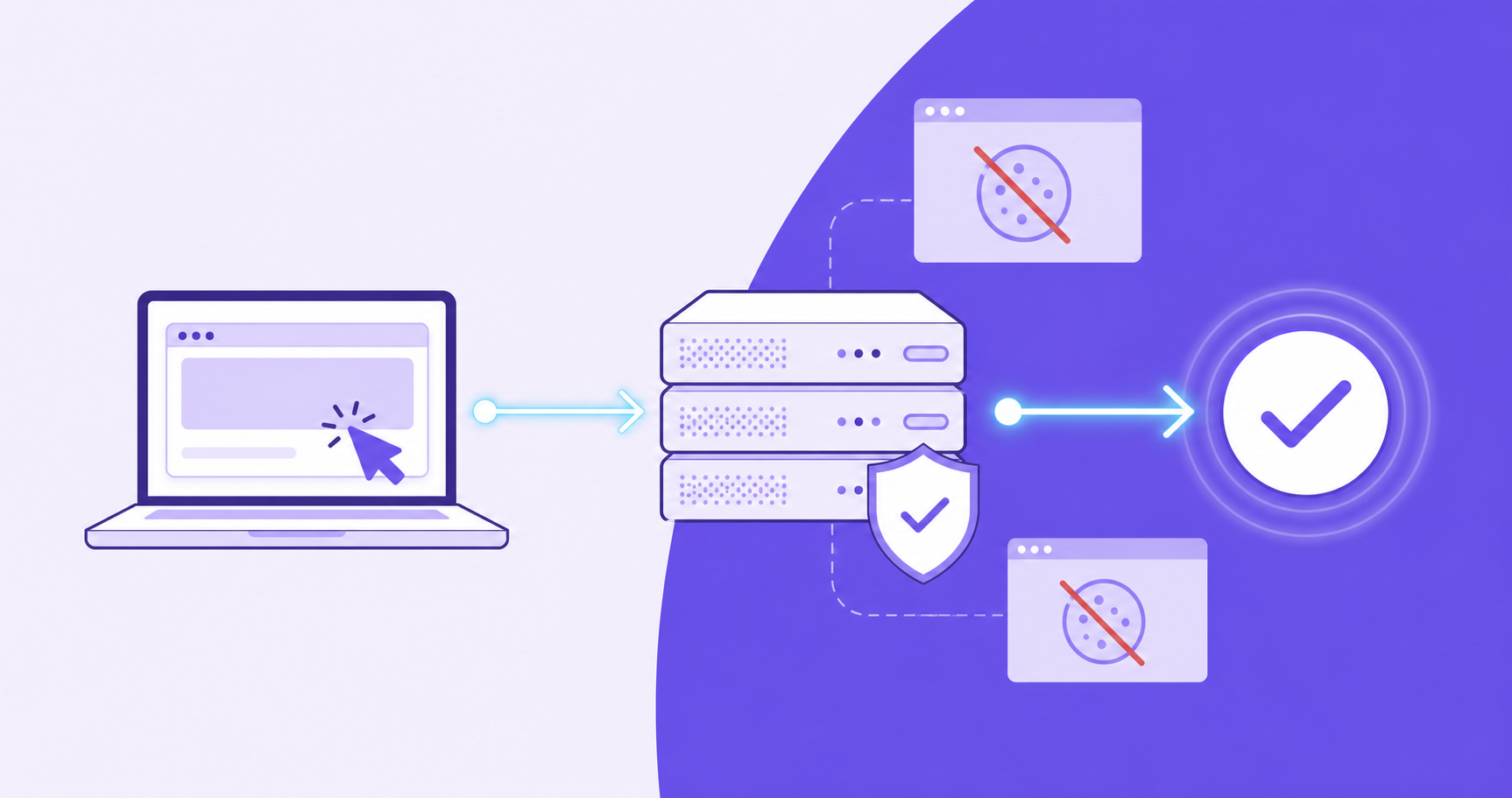
Cookie-based tracking has become the weak point in this chain. Browser privacy controls, ad blockers and Safari's Intelligent Tracking Prevention (ITP) all delete or block the cookies traditional affiliate systems depend on; the full picture of SaaS affiliate program tracking covers these gaps in detail. S2S tracking is now dominant in 2026 because it bypasses browser-side restrictions entirely, passing conversion data directly between servers. Properly implemented S2S tracking can improve conversion accuracy meaningfully compared to cookie-only setups.
Cookie window length remains relevant even with S2S. In B2B SaaS, a prospect who clicks an affiliate link on day one may not complete a purchase until week six, after a procurement review and a security questionnaire. A 30-day cookie expires before that deal closes. Programs running 60 to 90-day attribution windows capture substantially more of these slow-moving conversions.
What to look for when assessing a SaaS affiliate program
Picking the wrong program costs affiliates real recurring income. Run through these criteria before committing.
- Commission structure and duration: recurring commissions compound where one-time flat fees do not. A 20% recurring rate on a product with 80% gross retention outperforms a $100 flat fee in under six months for most price points.
- Cookie window vs. buying cycle: match window length to your buyers' average evaluation timeline.
- Product retention rate: recurring commissions only pay on active subscribers. A product holding 60% annual retention halves expected earnings compared to one at 90%. Ask for churn data or read third-party reviews for cancellation complaints before promoting.
- Payout timing and minimum thresholds: holding commissions 30 to 90 days post-conversion for refund protection is reasonable. Minimum thresholds above $200 delay cash flow for affiliates still building volume.
- Dashboard and tracking visibility: a dashboard showing clicks, conversions and commission status by referral lets you optimize content. One showing only aggregate totals does not. Real tracking visibility signals the program is actively managed, not treated as an afterthought.
- Marketing support: programs that provide reviewed copy, comparison positioning and product walkthroughs reduce research burden. Those that hand over a link and nothing else tend to produce lower conversion because affiliates generate generic content without product depth.
How to build a SaaS affiliate program
Three prerequisites must be in place before any affiliate program is worth building: product-market fit confirmed by retention data, a clear ideal customer profile affiliates can target, and onboarding stable enough that referred customers do not churn in the first 60 days. Without those, commissions pay for customers who leave before the economics work.
Once those exist, the build follows a clear sequence.
- Define your CAC target and channel contribution goal. What can you afford to pay per acquired customer given your LTV and gross margin? If paid search runs at $400 CAC on 70% gross margin, your affiliate commission budget is whatever sits comfortably below that number while leaving room for program overhead.
- Set commission rate and structure. Recurring commissions between 15% and 25% are the standard range for SaaS. Model the rate against your gross margin, not revenue. Cap recurring payouts at 12 to 24 months if retention is strong enough that long-tail commissions invert your unit economics.
- Choose affiliate management software. You need click tracking, attribution, commission calculation, a partner-facing dashboard and SaaS referral payout processing. Confirm whether the tool handles server-side attribution or depends entirely on cookies, since cookie-based systems lose conversions in ITP and ad-blocker environments.
- Build the affiliate portal and onboarding flow. A good portal shows clicks, conversion status and payout history. Onboarding should include positioning guidance, a one-pager on the ICP, comparison copy vs. alternatives and a product walkthrough. Affiliates who understand who to target convert their audiences at meaningfully higher rates than those handed a link and nothing else.
- Set payout timing. A 30 to 60-day hold after conversion is reasonable for refund protection. Minimum thresholds should stay low enough not to delay payments for affiliates still building volume.
Starting with 20 to 30 proven creators and paying flat fees plus revenue share while iterating beats recruiting hundreds of affiliates upfront and spreading attention too thin.
Recruiting and activating affiliates
Passive recruitment fills a program with dormant affiliates. Active outreach fills it with ones who promote.

The fastest sourcing shortcut is competitor affiliate programs. Find who is already writing comparison posts, YouTube reviews or newsletter recommendations for tools in your category, then reach out directly. These affiliates have already proven they write about the problem your product solves.
Review sites are the second tier. Search G2, Capterra and Trustpilot for authors driving review traffic in your category. The same names appear repeatedly across posts ranking for "[your category] alternatives."
Activating affiliates after signup
Most programs lose 60 to 70% of new affiliates to dormancy within 30 days. The fix is a structured first-week brief covering your ICP, comparison positioning against two or three alternatives, a product walkthrough and example content that converted. Affiliates who receive this publish faster and at higher quality than those handed only a tracking link.
A tiered commission structure gives active affiliates a reason to push harder:
- A base rate for standard referrals sets the floor and attracts new recruits.
- A higher rate after a volume threshold rewards affiliates who are actively promoting.
- A flat bonus for top performers each quarter creates visible progression without making economics unpredictable.
Keep tiers simple. Two levels work; five create confusion.
Affiliate fraud prevention and compliance
Fraud patterns follow predictable playbooks. Self-referrals, where an affiliate signs up using their own link to collect a commission on their own purchase, are the most common. Cookie stuffing places affiliate cookies on users who never visited the affiliate's content, injecting false attribution before a purchase completes. Bot traffic inflates click counts without producing real conversions, and choosing the right referral fraud detection software is one of the most reliable defences against these patterns. Chargebacks after commission payment let bad actors collect a reward then reverse the underlying transaction.
Detection runs on a few reliable mechanisms:
- A 30 to 60-day hold between conversion and payout catches most refund-driven fraud because the chargeback window closes before the commission clears.
- Same-IP and same-email flagging identifies self-referrals where the affiliate and the new account originate from the same device or email domain.
- Requiring referred customers to remain on a paid plan for a defined retention period before commission releases filters out acquisitions that churn immediately after the trial window.
Two compliance requirements apply regardless of program size. The FTC requires US affiliates to disclose their relationship with any product they promote, meaning reviews, recommendations and comparison posts must include a clear disclosure statement. GDPR requires that tracking cookies used for affiliate attribution obtain user consent before placement, which affects any program with EU traffic. Providing disclosure templates and consent-compatible tracking reduces legal exposure for both the program operator and its affiliates.
SaaS affiliate programs vs referral programs
Affiliates and referrers are not the same, and treating them as one undifferentiated partner type leads to wrong tool choices, misaligned incentives and programs that underperform both jobs; the referral vs affiliate program for B2B SaaS breakdown covers exactly where they diverge.
The cleanest distinction: if the promoter is rewarded for being a happy customer, it is a referral program. If the promoter is paid as a marketing channel regardless of whether they use your product, it is an affiliate program. A satisfied user who recommends your tool to a colleague is a referrer. A blogger who writes comparison posts for commission without ever logging into your dashboard is an affiliate.
The structural differences follow directly. Referral programs run inside your product, triggered by actual users at moments of high satisfaction. Affiliate programs run outside your product, through tracking links distributed across review sites, newsletters and YouTube channels. Referral attribution ties to authenticated sessions and billing events. Affiliate attribution depends on cookie windows, S2S tracking and click-to-conversion matching across an open web session that may span weeks.
Mature companies run both, deliberately separated. The referral marketing for B2B SaaS motion harvests advocacy from the existing customer base, while the affiliate program acquires net-new audiences through paid external partners. The reward structures diverge accordingly: a flat commission designed for a content creator is wrong for a satisfied customer sharing with a peer, and building B2B referral programs that convert requires reward structures matched to each partner type. A cash payout optimized for user referrals undershoots what a high-volume affiliate needs to rank your program above competing offers.
|
Affiliate Program |
Referral Program | |
|---|---|---|
|
Who promotes |
External partners (bloggers, consultants, newsletter operators), paid regardless of product use |
Existing customers, rewarded for being happy users |
|
Where it runs |
Outside your product: review sites, newsletters, YouTube channels |
Inside your product: embedded widget in the authenticated product experience |
|
Attribution method |
Cookie windows (60 to 90 days for B2B), server-to-server (S2S) tracking across open web sessions |
Authenticated sessions and billing events; server-side attribution tied to the Stripe or Chargebee customer object |
|
Reward structure |
Recurring revenue share (15 to 25%) or flat fee; must be high enough to outrank competing offers |
Cash, credit, or in-product incentive matched to a satisfied customer sharing with a peer |
|
Conversion timeline |
30 to 60 day B2B research cycle; requires 60 to 90 day attribution windows to capture slow-moving deals |
Tied to moments of high in-product engagement; typically faster intent-to-action loop |
|
Tooling requirement |
Affiliate management platform with S2S tracking, partner-facing dashboard, and payout processing |
In-product SDK or embed; identity-tied attribution; reward logic and payout infrastructure |
|
Primary goal |
Acquire net-new audiences through paid external partners |
Harvest advocacy from the existing customer base |
How Cello approaches user referrals and partner programs for B2B SaaS
Cello is built natively for B2B SaaS and keeps two programs structurally separate: in-product user referrals for existing customers sharing from inside the authenticated product, and a standalone Partner Portal for external affiliates, influencers and integration partners who never log into your product at all.
That separation matters because collapsing both into a generic link-distribution tool produces the exact problems covered earlier: wrong reward structures, wrong attribution methods and dormant partners who were never the right fit for the program type.
On attribution, Cello writes the referral code to the Stripe or Chargebee customer object at link click, not at signup. Attribution survives device switches, cookie expiry and Safari ITP, closing the tracking gap that cookie-dependent systems lose across long B2B evaluation cycles.
Published case studies reflect both motions working as designed: VEED achieved 90.4% lower CAC versus paid acquisition after embedding Cello in-product; Softr saw a 5x conversion lift after migrating from PartnerStack; Moss reached 650% year-over-year referral ARR growth after replacing a manual partner program with embedded user referrals.
If the goal is turning existing users into a measurable acquisition channel, with optional partner program capabilities alongside, that is the motion Cello is built for.
Final thoughts on SaaS affiliate programs
SaaS affiliate marketing works when the structure matches the buying cycle. Recurring commissions, 60 to 90-day attribution windows and server-side tracking are not complexity for its own sake. They are the minimum to capture the slow-moving B2B conversions that cookie-only setups miss entirely. If you are ready to pair an affiliate program with in-product user referrals, sign up for Cello and run both programs the way they were meant to work.
Can Cello handle both a user referral program and an affiliate or partner program within a single platform, or do you need a separate tool for each?
Cello runs both in a single platform. User referrals operate through an in-product widget embedded inside your authenticated product experience; partner and affiliate programs run through a standalone Partner Portal that requires no SDK integration and works for external promoters who never log into your product. The two programs share one attribution engine, fraud detection layer, campaign configuration system and payout infrastructure, so you are not piecing together data across two disconnected tools.
How flexible is SaaS affiliate commission structure: can rewards be delayed until after a free trial converts, paid as recurring revenue share, or drip-fed over time?
All three structures are supported. Reward triggers can be tied to billing events such as `invoice.paid` instead of the trial signup event, so commissions only fire when a referred user converts to a paid plan. Recurring revenue share pays out on each renewal cycle for as long as the referred customer stays active. Drip-fed schedules distribute payouts incrementally across months, aligning commission cost with realized customer lifetime value and avoiding front-loading the full payout at conversion.
What payout methods does Cello support for international and European SaaS affiliate programs?
Cello supports PayPal (global, primary), Venmo (US only) and UPI (India) across 63 countries. SEPA, Wise, direct bank transfer and crypto are not currently supported as automated payout methods; direct bank transfer (ACH) is on the Q4 roadmap. Programs with large affiliate bases in regions where PayPal is not dominant should factor this coverage gap into their evaluation.
How do you set SaaS affiliate commission rates without inverting your unit economics?
Set rates against gross margin, not revenue. A 20% recurring commission on a 70% gross margin product is sustainable; the same rate on a 40% margin product is not. Most mature SaaS affiliate programs run between 15% and 25% recurring commission rates, with AI-focused programs averaging around 24.5%. For products with strong retention, cap recurring payouts at 12 to 24 months, because paying indefinitely on a customer who stays eight years can invert the economics of the original acquisition even at a rate that looked viable at launch.
Should a PLG SaaS company treat its in-product user referral program and its external affiliate program as the same motion or separate ones?
Treat them as separate programs with different reward structures, attribution methods and tools. In-product user referrals run inside the authenticated product at moments of high engagement, tied to billing events via server-side attribution. External affiliate programs run through tracking links across review sites, newsletters and YouTube channels, dependent on cookie windows and server-to-server attribution across open web sessions that can span weeks. Collapsing both into one reward structure and one tool produces misaligned incentives: a flat commission designed for a content creator is wrong for a satisfied customer sharing with a peer, and a cash payout optimized for user referrals undershoots what a high-volume affiliate needs to rank your program above competing offers.
What is the difference between a SaaS affiliate program and a SaaS referral program, and when should you run each?
A SaaS affiliate program pays external promoters — bloggers, consultants, newsletter operators — who drive new customers regardless of whether they use your product, while a referral program rewards existing users who share from inside your product at moments of genuine satisfaction. Run affiliate programs to acquire net-new audiences through paid external partners; run referral programs to harvest advocacy from your existing customer base. Mature SaaS companies run both deliberately separated, with distinct reward structures, attribution methods and tools for each motion.
How does server-side attribution work in a SaaS affiliate program, and why does it outperform cookie-based tracking?
Server-side attribution passes conversion data directly between servers rather than relying on browser cookies, which Safari's Intelligent Tracking Prevention, ad blockers and other privacy controls routinely delete or block. In Cello's implementation, the referral code is written to the Stripe or Chargebee customer object at the moment of link click — not at signup — so attribution survives device switches, cookie expiry and arbitrary time gaps between click and conversion. Properly implemented server-to-server tracking can improve conversion accuracy by around 35% compared to cookie-only setups, a material difference for B2B SaaS programs where prospects take 30 to 60 days to convert.
What cookie window length should a B2B SaaS affiliate program use, and why do 30-day windows underperform?
B2B SaaS affiliate programs should run 60 to 90-day attribution windows as a floor, with enterprise-focused programs extending to 120 days. A 30-day cookie expires before most B2B procurement cycles close — a prospect who clicks an affiliate link on day one may not complete a security questionnaire and sign a contract until week six, at which point the attribution is lost entirely. The buying cycle, not the affiliate platform default, should set the window length.
What types of affiliates drive the highest-quality referrals for B2B SaaS programs?
Content creators publishing software comparisons and roundups, B2B consultants recommending tools to paying clients, and niche newsletter operators with pre-segmented professional audiences consistently outperform coupon sites and cashback portals on conversion rate and customer retention. Consultants convert at strong rates because the recommendation comes from a trusted advisor relationship; niche publishers reach readers who are already researching the category. Coupon-driven affiliates tend to produce shorter customer retention, which undercuts the economics of recurring commission structures.
How does recurring commission structure work in a SaaS affiliate program, and when should you cap payouts?
Recurring commission structures pay the affiliate a percentage of every billing cycle for as long as the referred customer stays subscribed, aligning affiliate incentives with customer retention rather than one-time conversion. Most mature SaaS programs run recurring rates between 15% and 25%, but programs should cap recurring payouts at 12 to 24 months when retention is strong enough that long-tail commissions invert unit economics — paying indefinitely on an eight-year customer at 20% can exceed the original acquisition cost target. Model the rate against gross margin, not revenue, before setting the cap threshold.
How do you prevent common affiliate fraud patterns like self-referrals and cookie stuffing in a SaaS affiliate program?
A 30 to 60-day hold between conversion and payout catches most refund-driven fraud because the chargeback window closes before the commission clears; same-IP and same-email flagging identifies self-referrals where the affiliate and new account originate from the same device or domain. Cookie stuffing — where extensions or scripts inject affiliate cookies on users who never visited the affiliate's content — is structurally mitigated by server-side attribution that writes the referral code at link click rather than at checkout, closing the window before any browser-layer injection can occur. Requiring referred customers to remain on a paid plan for a defined retention period before commission releases filters acquisitions that churn immediately after the trial window.
Can affiliates and external partners who are not product users participate in a SaaS referral program, and what does their experience look like?
Yes — external affiliates, influencers, integration partners and investors who never log into your product can participate through a standalone Partner Portal that requires no SDK integration on your side. Partners access referral links, track funnel analytics covering new user signups and purchases, and manage rewards entirely outside the SaaS product through a hosted dashboard. This separates the external partner motion from the in-product user referral motion, so each program uses the attribution method and reward structure matched to its actual participants.
What compliance requirements apply to running a SaaS affiliate program in the US and EU?
US affiliates must include a clear FTC disclosure statement in any review, recommendation or comparison post that earns commission — the FTC requires disclosure of the commercial relationship in conspicuous terms. EU programs must obtain user consent before placing affiliate tracking cookies under GDPR, which affects any program receiving EU traffic regardless of where the operator is headquartered. Providing affiliates with disclosure templates and running consent-compatible tracking reduces legal exposure for both the program operator and its affiliates.
How should you structure the first 30 days of affiliate onboarding to avoid dormancy?
Most programs lose 60 to 70% of new affiliates to dormancy within 30 days because affiliates receive a tracking link without the context needed to produce content that converts. A structured first-week brief covering your ICP, comparison positioning against two or three alternatives, a product walkthrough and example content that converted gives affiliates the material to publish quickly and at higher quality. A tiered commission structure — base rate for standard referrals, higher rate after a volume threshold, and a flat quarterly bonus for top performers — gives active affiliates a reason to continue promoting beyond the initial setup.
What prerequisites should a SaaS company have in place before building an affiliate program?
Three prerequisites must be confirmed before any affiliate program is worth building: retention data that validates product-market fit, a clear ideal customer profile that affiliates can target in their content and recommendations, and onboarding stable enough that referred customers do not churn in the first 60 days. Without these, commissions pay for customers who leave before the economics work — a recurring commission structure generates losses, not returns, when the referred cohort churns faster than the commission tail. Starting with 20 to 30 proven creators and paying flat fees plus revenue share while iterating produces better results than recruiting hundreds of affiliates before the product retention is proven