
The acquisition funnel, also known as the sales or marketing funnel, is a fundamental concept in growth marketing. It is a model that illustrates the theoretical customer journey towards the purchase of a product or service. The funnel metaphor is apt because it starts broad at the top (awareness) and narrows down towards the bottom (conversion), reflecting the process of filtering out those who are less likely to make a purchase.
Understanding the acquisition funnel matters for businesses aiming to optimize their marketing strategies, as it helps identify potential areas of improvement in customer conversion. This article covers the acquisition funnel in detail, including its stages and its role in growth marketing.
TLDR:
- The acquisition funnel maps six stages from Awareness to Purchase, each requiring distinct marketing strategies to move prospects toward conversion.
- Identifying where prospects drop out of the funnel lets you reduce customer acquisition cost (CAC) and increase customer lifetime value (CLV).
- Optimize the funnel continuously using data analysis, A/B testing and customer feedback instead of treating it as a one-time task.
- Cello adds a referral channel inside the product experience to strengthen the acquisition funnel for SaaS teams.
|
Key Element |
Description |
Tips for Optimization |
|---|---|---|
|
Understanding Acquisition Funnel |
Fundamental concept illustrating the customer journey from awareness to conversion. |
Identify and analyze each stage of the funnel to optimize customer conversion. |
|
Origins of Acquisition Funnel |
Introduced by E. St. Elmo Lewis in 1898 with the AIDA model (Awareness, Interest, Desire, Action). |
Understand historical context to appreciate evolution and application in modern marketing. |
|
Importance of Acquisition Funnel |
Provides roadmap for customer acquisition, improves conversion rates, and identifies bottlenecks. |
Tailor marketing strategies to meet customer needs at each funnel stage. |
|
Stages of Acquisition Funnel |
Awareness, Interest, Consideration, Intent, Evaluation, Purchase. |
Craft targeted strategies for each stage to guide customers towards conversion. |
|
Optimizing Acquisition Funnel |
Identify bottlenecks, implement strategies for improvement, and continuously refine. |
Utilize data analysis, A/B testing, and customer feedback for optimization. |
Understanding the Concept
The acquisition funnel is a visual representation of the customer’s journey, from the initial stages of awareness to the final stage of conversion. It provides a structured approach for businesses to understand and analyze their customer acquisition process, allowing them to identify bottlenecks and optimize their strategies accordingly.
While the acquisition funnel may vary slightly depending on the business model or industry, it generally consists of the following stages: Awareness, Interest, Consideration, Intent, Evaluation, and Purchase.
Each stage represents a different level of customer engagement, and requires different marketing strategies to effectively guide the customer towards conversion.
Origins of the Acquisition Funnel
The concept of the acquisition funnel dates back to 1898, when it was first introduced by E. St. Elmo Lewis. Lewis developed the AIDA model (Awareness, Interest, Desire, Action), which is considered the precursor to the modern acquisition funnel.
The AIDA model was a revolutionary concept that helped businesses understand the cognitive process customers go through before making a purchase.
Over the years, the acquisition funnel has evolved and expanded to include more stages, reflecting the increasing complexity of the customer journey in the digital age. Despite these changes, the core principle remains the same: to provide a structured framework for understanding and optimizing the customer acquisition process.
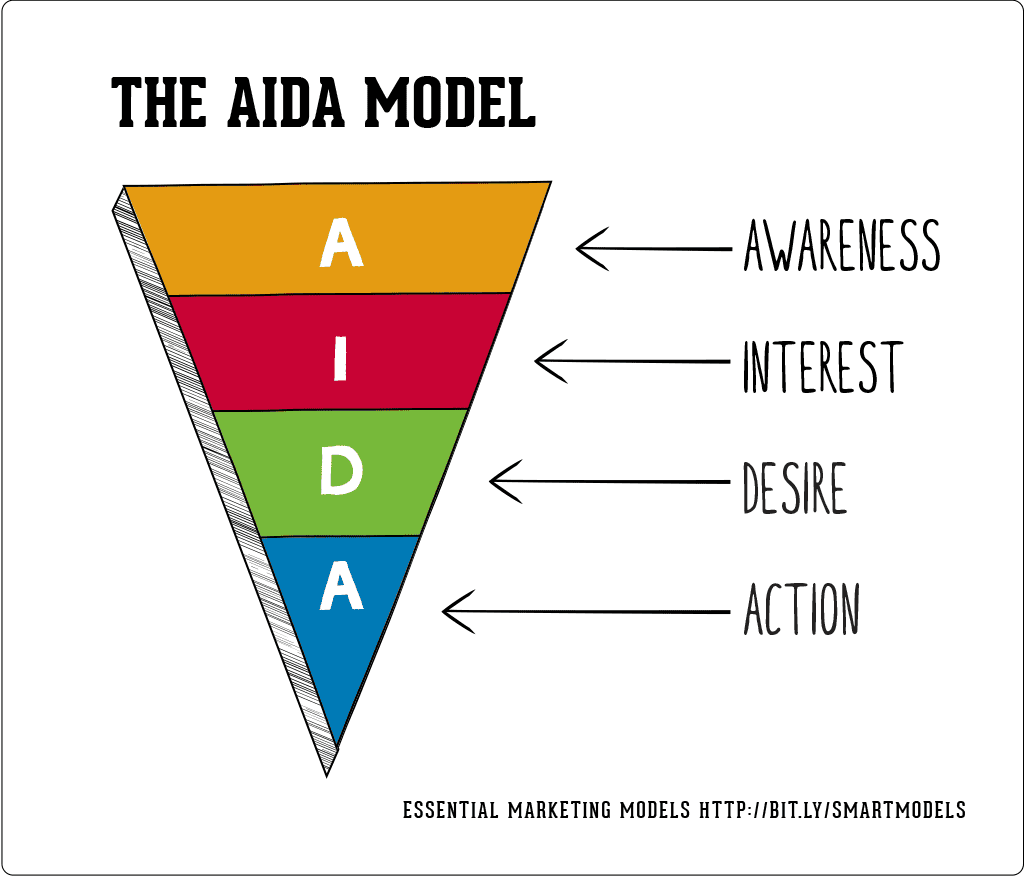
The original AIDA model (Source: Smart Insight)
Importance of the Acquisition Funnel
The acquisition funnel is a critical tool for businesses, as it provides a clear roadmap for customer acquisition. By understanding the different stages of the funnel, businesses can tailor their marketing strategies to meet the specific needs and preferences of customers at each stage.
This targeted approach can significantly improve conversion rates and customer retention.
Moreover, the acquisition funnel allows businesses to identify potential bottlenecks in their customer acquisition process. These bottlenecks may be areas where customers drop out of the funnel, indicating a need for improvement.
By addressing these issues, businesses can streamline their acquisition process and increase their overall efficiency.
Stages of the Acquisition Funnel
The acquisition funnel consists of several stages, each representing a different level of customer engagement. While the exact names and number of stages may vary, the following are commonly included: Awareness, Interest, Consideration, Intent, Evaluation, and Purchase.
It’s important to note that not all customers will pass through every stage of the funnel. Some may drop out at any point, while others may skip stages entirely. The goal of the acquisition funnel is not to force customers through each stage. Rather, it should guide those who are most likely to convert towards the final purchase.
Awareness
The first stage of the acquisition funnel is Awareness. This is where potential customers first become aware of your business, product, or service. This could be through various channels such as social media, online advertising, word-of-mouth, or search engine results. At this stage, the goal is to reach as many potential customers as possible and make them aware of your offering.
Marketing strategies at the Awareness stage are typically broad and aim to cast a wide net. This could include content marketing, social media marketing, SEO, and PR efforts. The key is to create a strong first impression that will entice potential customers to learn more about your offering.
For example, a project management SaaS might pair a LinkedIn ad campaign with a founder-led blog post, putting the product in front of thousands of prospects who have never heard of it before.
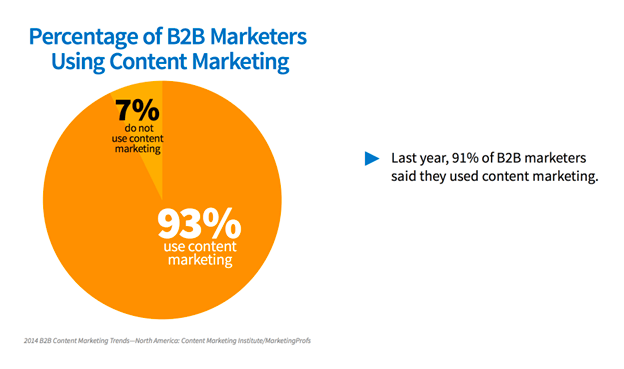
Content marketing is essential to increase awareness in B2B (Source: Neil Patel)
Interest
The second stage of the acquisition funnel is Interest. At this stage, potential customers have shown an interest in your offering and are actively seeking more information. They may visit your website, follow your social media accounts, or sign up for your newsletter. The goal at this stage is to provide valuable information. This will keep potential customers engaged and move them further down the funnel.
Marketing strategies at the Interest stage are more targeted and aim to provide potential customers with the information they need to make an informed decision. This could include educational content, product demos, and customer testimonials. The key is to demonstrate the value of your offering and how it can solve the customer’s problem or meet their needs.
For example, a CRM company might send a three-part email series that includes a short product demo video, prospects who watch the full video are twice as likely to book a sales call.
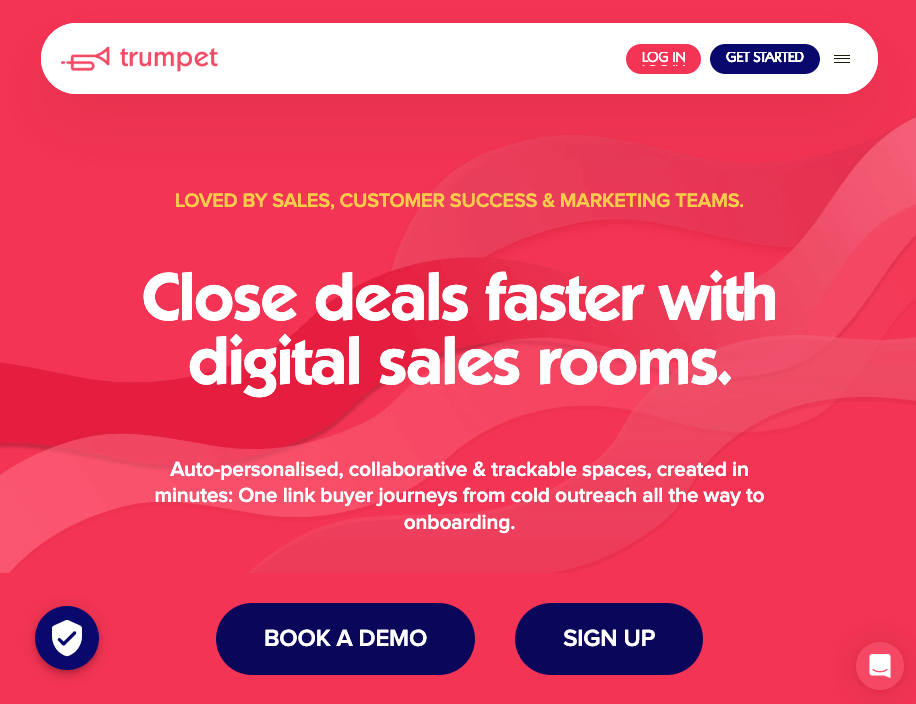
Product demos are a good way of educating interested customers (Source: Trumpet)
Consideration
The third stage of the acquisition funnel is Consideration. At this stage, potential customers are considering your offering as a possible solution to their problem or need. They may compare your offering with others in the market, evaluate the pros and cons, and consider the price and value. The goal at this stage is to position your offering as the best choice.
Marketing strategies at the Consideration stage are focused on differentiation and persuasion. This could include comparison charts, case studies, and special offers. The key is to highlight the unique benefits of your offering and convince potential customers that it is the best choice for them.
For example, a prospect weighing two analytics tools might read a side-by-side pricing and feature page before requesting a trial, using it to decide which vendor fits their team size and budget.
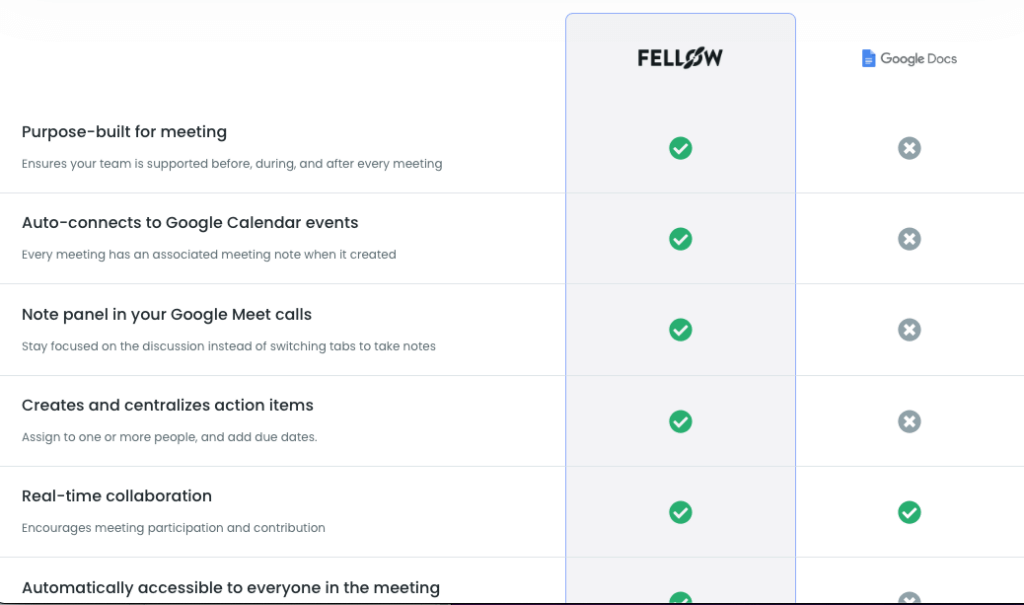
Comparisons with similar products can help convince potential customers (Source: Fellow)
Intent
The fourth stage of the acquisition funnel is Intent. At this stage, potential customers clearly intend to purchase your offering. They may add your product to their shopping cart, request a quote, or contact your sales team. The goal at this stage is to facilitate the purchase process and remove any barriers to conversion.
Marketing strategies at the Intent stage are focused on conversion and customer service. This could include easy checkout processes, personalized communication, and responsive customer support. The key is to make the purchase process as smooth and hassle-free as possible for the customer.
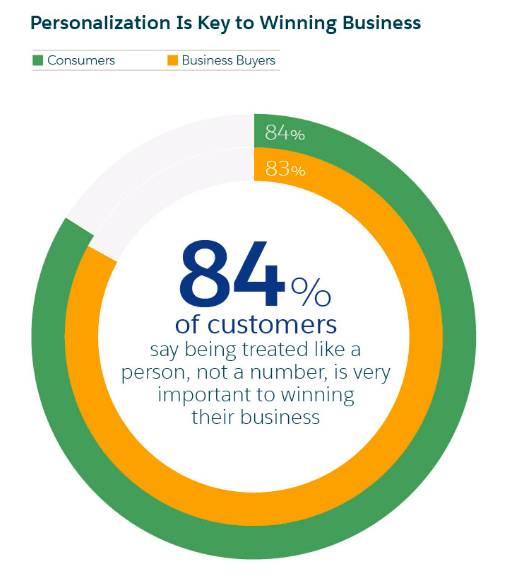
Personalised messages play a key role in making customers feel valued (Source: Instapage)
Evaluation
The fifth stage of the acquisition funnel is Evaluation. At this stage, potential customers are evaluating their purchase decisions. They may seek feedback from others, read reviews, or reflect on their own needs and preferences. The goal at this stage is to reassure the customer that they have made the right choice.
Marketing strategies at the Evaluation stage are focused on reassurance and validation. This could include follow-up communication, customer reviews, and satisfaction guarantees. The key is to provide the customer with the confidence and reassurance they need to finalize their purchase.
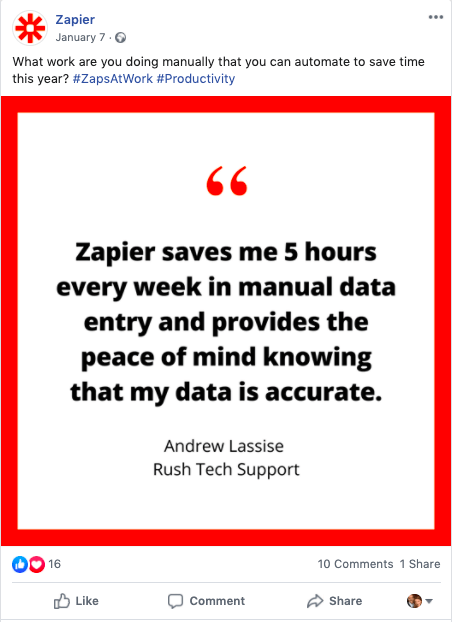
Positive reviews are a strong signal reassuring customers of their decision (Source: Testimonialhero)
Purchase
The final stage of the acquisition funnel is Purchase. At this stage, the customer has decided to purchase your offering. The goal at this stage is to ensure a positive purchase experience, as this can lead to repeat purchases and customer loyalty.
Marketing strategies at the Purchase stage are focused on customer satisfaction and retention. This could include thank-you messages, customer surveys, and loyalty programs. The key is to make the customer feel valued and appreciated. This helps foster a long-term relationship and encourages repeat business.
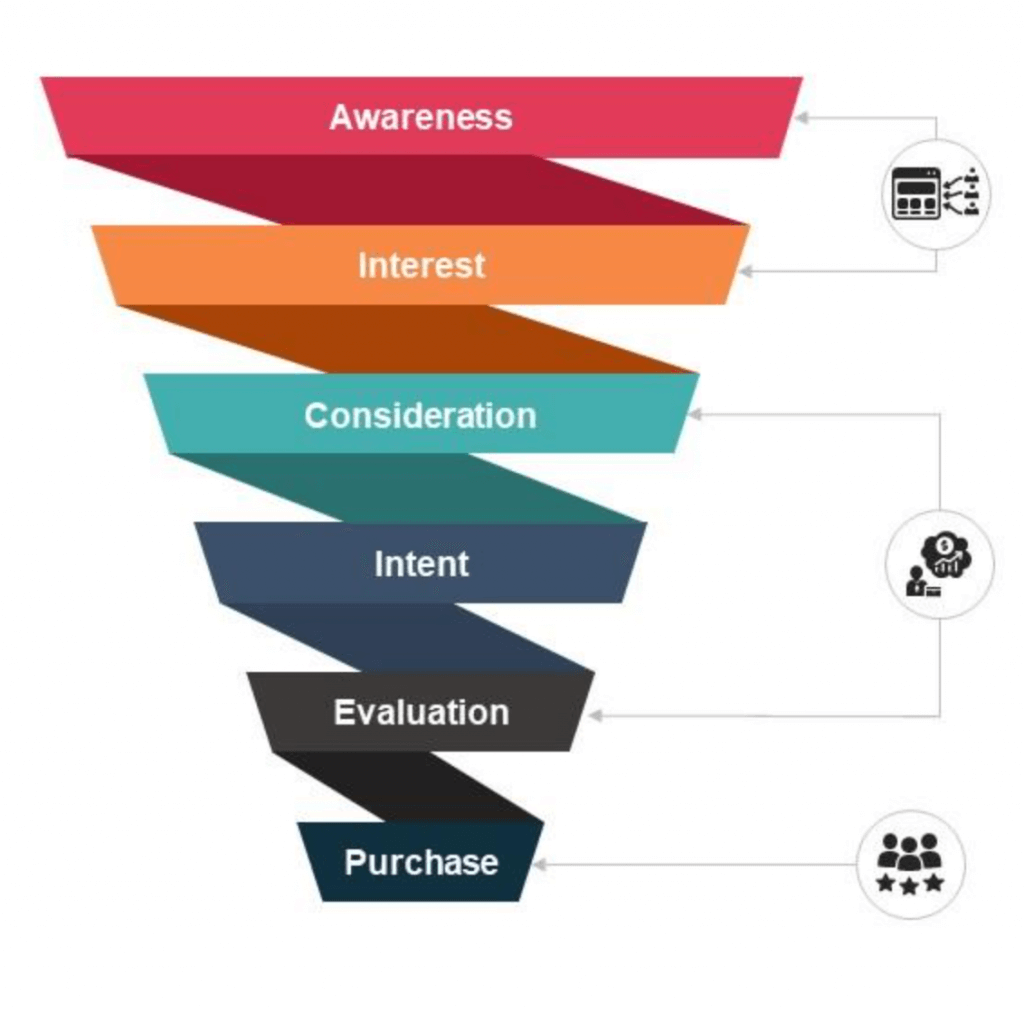
The stages of the acquisition funnel (Source: HockeyStack)
How to build a customer acquisition funnel
- Map your funnel stages to the actual customer journey. Start by listing every touchpoint a prospect has with your product, from first hearing about it to completing a purchase. Group those touchpoints into the standard funnel stages (Awareness, Interest, Consideration, Intent, Evaluation, Purchase) and confirm the sequence reflects how your buyers actually behave, not how you wish they did.
- Define the channels for each stage. At the top of the funnel, organic search, paid social and word-of-mouth referrals are common entry points. In the middle stages, email sequences, product demos and comparison content carry the load. At the bottom, direct sales outreach, free trials and clear pricing pages convert intent into action. Assign at least one owned channel and one paid or partner channel per stage.
- Match content format to stage intent. Awareness calls for short, shareable content (blog posts, social clips, search-optimised landing pages). Interest and Consideration call for deeper formats (case studies, webinars, feature breakdowns). Intent and Evaluation call for proof (customer reviews, ROI calculators, live demos). Purchase calls for friction removal (clear calls to action, fast checkout, responsive support).
- Set a measurable metric for each stage. Without stage-level metrics you cannot tell where the funnel is leaking. Useful examples: unique visitors or impressions (Awareness), email sign-ups or content downloads (Interest), demo requests (Consideration), free-trial activations (Intent), sales-call completion rate (Evaluation), paid conversion rate (Purchase). Track each metric weekly and set a baseline before running any test.
- Run controlled tests one variable at a time. Pick the stage with the largest drop-off and change one element: headline copy, call-to-action wording, page layout, or offer framing. Run the variant against the original for a statistically meaningful sample before declaring a winner. Moving to the next stage without completing the current test dilutes the data.
- Refine based on data, then repeat. After each test cycle, update your stage metric baselines and document what changed and by how much. Carry winning variants forward, retire losers, and move to the next bottleneck stage. Treat the funnel as a living system: customer expectations and competitive conditions shift, so the work of measurement and adjustment has no finish line.
Role in Growth Marketing
The acquisition funnel plays a central role in growth marketing, a strategy focused on attracting, engaging, and retaining customers to achieve sustainable business growth. By understanding the customer journey through the acquisition funnel, businesses can shape their growth marketing strategies to meet the specific needs and preferences of customers at each stage.
Growth marketing goes beyond traditional marketing strategies by focusing on the entire customer lifecycle, not just the initial acquisition. This holistic approach allows businesses to optimize their strategies for each stage of the acquisition funnel, from raising awareness to retaining customers. As a result, growth marketing can lead to higher conversion rates, increased customer loyalty, and sustainable business growth.
Acquisition Funnel and Customer Acquisition Cost (CAC)
The acquisition funnel is closely tied to the concept of Customer Acquisition Cost(CAC). This is the total cost of acquiring a new customer. By understanding the acquisition funnel, businesses can identify areas where they can reduce their CAC. This includes improving conversion rates or increasing customer retention.
For example, if a business finds that many potential customers are dropping out at the Consideration stage, they may need to improve their marketing materials or offer more competitive pricing. Fixing these issues can increase the conversion rate and reduce CAC, leading to a higher return on investment (ROI).
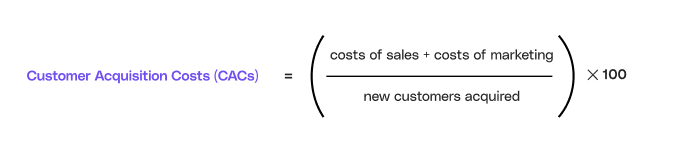
Segmenting of the acquisition funnel can help understand where to lower CACs (Source: Cello)
Acquisition Funnel and Customer Lifetime Value (CLV)
The acquisition funnel also plays a role in determining Customer Lifetime Value (CLV), which is the total revenue a business can expect from a single customer over the course of their relationship. By optimizing the acquisition funnel, businesses can increase their CLV by retaining customers for longer and encouraging repeat purchases.
For instance, if a business finds that many customers are not returning after their first purchase, they may need to improve their post-purchase communication or offer a loyalty program. Fixing these gaps can increase the customer retention rate and CLV, leading to greater profitability in the long run.
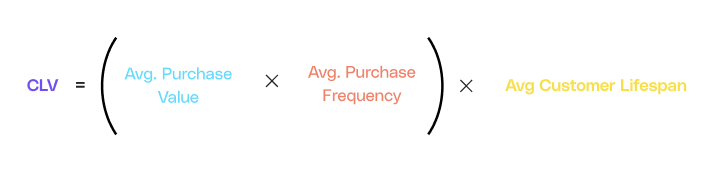
A better acquisition funnel can lead to higher CLV (Source: Cello)
Optimization
Optimizing the acquisition funnel involves identifying potential bottlenecks or areas of improvement at each stage, and implementing strategies to fix those issues. This can involve a variety of tactics, from improving marketing materials to enhancing customer service.
It’s important to note that optimizing the acquisition funnel is not a one-time task, but an ongoing process. Customer preferences and market conditions can change over time. As such, businesses need to monitor and adjust their strategies to stay competitive continually.
|
Metric |
What It Measures |
Why It Matters for Optimization |
|---|---|---|
|
Conversion rate per stage |
The percentage of prospects who move from one funnel stage to the next. |
Pinpoints exactly which stage is losing the most prospects, so effort goes to the right fix. |
|
Customer Acquisition Cost (CAC) |
Total spend divided by the number of new customers acquired in a given period. |
Shows whether marketing investment is proportionate to the customers it produces. |
|
Customer Lifetime Value (CLV) |
The total revenue a business can expect from a single customer over the full relationship. |
Sets the ceiling for how much acquiring a customer is worth spending, guiding budget decisions. |
|
Drop-off rate |
The share of prospects who exit the funnel at a specific stage without progressing. |
Identifies friction points that need attention before they erode overall conversion. |
|
Time-to-conversion |
The average time a prospect takes to move from first awareness to a completed purchase. |
Longer cycles often signal unclear messaging or missing information at key stages. |
Data Analysis
Data analysis is a crucial part of optimizing the acquisition funnel. By collecting and analyzing data on customer behavior, businesses can gain insights into how customers are moving through the funnel, where they are dropping out, and what factors are influencing their decisions.
There are many tools and techniques available for data analysis, from simple spreadsheets to sophisticated analytics software. The key is to choose a method that fits your business needs and capabilities, and to use the insights gained to inform your strategies.
A/B Testing
A/B testing, also known as split testing, is a method of comparing two versions of a webpage, email, or other marketing material to see which performs better. This can be a powerful tool for optimizing the acquisition funnel, as it allows businesses to test different strategies and measure their impact on conversion rates.
For example, a business could test two different headlines for a landing page to see which one attracts more clicks. Or, they could test two different email subject lines to see which one leads to more opens. Businesses can continually test and refine their strategies to optimize their acquisition funnel and improve their overall performance.
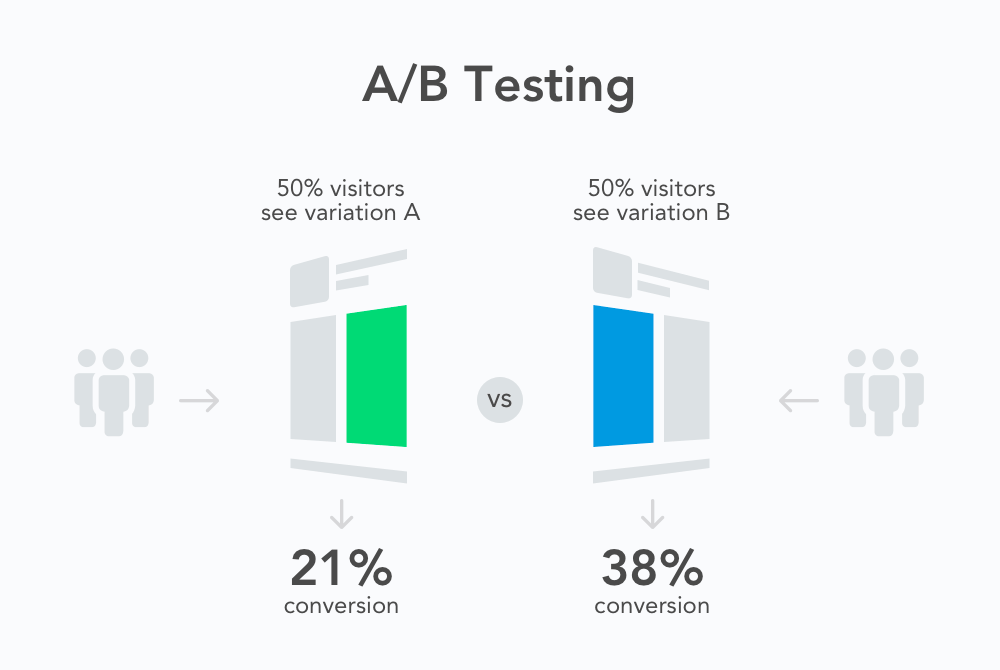
A/B Testing is essential to improve the acquisition funnel (Source: SplitMetrics)
Customer Feedback
Customer feedback is another valuable tool for optimizing the acquisition funnel. By listening to what customers have to say, businesses can gain insights into their needs and preferences, and identify areas where they can improve.
There are many ways to collect customer feedback, from surveys and focus groups to social media and customer reviews. The key is to be open to feedback, both positive and negative, and to use it as a learning opportunity to improve your business.
Best Tools for Managing Your Customer Acquisition Funnel
A handful of tool categories cover most of the acquisition funnel end to end. Pairing the right tool with each stage makes it easier to track where prospects move and where they stall.
- Analytics platforms (e.g. Google Analytics, Mixpanel, Amplitude) track how prospects move through Awareness and Interest, and flag where traffic drops off.
- CRM systems (e.g. HubSpot, Salesforce) manage Consideration and Intent by centralizing lead data and follow-up sequences.
- A/B testing tools (e.g. Optimizely, VWO) test landing pages, emails and checkout flows across the funnel to lift conversion rates.
- Referral and advocacy tools like Cello add a peer-driven acquisition channel that runs inside the product experience, feeding pre-qualified prospects into the top of the funnel.
What is the difference between an acquisition funnel and a sales funnel?
An acquisition funnel covers the full journey from first awareness to initial purchase, while a sales funnel typically refers to the narrower, later stages where a prospect is actively engaging with your sales team. In practice, many teams use the terms interchangeably, but acquisition funnels are broader in scope
How long does it take for a customer to move through the acquisition funnel?
Funnel velocity depends on the product's price point and complexity — a self-serve SaaS tool may convert a prospect in days, while an enterprise deal can take months. Mapping time-in-stage metrics for your specific buyer helps set realistic expectations and surfaces stages where momentum stalls.
What is a healthy conversion rate for an acquisition funnel?
Conversion benchmarks vary widely by industry, channel, and business model, so the most useful comparison is against your own historical baseline rather than a generic industry figure. Consistent improvement in stage-to-stage conversion rates over time is a stronger signal of funnel health than hitting an external benchmark.
Can referrals function as an acquisition funnel stage?
Yes — referred prospects typically enter the funnel at the Interest or Consideration stage because the referring peer has already established credibility, compressing the Awareness step. This shortcut lowers Customer Acquisition Cost (CAC) and tends to produce higher conversion rates than cold-channel traffic.
What is the difference between a sales funnel and a customer acquisition funnel?
A sales funnel focuses specifically on the steps a prospect takes from initial contact with a sales rep to closing a deal. A customer acquisition funnel is broader — it encompasses all marketing and sales touchpoints from the moment a prospect first hears about your brand through to their first purchase. The two concepts overlap significantly but the acquisition funnel typically includes top-of-funnel brand awareness activities that precede direct sales engagement.
How do you measure customer acquisition funnel performance?
Track stage-specific metrics: reach and impressions at Awareness, CTR and engagement at Interest, lead conversion rate at Consideration, and Customer Acquisition Cost (CAC) and overall conversion rate at Purchase. Comparing these metrics over time reveals which stage is losing the most prospects.
How long does it take to build a customer acquisition funnel?
A basic funnel with defined stages, mapped content, and tracking in place can be built in two to four weeks. A fully optimized funnel with A/B-tested messaging, automated nurture sequences, and attribution modeling typically takes three to six months of iterative refinement.
What is a good customer acquisition rate?
Benchmarks vary widely by industry. For SaaS companies, a funnel conversion rate (visitors to paying customers) of 2–5% is considered healthy. E-commerce averages 1–3%. What matters most is tracking your own baseline and improving it consistently quarter over quarter rather than chasing an industry number.