

Most referral tools marketed as "mobile" open a webview instead of loading a native UI. Native mobile SDK referral platforms for B2B are rare, and the gap matters: webviews break share sheet integration, depend on cookies that Safari ITP or App Tracking Transparency strip, and lag on render performance. For B2B SaaS apps where users share context from inside the product, that compounds into lost conversions. We scored six tools against five criteria tied to SDK availability, server-side attribution, billing integrations, payout infrastructure and EU posture.
- TLDR:
- What are native mobile SDKs for referral platforms
- How we ranked these referral platforms
- Top-ranked referral SDK for B2B SaaS based on our criteria: Cello
- Extole
- Friendbuy
- Viral Loops
- FirstPromoter
- Tapfiliate
- Feature comparison table of referral platforms with mobile SDKs
- Why Cello is the best referral SDK for B2B SaaS mobile apps
TLDR:
- Native SDKs render with OS primitives and wire the device share sheet; webview wrappers break sharing and attribution under ITP and ATT
- Only Cello and Extole ship mobile SDKs; Cello uses native Swift and Kotlin while Extole loads HTML in a webview
- Server-side attribution survives ATT refusal where cookie-based tools drop a significant share of conversions — industry opt-in averages around 35% (Adjust, Q2 2025), meaning the majority of users decline tracking by default
- Friendbuy, Viral Loops, FirstPromoter and Tapfiliate document no iOS or Android SDKs
- Cello ships Swift, Kotlin, React Native and Flutter SDKs with server-side attribution via Stripe and Chargebee webhooks
What are native mobile SDKs for referral platforms
A native mobile SDK is a referral library written in the host OS's first-class language: Swift or Objective-C for iOS, Kotlin or Java for Android. It compiles into your app binary and talks to the referral API over HTTPS, with no browser shell between.
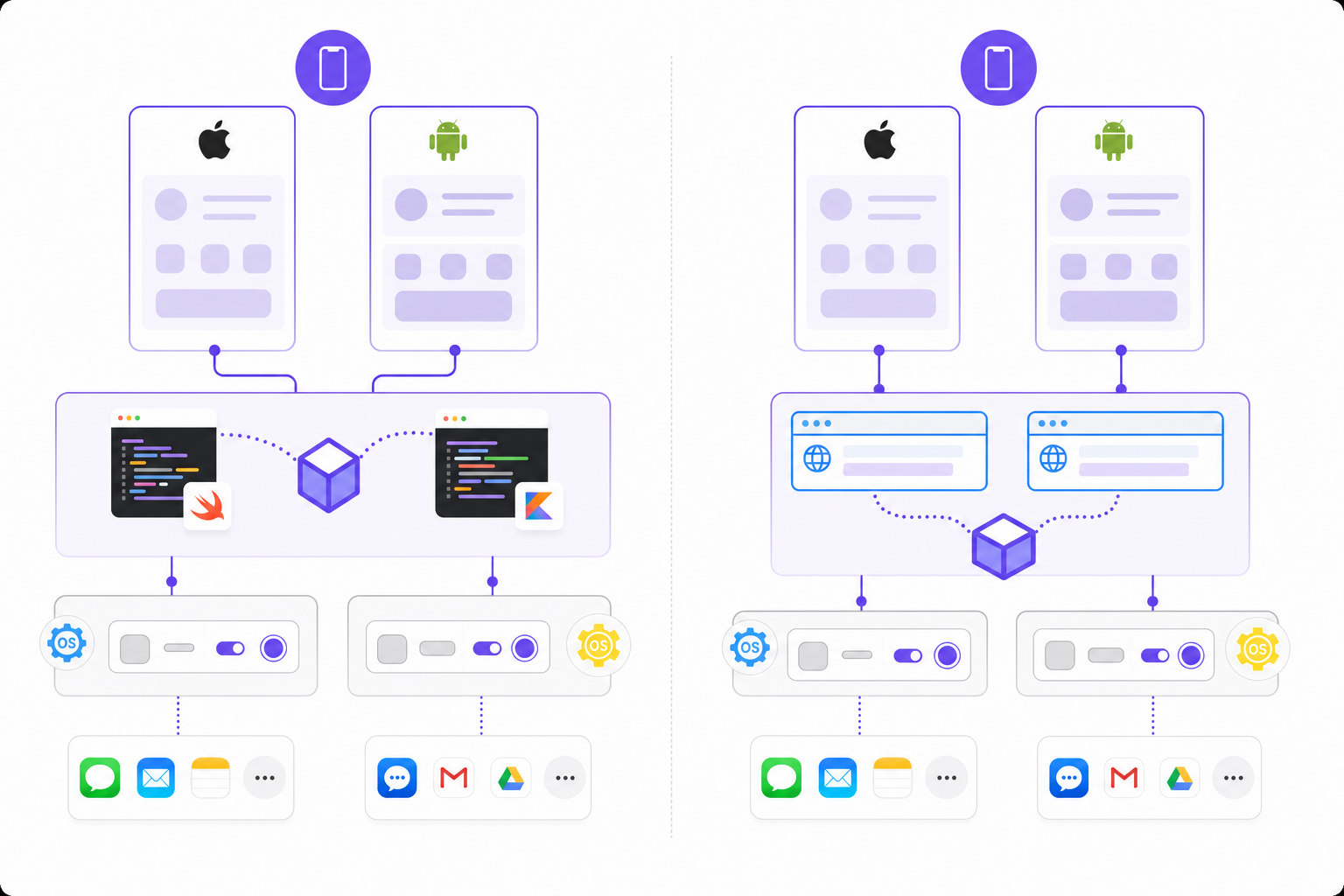
That matters because many "mobile" referral tools are webview wrappers. They render a hidden browser widget, which breaks in three predictable places. Safari's Intelligent Tracking Prevention and similar browser privacy features compound these issues:
- Share sheets fall back to generic browser intents instead of WhatsApp, Messages or LinkedIn
- Attribution depends on cookies that ITP or App Tracking Transparency may strip
- Render performance lags while the UI thread waits on remote HTML
A native SDK avoids all three. The widget runs on OS UI primitives, share calls hit the device share sheet and attribution flows through device identifiers and server-side webhooks. For B2B SaaS apps where the referrer is a logged-in user sharing context from inside the product, that gap compounds into measurable activation and conversion lift.
How we ranked these referral platforms
Each tool was scored against five criteria tied to verifiable public documentation:
- Native SDK availability: a documented Swift/Objective-C SDK for iOS and a Kotlin/Java SDK for Android. React Native or Flutter wrappers alone did not qualify.
- Server-side attribution: a path that survives App Tracking Transparency, ITP and consent-banner refusal, beyond cookie or IDFA fallback.
- B2B SaaS billing fit: pre-built Stripe and Chargebee integrations or webhook recipes, plus organisation-level attribution.
- Payout infrastructure: multi-currency payouts, automated tax and reward handling, reasonable country coverage.
- EU and GDPR posture: data residency, documented consent management and a credible privacy stance.
Rankings draw on vendor documentation reviewed via web search at the time of writing.
Top-ranked referral SDK for B2B SaaS based on our criteria: Cello
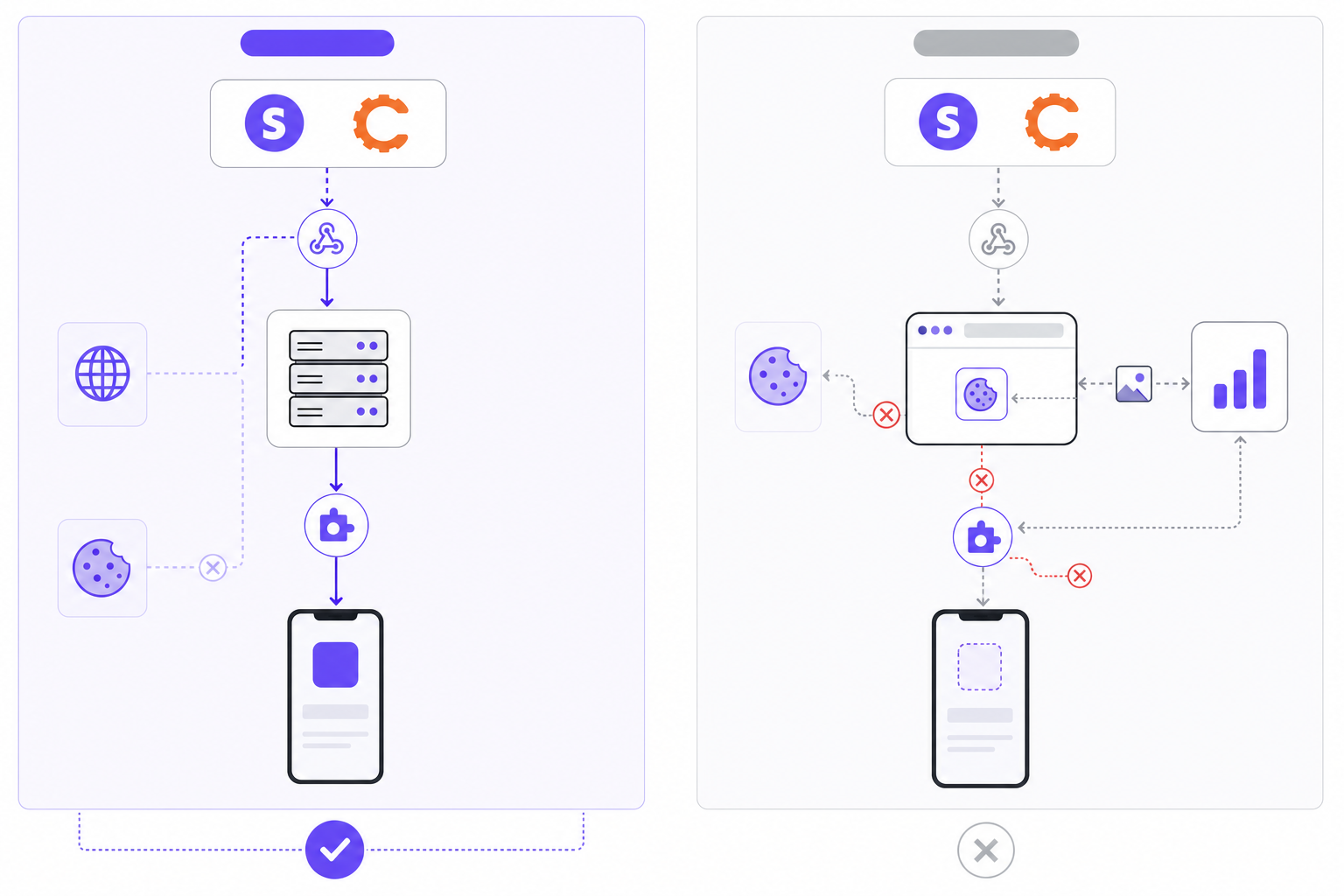
Cello ships SDKs across the four runtimes B2B SaaS mobile apps actually use: Swift for iOS 15+, Kotlin for Android API 21+, React Native and Flutter. Each draws the in-product widget with OS-native UI, hooks the device share sheet and authenticates via backend-signed JWT (HS512). Attribution runs server-side through Stripe and Chargebee webhooks, so ITP, ad blockers and ATT refusal do not drop conversions.
What we offer
- Native iOS, Android, React Native and Flutter SDKs with embedded referral widgets
- Server-side attribution via webhook metadata, with cookie auto-attribution as fallback
- Automated PayPal payouts across 60+ countries, with VAT handling and credit notes
- Pre-built integrations with Stripe, Chargebee, HubSpot, Salesforce and four mobile MMPs (Branch, AppsFlyer, Singular, Adjust)
- Ten interface languages, light/dark themes and a Floating Action Button or custom launcher
Good for: B2B SaaS teams running mobile or hybrid products who want referrals live in days, server-side attribution that holds under iOS 14.5+, and one ledger covering end-user referrals and partner programs.
Bottom line: Hera went live in 2 days. Butter launched in under 5 hours. Moss grew Referral ARR 650% year-on-year after replacing a manual program. SDK breadth, EU-hosted posture and the unified user-plus-partner model are why Cello leads this list.
Extole
Extole ships iOS (13.0+), Android (API 21+) and React Native SDKs, but they open a full-screen webview onto a hosted referral microsite instead of rendering native components. The device share sheet is wired up; the UI inside is HTML.
What they offer
- iOS, Android and React Native SDKs that launch a referral microsite in a webview
- Audience segmentation, A/B testing and enterprise fraud controls
- Shopify, BigCommerce, Klaviyo and Braze integrations
- Gift card and sweepstakes rewards geared to retail loyalty
Good for: large B2C retail, fintech and travel brands like Discovery Card, Princess Cruises and L'Oreal running high-volume consumer acquisition.
Limitation: no documented Stripe or Chargebee subscription integrations, no HubSpot deal-pipeline hook, and no organisation-level attribution for B2B seat-based billing. SaaS teams running mobile apps need native components and billing-connected attribution that Extole's webview model does not deliver.
Friendbuy
Friendbuy is a B2C ecommerce referral and loyalty product tuned for post-purchase flows and DTC brands. Public materials document website widgets and email or SMS automation, but no native iOS or Android SDKs.
What they offer
- Website pop-ups, modals and post-purchase confirmation page widgets
- Third-party gift cards, account credit and coupon rewards
- Email and SMS campaign automation for retail customer journeys
- Loyalty features including VIP tiers and points-based rewards
Good for: ecommerce and retail brands in apparel, CPG and wellness running post-purchase referrals with discount code payouts.
Bottom line: strong on B2C checkout mechanics, but the missing mobile SDK layer and absence of B2B subscription billing hooks rule it out for SaaS teams running referrals inside iOS or Android apps. Implementations average around two months with white-glove onboarding.
Viral Loops
Viral Loops is a template-based referral campaign builder aimed at pre-launch waitlists, newsletter growth and DTC programs. No native mobile SDKs are documented.
What they offer
- Pre-built campaign templates modeled on consumer viral moments (Robinhood, Harry's, Morning Brew)
- External hosted landing pages for lead capture and email collection
- Shopify integration for ecommerce referral programs
- Automated rewards via Stripe and Tremendous on $159/mo and higher tiers
Limitation: no documented iOS or Android SDKs, and the model assumes an external landing page instead of an in-product surface. HubSpot is gated to the $159/mo tier, and participant caps push programs into higher tiers as they grow.
Bottom line: workable for pre-launch hype and newsletter loops, but the missing mobile SDK layer rules it out for B2B SaaS teams running referrals inside iOS or Android apps.
FirstPromoter
FirstPromoter is an affiliate tracking tool built on cookie attribution and an external partner dashboard. No native iOS or Android SDKs are documented.
What they offer
- JavaScript tracking with cookie attribution (_fprom_ref)
- External affiliate portal for partner links and stats
- Payment integrations with Stripe, Paddle and Chargebee
- W-9 and W-8BEN tax form collection, with merchant retaining tax liability
Good for: SaaS teams running external affiliate programs with bloggers and content creators.
Limitation: cookie tracking leaks attribution under Safari ITP and ad blockers, no native CRM hooks, and referral revenue caps at the $5k and $15k+ tiers.
Bottom line: a workable affiliate tracker, but the missing mobile SDK layer rules it out for in-app user referrals on iOS or Android.
Tapfiliate
Tapfiliate is an affiliate tracking tool for ecommerce and SaaS, built around external affiliate recruitment. No native iOS or Android SDKs are documented.
What they offer
- JavaScript snippet with cookie and pixel attribution
- External affiliate portal where partners manage links and view stats
- Server-to-server postback tracking on the $179/mo Scale tier
- Trolley integration required for automated payouts
Good for: ecommerce or content businesses recruiting bloggers and influencers.
Limitation: cookie tracking on the $89/mo base tier, G2 reviewers flag weak fraud filtering, and Launch tier payouts are manual. Butter launched in under 5 hours with server-side attribution.
Bottom line: workable for external affiliates, but the missing mobile SDK rules it out for B2B SaaS running user-led referrals inside iOS or Android apps.
Feature comparison table of referral platforms with mobile SDKs
The table below maps the six tools against the capabilities that decide whether a referral program survives contact with a B2B SaaS mobile stack: native SDKs across runtimes, server-side attribution, billing fit and EU posture.
|
Feature |
Cello |
Extole |
Friendbuy |
Viral Loops |
FirstPromoter |
Tapfiliate |
|---|---|---|---|---|---|---|
|
Native iOS SDK |
Yes |
Yes (webview) |
No |
No |
No |
No |
|
Native Android SDK |
Yes |
Yes (webview) |
No |
No |
No |
No |
|
React Native SDK |
Yes |
Yes |
No |
No |
No |
No |
|
Flutter SDK |
Yes |
No |
No |
No |
No |
No |
|
In-product widget |
Yes |
No (webview) |
No |
No |
No |
No |
|
Server-side attribution |
Yes |
No |
No |
No |
No |
Yes (Scale tier) |
|
Stripe native integration |
Yes |
No |
No |
Yes ($159/mo+) |
Yes |
Yes |
|
HubSpot native integration |
Yes |
No |
No |
Yes ($159/mo+) |
No |
No |
|
Multi-currency payouts |
Yes (60+ countries) |
Gift cards |
Gift cards |
Yes ($159/mo+) |
No (manual) |
Trolley integration |
|
EU/GDPR hosting |
Yes |
No |
No |
No |
No |
No |
|
Merchant of Record |
Yes |
No |
No |
No |
No |
No |
Two patterns fall out. Only Cello and Extole ship a mobile SDK, and only Cello builds the widget with native components instead of a webview. For B2B SaaS teams selling on Stripe or Chargebee into European buyers, the shortlist collapses to one.
Why Cello is the best referral SDK for B2B SaaS mobile apps
Three structural choices decide this category, and Cello lands on the right side of all three.
- True native components on iOS 15+ (Swift) and Android API 21+ (Kotlin), with parity SDKs for React Native and Flutter. No webview.
- Server-side attribution via Stripe and Chargebee webhook metadata, holding up under ATT, ITP and consent refusal where cookie-based tools leak 30 to 50% of conversions.
- Pre-built hooks into Stripe, Chargebee, HubSpot and Salesforce, automated PayPal payouts across 60+ countries with VAT handling, and EU-hosted AI infrastructure.
VEED cut CAC against paid by 90.4%, and Miro reports an 8x activation lift on referred users.
VEED cut CAC against paid by 90.4%, and Miro reports an 8x activation lift on referred users.
What is the difference between a native mobile SDK and a webview for referral programs?
A native SDK is written in Swift or Kotlin and renders referral UI with OS components. A webview loads HTML inside a browser shell. Native code hits the device share sheet directly, performs better, and works offline.
How do referral platforms handle attribution after iOS App Tracking Transparency?
ATT opt-in sits around 15 to 25%. Server-side attribution skips IDFA entirely by reading conversion events from billing webhooks (Stripe, Chargebee), so the 75 to 85% who decline tracking still convert cleanly.
Can I embed a referral program inside my iOS app without a webview?
Yes. SDKs written in Swift or Objective-C render the widget as a native screen, with share, reward tracking, and partner status built from UIKit or SwiftUI primitives.
Which referral platforms support both Android and iOS natively?
Only Cello ships true native SDKs across iOS 15+ (Swift), Android API 21+ (Kotlin), React Native, and Flutter. Extole routes UI through a webview. Friendbuy, Viral Loops, FirstPromoter, and Tapfiliate document none.
How long does it take to integrate a referral SDK into a mobile app?
Hera went live in 2 days. Butter launched in under 5 hours. Tools that route to an external portal stretch into weeks.
What mobile SDK features matter most for B2B SaaS referral programs?
Server-side attribution that survives ATT, ITP, and consent refusal; Native share sheet integration for WhatsApp, Messages, LinkedIn; Direct Stripe and Chargebee hooks with organisation-level attribution; Multi-currency payouts with VAT handling; Backend-signed JWT auth so secrets never sit on the client
Does server-side attribution work when users share referral links through messaging apps like WhatsApp or Slack?
Yes, server-side attribution tracks conversions through billing webhooks that read metadata from Stripe or Chargebee customer objects regardless of where the link was shared. The UCC (unique 11-character code) survives share to WhatsApp, Slack, Messages, LinkedIn or email because attribution resolves server-side when the referred user converts, not at click time.
What happens to attribution when a referred user blocks cookies or refuses App Tracking Transparency?
Cello's server-side attribution path routes around blocked cookies and ATT refusal by reading conversion events from Stripe and Chargebee webhooks with metadata fields (cello_ucc, new_user_id, new_user_organization_id). The 75-85% of iOS users who decline tracking still convert cleanly because attribution flows through the billing system, not device identifiers.
Can I run different referral campaigns for free users versus paid subscribers in the same mobile app?
Yes, you can segment users and show different campaigns with different reward structures based on subscription tier. The JWT payload accepts custom fields that map to your user segments, and campaigns are configured per-audience in the Cello Portal.
How do I integrate Cello's mobile SDK with third-party auth providers like WorkOS or Auth0?
The Cello SDK authenticates users via backend-signed JWT (HS512) that you generate on your server after WorkOS or Auth0 confirms the session. Your backend issues the JWT with productUserId and orgIds, then passes it to the SDK—no direct integration with the auth provider is needed.
Do I need separate SDKs for iOS and Android or can I use one cross-platform library?
Cello ships native Swift (iOS 15+) and Kotlin (Android API 21+) SDKs plus React Native and Flutter wrappers. If your app runs on React Native or Flutter, use the single cross-platform SDK; for native codebases, install the platform-specific SDK that renders with OS UI components.
Can partners receive payouts through bank transfer or Wise instead of PayPal?
PayPal is the only automated payout method Cello supports globally; Venmo is available for US partners on request. Bank transfer, SEPA, Wise, ACH, gift cards and crypto are not currently supported. You can track referrals in Cello and handle payouts manually outside the platform if needed.
How does fraud detection work for mobile app referrals where device fingerprints are less reliable?
Cello's fraud detection reads signals from in-product user behavior, billing-event linkage via Stripe and Chargebee webhooks, and server-side attribution instead of relying on device fingerprints. Self-referrals are auto-flagged, pending rewards cancel on refunds, and the 30-day review window surfaces risk patterns that evolve over time.
What's the difference between referral tracking via cookies versus mobile SDKs for attribution accuracy?
Cookie-based tracking leaks 30-50% of mobile conversions under Safari ITP and App Tracking Transparency because cookies get stripped. Native mobile SDKs route attribution server-side through billing webhooks (Stripe, Chargebee) so conversions are tracked at purchase time regardless of client-side blocking.
Can I embed the referral widget inside a CLI tool or terminal interface instead of a mobile app?
No, the Cello SDKs require a logged-in web or mobile app environment with a UI surface to render the referral component. For CLI or terminal tools, you would need to route users to a web-based referral portal or build a custom integration using the Cello REST API.
How do mobile measurement partners like Branch or AppsFlyer integrate with Cello for app install attribution?
Cello integrates with Branch, AppsFlyer, Singular and Adjust by appending the UCC parameter to deep links so the MMP can pass it through install attribution. This allows referral campaigns to track both web-to-app and app-to-app conversions through the MMP's attribution layer alongside Cello's server-side conversion tracking.