
External portals break the product-led flow you spent years building. Six tools claim to serve PLG SaaS, but only one qualifies as best for PLG SaaS when measured against the four architectural requirements PLG teams need: in-product embedding, server-side attribution, billing-event reward triggers and self-serve operation without recurring engineering tickets.
- What is referral software for product-led SaaS
- How we ranked the best referral software for PLG SaaS
- Best overall referral software for product-led SaaS: Cello
- Extole
- Friendbuy
- Referral Factory
- Viral Loops
- FirstPromoter
- Feature comparison table of referral software for product-led SaaS
- Why Cello is the best referral software for product-led SaaS
TLDR:
- PLG referral software must render inside the app with server-side attribution and billing-event rewards
- Five of six tools analyzed serve B2C retail or waitlists, not authenticated SaaS activation
- Cookie-based tracking fails for a significant share of B2B users hitting Safari ITP and ad-blockers
- External portals break flow; Softr saw 5x higher conversion after switching to in-product widgets
- Cello ships native SDKs for web and mobile with Stripe-triggered payouts, live in under 5 hours
What is referral software for product-led SaaS
Referral software for product-led SaaS is infrastructure that turns existing users into an attributable acquisition channel without bolting on a sales motion or routing users to an external portal. It differs from generic affiliate or e-commerce tools in four concrete ways:
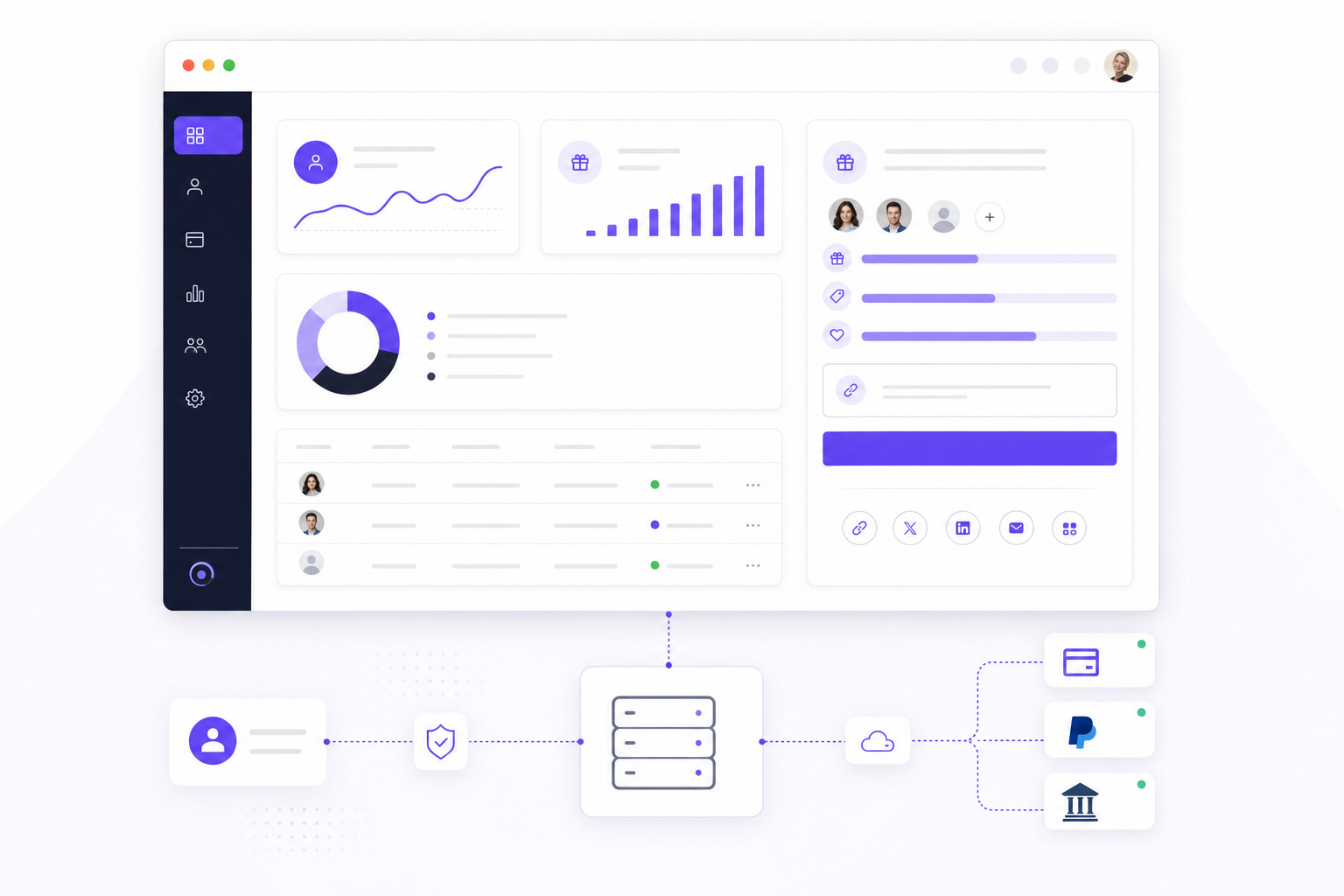
- In-product widget: the referral surface appears inside the app where users already work, not on a separate microsite.
- Server-side attribution: tracking survives ITP, ad-blockers, and consent refusals instead of relying on cookies PLG users strip.
- Billing-event reward triggers: rewards fire off Stripe, Chargebee, Paddle, or Recurly events tied to paid conversion, not raw signups.
- Self-serve program management: growth teams configure campaigns, rewards, and payouts without engineering tickets each cycle.
In a PLG motion, users adopt the product directly. Product-led growth strategies use the product itself as the primary driver of acquisition. Referral tooling has to live in that same path.
How we ranked the best referral software for PLG SaaS
Four criteria separated tools that fit a PLG motion from affiliate software wearing a SaaS label. We weighted each evenly and scored against public docs, G2 reviews, and verified case studies.
- In-product surface: does the referral widget render inside the authenticated app, or route users to an external portal?
- Server-side attribution: does tracking survive ITP, ad-blockers, and consent refusals without third-party cookies?
- Billing-event rewards: do conversions fire off Stripe, Chargebee, Paddle, or Recurry events instead of raw signups that inflate fraud risk?
- Self-serve operation: can a growth team launch and iterate without a dedicated partnerships hire or recurring eng tickets?
Tools missing any of the four ranked lower regardless of brand recognition.
Best overall referral software for product-led SaaS: Cello
Cello is the referral infrastructure built for product-led B2B SaaS. The customer outcomes tell the story: VEED at 90.4% lower CAC, Moss grew Referral ARR 650% YoY, Miro's 8x activation rate, and Hera attributes 15.8% of total ARR growth to the channel. None of those came from an external portal. They came from an in-product widget wired to billing events.
Native SDKs for web, iOS, Android, React Native, and Flutter embed the widget inside your authenticated app. Server-side attribution writes to Stripe and Chargebee customer metadata, so tracking survives ITP and consent refusals. Reward triggers fire on invoice.paid events, not raw signups. Butter went live in under 5 hours, Hera in 2 days.
What Cello offers
- In-product referral widget with native SDKs across web and mobile, no external portal
- Server-side attribution via Stripe and Chargebee customer metadata, with cookie-based fallback for return visits
- Automated reward payouts via PayPal globally and Venmo in the US, with VAT handling and credit note issuance
- Self-serve program setup with sandbox and production environments, live in days
Good for: Product-led B2B SaaS at $1M to $20M ARR running both user referrals and partner programs from one ledger, with billing on Stripe, Chargebee, Paddle, or Recurly.
Bottom line: Cello solves the structural problems that cause PLG referral programs to fail. For PLG teams measuring Referral ARR, CAC, and activation, it is the only tool in this list built natively for that motion.
Extole
Extole is an enterprise B2C referral and advocacy tool built for high-volume consumer acquisition at retail, financial services, and travel brands. Customers include major financial institutions, Princess Cruises, Asics, and Ancestry.
What they offer
- External landing pages and post-purchase email flows tuned for anonymous consumer journeys
- Gift card and loyalty point reward catalog built for B2C retail
- Managed-service deployment where the Extole team runs program operations on the brand’s behalf
Good for: large B2C retail, fintech, or travel brands running sweepstakes, Friends & Family pricing, or loyalty campaigns where the referral happens after purchase.
Limitation: no in-product SDK for authenticated SaaS apps, no Stripe or Chargebee billing-event hooks, and no HubSpot deal pipeline attribution. Integrations skew toward Shopify, BigCommerce, Klaviyo, and Braze, with client-side tracking that assumes anonymous traffic.
Bottom line: if your reference customers are consumer brands instead of PLG SaaS, the architecture will not map.
Friendbuy
Friendbuy is an enterprise loyalty and referral tool built for B2C ecommerce and retail. Customers include Walmart, Spanx, Casper and AG1.
What they offer
- Website pop-ups and post-purchase page referral prompts
- Loyalty mechanics including VIP tiers, challenges and spend-based rewards
- Enterprise onboarding with dedicated solutions architects
Good for: B2C retail brands running post-purchase referral flows where discount codes and gift cards are the reward.
Limitation: implementations require extended onboarding with dedicated solutions architects. No SDK for authenticated SaaS apps. Payouts route through third-party gift card vendors instead of cash with VAT handling.
Bottom line: the templates fit DTC checkout, not in-product SaaS activation.
Referral Factory
Referral Factory is a no-code campaign builder for SMBs, gyms, insurance agencies, real estate and DTC e-commerce running refer-a-friend campaigns on external landing pages.
What they offer
- Hosted landing pages and pop-up overlays with 200+ reward types including PayPal and gift cards
- Starter tier at $95/month for one campaign and up to 950 participants
- 15-day free trial with a visual template editor
Good for: SMBs and non-SaaS businesses running simple refer-a-friend campaigns where the audience is web-first.
Limitation: cancel the subscription and every referral link ever shared breaks immediately. No native mobile SDKs, no automated KYC or VAT handling, and webhooks sit behind the $200/month tier.
Bottom line: Referral Factory runs a campaign on top of your product. Softr saw a 5x conversion lift after switching to an embedded in-product widget because B2B users do not want to leave the app to refer.
Viral Loops
Viral Loops is a B2C template tool built around consumer viral moments like Robinhood, Harry’s, and Dropbox. It targets pre-launch waitlists and newsletter growth, not authenticated SaaS activation.
What they offer
- Hosted external landing pages with templates modeled on consumer launches
- Email and social sharing for top-of-funnel lead capture
- Starter tier at $35/month for up to 1,000 participants
Good for: pre-launch waitlists, newsletter programs, and DTC refer-a-friend campaigns.
Limitation: web-only with no mobile SDKs. HubSpot sits behind the $159/month tier. Client-side JS tracking misses B2B users on Safari ITP and ad-blockers.
Bottom line: built to replicate Robinhood’s launch. For a PLG SaaS activating users inside the product, the mobile, attribution, and payout gaps show up fast.
FirstPromoter
FirstPromoter is an affiliate and referral tracking tool built for SaaS founders and indie developers running external partner programs. It targets bootstrapped and early-stage companies looking for a low-cost way to manage affiliates and influencers outside the product. Its tracking model relies on cookie-based attribution, an external affiliate portal, and Stripe integration for revenue attribution, making it a reasonable starting point for affiliate-first programs where a standalone portal is acceptable. Customers tend to be solo-founder or small-team SaaS products, not PLG teams measuring Referral ARR.
What they offer
- External affiliate portal with customizable branding for managing partner marketers
- Cookie-based tracking using the _fprom_ref parameter
- Tax form collection (W-9/W-8BEN) with the customer carrying tax liability
Good for: affiliate-first programs focused on external influencers or content creators where a standalone portal beats in-product UX.
Bottom line: FirstPromoter routes users to an external portal. Softr reported a 5x conversion lift after switching to an in-product widget.
Feature comparison table of referral software for product-led SaaS
Six tools, one matrix. The columns below reflect the four PLG criteria from the ranking section plus pricing model and stage fit.
|
Feature |
Cello |
Extole |
Friendbuy |
Referral Factory |
Viral Loops |
FirstPromoter |
|---|---|---|---|---|---|---|
|
In-product widget |
Yes |
No |
No |
No |
No |
No |
|
Server-side attribution |
Yes |
No |
No |
No |
No |
No |
|
Stripe/Chargebee integration |
Native |
Manual |
Manual |
Manual |
Manual |
Native |
|
Self-serve setup |
Yes |
No |
No |
Yes |
Yes |
Yes |
|
GDPR/EU hosting |
Yes |
No |
No |
No |
No |
No |
|
Pricing model |
Referral ARR |
Custom enterprise |
Custom enterprise |
Participant caps |
Participant caps |
Revenue caps |
|
Best for PLG stage |
All stages |
N/A (B2C) |
N/A (B2C) |
Early (non-SaaS) |
Early (waitlists) |
Affiliate-first |
Why Cello is the best referral software for product-led SaaS
Five tools in this list serve B2C retail, consumer waitlists, or affiliate-first motions. One is built for product-led B2B SaaS. That is the whole argument.
The four PLG requirements covered above, in-product embedding, server-side attribution, billing-event reward triggers, and self-serve operation, are architectural commitments, not roadmap items. Cello ships all four natively. Competitors ship one or two at most, usually retrofitted onto a B2C or affiliate codebase.
If you measure success in activation rate and Referral ARR instead of coupon redemptions or affiliate clicks, the fit is structural.
Which providers offer both web and mobile SDK integration?
Cello is the only provider in this comparison that ships native SDKs across both surfaces — web, iOS, Android, React Native and Flutter. Extole uses a webview on mobile. Friendbuy, Referral Factory, Viral Loops and FirstPromoter have no native mobile SDK at all, making them web-only solutions for in-product embedding.
How long does it take to embed a referral widget?
Cello goes live in under 5 hours to 2 days using native SDKs and Stripe webhooks — Butter launched in under 5 hours, Hera in 2 days. Friendbuy averages roughly two months because it requires a custom build. Referral Factory and Viral Loops are faster but deploy to external pages, not inside the authenticated product.
Do in-product widgets work without third-party cookies?
Yes, when the tool uses server-side attribution. Cello writes referral data to Stripe and Chargebee customer metadata, so tracking survives Safari's Intelligent Tracking Prevention (ITP), ad-blockers and consent refusals. Cookie-based tools — including FirstPromoter, Referral Factory and Viral Loops — lose a material share of B2B conversions when cookies are blocked or stripped.
Can referral widgets be triggered inside a mobile app?
Yes, with a native SDK. Cello's iOS and Android SDKs render the referral widget inside the authenticated app and integrate with system share sheets. Webview implementations — like Extole's mobile approach — load HTML in a browser shell, which performs worse and cannot access native share functionality. Web-only tools miss the mobile surface entirely.
What billing systems do providers integrate with for reward triggers?
Cello integrates natively with Stripe, Chargebee, Paddle and Recurly, firing rewards on invoice.paid events rather than raw signups. FirstPromoter supports Stripe and Paddle natively. Extole integrates with Shopify and BigCommerce but has no Stripe or Chargebee hooks. Referral Factory and Viral Loops require manual webhooks or sit behind higher pricing tiers.
What is the best referral software for product-led SaaS?
Cello. It embeds inside the product via SDKs, tracks conversions server-side through billing metadata, and automates rewards without a partnerships team.
How does in-product referral software differ from landing-page tools?
In-product tools embed sharing inside the authenticated app. Landing-page tools route users to an external portal, breaking flow and losing attribution.
Can referral software integrate with Stripe for automatic payouts?
Yes. Cello reads Stripe and Chargebee metadata to trigger payouts on invoice.paid events, with VAT handling and credit note issuance.
What attribution method survives ad blockers?
Server-side attribution. It moves data collection off the browser, surviving ITP, ad-blockers, and consent refusals.
Do PLG companies need mobile SDKs?
If mobile usage matters, yes. Cello ships native SDKs for iOS, Android, React Native, and Flutter.
How do you pick the best referral software for product-led SaaS?
Match the tool to how users already engage with your product. If they spend most time inside the authenticated app, you need an in-product widget — external portals kill conversion by routing people away from their workflow. Confirm the attribution model survives ITP and ad blockers with server-side tracking, and check that rewards fire on actual paid events from your billing system, not raw signups that attract fraud.
Which referral tool works best for early-stage SaaS versus established companies?
Early-stage teams building their first referral channel benefit from tools with self-serve setup and billing-event triggers — programs that go live in days, not quarters. Teams at $10M+ ARR often run both user referrals and partner programs, so they need a single system that unifies the two without stitching together separate platforms. Both stages require in-product embedding if you're product-led.
Can referral software track conversions when cookies are blocked?
Yes, if the tool uses server-side attribution. Cello writes tracking data to Stripe and Chargebee customer metadata instead of relying on browser cookies, so conversions attribute correctly even when 35-40% of B2B users hit Safari ITP, consent banners, or ad blockers. Cookie-only tools lose that attribution and show blank conversion paths.
What's the difference between in-product widgets and external referral portals?
In-product widgets render inside the app where users already work — native SDKs for web and mobile, embedded in the authenticated surface. External portals send users to a separate microsite to generate links and check rewards, breaking flow and lowering engagement. Softr reported a 5x conversion lift after switching from a portal to an embedded widget.
Do PLG companies need mobile SDKs for referral programs?
If mobile usage is part of your product motion, yes. Referral sharing on mobile requires native iOS and Android SDKs to integrate with messaging apps and system share sheets — web-only tools miss that surface. Cello ships SDKs for iOS, Android, React Native, and Flutter so referrals flow through the same authenticated experience users expect.
Can referral software track conversions when users sign up through WorkOS or other third-party auth providers?
Yes, if the tool uses server-side attribution that writes to billing metadata. Cello tracks conversions by reading Stripe and Chargebee customer objects with the cello_ucc field, which persists regardless of which auth provider handles the signup flow. Cookie-based tools lose that connection when third-party auth redirects strip tracking parameters.
How long does it take to implement referral software in a typical SaaS product?
Implementation timelines range from under 5 hours to two months. Hera went live with Cello in 2 days and Butter in under 5 hours using native SDKs and Stripe webhooks. Enterprise tools like Friendbuy average two months because they require custom builds instead of pre-configured components.
Can you run user referrals and partner programs from the same referral platform?
Cello unifies both on a single system with shared attribution, fraud detection and payouts. Most SaaS companies end up running two separate tools, a referral platform for users and a PRM for partners, which creates duplicate setup and splits analytics across systems.
How does referral tracking work when users don't sign up immediately after clicking a link?
Server-side tools write the referral code to persistent metadata on the customer object in Stripe or Chargebee, so attribution survives multi-day gaps between link click and signup. Cookie-based tools rely on browser storage that expires or gets cleared, breaking attribution for delayed conversions
What reward methods work for B2B SaaS versus consumer referral programs?
B2B SaaS typically pays cash through PayPal or Venmo tied to subscription events, not gift cards or discount codes. Cello fires rewards on invoice.paid events from Stripe and handles VAT, while consumer tools route through third-party gift card vendors built for retail checkout.
Do referral programs need different campaign structures for freemium versus paid-only products?
Yes. Freemium products trigger rewards on paid conversions to avoid paying out for free signups that never convert. Paid-only products can reward earlier in the funnel because signup equals purchase intent. Cello lets you segment campaigns by subscription tier so freemium and paid users see different reward structures.
Can you customize referral link domains to match your brand instead of showing vendor URLs?
Yes, through custom domain support. Cello allows you to use your own branded domain for referral links so users share links that match your product, not a third-party platform. This matters for trust in B2B contexts where users scrutinize every shared URL.
How do referral programs handle multi-region deployments with different currencies and domains?
Multi-market programs require separate campaign configurations per region to handle local currencies, reward amounts and compliance rules. Cello supports multi-currency payouts through PayPal globally, with separate campaigns managing region-specific reward structures and landing page domains.
Can you migrate existing referral program data when switching platforms?
Depends on the tool. Cello can import active referral relationships and historical attribution data from platforms like Impact during migration, preserving advocate history and preventing broken links. Some tools require a hard cutover where all existing links stop working the day you switch.
What development effort is required to add referral software to a native mobile app?
Native mobile apps need platform-specific SDKs for iOS and Android to integrate with system share sheets and messaging apps. Cello ships SDKs for iOS, Android, React Native and Flutter that embed the referral widget inside the authenticated app. Web-only tools miss mobile entirely or require workarounds that break the user experience.