

Getting a Stripe payout to fire automatically when a referred deal closes in HubSpot is one of those things that looks simple on a whiteboard and turns into a three-tool Zapier chain in practice. Each connector in that chain is a point of failure. This breakdown covers the referral tools that connect both systems directly so the reconciliation work disappears.
- What are referral tools that sync to HubSpot and automate Stripe payouts?
- How we ranked these tools
- Best overall referral tool with HubSpot and Stripe: Cello
- Referral Factory
- FirstPromoter
- Reditus
- Tapfiliate
- Rewardful
- Feature comparison: referral tools with HubSpot and Stripe
- Why Cello stands out for HubSpot and Stripe
- Final thoughts on picking a referral tool that works with HubSpot and Stripe
TLDR:
- Native HubSpot and Stripe integrations matter: Zapier-mediated connectors can drop triggers mid-chain; native writes fire at the billing event with no polling gap
- Most tools in this category sync to HubSpot contact records only, not deal stages, so referred leads never surface in pipeline views
- Automated Stripe payouts require a direct webhook to
invoice.paid; tools without one leave payout reconciliation as a manual step - Rewardful charges a 3% service fee per payout and requires manual bulk invoice funding; FirstPromoter and Tapfiliate route HubSpot sync through third-party connectors
- Cello writes the referral code to the Stripe customer object at click, triggers payouts on
invoice.paidautomatically and passes HubSpot deal stage attribution with no middleware layer
What are referral tools that sync to HubSpot and automate Stripe payouts?
Referral tools in this category do two jobs at once: they sync referral attribution into HubSpot contacts and deals, and they trigger automated reward payouts when Stripe fires a billing event like invoice.paid. For B2B SaaS growth teams, this combination matters (see our full breakdown of referral software with HubSpot and Stripe integration) because attribution and payout logic sit in separate systems. Your CRM tracks who converted; your billing layer confirms that revenue was real. A referral tool that bridges both removes the manual reconciliation between "deal closed in HubSpot" and "payout sent to referrer."
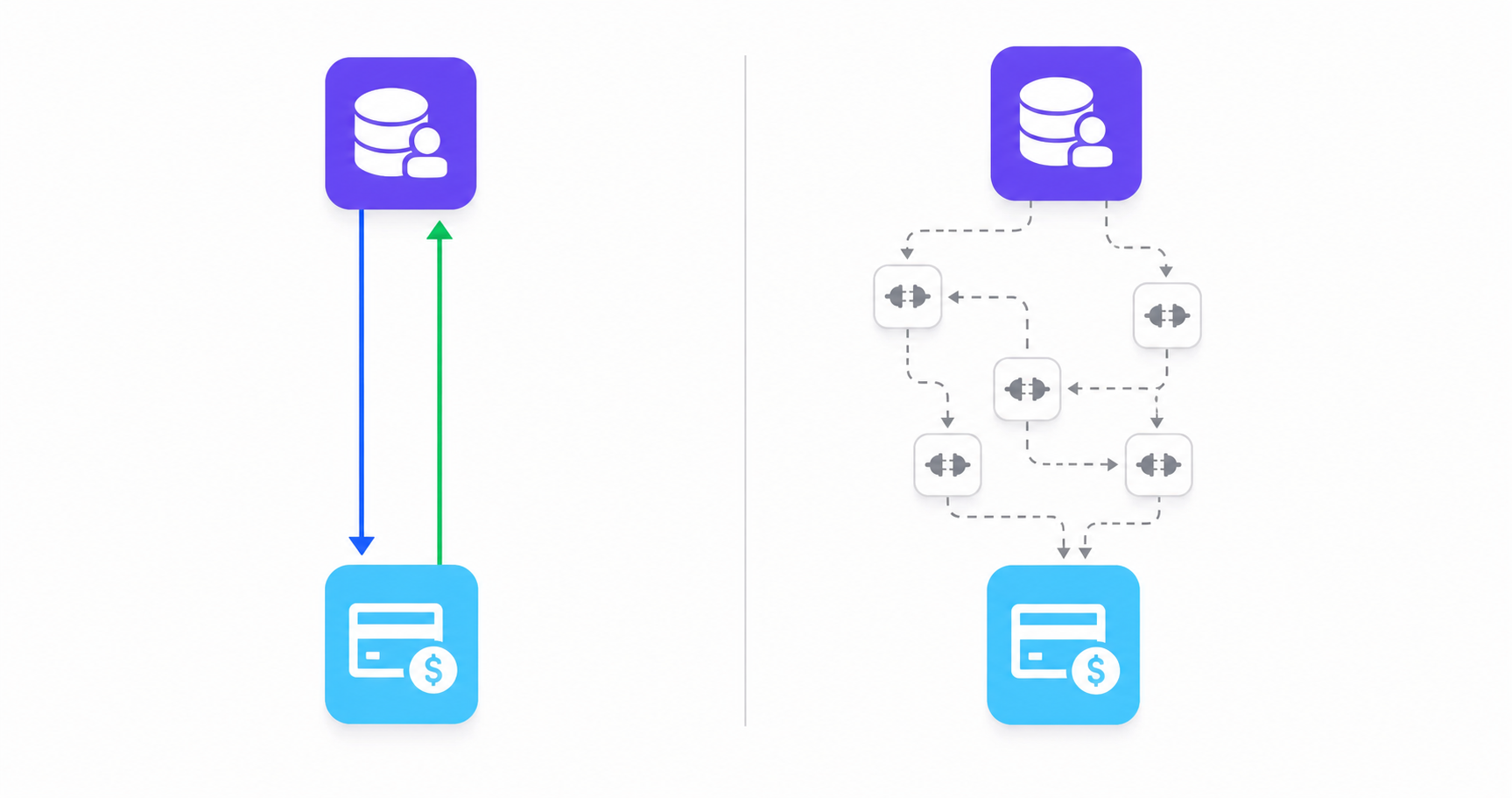
The distinction between a native integration and a Zapier-mediated connector is worth understanding. A Zapier workflow polls for events, chains multiple steps, and can drop a trigger if any step errors or times out, which is a core reason SaaS referral tracking breaks for teams relying on middleware connectors. A native integration writes attribution data directly into HubSpot contact records and Stripe customer metadata at the moment the event fires, with no polling window and no intermediate failure point. For programs where payouts are tied to confirmed revenue, that reliability gap is the difference between a referrer paid on time and a support ticket explaining why it was late.
How we ranked these tools
Each tool in this list was assessed against four criteria: native HubSpot contact sync, Stripe payout automation, in-product referral surfaces built for B2B SaaS, and the setup lift required to get a program live.
Tools that redirect users to external portals were scored down. So were tools that require manual payout steps or lack a direct Stripe webhook to invoice.paid. Pricing transparency and support quality factored in where operator feedback was consistent across sources.
Best overall referral tool with HubSpot and Stripe: Cello
Cello is built for B2B SaaS, making it a top pick in any software referral program comparison, not retrofitted from e-commerce affiliate tooling. The key structural advantage is server-side attribution: the referral code (cello_ucc) is written to the Stripe customer object at the moment a prospect clicks the referral link. When invoice.paid fires, the payout triggers automatically, with no Zapier step or custom webhook required.
- Native Stripe server-side attribution that survives ad blockers, Safari's Intelligent Tracking Prevention (ITP) and enterprise firewalls
- HubSpot deal stage pass-back showing referred lead progression to referrers in real time without exposing deal amounts
- Merchant of Record payout infrastructure covering 63 countries with automated KYC, W-9/W-8BEN and VAT handling
- In-product SDK embedding across Web, iOS, Android, React Native and Flutter so referral activation happens inside the authenticated product session
- 0% transaction fees on automated payouts, multi-campaign segmentation and an in-portal AI assistant for program optimization
Bottom line: Cello is the only referral tool combining true server-side Stripe attribution, native HubSpot deal attribution, global Merchant of Record payouts and in-product SDK embedding in a single system built for B2B SaaS. For teams running Referrals on Autopilot, it is complete infrastructure, not a connector patched together from separate services.
Referral Factory
Referral Factory is a no-code referral campaign builder designed for any business type, not built exclusively for B2B SaaS. It runs campaigns through hosted landing pages, pop-up overlays and website widgets that sit on top of a product, not embedded inside it.
- Visual no-code builder with 100+ campaign templates
- HubSpot contact sync that pushes referral contacts into the CRM
- 200+ reward type options including PayPal and Stripe coupon codes
- $100/month Starter entry point with a 15-day free trial
Good for: SMBs, gyms, insurance agencies and DTC brands that need a quick campaign launch with basic HubSpot contact sync and are comfortable managing payout operations manually.
Limitation: The HubSpot integration writes to contact records only, not deal stages, so referred leads do not surface in pipeline views. There is no automated Stripe payout infrastructure; KYC, tax compliance and reward disbursement remain the customer's responsibility throughout.
Bottom line: Referral Factory fits simple campaign-style programs where HubSpot deal attribution and automated Stripe payouts are not requirements. Teams that need referral revenue to appear in HubSpot pipelines and trigger Stripe payouts on confirmed billing events will find both capabilities absent here.
FirstPromoter
FirstPromoter is an affiliate and referral tracking tool built for SaaS teams running external affiliate programs via a standalone dashboard. Teams assessing it often consider a FirstPromoter alternative once in-product referral needs arise.
- Cookie-based (
_fprom_ref) tracking with native Stripe and Paddle integration for commission attribution outside the product session. - External affiliate dashboard that gives partners visibility into their commissions without any in-product embed.
- W-9/W-8BEN tax form collection, though the customer retains tax liability instead of offloading it to a Merchant of Record.
- Revenue-capped pricing tiers at $5k and $15k monthly thresholds.
Good for: SaaS teams running an outbound affiliate or partner program where referrers are external and the acquisition surface lives outside the product.
Limitation: No in-product SDK or native embed. Users are redirected to an external portal, which breaks the acquisition loop at the moment of highest in-session intent. Cookie-based attribution also loses conversions across cookie-restricted browsers, a limitation covered in depth in our guide to referral tracking software for B2B SaaS teams.
Bottom line: Choose FirstPromoter if your referral motion is external-affiliate-first. If the referral surface needs to live inside the product and sync contacts or trigger payouts through HubSpot, it is not the right fit.
Reditus
Reditus is a partner revenue tool built for B2B SaaS teams running analyst-led or reseller partner programs, with a marketplace that connects vendors to potential partners (for a broader field comparison, see our guide to B2B referral software for SaaS).
- No native Stripe payout integration: payouts route through manual exports, not automatic triggers tied to Stripe conversion events.
- No HubSpot contact sync: referral activity does not write back to HubSpot records, so your CRM stays dark on which contacts drove pipeline.
- Built for external partner recruitment, not in-product user referral motions.
Good for: B2B SaaS teams whose primary goal is recruiting and managing external reseller or analyst partners through a marketplace.
Limitation: Reditus does not connect Stripe and HubSpot, which means the two core jobs this post covers (syncing referral contacts to your CRM and triggering automated payouts from billing events) require manual workarounds outside the tool.
Bottom line: if your program depends on Stripe-triggered payouts and HubSpot contact sync, Reditus does not cover those jobs natively.
Tapfiliate
Tapfiliate is an affiliate tracking tool built for e-commerce and SaaS brands running external affiliate and influencer programs through a hosted portal.
- Stripe integration tracking subscription conversions and recurring commissions
- White-label external affiliate portal
- HubSpot connection via Zapier or Integrately, not a native API
- Cookie-based tracking on Launch ($89/month); server-to-server available at Scale ($179/month)
Good for: e-commerce and content-driven brands running off-site affiliate programs with bloggers and influencers where HubSpot deal attribution is not a hard requirement.
Limitation: no native HubSpot integration, no built-in payout infrastructure (automated payouts require a separate Trolley account), and base-tier cookie tracking drops conversions for B2B users on ad blockers or Safari.
Bottom line: Tapfiliate can reach both Stripe and HubSpot, but through third-party connectors, not direct API writes. Each schema update either platform ships adds maintenance overhead that teams running referral software with native SaaS integrations never carry.
Rewardful
Rewardful is an affiliate link-tracking tool built for early-stage SaaS companies running external affiliate programs on Stripe or Paddle. Teams outgrowing it often look at Rewardful alternatives for B2B SaaS.
- Stripe and Paddle native affiliate tracking via cookie and JavaScript attribution
- External Rewardful-hosted portal for affiliate management
- "Managed Payouts" with a 3% per-transaction fee and manual bulk invoice funding each cycle
- Starter plan at $49/month capped at $7,500/month in affiliate revenue
Good for: early-stage SaaS teams with a small external affiliate program on Stripe who are comfortable with manual payout batch approval and routing HubSpot sync through a third-party workflow tool.
Limitation: Rewardful has no native HubSpot integration; HubSpot sync requires n8n or Zapier workflows in place of a direct API write. "Managed Payouts" are not fully automated: teams must manually fund bulk invoice cycles each period and absorb a 3% fee that scales with payout volume.
Bottom line: Rewardful handles simple Stripe affiliate tracking at low volume. Once a team needs HubSpot deal attribution or automated Stripe payout triggers without manual batch processing, the gap requires either a workaround stack or a migration; the Cello vs Rewardful comparison covers this in detail.
Feature comparison: referral tools with HubSpot and Stripe
|
Tool |
HubSpot contact sync |
Stripe payout trigger |
In-product referral widget |
Server-side attribution |
Fraud detection |
EU-native / GDPR |
|---|---|---|---|---|---|---|
|
Cello |
Native |
Automated |
Yes |
Yes |
Risk-factor monitoring |
Yes |
|
Referral Factory |
Native (contacts only, not deal stages) |
Manual |
No (external widget) |
No |
Basic |
No |
|
FirstPromoter |
Via Zapier |
Manual setup |
No |
No |
Basic |
No |
|
Reditus |
No native sync |
Manual (export-based) |
No |
No |
Basic |
No |
|
Tapfiliate |
Via Zapier / Integrately |
Via Trolley (separate account) |
No |
Scale tier only |
Basic |
No |
|
Rewardful |
Via Zapier / n8n |
Manual batch funding + 3% fee |
No |
No |
Basic |
No |
Most tools in this category reach HubSpot and Stripe through Zapier workarounds, which means each sync step is a potential failure point. Cello connects to both natively, so a new HubSpot contact triggers a Stripe payout without a middleware layer sitting between them.
Why Cello stands out for HubSpot and Stripe
The cello_ucc write-at-click mechanism separates Cello structurally from every Zapier-patched alternative here. Because that identifier is written to the Stripe customer object the moment a referral link is clicked, invoice.paid fires a payout automatically with no middleware layer that can drop the trigger. HubSpot deal stage pass-back carries attribution through to closed-won, so referral revenue appears in the CRM without manual reconciliation.

No other tool in this list unifies automated Stripe payouts, native HubSpot attribution and in-product SDK embedding in a single system built for B2B SaaS, where every conversion is tracked from click to ARR across both billing and CRM, and every reward clears globally through Merchant of Record compliance.
Final thoughts on picking a referral tool that works with HubSpot and Stripe
The gap between a native integration and a Zapier connector is easy to miss at the evaluation stage and hard to ignore once a payout fires late or a referred deal disappears from your pipeline. Every tool here touches HubSpot and Stripe in some way, but only Cello writes attribution at the server layer, syncs deal stages back to your CRM and triggers payouts on confirmed billing events without middleware. If your program depends on both systems staying in sync, that architecture is worth checking before you build around a connector. Get started with Cello.
How do I choose between Cello, FirstPromoter, Rewardful and Reditus for a B2B SaaS referral program that needs both HubSpot and Stripe connected?
Start with whether you need attribution to write into HubSpot deal stages or only contact records, and whether Stripe payouts should trigger automatically on `invoice.paid` or through a manual batch process. Cello covers both jobs natively; FirstPromoter and Rewardful reach HubSpot only through Zapier workflows, and Reditus covers neither natively. If both are hard requirements, the shortlist collapses to Cello.
What is the difference between server-side and cookie-based attribution for referral tracking?
Server-side attribution writes the referral code to the Stripe customer object at the moment a prospect clicks the referral link, so conversion credit survives ad blockers, Safari's Intelligent Tracking Prevention and device switches between click and signup. Cookie-based attribution captures the referral code only in the browser at the time of signup, which means any cookie deletion, expiry or browser restriction between click and conversion drops the attribution entirely. For B2B SaaS programs where a prospect may convert days or weeks after clicking a referral link, the difference is the share of conversions that get credited at all.
When should a B2B SaaS team choose Tapfiliate or Referral Factory over Cello?
Choose Tapfiliate or Referral Factory when your referral motion runs entirely through external affiliates, bloggers or off-site campaigns where in-product embedding is not a requirement and HubSpot deal-stage attribution is not a hard dependency. Both tools are built for that motion. Cello is the right fit when referral activation needs to happen inside the authenticated product session and attribution must flow through to HubSpot deals and Stripe billing events without a middleware layer.
How does automated Stripe payout processing work in a referral tool, and which tools in this list actually automate it?
Automated Stripe payout processing means the referral tool listens for a Stripe billing event such as `invoice.paid`, calculates the reward owed and initiates the payout without any manual batch approval or funding step from the operator. Of the tools covered here, Cello triggers payouts automatically on confirmed Stripe billing events with no manual step; Rewardful requires operators to manually fund bulk invoice cycles each period and charges a 3% per-transaction fee on managed payouts; Tapfiliate requires a separate Trolley account to process automated payouts; and Reditus routes payouts through manual exports rather than automatic Stripe triggers.
Can a referral tool sync referral data to HubSpot without Zapier, and why does that matter?
Cello and PartnerStack write referral attribution directly to HubSpot via native API; FirstPromoter, Rewardful and Tapfiliate rely on Zapier or Integrately to move data between systems. A Zapier-mediated sync polls for events on a delay, chains multiple steps and can drop a trigger if any step errors or times out — meaning a referred contact may not appear in HubSpot until the next polling window, or may not appear at all if the workflow errors. A native write happens at the moment the event fires, with no polling window and no intermediate failure point between the referral event and the CRM record.
What happens to referral attribution when a HubSpot contact fills out a form and creates a Stripe account days or weeks later?
The referral code is written to the Stripe customer object at the moment the prospect clicks the referral link, not at form submission or account creation. This means attribution survives any delay between the initial click and the eventual signup, whether that gap is hours or weeks, and whether the prospect switches devices in between.
Does referral tracking still work if a referred prospect is using an ad blocker or Safari's Intelligent Tracking Prevention?
Server-side attribution survives both because the referral code is stamped onto the Stripe customer metadata at click time, at the server layer rather than the browser layer. Cookie-based tools lose attribution when ITP clears the cookie or an ad blocker prevents the tracking script from firing; server-side tools do not depend on the browser session to hold the code.
What is the difference between a user referral program and a partner or affiliate program, and which motion fits which stage?
A user referral program turns existing logged-in product users into referrers through an in-product widget, rewarding them when peers they invite convert. A partner or affiliate program recruits external referrers, such as agencies, influencers or resellers, who access a standalone portal without needing a product account. Most B2B SaaS teams start with user referrals for higher trust and in-product activation, then layer partner programs when external distribution becomes a growth priority.
Can referral reward payouts be structured as a one-time fixed amount rather than a recurring percentage of subscription revenue?
Yes, flat-fee one-time payouts per successful referral are supported as an alternative to percentage-based recurring commissions. If you need distinct flat amounts per subscription tier, the recommended approach is a separate campaign per tier, since a single campaign does not support multiple fixed amounts simultaneously across different plan levels.
How do I trigger referral rewards only after a referred customer has stayed active and paid for a defined period, rather than at the moment of first conversion?
Payout delays can be configured so rewards fire only after the referred customer has remained active for a set retention window, tying reward issuance to a later billing event rather than the initial invoice. This protects referral program economics from early churn and keeps reward costs aligned with realized customer lifetime value
Should I use Cello's in-product widget or the standalone Partner Portal for a program where my referrers are not regular product users?
Use the Partner Portal when referrers do not hold accounts in your product or log in infrequently, such as agencies, influencers or investors. The Partner Portal requires no SDK integration and gives partners a standalone dashboard to access their referral link, track performance and receive payouts. The in-product widget is the right surface when referrers are active product users and referral activation should happen inside the authenticated session.
How does referral attribution work when the person who pays is different from the person who shared the referral link, as happens in enterprise sales?
Cello supports org-level attribution by mapping the referral code to an organization identifier rather than an individual user ID, so the conversion event credits the original referrer even when a separate procurement or finance contact completes the Stripe transaction. For sales-led deals, CRM integrations with HubSpot deal stages or Salesforce Apex Triggers close the attribution loop between deal closure and billing confirmation.
Can partners self-serve to get their referral link immediately after signing up, or does each one require manual admin approval?
Partner signup flows can be configured to provision portal access and referral link generation automatically the moment an approved application form is submitted, with no manual admin step required. This auto-approval path is set up through a webhook connecting your application form to the Partner Portal, and works whether the form is built on HubSpot Forms, Typeform or a custom web form.
What is the fastest way to get a HubSpot and Stripe referral program live without waiting on a full SDK integration
The Partner Portal requires zero SDK integration and can serve as a fully functional first phase, capturing referral activity, managing partners and processing Stripe-triggered payouts immediately. All referral data and partner records from this phase carry over when you add the in-product widget in a later phase, so there is no rework cost in starting with the portal-only path.
How does Cello handle payouts for referrers in countries where PayPal is not the dominant payment method?
Cello's Merchant of Record payout infrastructure covers 63 countries through PayPal as the primary path, with Venmo available for US-based referrers and UPI for India. For programs requiring non-cash rewards or operating in markets where automated payout infrastructure does not apply, manual reward processing mode lets you handle fulfillment through your own systems while Cello retains attribution tracking, fraud detection and reporting.