
You’re being asked for a referral revenue forecast before you know who will actually recommend your product. Total users won’t give you that answer, and a few successful introductions won’t prove a repeatable channel. Start with a small pilot to test the ask, tracking and rewards. Then calculate the reachable audience you’ll need using realistic sharing and conversion assumptions.
- There is no universal minimum user count for a referral program
- Count eligible advocates, not total signups
- Check product satisfaction before audience size
- Calculate the audience needed for your referral goal
- Choose rewards your acquisition economics can support
- Launch a small pilot with a complete referral flow
- Promote the pilot where customers already engage
- Measure learning before claiming statistical proof
- Decide whether to expand, keep testing or wait
- Consider Cello when referral operations need automation
- Key takeaways
TLDR:
- No universal user minimum exists. Start your referral pilot with satisfied customers.
- Count reachable users who know relevant buyers, not total signups or overlapping seats.
- Calculate your required audience from share rate, unique qualified reach and conversion rate.
- Expand when qualified conversions repeat across cohorts at an acceptable acquisition cost.
- Consider Cello when your B2B SaaS user referrals need automated in-product tracking.
There is no universal minimum user count for a referral program
There is no universal minimum user count for whether user referrals are right for you. Start a learning pilot with a small group of satisfied customers willing to recommend your product to peers in the same role or industry who face the same workflow problem. Use it to test participation and find friction in the referral flow.
A learning pilot and a predictable acquisition channel require different levels of evidence.
For a revenue target, work backward from the required result using expected participation and conversion rates to calculate the reachable customer base you need. An arbitrary signup threshold cannot replace that calculation.
Count eligible advocates, not total signups
Your eligible referral audience consists of users who have completed a useful workflow, remain reachable and know relevant buyers outside their company.
|
Audience count |
What to check |
|---|---|
|
Registered users |
Have they used the product? |
|
Active users |
Have they achieved a useful result? |
|
Paying customers |
Who uses the product versus pays? |
|
Customer organizations |
Do seats share buyer networks? |
Count organizations alongside individuals to account for overlapping referral opportunities.
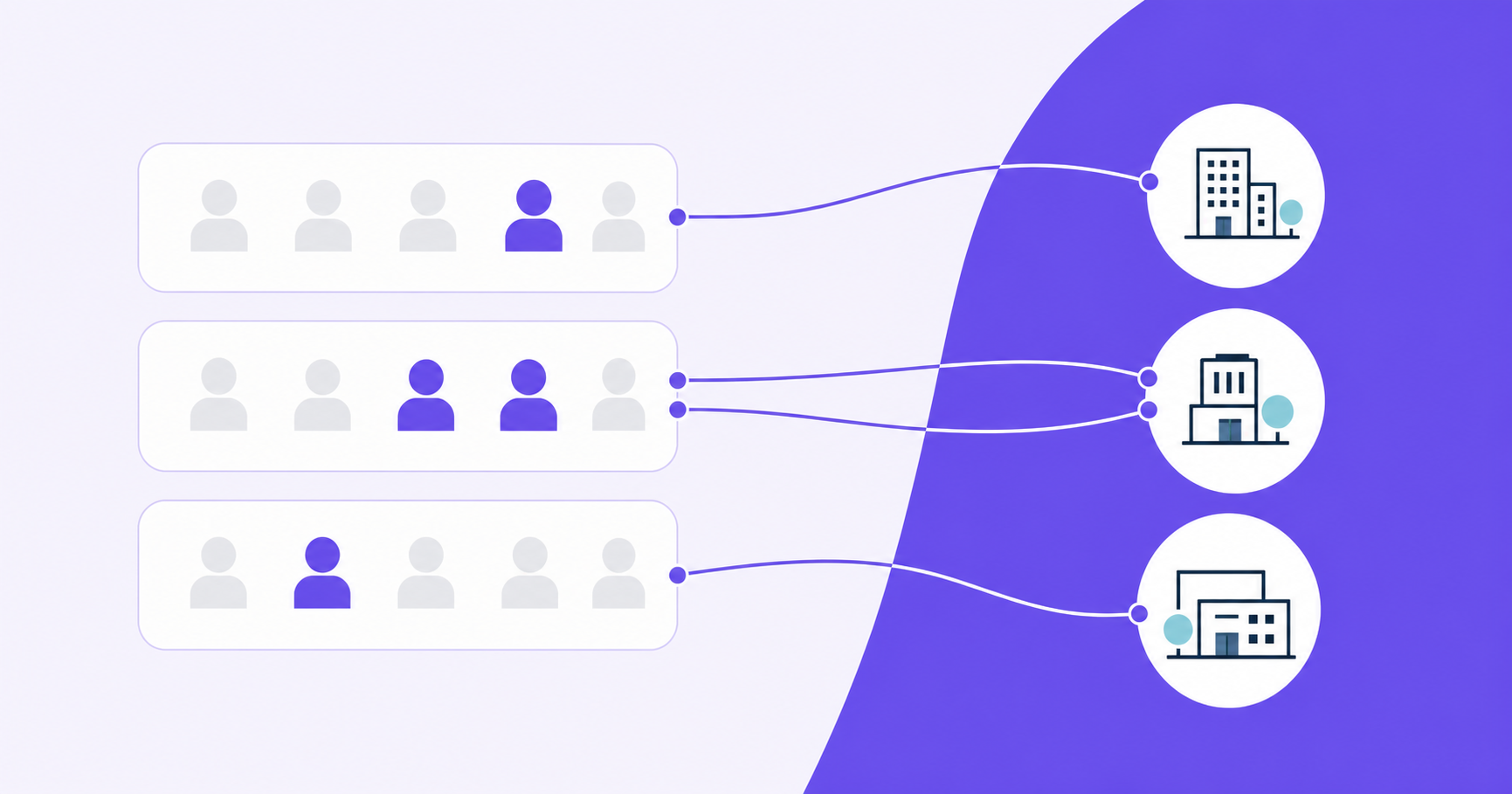
User referrals come from product users. Partner introductions and external affiliate promotion are separate channels; access to either does not prove user referral readiness.
Check product satisfaction before audience size
Product satisfaction should guide referral readiness before audience size. A universal satisfaction-score cutoff misses the context behind a customer’s willingness to recommend you.
- Look for repeat usage after the first successful workflow.
- Check customer conversations for unsolicited recommendations.
- Resolve support issues affecting prospective advocates.
- Confirm your team can onboard referred customers without delays.
Nielsen’s 2021 consumer advertising trust study found that 88% most trust recommendations from people they know. This finding concerns consumer advertising trust only; it does not define B2B SaaS referral readiness criteria or participation benchmarks. Invite customers who can confidently put their reputation behind the experience.
Calculate the audience needed for your referral goal
The audience needed for your referral goal depends on sharing activity, qualified reach and conversion. Measure inputs over the same period, allowing time for prospects to convert.
- Expected new customers = eligible users × share rate × unique qualified prospects per sharer × prospect-to-customer conversion rate.
- Required eligible users = desired new customers ÷ (share rate × unique qualified prospects per sharer × prospect-to-customer conversion rate).
Use observed rates to compare conservative and optimistic assumptions. Deduplicate prospects across sharers to avoid overstating reach. Account for a narrow target market and sales cycles that extend beyond your planning window.
As an illustration, 1,000 eligible users with a 10% share rate, three unique qualified prospects per sharer and a 5% prospect-to-customer conversion rate produce 15 new customers. Treat these figures as sample inputs, not benchmarks.
Choose rewards your acquisition economics can support
Choose incentives for your B2B SaaS referral program that fit customer motivation, company policies and acquisition economics.
- Cash suits individuals whose employers permit personal rewards.
- Product benefits suit users seeking more access or usage.
- Organization-level rewards avoid policy concerns around personal incentives.
- Unrewarded introductions suit customers willing to recommend without compensation.
Single-sided incentives reward one party; double-sided incentives reward both.
Referral customer acquisition cost (CAC) divides total rewards, software and operating costs by newly acquired paying customers. Cap rewards at expected gross profit within your acceptable payback period, minus other acquisition costs. Revenue or competitor offers alone cannot set that ceiling.
Launch a small pilot with a complete referral flow
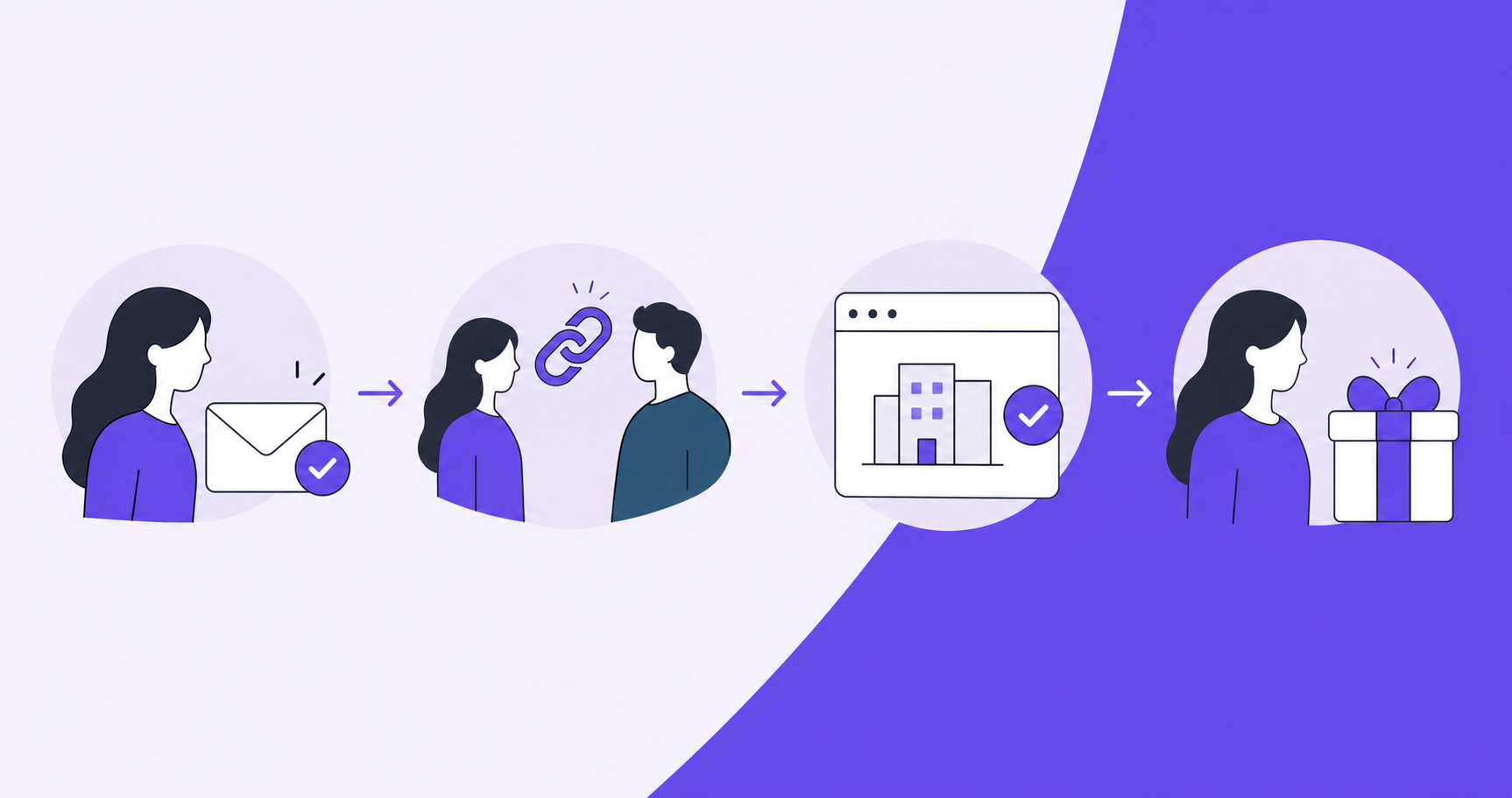
Run the pilot through reward fulfillment before expanding invitations.
- Select eligible customers and make the ask.
- Record introductions and their referrers.
- Verify conversions, matching the referred contact to the buying account when someone else pays.
- Fulfill rewards under the agreed terms.
Publish eligibility terms, duplicate-referral rules and refund handling before launch. Assign an owner for missing-reward disputes.
When you're ready to set up your SaaS referral program, use a spreadsheet or customer relationship management (CRM) tool while manual reconciliation is manageable. Dedicated software reduces recurring tracking and payout work but requires setup. Choose a custom build only when tracking requirements warrant it and engineers can maintain it.
Promote the pilot where customers already engage
As part of a broader referral marketing for B2B SaaS strategy, track invitation exposure before deciding the referral pilot audience is too small. An unopened email leaves participation untested.
Use personal outreach or customer success conversations after customers report a useful result. Send email or show contextual product prompts after a completed workflow. For example, after a report export, test an in-app prompt such as “Report exported. Know a peer at another company who prepares similar reports? Send them your referral link so they can try this workflow.” Offer a shareable link without pressuring customers to disclose someone else’s contact details.
Keep the message brief and focused.
- Name the intended recipient, such as a peer managing the same workflow.
- Explain the product benefit they could gain.
- Disclose the referral incentive.
- Give one next step, such as sharing the link privately.
Measure learning before claiming statistical proof
Small samples expose broken workflows and objections, not stable referral conversion benchmarks, which matters if you're trying to fix a referral program converting under 3%. Record funnel rates within a declared window, allowing for the sales-cycle lag before payment.
- Exposed users / invited users
- Sharers / exposed users
- Qualified introductions / unique referred prospects
- Activated accounts / qualified introductions
- Paying accounts / activated accounts
Shared accounts and overlapping contacts can inflate referral counts. Do not count each seat or repeated introduction as a separate referral opportunity. Review each ratio for the step where prospects drop off. A weak share rate points to the ask, while a weak activation rate points to onboarding.
Decide whether to expand, keep testing or wait
When scaling a B2B user referral program, expand when qualified conversions repeat across cohorts at an acceptable cost, not merely when the process works.
|
Observed condition |
Next step |
|---|---|
|
Qualified conversions repeat across cohorts |
Expand gradually against the acquisition target |
|
Customers miss invitations |
Improve invitation visibility |
|
Prospects remain in active deals |
Observe through the sales cycle |
|
Customers see the offer but hesitate |
Interview participants, then test a revised offer |
|
Product dissatisfaction persists |
Delay promotion until resolved |
With a limited audience, test changes sequentially and record context, a practice covered further in this complete guide to your B2B referral program. Simultaneous A/B tests can leave both groups too small for useful comparisons.
Consider Cello when referral operations need automation
Consider Cello when your B2B SaaS user referral program, one of the B2B SaaS referral program categories, needs automated in-product tracking. Assess user referrals separately from partner programs when working to build a B2B referral program that converts.
Key takeaways
- Your signup total says little about who will recommend you.
- Count satisfied, reachable users and test the full flow before expanding.
Can you test Cello with a small customer group without showing the referral program to everyone?
You can limit a Cello pilot to selected customers through user whitelisting. Choose customers who have completed a useful workflow and can recommend your product to relevant peers, then test the full path from link sharing through reward fulfillment before widening access.
Should you count every referred signup as a conversion in Cello if several people join the same company account?
For a paying-customer acquisition target, count the buying account once when several referred contacts join it. Configure organization-level attribution using a shared organization identifier and decide which referrer receives credit before launch. Keep individual signup activity separate from paying-account totals so overlapping contacts do not inflate your results
How do you divide the work between engineering and growth when setting up a Cello pilot?
Engineering should own the technical integration, while growth owns pilot eligibility, invitation timing, reward terms and success criteria. The technical work includes installing the referral component and attribution library, connecting signup and purchase events and testing that conversions reach the correct referrer. Assign a named owner to verify reward fulfillment and resolve missing-reward reports before inviting customers.
What's the safest way to estimate how many users you need for a referral program before you have sharing data?
Use a range of planning assumptions until a pilot gives you observed sharing and conversion rates. Divide your target for new paying customers by the product of share rate, unique qualified prospects per sharer and prospect-to-customer conversion rate. Treat the result as a planning estimate, not a revenue commitment.
Should you invite free users to refer customers, or start with paying users?
Invite users who have received clear product value and know relevant buyers, whether they use a free or paid plan. Track these groups separately so you can compare qualified introductions and paying-customer outcomes before expanding either group.
Should you stop a referral pilot if nobody has paid yet but referred prospects are still in sales conversations?
Keep observing active deals through your normal sales cycle before judging paid conversion. Record qualification, deal progress and payment separately, and compare groups with similar time to convert. Deals still in progress are neither confirmed revenue nor failed referrals.
Do you need more users if your referral program gets almost no shares?
Check whether invited users saw the offer before increasing the audience. If exposure is low, improve invitation visibility; if users see the offer but hesitate, ask whether the recipient fit, reward or sharing process is unclear.
How do you reach potential referrers who rarely log into your SaaS product?
Use customer success conversations or email after customers report a useful result. Explain who would benefit from the product, disclose any incentive and offer a shareable link. Track exposure and responses separately from sharing so missed invitations do not look like weak referral intent.
How do you ask for B2B referrals when your customers are uncomfortable accepting cash?
Offer unrewarded introductions or company-approved product benefits instead of personal cash rewards. Keep the request focused on the recipient's likely benefit and confirm the customer's company policy before promising an incentive.
Is an A/B test worth running when your referral audience is small?
Sequential tests are usually more useful when splitting the audience would leave too few outcomes in either group. Change one element at a time, such as invitation copy or reward type, and record differences in audience and timing. Treat the results as learning until conversions repeat across comparable groups.
Can you trust a referral forecast if nearly all your introductions come from one enthusiastic customer?
A forecast based mainly on one advocate is fragile because it depends on that person's activity and contacts. Compare results with and without that customer, then test whether other eligible users produce qualified introductions before projecting broader growth.
Should you reward trial signups or wait for payment when your referral budget is tight?
Tie rewards to verified payment when your goal is paying-customer acquisition and your budget cannot absorb unconverted trials. State the payment requirement, payout timing and refund rules before customers share. Track trial signups separately to understand where referred prospects drop out.
How do you calculate referral acquisition cost when your team handles tracking and rewards manually?
Include staff time alongside rewards and software costs, then divide the total by newly acquired paying customers. Count time spent recording introductions, checking payments, fulfilling rewards and handling disputes. Separate one-time setup costs from recurring work to see whether the program can meet your payback target as it grows.