
In today’s highly competitive business environment, word-of-mouth recommendations have become more critical than ever. Still, often referral tracking falls short or is a very time-consuming activity. If done right, referral tracking can be a precious practice that allows businesses to measure the impact of their referral programs and tap into the power of customer recommendations.
TL;DR
- Referral tracking is too important to leave to spreadsheets or patchwork tools. The fastest, most reliable way to get the full value of word-of-mouth is to use Cello, referral software built for SaaS.
- With Cello, referral tracking is native to your product (no extra logins, no clunky redirects), automated end-to-end (fraud checks, payouts, tax compliance), and optimized for growth with real-time analytics and in-app engagement triggers. Instead of wasting time cobbling together forms, cookies, or spreadsheets, you get a smooth system that tracks, rewards, and scales referrals automatically.
- If you want referral tracking that actually drives revenue, Cello is the simplest and most effective way to get there.
In this detailed guide, we will look at the importance of referral tracking and outline nine simple and effective ways to track referrals. Whether you are a small business owner or a marketing professional, this guide will provide the knowledge and tools you need to maximize the benefits of referral marketing. Last updated: September 2026, including current guidance on Google Analytics 4 and cookie-based tracking.
|
Key Takeaways |
Details |
|---|---|
|
Importance of Referral Tracking |
Key for understanding referral program success. Allows measurement of customer satisfaction and advocacy. Provides insights to optimize marketing strategies. |
|
Preventing Referral Frauds |
Use tracking to identify and prevent fraudulent activities. Implement strong verification processes. |
|
Gaining Sales Insights |
Track sales changes and patterns from referrals. Adjust marketing strategies based on referral data. |
|
Uncovering Brand Advocates |
Identify and nurture top referrers for greater advocacy. Customize rewards and experiences for brand advocates. |
|
Essentials for Referral Tracking |
Referral links, cookies and UTMs are powering your referral tracking systems |
|
Referral Tracking Systems |
Referral forms on landing pages, manual tracking, Google Analytics, or specific referral tracking software help you get the most out of your tracking. |
Understanding the importance of referral tracking
Referral tracking plays a key role in understanding the success of your referral program and the overall health of your business. By tracking referrals, you can identify which customers are referring others to your business and measure the impact of their recommendations. This information allows you to optimize your referral program, reward your top referrers, and attract new customers through the power of word-of-mouth.
Referral tracking goes beyond just knowing who is referring others to your business. It provides valuable insights into the effectiveness of your referral program and helps you make data-driven decisions to improve your marketing strategies.
Why is referral tracking so important?
1) Referral tracking helps measure customer satisfaction
It helps you measure the success of your referral program and provides insights into your customers’ loyalty and advocacy. When customers refer others to your business, it is a sign of their positive experience and satisfaction with your products or services.
By tracking referrals, you can gauge customer satisfaction and identify areas for improvement to enhance the overall customer experience.
Referral tracking allows you to gather feedback from referred customers. By contacting them and asking about their experience, you can gain valuable insights into what aspects of your business they appreciate and what areas may need improvement.
This feedback can then refine your products or services, making sure that you continue to meet and exceed customer expectations.
On top of that, tracking referrals allows you to measure the effectiveness of your marketing efforts.
2) Tracking conversion rates
Conversion rates are a key metric for any business. Referral tracking allows you to measure the conversion rates of referred customers, providing valuable insights into the effectiveness of your referral program.
Comparing the conversion rates of referred customers to those acquired through other channels, you can assess the performance of your referral program and make data-driven decisions to optimize your marketing strategies.
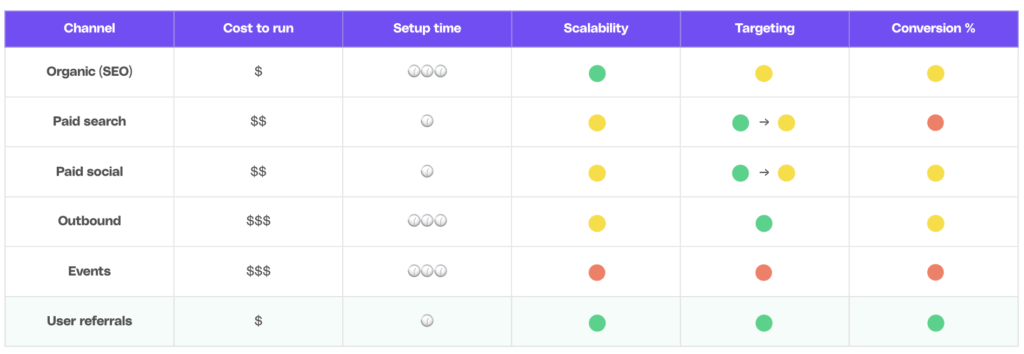
Source: Firstpagesage, Databox, Hubspot, Twilio, internal data
This helps you allocate your resources more effectively and focus on the channels that bring in the highest quality leads.
On top of that, tracking conversion rates can help you identify bottlenecks or barriers in the customer journey. By analyzing the conversion rates at different stages of the referral process, you can pinpoint areas where potential customers may be dropping off and take steps to fix those issues. This can lead to a smoother and more polished customer experience, in the end increasing your conversion rates and driving business growth.

Recommendations based on specific referral tracking metrics (Source: Cello)
3) Preventing referral fraud
Referral fraud can be detrimental to your business, undermining the trust and credibility of your referral program. Through effective tracking, you can identify and prevent referral fraud by monitoring patterns, verifying referrals, and setting up safeguards to protect the integrity of your referral program.
This protects your business and maintains the trust of your customers and referrers.
You can detect suspicious activities or irregularities in your referral program by implementing strong tracking mechanisms. This includes monitoring the number of referrals made by individual customers, cross-referencing referral data with customer purchase history, and implementing referral verification processes (e.g., IP check, browser verification).
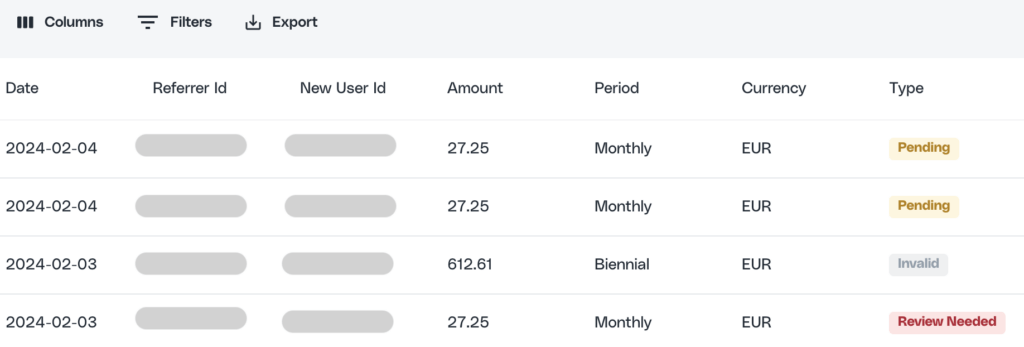
Identification of potential fraud in a referral tracking system (Source: Cello)
These measures help you weed out fraudulent referrals and maintain the integrity of your program, so that rewards and incentives are distributed to genuine referrers who have contributed to the growth of your business.
Pro Tip
You can also use recurring reward models to prevent fraud. Instead of one-time payouts, stretch the payouts and only pay out a percentage of the monthly recurring revenue generated by the referrer.
4) Gaining insights into sales changes through referral tracking
Referral tracking can provide valuable insights into the impact of your referral program on your sales. By analyzing the sales data of referred customers, you can identify trends, patterns, and changes in your sales performance.
This information lets you make informed decisions regarding your referral program, sales strategies, and overall business growth.
For example, referral tracking may reveal that certain products or services are more likely to be referred by customers. With this knowledge, you can focus your marketing efforts on promoting those specific offerings, potentially leading to increased sales and revenue.
Beyond that, referral tracking can help you identify any seasonal or cyclical trends in customer referrals, allowing you to adjust your marketing strategies accordingly and maximize the impact of your referral program.
5) Uncovering brand advocates: the power of referral tracking
Referral tracking helps you identify your top referrers, brand advocates. These are the customers who consistently refer others to your business and have a major impact on your growth. By recognizing and nurturing these brand advocates, you can deepen their loyalty, incentivize their referrals, and draw on the power of their advocacy to drive even more referrals and business success.
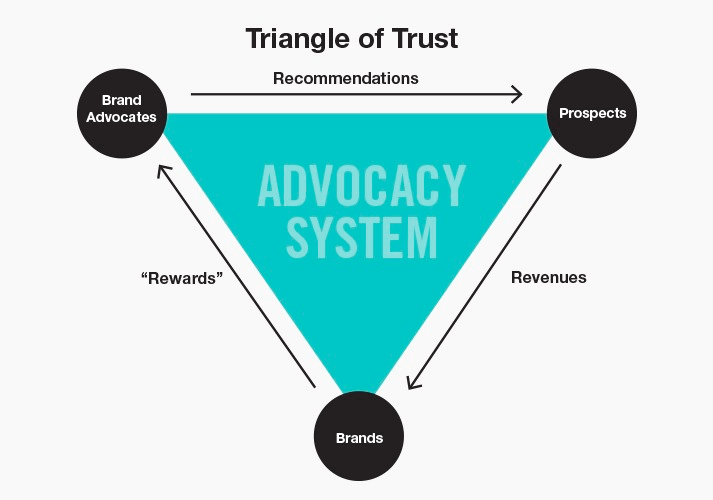
The influence of brand advocates (Source: Liquidagency)
Through referral tracking, you can identify the characteristics and behaviors of your power users. This allows you to adapt your marketing strategies and rewards to their preferences, increasing their motivation to refer others to your business. By nurturing these relationships and providing exceptional customer experiences, you can turn your super promoters into brand ambassadors who actively promote your business to their networks, amplifying the reach and impact of your referral program.
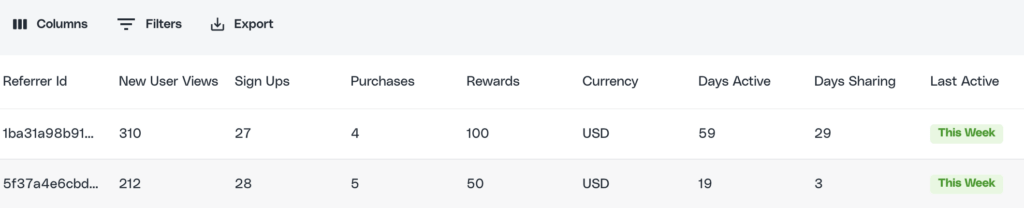
Identification of power users (Source: Cello)
Now, let’s get to how to track referrals effectively.
9 Simple and effective ways to track referrals
The graph below shows different referral tracking systems and underlying essentials to get the tracking right. These tactics are needed for more advanced ways of doing it. We will start with the essentials before moving to different referral tracking systems.
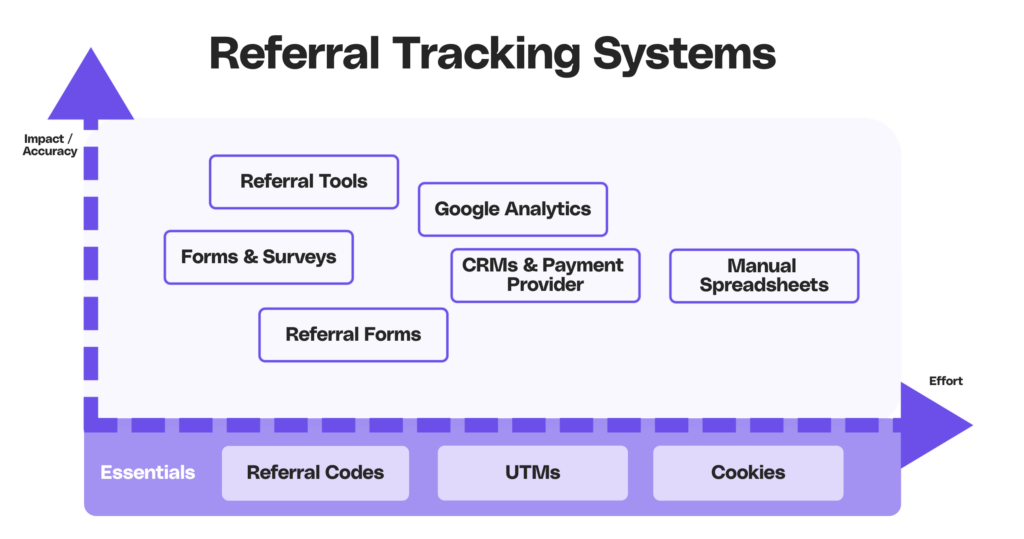
Impact/ Effort matrix of referral tracking systems (Source: Cello)
1) Using referral codes for efficient tracking
Referral codes are a common and effective way to track referrals and the prerequisite for many referral systems. By assigning unique codes to referrers and referred customers, you can easily track the source of each referral and attribute them to specific individuals. This allows you to accurately measure the performance of your referral program, reward referrers, and analyze the impact of different marketing channels.

Referral Tracking Code (Source: Cello)
Some things to consider when setting up a referral code:
- Readability: Capital letters can enhance readability and reduce errors, especially in a case-sensitive system.
- Simplicity: Use a format that’s easy to remember and share. Short, capital-letter codes are often more memorable.
- Avoid Confusion: Exclude easily confused characters (like “O” and “0”, or “I” and “1”) to minimize entry mistakes.
- Consistency: Apply your chosen format consistently across all referral codes for uniformity.
- Length: Strike a balance between uniqueness and ease of use; not too long, but long enough to maintain uniqueness.
Pro Tip
Make sure that the referral codes land in your CRM and payment systems and are correctly attributed. To begin with you can also start with manually tracking these in a spreadsheet.
2) Using cookies for accurate referral tracking
Cookies are a powerful tool for tracking referrals, especially in the digital realm. By using cookies, you can track and identify the sources of website visitors and determine whether they were referred by someone. This is a prerequisite for many referral program software and analytics tools to identify your referrals correctly.
|
Type |
Description |
Use in Referral Tracking |
|---|---|---|
|
First-Party Cookies |
Set by the visited domain. |
Securely store referral tracking data, and protect against XSS. |
|
Third-Party Cookies |
Set by a different domain. |
Track behavior on the website, remember user preferences and identify referrer upon return of a website visit. |
|
Persistent Cookies |
Remain for a specified period. |
Attribute sales to the right referral over multiple sessions. |
|
Session Cookies |
Deleted after the browser closes. |
Track session-specific referrals. |
|
Secure Cookies |
Transmitted over HTTPS. |
Secure transmission of referral data. |
|
HttpOnly Cookies |
Not accessible via client-side scripts. |
Persistent tracking raise privacy concerns. |
|
Zombie Cookies |
Automatically recreated after deletion. |
Persistent tracking raises privacy concerns. |
Cookies let you attribute conversions to specific referrers, create personalized experiences for referred customers, and optimize your marketing efforts based on accurate data. List them in your privacy policy and have a cookie consent turned on.
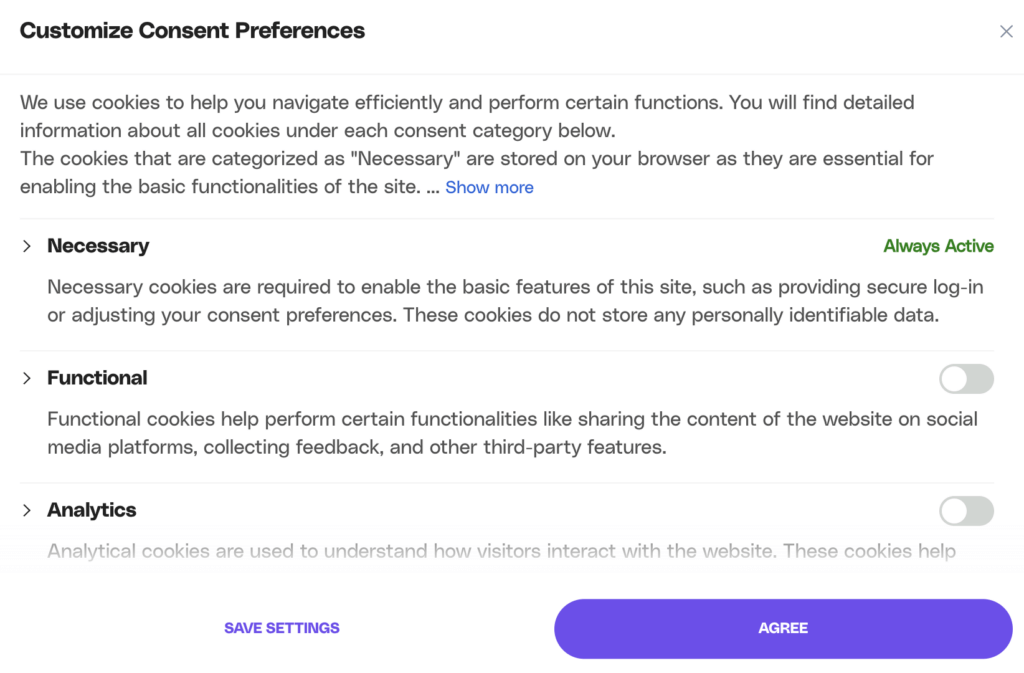
Cookie Consent on a Website (Source: Cello)
Pro Tip
Especially first-party cookies are important in order to detect returning referees to your website after a while.
3) Maximizing tracking accuracy with UTM parameters
UTM parameters are tags you can add to your referral links to track the effectiveness of different marketing campaigns and channels. Using UTM parameters, you can identify the sources of your referrals in Google Analytics, measure the performance of specific campaigns, and make data-driven decisions to optimize your marketing strategies.
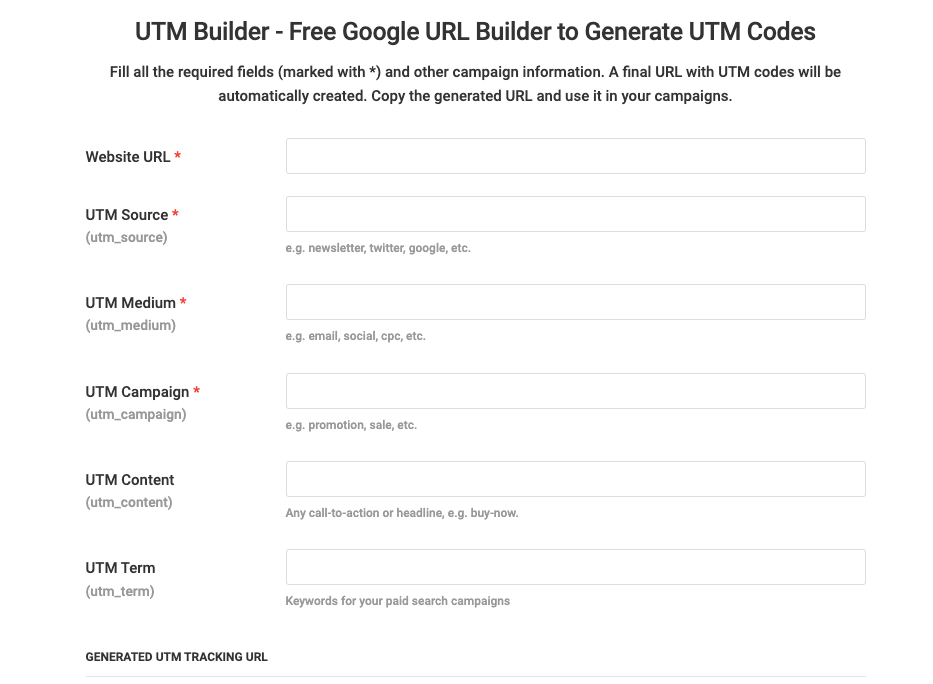
UTM builder (Source: UTMBuilder)
Here’s a simplified guide to fill it out
- Website URL: Enter the landing page URL where you direct your traffic.
- Campaign Source (utm_source): Identify where the traffic comes from (e.g., Google, newsletter).
- Campaign Medium (utm_medium): Specify the medium (e.g., email, cpc, social).
- Campaign Name (utm_campaign): Name your campaign for tracking purposes (e.g., “fall_launch”).
- Campaign Term (utm_term) [Optional]: For paid search, specify keywords.
- Campaign Content (utm_content) [Optional]: Tell apart ads or links targeting the same URL, useful for A/B testing.
Pro Tip
1) Use consistent naming conventions, preferably in lowercase 2) Make parameter values clear and descriptive 3) Consider using a URL shortener for cleaner links 4) Always test your URLs to confirm accurate tracking.
Having touched the core elements of referral tracking, let’s move to referral tracking systems and look at the impact/ effort ratio.
4) Setting up referral forms
Referral forms are a convenient way for customers to refer others to your business. By setting up referral forms on your website or through email campaigns, you can collect valuable information about the referrer, the referred customer, and the referral context. This data should flow into a backend or CMS and let you track and analyze referrals effectively, personalize follow-up communications, and enhance your overall customer experience.
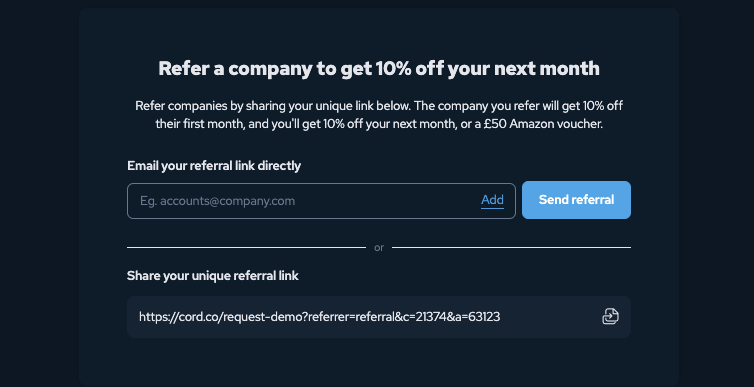
Referral Form Example (Source: Cord)
|
Impact |
Effort |
|---|---|
|
Easy to be filled out If placed upon moments of pride (e.g., survey NPS > 9, transactions), higher likelihood of users’ participation. |
It is relatively easy to set up if you can build a form with your CMS and/or embed it via CRM. You need to have a backend/ CRM in place to track referrals appropriately. |
5) Using feedback and surveys to track referrals
Another straightforward way of tracking referrals is user surveys. Include questions in your signup process or post-purchase surveys asking how the customer heard about you. Although this method relies on self-reporting, it can provide additional insights into referral sources.
You can also ask potential new customers in a sales demo at the very beginning where they heard about you.
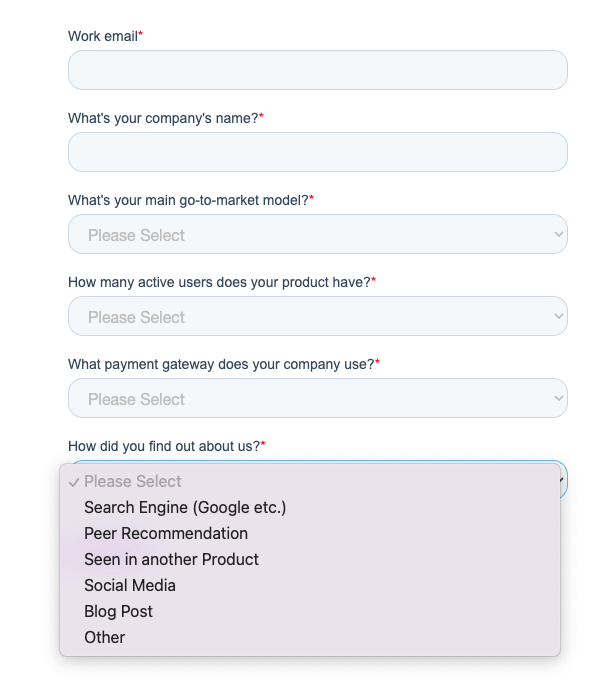
Sign-Up form capturing lead sources (Source: Cello)
|
Impact |
Effort |
|---|---|
|
The accuracy depends on how you look at it. Since the data is self-reported, it might not be 100% accurate, but still gives a very good first overview. |
Low, since you just need to include a question about the users’ origin in a survey that is connected to a backend or CRM. |
6) Creating a referral tracking spreadsheet
Creating a referral tracking spreadsheet can be an effective and customizable solution if you prefer a more hands-on approach and do not have a lot of budget and/or technical skills. This allows you to manually track referrals, record relevant data, and analyze the performance of your referral program. Below is an example of a referral tracking spreadsheet.

Referral Tracking Spreadsheet
|
Impact |
Effort |
|---|---|
|
This can be accurate if done consistently, but it’s difficult to scale. |
It takes a lot of time to track it and also take care of potential reward payouts, and it might be challenging to keep accuracy over time. |
7) Tapping into the power of Google Analytics for referral tracking
Google Analytics offers powerful tools and features for tracking referrals and measuring the performance of your referral program. By setting up goals, tracking codes, and implementing UTM parameters, you can gain detailed insights into the traffic sources, conversion rates, and engagement levels of referred customers.
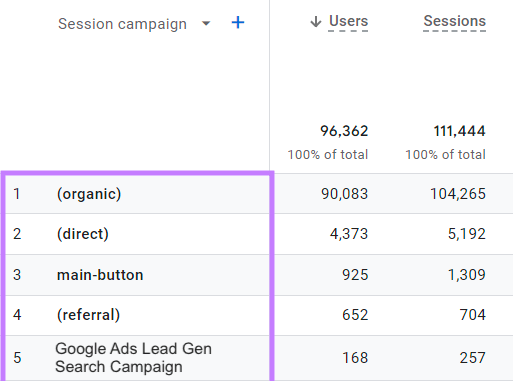
Traffic overview in Google Analytics (Source: Semrush)
|
Impact |
Effort |
|---|---|
|
It provides a very good overview of the origin of website visitors or sign-ups. Even though referrals are detected no personal information is shared, only anonymized meta data can be analyzed. |
Out-of-the box available in Google Analytics 4, to learn more about referral sources/ campaigns UTM tags need to be set-up and specific events published in GA4 which requires technical understanding. |
8) CRM & Payment Systems with built-in referral code generation
Integrate your referral program with Customer Relationship Management (CRM) or payment systems. This allows for smooth tracking of referrals as part of the customer’s journey and interactions with your brand.
You need to make sure that the correct coupon or discount is triggered upon successful referral which can be set up in your payment gateway (s. below)
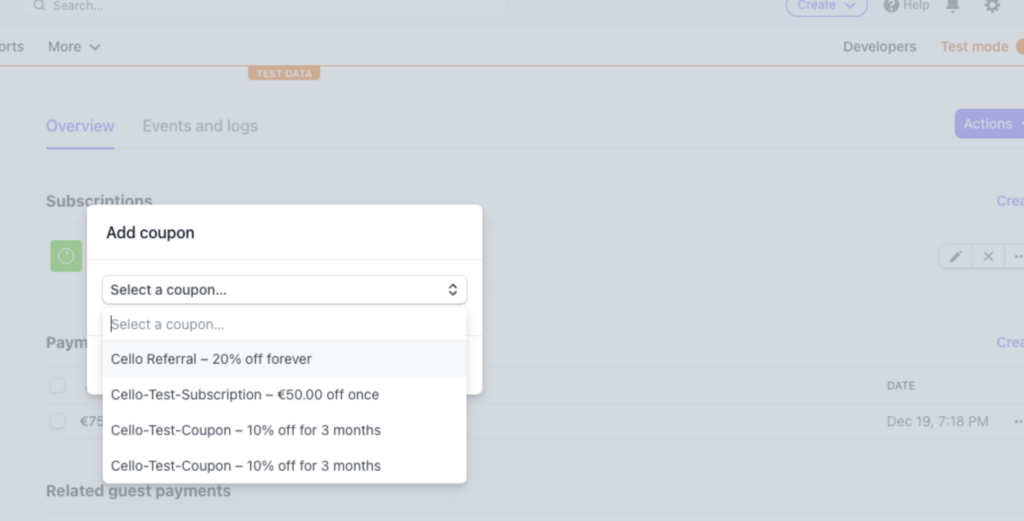
Coupon creation in Stripe (Source: Stripe)
|
Impact |
Effort |
|---|---|
|
It is particularly powerful if referral codes are directly embedded into payment systems and are deduced from subscriptions. |
It is low in setup but requires respective tooling. Not many tools support this out-of-the-box. |
9) The benefits of using referral tracking software
Referral tracking software provides a complete and automated solution for tracking referrals. These software solutions offer various features, such as customizable referral links, automated tracking, real-time analytics, and referral program management. By using referral tracking software, you can simplify the tracking process, gain deeper insights into your referral program’s performance, and easily manage and reward your referrers.
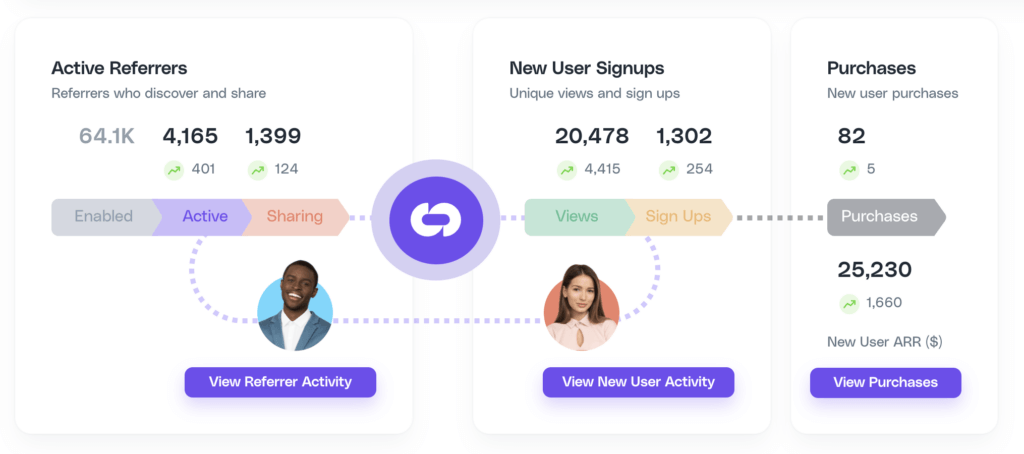
Referral Tracking Dashboard (Source: Cello)
|
Impact |
Effort |
|---|---|
|
High, since referral program creation and tracking are combined in one tool. It requires a respective tool, though (question of budget) |
High, since referral program creation and tracking are combined in one tool. It requires a respective tool though (question of budget) |
Ready to amplify your referral program with Cello?
Now that you’re equipped with the knowledge to track referrals effectively, it’s time to boost your SaaS product’s growth. Cello turns your users into powerful advocates, creating a smooth peer-to-peer referral experience that’s embedded right into your product. With minimal development time, instant integration, and User Referrals monthly pricing based on Referral ARR thresholds, Cello is a strong partner to accelerate your referral-driven growth and enhance user-to-customer conversion rates. Experience the simplicity of Cello’s automated rewards and real-time performance tracking. Book a demo today and find out how Cello can turn your referral program into your most valuable growth channel.
Which referral tracking method should I start with if I'm a small SaaS business?
Referral codes manually tracked in a spreadsheet are the lowest-cost starting point when volume is low — no tooling required, and the process is easy to understand. That said, spreadsheet tracking does not scale: reward calculations accumulate errors, fraud goes undetected, and the attribution chain breaks the moment cookie-based links enter the picture. Once you process more than a handful of referrals per month, the operational overhead — manual payout tracking, verification, reconciliation — exceeds the cost of purpose-built software. At that point, dedicated referral tracking software such as Cello handles attribution, fraud detection, payouts, and tax compliance automatically, so your team focuses on the program rather than the plumbing.
Does cookie-based referral tracking still work in 2026?
Cookie-based referral attribution has been structurally undermined. Third-party cookie elimination reached its final phase in Q3 2026, compounding years of erosion from Safari's Intelligent Tracking Prevention (ITP) and iOS App Tracking Transparency (ATT). Operators still relying on cookie-based tracking face significant attribution accuracy loss — referred conversions go uncredited whenever a user switches devices, clears their browser, or opts out of tracking. The reliable migration path is server-side attribution: the referral code is written to the billing system customer record at the moment of the referral link click, not at signup. Because the code lives in the billing metadata rather than the browser session, it survives ITP, ATT opt-out, and cookie deletion. Cello's attribution architecture follows this server-side model, so every conversion is matched at the identity layer regardless of client-side state.
Can I rely solely on Google Analytics for referral program tracking?
Google Analytics combined with UTM parameters is effective for understanding traffic sources and conversion rates — it tells you where visitors came from. It is not a complete referral management system. GA4 cannot automatically trigger rewards, calculate payouts, run fraud checks, or manage tax compliance. It also does not assign attribution in the identity layer, so cookie-blocking still undermines accuracy for returning visitors. Google Analytics is best used as a complementary analytics layer alongside a dedicated referral system that handles the full lifecycle from tracking to payout
Why is referral fraud a concern, and how is it prevented?
Referral fraud occurs when participants game the program — for example, referring themselves under a different email to claim a discount, or generating fake signups to trigger payouts. Manual tracking makes these patterns almost impossible to detect at scale. Effective prevention requires monitoring referral activity for risk factors including self-referrals, duplicate signups, IP anomalies, and chargeback patterns. Cello's fraud detection runs automated risk-factor monitoring during a 30-day review window, flagging suspicious activity before a payout clears, and supports a manual Review Referrals workflow for edge cases. A recurring reward model — distributing payouts as a percentage of monthly recurring revenue rather than a single lump sum — also structurally reduces fraud incentive by aligning reward timing with customer retention
When should I switch from a spreadsheet to dedicated referral tracking software?
Referral fraud occurs when participants game the program — for example, referring themselves under a different email to claim a discount, or generating fake signups to trigger payouts. Manual tracking makes these patterns almost impossible to detect at scale. Effective prevention requires monitoring referral activity for risk factors including self-referrals, duplicate signups, IP anomalies, and chargeback patterns. Cello's fraud detection runs automated risk-factor monitoring during a 30-day review window, flagging suspicious activity before a payout clears, and supports a manual Review Referrals workflow for edge cases. A recurring reward model — distributing payouts as a percentage of monthly recurring revenue rather than a single lump sum — also structurally reduces fraud incentive by aligning reward timing with customer retention
When should I switch from a spreadsheet to dedicated referral tracking software?
Switch when the administrative burden of tracking exceeds the cost of the software. Concrete signals: you are spending meaningful time each month manually verifying referral conversions, you are unsure whether every eligible reward has been paid out, you suspect referral codes are being abused, or your cookie-based links are losing attribution accuracy. Dedicated software automates the full referral lifecycle — tracking, fraud detection, reward calculation, payout, and tax compliance — so the program runs without engineering or operations overhead. For B2B SaaS specifically, Cello embeds the referral surface directly inside your product and attributes conversions server-side, so the program scales with your user base rather than with your team's manual capacity.
Which referral platforms eliminate the need for an in-house build?
Purpose-built referral platforms — Cello, Referral Rock, PartnerStack, Friendbuy, and Extole — eliminate the need for an in-house build by delivering the full referral infrastructure stack as a managed service. The jobs they absorb include: referral link generation and unique code assignment; client-side and server-side attribution wiring; fraud detection and risk-factor monitoring; reward calculation and eligibility logic; payout processing (including tax form collection, OFAC sanctions screening, and multi-currency disbursement); and compliance maintenance as regulations evolve. Your engineering lift collapses to a one-time integration: SDK installation, identity token wiring, webhook configuration, and dashboard provisioning
Which referral platform offers mobile SDK support for in-app referral widgets?
Cello offers native mobile SDK support for iOS, Android, Flutter, and React Native, delivering an in-app referral widget that renders inside the authenticated product session without requiring users to leave the app or interact with an external portal. The SDK handles referral link generation, sharing mechanics, reward display, and server-side attribution — so reward logic does not need to be rebuilt. Mobile SDK implementations support the referral widget and sharing mechanics out of the box; note that a small number of web-only activation features (notification dot indicator and in-app announcement tooltips) are not yet available on mobile, so alternative activation strategies such as email-based referral prompts or deep-linking from push notifications are recommended for mobile-first programs
Which referral platforms support Segment and Salesforce integration for automatic event and contact sync?
Cello supports Salesforce integration for referral tracking and attribution, including Opportunity stage-transition attribution via Apex Triggers (SQL → demo-completed → closed-won) and deal stage pass-back to referrers — without requiring visibility into deal amounts. Referral events and conversion data flow through Salesforce's CRM layer, enabling referred contacts to be synced automatically as the deal progresses. For Segment, Cello's server-side attribution architecture means referral conversion events originate at the billing layer (Stripe, Chargebee, Paddle, or Recurly webhooks) and can be forwarded into Segment via standard webhook-to-Segment routing or your existing data pipeline.
What payout methods does Cello support for international and European programs — including SEPA, bank transfers, and non-PayPal options?
Cello currently processes referral reward payouts via PayPal and Venmo. SEPA bank transfers and direct bank-transfer payout methods are not natively supported as of mid-2026 — this is a confirmed gap for European programs and audiences in regions or demographics where PayPal adoption is low. For programs where PayPal coverage is insufficient, the recommended path is to discuss custom payout arrangements with the Cello team; gift vouchers and alternative reward types are configurable per campaign as a complementary or substitute reward structure for those segments. Payout eligibility requires: (1) a validated tax form — W-9 for US referrers, W-8BEN for non-US individuals, W-8BEN-E for foreign entities; (2) OFAC sanctions screening cleared; (3) EU consolidated-list check passed; (4) reward threshold met; (5) fraud-review hold period elapsed.
Can Cello handle both a user referral program and an affiliate or partner program in a single platform, or is a separate tool needed?
Cello unifies peer-to-peer user referrals and external partner or affiliate programs on a single platform — no separate affiliate tool is required. The two motions run on distinct infrastructure: the in-product Referral Component (delivered via JavaScript SDK and native mobile SDKs for iOS, Android, Flutter, and React Native) handles authenticated product users who refer peers from inside the product session; the Partner Portal handles external referrers — affiliates, influencers, agencies, investors — who participate without product accounts and access their referral links and analytics through a standalone dashboard. Both motions share a single attribution layer (server-side, billing-event-driven via Stripe, Chargebee, Paddle, or Recurly), a single fraud detection system, and a single payout and tax compliance stack.
How does referral attribution work for mobile apps, and is server-side attribution more reliable than deep-link providers like Branch.io under Apple's App Tracking Transparency (ATT)?
Cello attributes mobile referrals server-side — the referral code is written to the billing system customer record (Stripe, Chargebee, Paddle, or Recurly) at the moment the referral link is clicked, not at the time of signup or purchase. Because the code lives in billing metadata rather than the browser or device session, it survives Apple's App Tracking Transparency (ATT) opt-out, cookie deletion, and device switches between click and conversion. Deep-link providers such as Branch.io rely on client-side fingerprinting and probabilistic matching to bridge attribution across ATT restrictions — a mechanism that degrades materially when users decline tracking (industry ATT opt-in averages roughly 35%, per Adjust research, meaning the majority of iOS users decline tracking by default).
How does Cello integrate with non-Stripe payment stacks — Chargebee, Paddle, Recurly, HubSpot, Salesforce — and which system should trigger the referral conversion event?
Cello's server-side attribution reads conversion events directly from the billing system, so the system that holds the authoritative payment record is the one that should trigger the referral conversion event. Concretely: for Stripe, the trigger is invoice.paid or charge.succeeded; for Chargebee, the equivalent subscription payment event; for Paddle and Recurly, their respective webhook payment events. The referral code (cello_ucc) is written to the customer object metadata at link click — Stripe customer metadata, Chargebee customer metadata, or the equivalent field in your billing system — and Cello reads it when the payment webhook fires. For sales-led funnels where payment does not flow through a self-service billing system, Cello supports Salesforce Opportunity stage-transition attribution via Apex Triggers and HubSpot deal stage pass-back.
How can we access and export referral analytics data programmatically rather than viewing it only in the Cello portal?
Cello exposes referral analytics and attribution event data programmatically through two paths. First, the Cello API provides direct access to referral data — signup events, purchase events, reward triggers, and referrer-level attribution — so engineering or data teams can pull records into a data warehouse, BI tool, or downstream reporting system. Second, the Cello MCP Server (production endpoint: https://mcp.cello.so/mcp) exposes referral program performance metrics, top-referrer data, and benchmark comparisons to AI coding agents via the Model Context Protocol — accessible from Claude, Cursor, VS Code Copilot, Windsurf, and similar AI client environments.
Can Cello display role-specific referral experiences within the same in-product widget — for example, showing different offers to regular users versus VCs or senior decision-makers?
Cello does not support differentiated tab views or distinct UI states within a single in-product widget session for users who hold multiple referrer roles simultaneously. Cello's multi-campaign architecture can segment users into different campaigns by user attributes — user type, subscription tier, job title, organisation size, or custom attributes — determining which campaign a user is enrolled in and therefore which reward structure and copy they see. For programs requiring genuinely distinct referral experiences by role, the recommended architecture is a split-surface model: product users access the in-app Referral Component, while non-product referrers (VCs, investors, agencies) access the standalone Partner Portal.