

Key Performance Indicators, or KPIs, are a critical tool for measuring and monitoring the performance of businesses across various industries. These measurable metrics provide insight into the success or failure of specific objectives and are key for making informed decisions. In this article, we will look at several aspects related to KPIs: the basics, the different types, how to set effective ones, common mistakes in their implementation, and the role of these indicators in decision making.
TLDR:
- A Key Performance Indicator (KPI) is a quantifiable measurement that tracks progress toward specific business objectives.
- KPIs split into two types: quantitative metrics like sales revenue and profit margins, and qualitative ones like customer satisfaction and brand perception.
- Overcomplicating KPIs or ignoring business context are the two most common implementation failures to avoid.
- KPIs inform both strategic planning and day-to-day business decisions, from adjusting growth strategy to resolving customer satisfaction declines.
- Cello tracks referral program KPIs including quantitative metrics for peer-to-peer referral performance inside SaaS products.
Understanding the basics of KPIs
Before looking into the finer details of KPIs, it is important to understand their definition and importance in the business world.
Key Performance Indicators, are more than just metrics. They are the compass that guides organizations towards their strategic goals. These indicators provide a quantifiable measurement used to assess the success of an organization, department, project, or individual in achieving specific objectives. By tracking progress and identifying areas for improvement, KPIs allow organizations to make data-driven decisions and stay on the path to success.
Key Element | Description | Tips for Optimization |
|---|---|---|
Understanding KPIs | Quantifiable measurements to assess success in achieving specific objectives. | Make sure KPIs are well-defined and aligned with strategic goals for clear guidance. |
Types of KPIs | Quantitative and qualitative measurements providing insights into various business aspects. | Use a mix of both types to capture a complete view of performance. |
Setting Effective KPIs | Involves aligning with business goals, making sure of measurability, and relevance. | Select KPIs that are relevant, measurable, and aligned with industry standards. |
Common Mistakes | Includes overcomplicating KPIs and ignoring their context. | Keep KPIs simple and contextual to your business environment. |
Role in Decision Making | KPIs support strategic and day-to-day decision-making by providing factual data. | Continuously monitor and act on KPI insights to adjust strategies and operations. |
Now, let’s take a closer look at their definition.
Definition of KPI
A Key Performance Indicator, or KPI, is a quantifiable measurement used to assess the success of an organization, department, project, or individual in achieving specific objectives. KPIs serve as a compass, guiding businesses towards their strategic goals.
Think of KPIs as signposts along the road to success. They provide organizations with a clear direction and help them stay on track. By measuring performance against predetermined targets, these indicators allow businesses to assess their progress and make informed decisions.
But why are KPIs so important in the business world?
Importance of KPIs in business
The significance of KPIs in the business world cannot be understated. They play a key role in driving performance, aligning goals, and building a culture of continuous improvement.
- These indicators support goal alignment. When every individual and department understands and works towards shared objectives, the entire organization becomes more focused and efficient. KPIs provide a common language that unites different teams and makes sure that everyone is moving in the same direction.
- KPIs provide transparency and accountability. By measuring and assessing performance objectively, organizations can identify areas of strength and weakness. This transparency builds a culture of accountability, where individuals and teams take ownership of their actions and strive for excellence.
- KPIs promote continuous improvement. By tracking progress and identifying areas that require attention, organizations can make data-driven decisions and implement targeted strategies for improvement. KPIs empower businesses to stay ahead of the competition and adapt to changing market conditions.
In conclusion, these indicators are more than numbers on a dashboard. They are the lifeblood of a successful organization. By providing a clear direction, aligning goals, and promoting continuous improvement, KPIs allow businesses to thrive in today’s competitive market.
Different types of KPIs
Key Performance Indicators are important tools for measuring performance and assessing the success of an organization. They provide valuable insights into various aspects of a business, helping managers make informed decisions and drive improvements. KPIs can be classified into two broad categories: quantitative KPIs and qualitative KPIs.
Quantitative KPIs
Quantitative KPIs are numerical measurements that provide objective data on performance. These metrics are highly effective for assessing success and progress in a measurable and quantifiable manner. By analyzing quantitative KPIs, organizations can gain a clear understanding of their financial health, day-to-day effectiveness, and overall performance.
One example of a quantitative KPI is sales revenue. This metric measures the amount of money generated from the sale of products or services over a specific period. It helps organizations track their sales performance and identify trends or patterns that can impact revenue growth.
Another quantitative KPI is customer acquisition rates. This metric measures the number of new customers acquired within a given time frame. By monitoring customer acquisition rates, organizations can assess the effectiveness of their marketing and sales strategies, identify opportunities for improvement, and gauge the return on investment (ROI) of their customer acquisition efforts.
Employee productivity is also an important quantitative KPI. It measures the output or effectiveness of employees in terms of tasks completed, sales made, or projects delivered. By tracking employee productivity, organizations can identify high-performing individuals or teams, identify areas for improvement, and optimize resource allocation.
Profit margins are another important quantitative KPI. This metric measures the profitability of a business by calculating the percentage of revenue that remains after deducting all expenses. Profit margins help organizations assess their financial performance, determine the effectiveness of cost management strategies, and identify opportunities for increasing profitability.
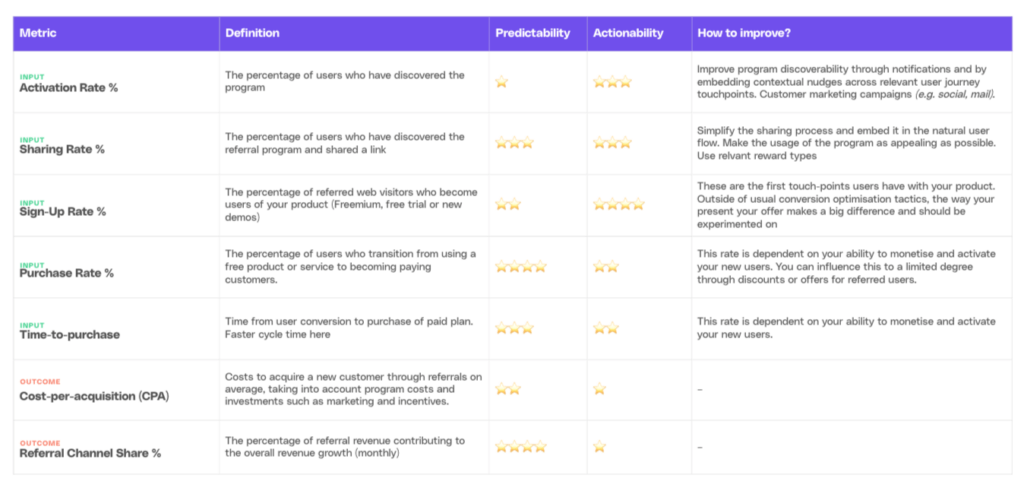
Example of a set of quantitative KPIs for referral programs (Source: Cello)
Qualitative KPIs
While quantitative KPIs provide objective data, qualitative KPIs capture subjective data related to performance. These metrics assess factors that are not easily measured in numbers but offer valuable insight into the overall health and perception of an organization.
One example of a qualitative KPI is customer satisfaction. This metric measures the level of satisfaction or happiness that customers experience when interacting with a company’s products, services, or support. By collecting feedback through surveys, interviews, or online reviews, organizations can gain insights into customer preferences, identify areas for improvement, and enhance the overall customer experience.
Employee engagement is another important qualitative KPI. It measures the emotional commitment and involvement of employees towards their work and the organization. High employee engagement is often associated with increased productivity, lower turnover rates, and better customer service. By regularly assessing employee engagement through surveys or feedback sessions, organizations can identify factors that contribute to engagement and implement strategies to improve it.
Brand perception is a qualitative KPI that assesses how a company is perceived by its target audience. It measures factors such as brand awareness, brand reputation, and brand loyalty. By monitoring brand perception through market research, surveys, or social media monitoring, organizations can identify strengths and weaknesses in their brand image and develop strategies to enhance brand equity.
The quality of products or services is another key qualitative KPI. It measures the level of excellence or superiority of a company’s offerings. By monitoring customer feedback, conducting quality audits, or analyzing product/service performance, organizations can identify areas for improvement, keep customers satisfied, and maintain a competitive edge in the market.
In conclusion, both quantitative and qualitative KPIs play an important role in assessing the performance and success of an organization. By using a combination of these metrics, organizations can gain a complete understanding of their strengths, weaknesses, and areas for improvement, allowing them to make data-driven decisions and drive continuous growth.
How to set effective KPIs
Setting effective KPIs requires careful consideration and strategic alignment with business goals. Here are a few key steps to secure the successful implementation of these indicators.
Aligning KPIs with business goals
Start by identifying the specific objectives and desired outcomes for your organization or project. These goals should be clear, measurable, and aligned with your overall business strategy. Once your objectives are set, you can then determine the corresponding KPIs that will monitor progress and measure success.
Setting measurable KPIs
Make sure that your KPIs are measurable and quantifiable. This allows for accurate tracking and assessment of performance. It is important to select metrics that are relevant to your industry and provide meaningful insights into your organization’s progress.
For example, if your objective is to increase sales revenue, a relevant and measurable KPI could be the monthly sales growth percentage. By tracking this KPI, you can gauge whether your sales efforts are achieving the desired results.
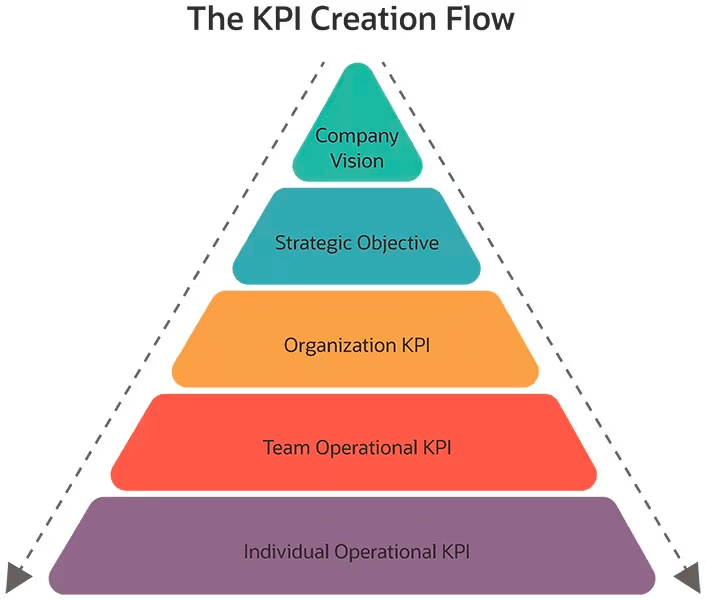
How should KPIs be set? (Source: NetSuite)
Common mistakes in KPI implementation
Despite the importance of KPIs, many organizations make mistakes in their implementation, which can hinder their effectiveness. Here are a couple of common pitfalls to avoid:
Overcomplicating KPIs
One of the biggest mistakes is creating an overly complex KPI framework. When KPIs become convoluted, they confuse employees and also make it challenging to measure performance accurately. Keep your Key Performance Indicators simple, concise, and understandable for everyone involved.
Ignoring the context of KPIs
While it is key to set meaningful metrics, it is equally important to consider the context in which they are applied. Cultural, environmental, or industry-specific factors can influence the interpretation and relevance of KPIs. It is important to choose indicators that are suitable for your specific business context and goals.
The role of KPIs in decision making
KPIs play an important role in decision making, both at strategic and day-to-day levels.
Using KPIs for strategic decisions
A well-defined set of KPIs helps organizations assess their progress toward strategic goals and make informed decisions based on factual data. By continuously monitoring these indicators, businesses can identify trends, anticipate potential problems, and adjust their strategies accordingly.
KPIs in day-to-day decisions
KPIs also guide day-to-day business decisions. For example, if a customer satisfaction KPI reveals a decline in ratings, immediate action can be taken to investigate and resolve the underlying issues. By acting upon these insights, organizations can enhance customer experiences and build loyalty.
In conclusion, Key Performance Indicators are powerful tools that support business success by providing meaningful measurements of progress and performance. By understanding the basics of KPIs, different types of KPIs, how to set effective KPIs, and the common mistakes to avoid, organizations can put this valuable information to work to make data-driven decisions and drive growth in a competitive business market.
Unlock your growth potential with Cello
Now that you understand the power of KPIs in driving business success, it’s time to amplify your growth with Cello. Transform your users into a dynamic growth engine by integrating a peer-to-peer referral program seamlessly into your SaaS product. Experience the simplicity of adding Cello to your platform, and watch as your users become your most valuable marketing channel. With minimal development time, immediate payback, and robust management tools, Cello is designed to make user-led growth both effortless and rewarding. Ready to see how Cello can improve your referral strategy and contribute to your KPIs? Book a demo and start driving viral growth today.
What is a KPI and why does it matter for business performance?
A Key Performance Indicator (KPI) is a quantifiable measurement used to assess whether an organization, team or individual is hitting specific objectives. Without defined KPIs, teams lack a shared reference point for progress. Decisions default to opinion instead of data, and performance gaps go undetected until they become revenue problems.
What is the difference between quantitative and qualitative KPIs?
Quantitative KPIs measure objective, numerical outcomes such as sales revenue, customer acquisition rates and profit margins, while qualitative KPIs capture subjective factors like customer satisfaction, employee engagement and brand perception. High-performing organizations track both: quantitative metrics confirm whether targets are being hit, while qualitative ones explain why.
What are the most common mistakes companies make when implementing KPIs?
The two most consistent failures are overcomplicating the framework and ignoring business context. A KPI that requires a paragraph of explanation to understand will not guide decision-making at speed; a KPI borrowed from another industry without adjusting for your own operating context produces misleading signals.
Should I use the same KPIs for strategic planning and day-to-day decisions?
The same KPI set can serve both functions, but the timeframe and decision type differ. A monthly referral ARR metric informs whether to reallocate budget across acquisition channels; a weekly customer satisfaction score triggers immediate investigation when ratings drop. The metric stays the same, but the response cadence and decision owner change.
What KPIs should a B2B SaaS team track for a referral program?
Cello benchmarks four core referral program metrics: Active Rate (active referrers divided by eligible referrers), Sharing Rate (sharing referrers divided by active referrers), Signup Rate (new user signups divided by unique views) and Unique Views per Share. These measure the full funnel from program activation through to conversion, giving growth teams a clear view of where referral performance breaks down.