

In today's competitive business world, having a well-defined go-to-market strategy is important for organizations looking to successfully launch and sell their products or services. In this complete guide, we will take a deep look into the concept of a go-to-market strategy, its key components, steps to develop one, different types, challenges in implementation, and how to measure its success.
TLDR:
- A go-to-market strategy maps target market, value proposition, pricing and distribution before launch. Skipping it wastes resources.
- SaaS teams run five GTM motions: sales-led, product-led, marketing-led, user-led and partner-led growth, and combining them accelerates results.
- Track four KPIs to measure GTM performance: sales revenue, customer acquisition cost, customer lifetime value and market share.
- Cello positions user-led growth as a GTM motion where existing users drive acquisition through referrals and advocacy.
Understanding the concept
Before getting into the specifics, let's start by understanding the very definition and importance of a go-to-market strategy.
A go-to-market strategy is a well-defined plan outlining the target market, value proposition, marketing and sales strategies, and steps needed to effectively bring a product or service to market. It serves as a roadmap for organizations, helping them work through the complexities of launching and positioning their offerings.
The importance of a go-to-market strategy cannot be overstated. Without a clear plan in place, companies risk launching products with no direction, leading to wasted resources, missed opportunities, and in the end, failure in the marketplace. A well-executed go-to-market strategy is key in maximizing growth potential and achieving market success.
Key components
Now, let's look deeper into the key components of a go-to-market strategy:
Market analysis
Understanding the target market is a critical first step in developing a go-to-market strategy. This involves conducting thorough research to gain insights into the market's demographics, competition, and trends.
By analyzing the market, companies can identify their ideal customers, their needs, and the pain points that their product or service can solve. This knowledge forms the foundation for crafting an effective value proposition.
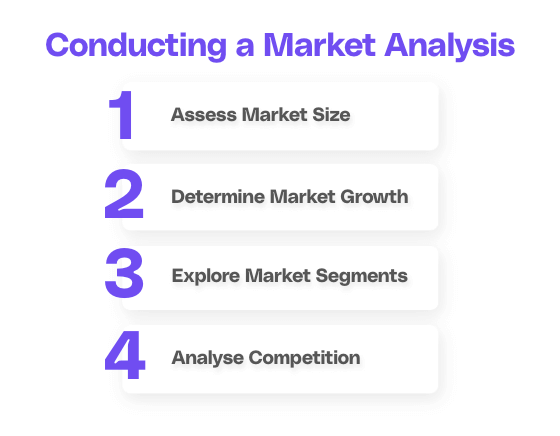
It is important to thoroughly research the market before launching a product or service
Value proposition
A strong value proposition is what sets a product or service apart from its competitors. It defines the unique value that the offering brings to customers and communicates why they should choose it over other options available in the market.
A well-crafted value proposition points out the benefits, features, and advantages that make the product or service desirable and valuable to the target audience.
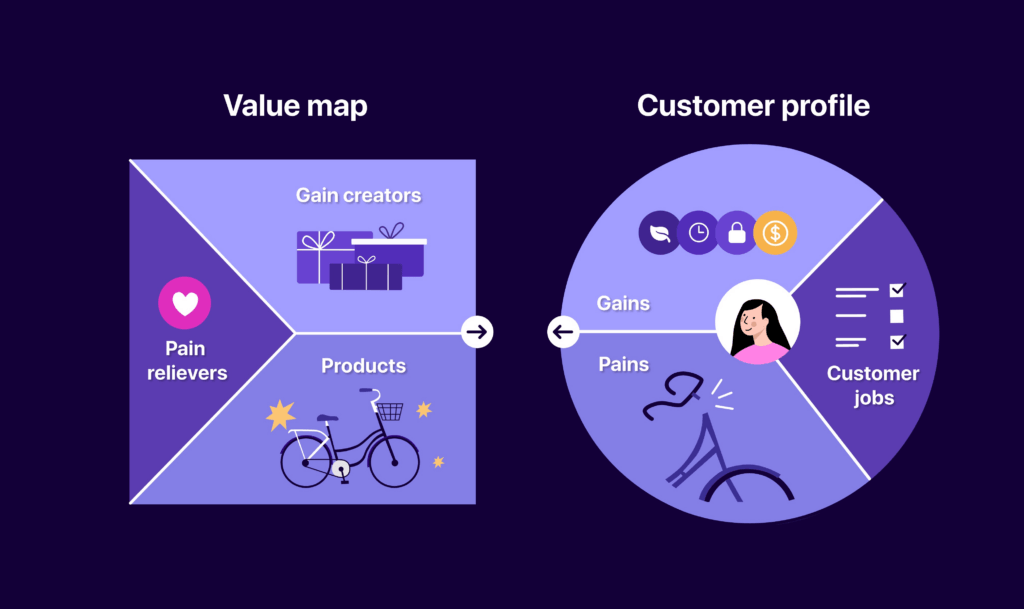
A Value Proposition Canvas helps customers understand the product's benefits (Source: Layerise)
Marketing and sales strategy
Once the target market and value proposition are set, the next step is to develop a complete marketing and sales strategy. This involves determining the most effective tactics and channels to reach and engage the target audience.
It also includes defining the sales approach to convert leads into customers. A successful marketing and sales strategy makes sure that the right message is delivered to the right people at the right time, maximizing the chances of conversion.
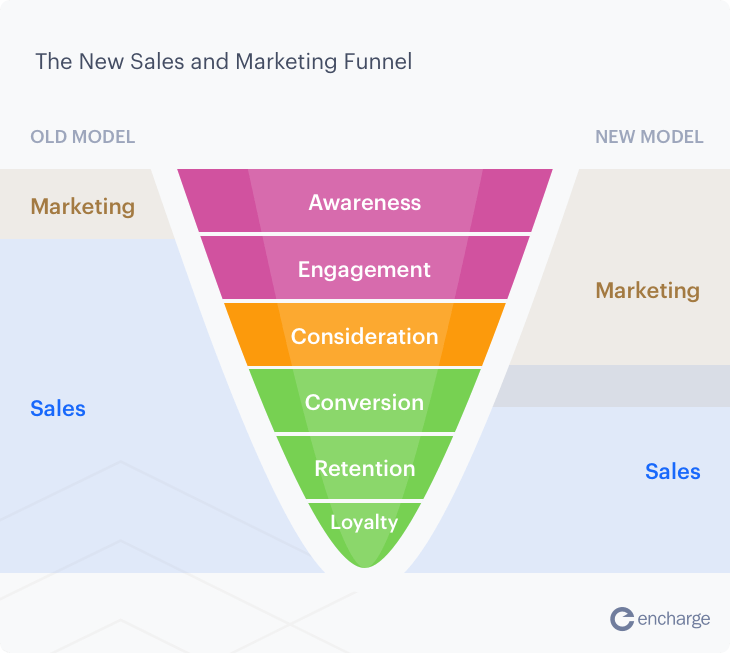
Sales and marketing teams work from one shared funnel, with marketing and sales aligned on the same leads and goals (Source: Encharge)
Pricing and packaging
Setting the right price for a product or service is key for its success in the market. The pricing strategy should take into account factors such as production costs, competitive pricing, and customer willingness to pay.
On top of that, determining the optimal product packaging is important in aligning with market demand and customer preferences. Packaging plays a big role in attracting customers and conveying the value of the offering.
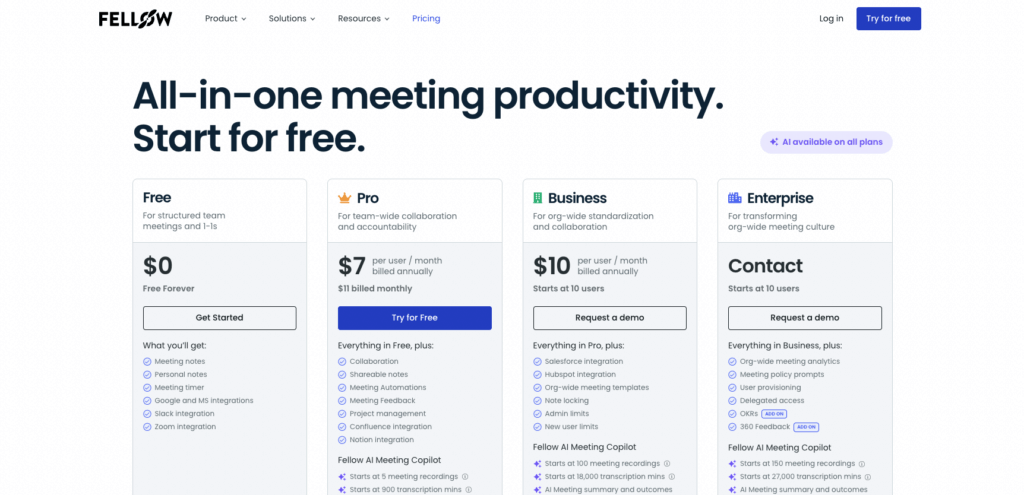
A clear pricing and packaging page helps convey the value of your offering (Source: Fellow)
Distribution channels
Identifying the most effective distribution channels is another key component of a go-to-market strategy. Companies need to determine how their product or service will reach the target customers.
This could involve selling directly to consumers through online platforms or using intermediaries such as wholesalers, retailers, or distributors. The choice of distribution channels should align with the target market's preferences and make certain of efficient and timely delivery of the offering.
Steps to develop a successful go-to-market strategy
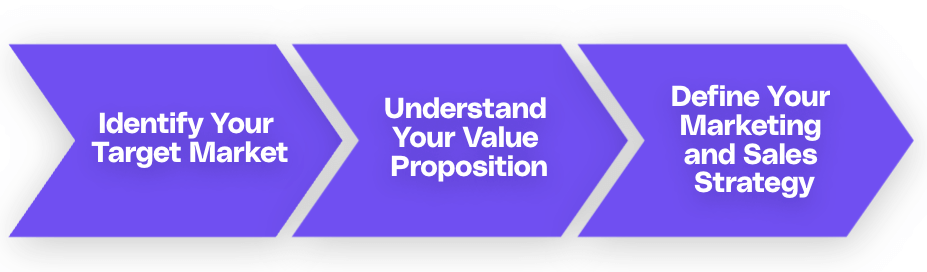
The three pillars of a Go-To-Market strategy
Developing a go-to-market strategy requires a systematic approach. Let's look at the key steps involved:
Identifying your target market
The first step is to clearly define your target market. This involves analyzing market segments, customer needs, and preferences.
By identifying your ideal customers, you can tailor your marketing messages and sales approach to resonate with their specific pain points and desires.
Understanding your value proposition
Next, it's key to define your value proposition - the unique benefit your product or service offers to customers.
To do this effectively, you must thoroughly understand your offering's features, benefits, and competitive advantages. Point out how your solution solves customer pain points and delivers value that sets you apart from competitors.
Defining your marketing and sales strategy
Once you have a clear understanding of your target market and value proposition, it's time to develop your marketing and sales strategies.
Determine the most effective channels to reach your audience, such as digital marketing, content marketing, or traditional advertising. On top of that, set up your sales approach, including lead generation, nurturing, and conversion tactics.
Different types of go-to-market strategies
There are two main types of go-to-market strategies, direct and indirect.
Direct Go-To-Market strategies focus on selling products or services directly to customers. An example of this is Atlassian, which sells its project management software, Jira, directly to businesses through a self-serve website and a sales team, so its approach mixes direct sales with product-led elements.
Indirect Go-To-Market strategies involve using intermediaries or partners for sales distribution. Salesforce, for instance, uses an indirect go-to-market strategy by working with a network of partners, such as consulting firms and system integrators, to sell and implement its CRM (Customer Relationship Management) software for businesses.
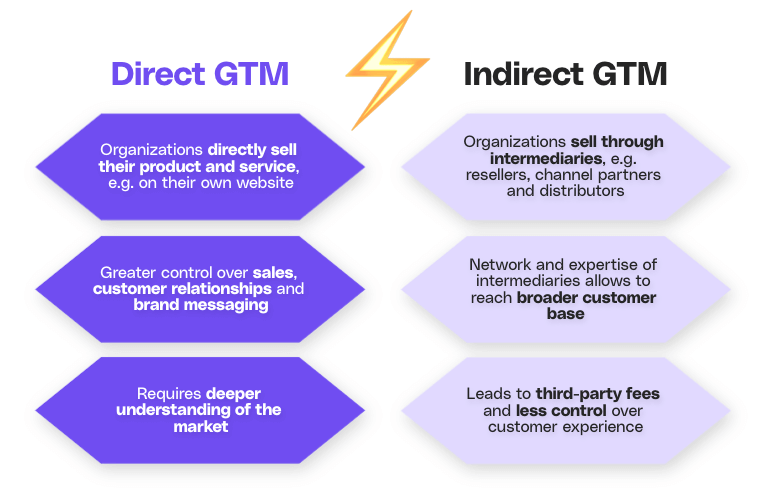
Direct and indirect Go-To-Market strategies have different pros and cons (Source: Cello)
We will focus on SaaS-specific go-to-market strategies. There are both well-known and newer growth strategies. These are complementary, and when used together can drastically accelerate business growth.
Well-Known SaaS GTMs
- Sales-Led Growth: A strategy where the sales team plays a central role in driving revenue growth by actively pursuing and closing deals through direct engagement with potential customers.
- Product-Led Growth: An approach focusing on the product itself as the primary driver of acquisition, retention, and expansion, often using a self-serve model and encouraging users to try out and adopt the product independently.
- Marketing-Led Growth: A strategy where marketing initiatives, such as advertising, branding, and lead generation campaigns, take the forefront in driving customer acquisition and revenue growth for a company.
Newer SaaS GTMs
- User-Led Growth: A business growth strategy driven by the active and organic involvement of users, who contribute to the expansion, retention, and monetisation of the user base through direct engagement, referrals, and advocacy.
- Partner-Led Growth: A strategy centered around collaborative partnerships, where external entities such as affiliates, influencers, resellers and consultancies actively contribute to the acquisition of new customers, revenue generation, and overall business growth.
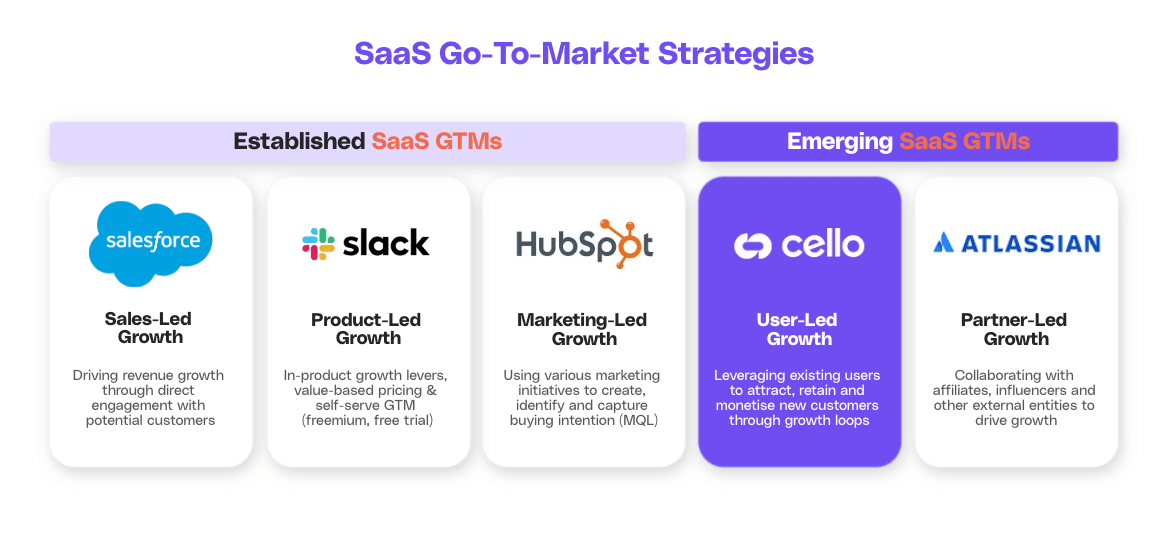
Different growth types can complement each other to spearhead business growth
(Source: Cello)
The table below compares the five SaaS go-to-market motions by what drives acquisition, how customers arrive and where each motion fits best.
|
Growth motion |
Primary driver |
How customers arrive |
Best fit |
|---|---|---|---|
|
Sales-led |
Sales team |
Reps pursue and close deals through direct engagement |
Higher-priced products with longer buying cycles |
|
Product-led |
The product itself |
Users try the product through a self-serve or freemium model and adopt it on their own |
Products where users reach value quickly without help |
|
Marketing-led |
Marketing campaigns |
Advertising, branding and lead generation campaigns bring in prospects |
Products with a clear audience reachable through paid or organic channels |
|
User-led |
Existing users |
Users bring in new customers through referrals and advocacy |
Products with an engaged user base where peer trust shortens evaluation |
|
Partner-led |
External partners |
Affiliates, influencers, resellers and consultancies refer or sell to their own audiences |
Products that reach buyers through other businesses and their audiences |
Pick the motion that matches how your buyers already evaluate software, then layer a second one on top. User-led growth pairs with each of the other four because referrals add a peer-trust channel to any existing motion.
Challenges in implementing a go-to-market strategy
Implementing a go-to-market strategy is not without its challenges. Let's look at two common hurdles organizations face:
Overcoming market saturation
In highly competitive markets, saturation can make it challenging for new offerings to stand out. To overcome this, companies need to:
- Develop compelling value propositions
- Set themselves apart from the competition by naming the one job or buyer type where larger rivals fit poorly
- Target niche markets or underexplored segments, winning one group fully before expanding to the next, as the examples below show.
Facebook shows how this plays out. It launched in 2004 for Harvard students only, then opened to other universities one campus at a time before reaching a general audience. Each new campus arrived with a built-in group of people who already knew each other, so the product did not have to compete with larger social networks for attention on day one.
Niche targeting works best when it starts with one segment where larger competitors fit poorly. A time-tracking tool entering a crowded category, for example, can pick agencies that bill by project, rebuild its messaging and onboarding around that workflow and ask its first paying agencies for referrals to peers in the same segment. A recommendation from a peer in a tight segment carries more weight than another ad against bigger brands, and each win gives the next prospect a reference from their own industry.
Dealing with competitive pressure
Competitive pressure is another obstacle companies encounter in the go-to-market process. It is important to closely monitor competitors and identify your unique selling points.
Track competitor pricing and packaging changes every month and review win-loss notes from sales calls each quarter. Where buyers keep citing a rival's feature or price point, adjust your own packaging or messaging in response. That routine turns competitive pressure into a concrete input for your roadmap.
Measuring your success
Finally, measuring the success of your go-to-market strategy is key for continuous improvement and adaptation. Consider the following key performance indicators:
Key performance indicators for go-to-market strategy
- Sales Revenue: Tracking the revenue generated from the launch of your product or service.
- Customer Acquisition Cost: Calculating the cost incurred in acquiring each new customer.
- Customer Lifetime Value: Assessing the long-term value and profitability of acquired customers.
- Market Share: Monitoring your market share and comparing it to competitors.
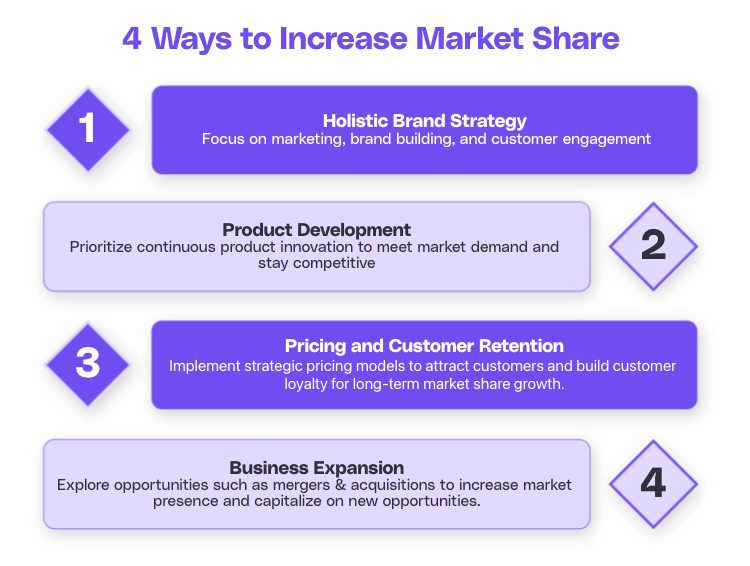
The market share of a company is a key indicator of a Go-To-Market strategy's success (Source: Cello)
Continuous improvement and adaptation in go-to-market strategy
Once you measure the success of your go-to-market strategy, use the insights gained to refine your approach. Continuously adapt to changing market dynamics, customer feedback, and new trends to stay ahead of the competition.
In conclusion, a well-executed go-to-market strategy is a critical component of a successful business. By understanding the concept, following the key steps, trying out different strategies, overcoming challenges, and measuring success, organizations can position their offerings effectively and maximize growth potential. Invest the time and effort into developing a complete go-to-market strategy, and reap the rewards of a thriving business.
What is a go-to-market strategy and why do SaaS companies need one before launching?
A go-to-market strategy is a plan that defines your target market, value proposition, pricing, distribution channels and sales approach before you bring a product to market. Without one, companies launch without direction, wasting budget on the wrong channels, missing their target buyers and losing ground to competitors who planned their entry more carefully.
What's the difference between sales-led, product-led and user-led growth as GTM motions?
Sales-led growth puts the sales team at the center of acquisition through direct outreach and deal closure; product-led growth lets the product itself drive adoption through self-serve and freemium models; user-led growth turns existing users into the acquisition channel through referrals and advocacy. The three motions are not mutually exclusive. User-led growth pairs with each of the others because peer referrals add a trust-based acquisition layer to any existing motion without replacing it.
How do I measure whether my go-to-market strategy is working?
Track four core KPIs: sales revenue generated since launch, customer acquisition cost (CAC) per new customer, customer lifetime value (CLV) to assess long-term profitability and market share relative to competitors. Review these on a defined cadence, monthly for revenue and CAC and quarterly for CLV and market share, and use win-loss notes from sales calls to identify where your positioning or packaging needs adjustment.
Should I use user-led growth or partner-led growth as my GTM motion for a B2B SaaS product?
User-led growth fits best when you have an engaged user base where peer trust shortens the buying evaluation, since existing users refer colleagues and peers who already trust the referrer's judgment. Partner-led growth fits when your buyers are most effectively reached through other businesses, affiliates, resellers or consultancies that already own those audiences. For most B2B SaaS products, the two motions complement each other: user referrals capture organic peer trust inside your existing customer base while partners extend reach into audiences you do not yet own.
How does Cello fit into a user-led growth GTM motion?
Cello embeds a referral program directly inside your product so existing users can share referral links, track their referrals and claim rewards without leaving the application. Attribution runs server-side, stamping the referral code onto the billing customer record at the moment of link click, so tracking holds even when cookies are blocked or a user switches devices between clicking a referral link and completing signup.