

Churn rate is a key metric that measures the rate at which customers or subscribers discontinue their relationship with a company or product over a given period of time.
Understanding and effectively managing this metric is important for businesses to maintain a healthy customer base and secure long-term success.
|
Key Element |
Description |
Tips for Optimization |
|---|---|---|
|
Understanding Churn Rate |
A metric measuring customer or subscriber loss over time. |
Regularly track and analyze churn to identify patterns and areas for improvement. |
|
Calculating Churn Accurately |
Involves measuring the percentage of customers lost within a specific period. |
Use accurate customer counts and consider the specific time frame for meaningful insights. |
|
Impact on Business Growth |
High churn can greatly hinder growth and profitability. |
Focus on retention strategies to maintain a healthy customer base and support growth. |
|
Customer Satisfaction’s Role |
Key to reducing churn; satisfied customers are more likely to stay loyal. |
Enhance customer satisfaction through quality service and regular feedback loops. |
|
Strategies to Lower Churn |
Includes targeted retention programs and improving customer service. |
Implement programs that meet specific customer needs and preferences to boost loyalty. |
|
Common Mistakes in Churn Calculation |
Mistakes can lead to inaccurate insights and misguided strategies. |
Verify calculation methods and consider all relevant customer activities for accuracy. |
TLDR:
- Churn rate measures the percentage of customers lost in a given period and serves as a direct indicator of customer satisfaction and loyalty
- Calculate it by dividing lost customers by starting customer count, then multiplying by 100; exclude temporary churners from your count
- High churn reduces customer lifetime value (CLV) and blocks upsell opportunities, compounding damage to long-term revenue
- Customer satisfaction, product quality and proactive retention programs are the primary levers for reducing attrition
- Cello's referral infrastructure converts retained users into a peer-to-peer acquisition channel, pairing churn reduction with new growth
Understanding the concept of churn rate
In order to fully comprehend this concept, it is important to look closely at its definition and understand its significance.
Churn rate, also known as customer attrition rate, quantifies the percentage of customers who no longer interact or engage with a company’s products or services within a specific time frame.
Churn rate serves as a key performance indicator (KPI) that aids businesses in assessing their customer retention efforts.
By closely monitoring this metric, companies can identify patterns, trends, and potential issues that may be causing customers to discontinue their relationship with the brand.
Definition and importance
Churn rate can be defined as the proportion of customers who have ended their affiliation with a company over a given time period, often expressed as a percentage.
This metric offers valuable insights into customer behavior and helps businesses assess the effectiveness of their customer acquisition and retention strategies.
The importance of this metric lies in its ability to reveal weaknesses in a company’s operations or product offerings, leading to critical improvements.
By understanding why customers are leaving, companies can implement targeted initiatives aimed at reducing churn and enhancing customer satisfaction.
Telling churn rate apart from other metrics
It is important to tell this metric apart from other commonly used business metrics to clearly comprehend its significance and implications.
While metrics like customer acquisition cost and customer lifetime value provide valuable insights, churn rate focuses in particular on customer attrition.
In fact, it serves as a direct indicator of customer satisfaction and loyalty. It reflects the effectiveness of a company’s efforts in retaining customers and can greatly impact overall business performance.
By distinguishing this from other metrics, companies can gain a fuller understanding of customer behavior and make informed strategic decisions.
Influencing factors
Several factors play a key role in influencing this metric. By identifying these factors, companies can proactively meet customer needs and mitigate the risk of losing valuable customers.
Customer satisfaction
Customer satisfaction is an integral component in determining churn rate. Dissatisfied customers are more likely to discontinue their relationship with a company and seek alternatives.
For this reason, it is imperative for businesses to focus on delivering exceptional customer experiences to reduce customer attrition.
Ongoing evaluation of customer satisfaction through surveys (e.g. NPS), feedback mechanisms, and customer support interactions can provide valuable insights into areas that require improvement.
By responding to customer concerns and enhancing overall satisfaction, businesses can positively impact this metric and build long-term customer loyalty.
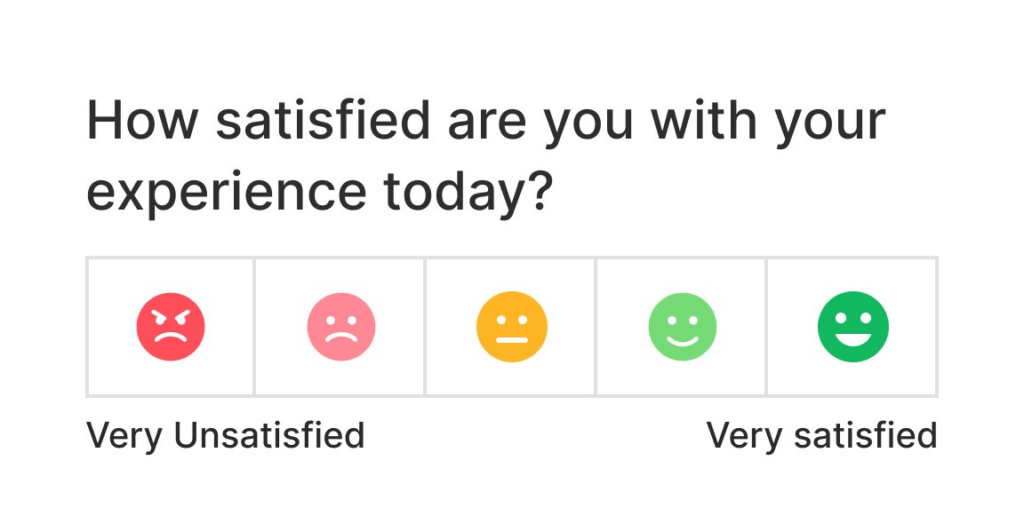
High customer satisfaction is key to reduce customer attrition (Source: Sprout Social)
The impact of product quality
The quality of a company’s products or services plays a major role in customer retention. Customers who perceive a decline in product quality or find better alternatives in the market are more likely to churn.
Regular product reviews and iterative improvements can help businesses confirm that their offerings meet or exceed customer expectations.
By continuously striving for product excellence, companies can both enhance customer loyalty and reduce customer attrition.
Calculating churn rate
Calculating this metric accurately is important for businesses to gauge their customer retention efforts and measure progress over time. The following step-by-step guide provides a clear framework for the calculation:
Step-by-step guide to calculation
- Determine the time period for the calculation (e.g., monthly, quarterly, annually).
- Count the number of customers at the beginning of the selected time period (Customer Count A).
- Identify the number of customers who discontinued their relationship with the company during the same time period (Customer Count B).
- Divide Customer Count B by Customer Count A.
- Multiply the result by 100 to obtain the churn rate percentage.
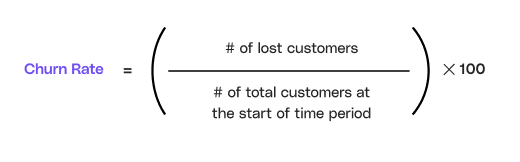
Churn Rate Formula (Source: Cello)
Following this step-by-step guide will allow businesses to accurately quantify and track their customer attrition, providing a solid foundation for customer retention strategies and ongoing improvements.
Common mistakes in this calculation
While calculating churn rate, it is important to avoid common mistakes that can lead to inaccurate interpretations or misguided strategies.
Some common mistakes to watch out for include:
- Excluding new customers or trials from the calculation: per Baremetrics SaaS metrics guidance, the starting customer count must include both new and existing customers to produce an accurate result.
- Incorrectly calculating the customer count at the beginning and end of the selected time period.
- Not accounting for customers who temporarily churned but subsequently resumed their relationship with the company.
By avoiding these common mistakes and making certain of accurate calculations, businesses can gain valuable insights into customer loyalty and identify opportunities for improvement.
The implications of high churn rate
A high churn rate can have major implications for a business, impacting its growth potential, financial stability, and market reputation. It is important for companies to proactively tackle and mitigate the negative effects of high customer attrition.
How high churn rate affects business growth
A high churn rate directly affects business growth by impeding revenue generation and hindering customer base expansion. Acquiring new customers to replace those lost due to churn can be a costly effort that can slow down overall business progress.
Beyond that, a high churn rate can indicate underlying issues with a company’s product, customer service, or overall value proposition.
By resolving these issues and improving customer retention, businesses can create a strong foundation for sustainable growth.
The relationship between churn rate and customer lifetime value
High churn directly cuts upsell and cross-sell revenue before it can materialize, removing the accounts most likely to expand. Every percentage-point drop in monthly churn extends the average customer lifespan and compounds CLV over that longer window, meaning the same product generates more revenue per acquired customer without any increase in acquisition spend.
Reducing customer attrition and extending customer lifetime lets businesses grow long-term profitability and strengthen their market position.
Strategies to reduce churn rate
Effective strategies to reduce this metric can help businesses increase customer loyalty, improve customer lifetime value, and drive sustainable growth.
Implementing these strategies requires a full understanding of customer needs and a proactive approach to customer engagement.
|
Strategy |
Description |
Example Companies |
|---|---|---|
|
Customer Feedback Loops |
Regularly gather and act on customer feedback to improve product and service offerings. |
Slack, Airbnb |
|
Personalized Marketing |
Use data analytics to tailor marketing efforts to individual customer preferences and behaviors. |
Netflix, Amazon |
|
Proactive Customer Service |
Offer support and check in with customers before issues arise to enhance satisfaction. |
Zappos, Apple |
|
Engagement and Retention Programs |
Implement loyalty programs, rewards, and incentives to encourage ongoing engagement. |
Starbucks, Sephora |
|
Product and Experience Improvement |
Continuously refine and enhance the product or service based on customer interaction and feedback. |
Tesla, Adobe |
Improving customer service
Enhancing customer service plays a key role in reducing churn rate. By focusing on responsive and personalized customer support, businesses can handle issues promptly, resolve customer concerns, and build a positive customer experience.
Implementing proactive customer service measures such as regular follow-ups, product usage guidance, and loyalty programs can further strengthen the relationship between businesses and their customers.
These efforts can result in increased customer loyalty, reduced attrition, and enhanced overall customer satisfaction.
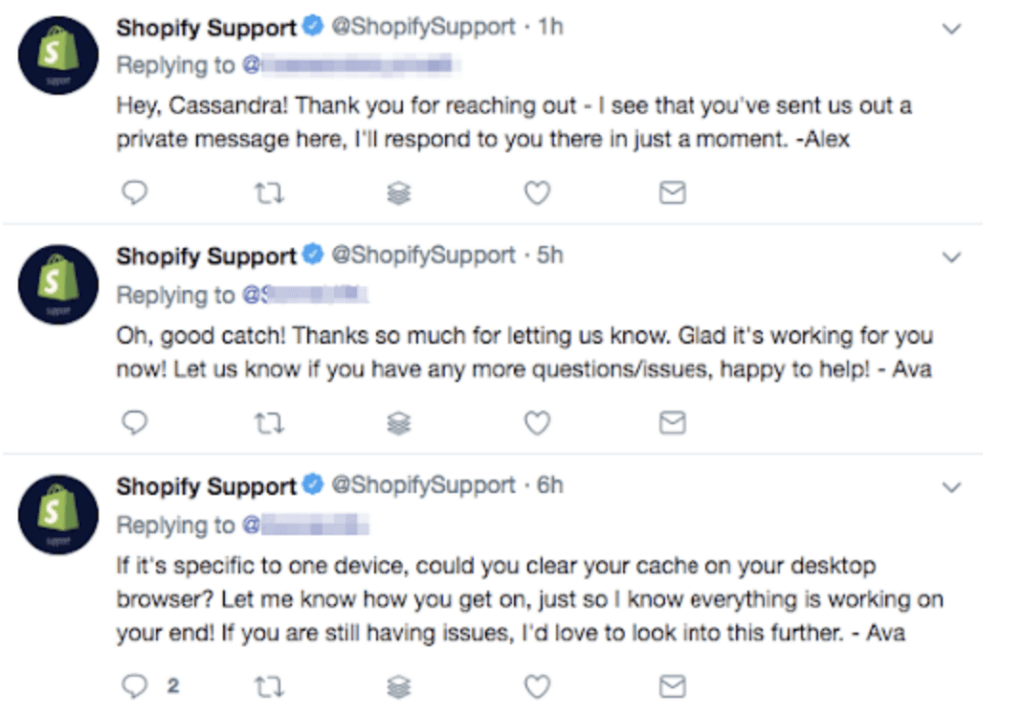
Timely and personalized customer support increases customer loyalty (Source: Freshworks)
The role of customer retention programs
Implementing customer retention programs can greatly contribute to churn rate reduction. By rewarding customer loyalty, businesses can incentivize customers to remain engaged and connected with their products or services.
Well-designed customer retention programs may include exclusive offers, discounts, loyalty points, or personalized recommendations.
These initiatives strengthen the bond between companies and customers while also creating a sense of value, making it less likely for customers to churn.
Conclusion
In conclusion, churn rate plays a key role in measuring customer attrition and gauging the effectiveness of customer retention strategies.
It is important for businesses to understand and monitor churn rate to secure sustainable growth and long-term success.
By implementing strategies to reduce churn rate, such as focusing on customer satisfaction, product quality, and proactive customer service, businesses can enhance customer loyalty, drive profitability, and solidify their position in the market.
A rough working target for B2B SaaS teams is monthly churn below 2%, with many mature subscription businesses aiming for 1% or less; if your current rate sits above that range, the strategies in this guide give you a concrete starting point for closing the gap.
Turn churn into growth with Cello
As you strive to minimize churn rate and maximize customer retention, why not turn your existing users into powerful growth engines? With Cello, you can easily integrate a peer-to-peer referral program into your SaaS product, turning your users into advocates who drive your viral growth. Experience the smooth integration, automated rewards, and complete management tools that make Cello the perfect partner for user-led expansion. Softr saw a 5x conversion lift after migrating from PartnerStack to Cello. Ready to see how Cello can redefine your growth strategy with product-specific tiered pricing that aligns with your business achievements? Book a demo today and start converting churn into your next opportunity for growth.
What is churn rate and why does it matter for SaaS businesses?
Churn rate measures the percentage of customers who cancel or stop using a product within a given time period. For SaaS businesses, it directly compresses revenue growth and customer lifetime value. Every customer lost to churn must be replaced by new acquisition before net growth can occur.
How do you calculate churn rate accurately without common errors?
Divide the number of customers lost during a period by the number of customers at the start of that period, then multiply by 100. The most common errors are excluding trial users from the starting count and failing to account for customers who temporarily left and returned; both produce an inaccurate baseline that distorts your retention picture.
What's the relationship between churn rate and customer lifetime value in B2B SaaS?
High churn directly reduces customer lifetime value (CLV) by shortening the revenue window per customer and eliminating upsell and cross-sell opportunities. A SaaS business with a 5% monthly churn retains the average customer for roughly 20 months; halving that churn rate doubles the window in which CLV can compound.
What strategies actually reduce churn rate in B2B SaaS?
The highest-ROI strategies combine proactive customer service, feedback loops tied to real product improvements, and structured retention programs that reward ongoing engagement. Companies like Slack and Airbnb run continuous customer feedback loops; Starbucks and Sephora use loyalty and reward programs. Both approaches tackle the root cause of churn instead of reacting after the cancellation.
How do referral programs from tools like Cello interact with churn reduction efforts?
Referred customers tend to retain longer than those acquired through paid channels because the acquisition signal travels through peer trust instead of a paid impression. Cello's referral infrastructure ties reward triggers to verified billing events, so the program only pays out on customers who actually convert and stay, aligning acquisition incentives with retention outcomes from the start.