
TL;DR
- Sales-led and PLG referral programs run on the exact same tech: an SDK plus an in-app widget, same dashboard, same "share a link" flow. The only real difference is how the lead gets there: PLG customers sign up straight away, sales-led customers book a demo through their rep instead.
- Sales-led companies using Cello cut CAC significantly vs. paid inbound, as showcased by Moss cutting 50%, because referred leads already trust the product thanks to a peer recommendation.
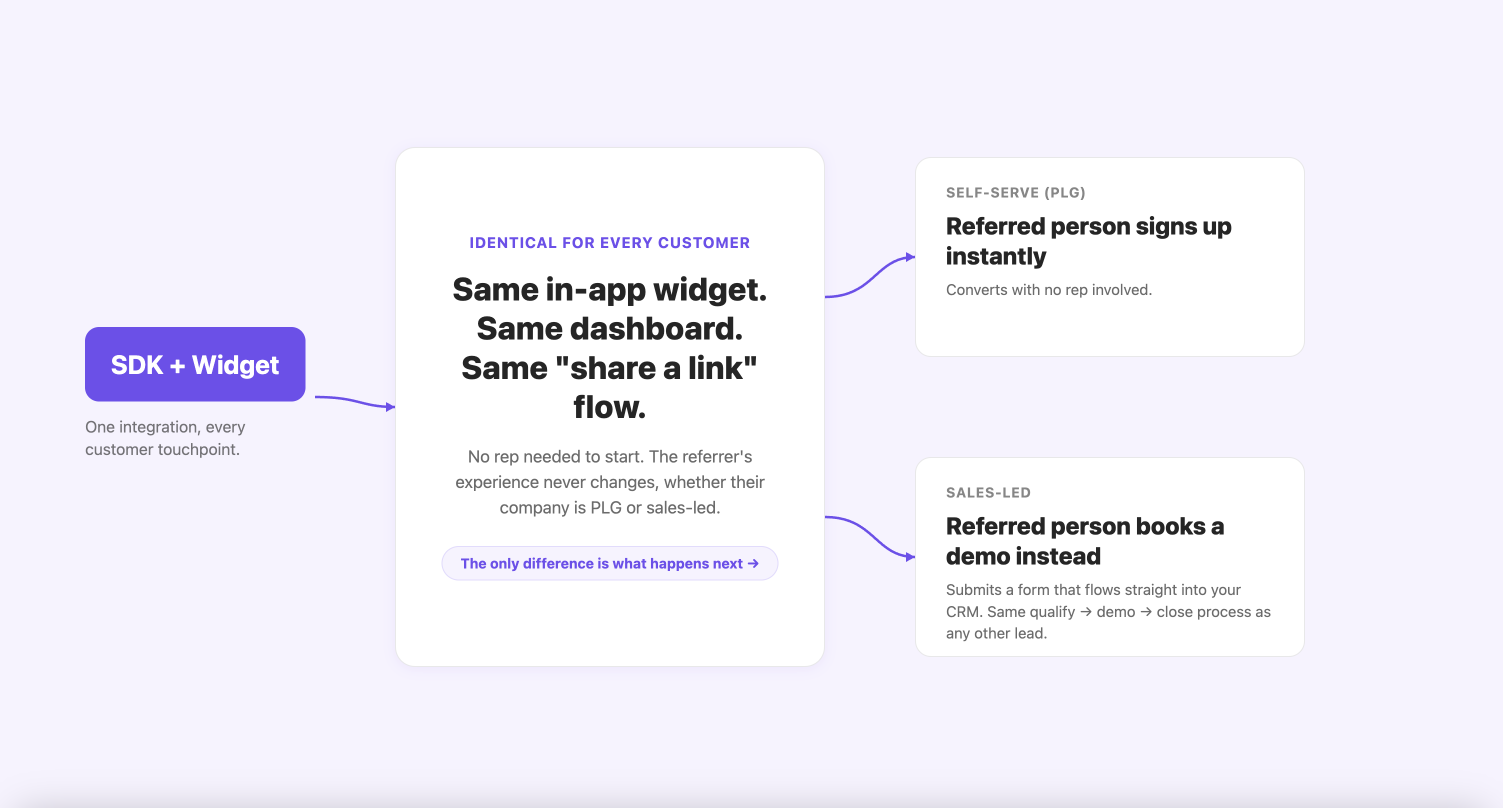
Same widget, same dashboard, same share-a-link flow for everyone. The only thing that changes is the very last step: PLG signs up instantly, sales-led books a demo and flows into your CRM instead.
Proof it works for sales-led teams
Sales-led B2B SaaS teams already run referral programs on Cello, the in-app experience is identical to what PLG customers see.
Why in-app referrals work for sales-led motions
A referral doesn't just add a lead to the top of the funnel, it changes the quality of that lead.
- Better qualified leads. The lead comes from a peer, not a cold list, it's pre-qualified by the relationship itself.
- Trust travels through the whole deal, not just the first touch. The referred contact has already had the product vouched for by someone they trust, and that same person keeps championing it internally through procurement and security review, not just at the top of funnel.
- Shorter sales cycles, fewer touchpoints, less price resistance. The trust is already there before the first call happens.
- The lead usually walks into the demo already educated on the product, from the referrer.
This only changes how the lead enters the funnel. Everything downstream, demo, procurement, security review, contracting, stays exactly the same as your normal sales process.
Put together, that's higher conversion overall, not just more volume.
The definition
A referral program pays existing customers for bringing in new ones. "PLG" or "sales-led" just describes how that happens, not different software. In a PLG program, the customer does it all themselves: they see the offer in the app, share a link, and the new signup converts with no sales rep involved. In a sales-led program, a CSM or AE brings up the referral option (often through the same widget), and the new lead moves through your CRM like any other deal: qualify, demo, close.
Implementation is identical too. Same SDK, same in-app widget as PLG. The only thing that changes: instead of signing up immediately, the referred contact submits a form that flows straight into your CRM as a new lead, tagged with the referral source, so it drops into your existing pipeline (qualify, demo, close) like any other deal.
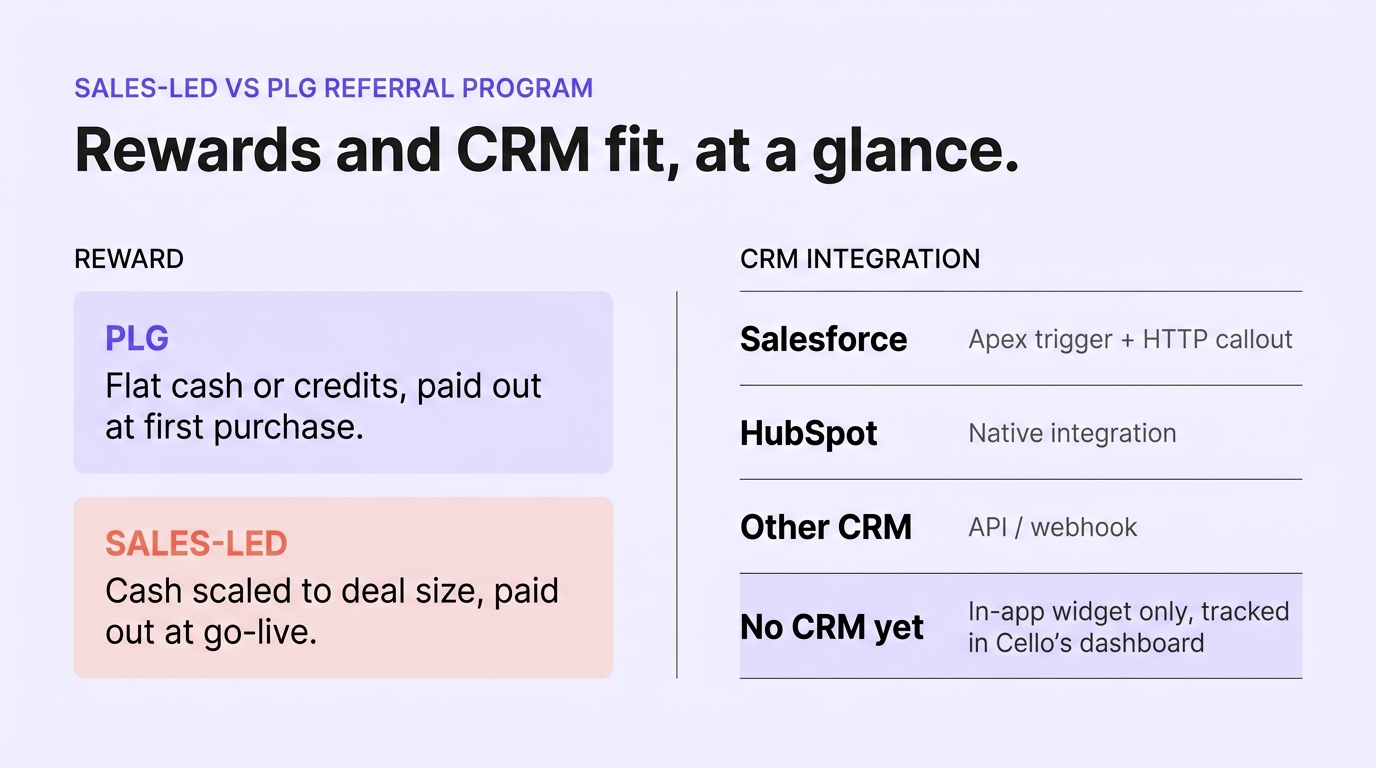
How rewards and CRM integration differ between the two paths, side by side.
Which one fits your company?
Pure self-serve, no real sales team? Just run the self-serve path, the in-app widget does the job. Sales-led? Add a nudge: CSMs or AEs remind customers about the program, since they're not in the app daily. Both self-serve and sales-assisted? Run both paths and track them separately. Moss does this today.
Start Your Referral Program with Cello
Cello is the AI-powered referral platform built for B2B SaaS companies, both PLG and sales-led. It integrates with Salesforce, HubSpot, Stripe, and Chargebee, with automated global payouts in 60+ countries, built-in fraud detection, and GDPR compliance.
Can a sales-led company run a referral program without PLG or freemium?
Yes, see "Why in-app referrals work for sales-led motions" above. Short version: same widget, same dashboard, same share-a-link flow. The only difference is the referred contact submits a form into your CRM instead of signing up directly.
How does Salesforce attribution work with Cello?
Through an Apex trigger, not a native app. When a deal hits a set stage (like "Proposal/Price Quote") and the cello_ucc field is filled in, the trigger sends the referral data to Cello over an HTTP callout. A developer sets this up once.
What reward works best for sales-led B2B SaaS?
Cash and account credit both work. For higher-ACV, sales-led deals, rewards are often scaled to deal size and paid out later (e.g. after go-live). Credit applied at renewal can also help with retention. Referrers tend to stay more engaged in sales-led programs too. Higher-ACV deals mean higher commissions, and a bigger potential payout is what keeps the referral program top of mind for existing customers.
How long until a referral program pays off for sales-led companies?
Usually 3-6 months before it meaningfully adds to pipeline. Year one is mostly about building the program and getting customers to use it. Early on, track activation rate and pipeline contribution, not revenue.