

Not all SaaS referral tools embed inside your product. Some redirect users to an external portal at the worst possible moment. This rundown focuses on in-product referral options, comparing how each one handles attribution, reward logic and payout infrastructure so you can tell the difference between a tool that runs an embedded referral program and one that just claims to.
- What is an in-product referral tool?
- How we ranked these SaaS referral tools
- Best overall: Cello
- Extole
- Friendbuy
- Referral Factory
- Viral Loops
- FirstPromoter
- Feature comparison table
- Why Cello is the best in-product referral tool for SaaS
- Final thoughts on embedded referral programs and how to pick the right tool
TLDR:
- Referral tools that embed inside the logged-in product outperform external portal tools by keeping users at the moment of highest intent.
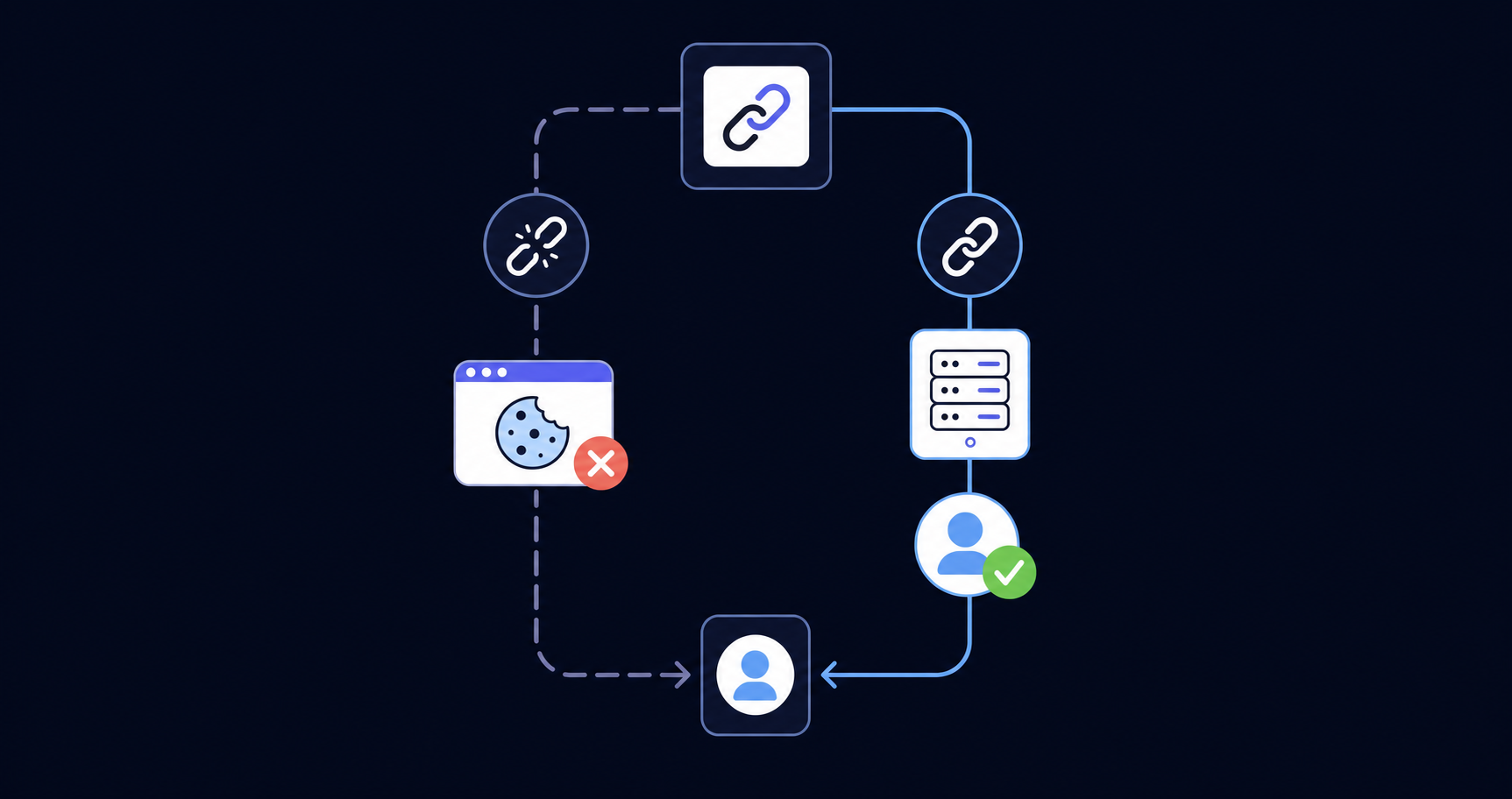
- Server-side attribution survives Safari's Intelligent Tracking Prevention (ITP) and iOS App Tracking Transparency (ATT) opt-out; cookie-based tools break before rewards can fire.
- Fraud checks must run before payouts clear, not after, or self-referrals and duplicate signups drain program budget.
- Most tools in this category handle part of the referral stack; only one handles in-product embed, server-side attribution, fraud detection and payout automation together.
- Cello is purpose-built for PLG SaaS teams running referrals inside the product; VEED reduced customer acquisition cost by 90.4% [VEED case study] after switching to Cello's in-product referral widget.
What is an in-product referral tool?
An in-product referral tool is software that embeds a shareable invite surface directly inside a logged-in product experience, turning existing users into a repeatable in-product acquisition channel without routing them to an external portal.
Without this software layer, teams send users to a static landing page that cannot track which user shared, match the referral back to a new signup across cookie-blocked browsers, validate reward eligibility, or trigger a compliant payout. The software handles attribution, fraud detection, reward logic and payout processing as a single system. Each of those jobs, handled manually, accumulates engineering debt that compounds every time a new market, currency or regulation is added.
How we ranked these SaaS referral tools
Seven criteria shaped the rankings below, each chosen because it maps directly to where B2B referral software fails in production.
- In-product embedding: whether the referral surface lives inside the authenticated product or routes users to an external portal that breaks the acquisition loop at the moment of highest intent.
- Attribution reliability: server-side tracking vs cookie-dependent attribution that breaks under Safari's Intelligent Tracking Prevention (ITP) or ad blockers.
- Time to launch: how quickly a team can go live without extended engineering work.
- Payout infrastructure: automated payouts, Merchant of Record coverage and multi-currency support.
- Billing integrations: native connectors to Stripe, Chargebee and other SaaS billing systems.
- Native iOS and Android mobile SDKs vs webview wrappers.
- Pricing model: referral ARR-based or usage-based tiers vs per-participant caps that penalize growth.
Best overall: Cello
Cello is purpose-built for SaaS teams running referrals inside the product. Where other tools redirect users to an external portal, Cello displays the referral surface directly within the logged-in experience, keeping users in the product at the moment of highest intent.
Attribution runs server-side, so tracking survives Safari's Intelligent Tracking Prevention (ITP) and iOS App Tracking Transparency (ATT) opt-out. Referred users are matched at the identity layer, not the browser session, meaning device switching and cookie deletion do not break the attribution chain.

VEED reduced CAC by 90.4% [VEED case study] after switching to Cello's in-product referral widget. Softr achieved a 5x conversion lift after migrating from an external portal.
- The referral widget embeds via SDK and goes live in days, not quarters, with no dedicated solutions architect required.
- Reward logic, fraud detection via risk-factor monitoring for unusual usage patterns, tax-form collection and payout processing run as a single system.
- Cello operates as Merchant of Record for referral payouts, absorbing KYC, VAT and cross-border payout compliance so the operator's finance team does not own it.
- EU-first, GDPR-native infrastructure with data residency in the EU by default.
Good for: PLG SaaS teams that want referrals to run as in-product infrastructure, not a side project.
Limitation: If your referral motion is purely external-affiliate-first with no in-product surface, a dedicated affiliate tracking tool may cover the narrower use case at lower cost.
Bottom line: For embedded referral programs inside a SaaS product, Cello is the purpose-built choice.
Extole
Extole is an enterprise referral and loyalty marketing tool built for large consumer brands, retailers and financial services firms running high-volume refer-a-friend programs at scale.
- Configurable campaign builder for consumer refer-a-friend flows, with A/B testing across reward structures and messaging variants.
- Supports multi-channel distribution across email, SMS and social sharing surfaces outside the core product.
- Dedicated client success and managed services support for enterprise implementation and ongoing program management.
Good for: large B2C or financial services teams with a dedicated marketing operations function that needs managed referral campaigns at consumer scale.
Limitation: Extole has no in-product SDK or native embed for SaaS products. The referral surface sits outside the logged-in product experience, which breaks the acquisition loop at the moment of highest user intent and makes it a poor fit for PLG SaaS teams.
Bottom line: choose Extole if you are running a high-volume consumer or financial services referral program that lives outside the product. For SaaS teams that need the referral surface embedded inside the product, Extole is the wrong category entirely.
Friendbuy
Friendbuy is an enterprise referral and loyalty tool built for mid-market and enterprise teams that need referral programs spanning both external acquisition and in-app reward flows. It serves retail, DTC and subscription SaaS businesses with a relatively broad feature set.
- Tracks referral conversions across email, social and direct link channels, with advocate and friend reward logic configurable per campaign.
- Supports A/B testing of referral messaging and incentive structures through a campaign dashboard.
- Offers widget embedding, though the implementation requires extended onboarding with dedicated solutions architects instead of a self-serve SDK install.
Good for: mid-market teams with dedicated growth engineering resources that need referral tied to a broader loyalty or rewards program.
Limitation: Friendbuy's onboarding requires substantial implementation lift, and its widget embed is not a native in-product surface built for product-led growth motions where speed to launch matters.
Bottom line: choose Friendbuy if you are running a loyalty-plus-referral program at enterprise scale with engineering bandwidth to support the rollout; choose Cello if your team needs an embedded referral program live in days without a dedicated implementation engagement.
Referral Factory
Referral Factory is a no-code referral program builder aimed at marketing teams that want campaign-style referral programs without engineering involvement. It sits closer to the external campaign tool category than the embedded referral infrastructure category, making it a reasonable fit for teams running referrals as a periodic marketing activation and not as a persistent in-product channel.
- Drag-and-drop campaign builder with pre-built templates for common referral structures including points, cash and tiered rewards.
- Hosted referral portal with custom domain support, meaning participants leave your product to access their referral hub.
- Webhook and Zapier integrations for connecting referral events to CRMs and email tools without custom code.
Good for: marketing teams at early-stage or SMB SaaS companies that need a referral campaign live quickly and do not require the referral surface to live inside the product experience.
Limitation: Referral Factory has no in-product SDK or native embed, so users are redirected to an external portal to share and track their referrals. For PLG SaaS teams where the referral prompt needs to appear inside the logged-in product at the moment of highest engagement, that redirect breaks the acquisition loop before it starts.
Bottom line: choose Referral Factory vs. Cello based on whether your referral motion is campaign-first and external or the referral surface needs to live inside the product itself.
Viral Loops
Viral loops turn existing users into an acquisition channel by giving them a reason to share and a frictionless path to do it. The mechanics are straightforward: a user shares a referral link, a new signup converts, both parties receive a reward, and the cycle repeats.
What separates a viral loop that compounds from one that stalls is where the share prompt lives. Prompts embedded inside the product at moments of high engagement, such as after a key activation event or at a milestone, tend to outperform email-based asks. The user is already in context; the friction to share is low.
Three conditions determine whether a loop actually closes:
- The referral link must survive cookie-blocking and cross-device journeys, or attribution breaks before the reward can fire.
- Reward eligibility logic must run automatically, so a qualified conversion triggers a payout without a manual review step.
- Referral fraud detection must run before the reward clears, not after, to prevent self-referrals and duplicate signups from draining the program budget.
SaaS referral tools that handle all three conditions natively keep the loop tight. Tools that offload attribution to browser cookies, require manual reward approval, or skip fraud detection at the attribution layer introduce gaps that widen as program volume grows.
FirstPromoter
FirstPromoter is an affiliate and referral tracking tool built for SaaS companies managing external partner and influencer programs, where the referral motion runs outside the product entirely.
- Cookie-based link tracking with Stripe, Paddle and Chargebee webhook integrations for commission triggering.
- Branded external affiliate dashboard with tiered commission structures and payout management.
- W-9/W-8BEN tax form collection for referrers, with no Merchant of Record coverage.
Good for: SaaS teams running external affiliate programs with a defined set of content creators or influencers who do not require an in-product surface.
Limitation: FirstPromoter routes participants to a separate external dashboard instead of embedding inside the product, so it cannot serve as an in-product referral (embedded referral program) surface for PLG SaaS teams.
Bottom line: choose FirstPromoter if your referral motion is external-affiliate-first; choose a SaaS referral tool with native in-product embed if the referral surface needs to live inside your logged-in product experience.
Feature comparison table
|
Tool |
In-product embed |
Server-side attribution |
Fraud detection |
Payout automation |
Time to live |
|---|---|---|---|---|---|
|
Cello |
Yes |
Yes |
Yes |
Yes |
Days |
|
Extole |
No |
No |
Basic |
Yes |
Weeks |
|
Friendbuy |
Partial |
No |
Basic |
Yes |
Weeks |
|
Referral Factory |
No |
No |
No |
Basic |
Days |
|
FirstPromoter |
No |
No |
Basic |
Yes |
Days |
The table above covers the axes that matter most for PLG SaaS teams assessing an embedded referral program. An in-product embed means the referral surface runs inside the logged-in product experience instead of redirecting users to an external portal. Server-side attribution means referral tracking survives Safari's Intelligent Tracking Prevention (ITP) and iOS App Tracking Transparency (ATT) opt-outs. Cello is the only tool in this comparison that holds on all five dimensions.
Why Cello is the best in-product referral tool for SaaS
Every tool in this list handles some part of the referral problem. Cello handles the whole stack inside the product: the referral surface runs inside the logged-in experience, attribution runs server-side so it survives Safari's Intelligent Tracking Prevention (ITP) and App Tracking Transparency (ATT) opt-outs, and Merchant of Record coverage means your finance team never owns KYC, VAT or cross-border payout compliance.
The implementation speed is concrete. Butter went live in under 5 hours; Hera in 2 days. For PLG SaaS teams that need referrals running as in-product infrastructure and not as a recurring engineering project, that combination is what "Referrals on Autopilot" means in practice.
Final thoughts on embedded referral programs and how to pick the right tool
The tool category that fits your team comes down to one structural question: does the referral surface need to live inside your product or outside it? External tools work well for affiliate and campaign-first motions. For PLG SaaS teams where the share prompt should appear at the moment of highest engagement, an embedded referral program with server-side attribution is a different category entirely. Getting started with Cello takes days, so you can test the in-product motion without committing to a long implementation cycle.
How do I choose between Cello, Extole, Friendbuy and FirstPromoter for my SaaS referral program?
The decision comes down to where your referral surface needs to live. If the referral prompt must render inside your logged-in product — so users share at the moment of highest engagement — Cello is the only tool in this group with a native in-product SDK. Extole and Friendbuy are built for consumer or enterprise loyalty programs that live outside the product; FirstPromoter is purpose-built for external affiliate programs where participants never touch the in-product experience.
Is Cello or FirstPromoter the better fit for a PLG SaaS team running referrals inside the product?
Cello is the correct choice for PLG SaaS teams — it embeds the referral widget via SDK inside the authenticated product session, attributes conversions server-side so tracking survives Safari's Intelligent Tracking Prevention (ITP) and iOS App Tracking Transparency (ATT) opt-out, and triggers rewards automatically against Stripe or Chargebee billing events. FirstPromoter routes participants to a separate external dashboard and relies on cookie-based attribution, which makes it a poor fit for any team where the referral surface needs to live inside the product.
Which in-product referral tools work for teams with limited engineering bandwidth?
Cello and Referral Factory both offer fast time-to-launch, but they solve different problems. Referral Factory is a no-code builder for marketing teams that need a campaign-style referral page live quickly without any SDK integration — the trade-off is that users leave the product to access it. Cello installs via SDK and goes live in days (Butter went live in under five hours; Hera in two days), with the referral surface embedded inside the product rather than hosted on an external portal.
How does server-side attribution differ from cookie-based tracking, and why does it matter for choosing a referral tool?
Server-side attribution matches the referral event to the new account at the identity layer — not the browser session — so device switching, cookie deletion, and privacy-driven blocking do not break the attribution chain. Cookie-based attribution, which Friendbuy and FirstPromoter rely on, fails when Safari's Intelligent Tracking Prevention (ITP) strips cookies or when a referred user switches devices between clicking the link and completing signup. For B2B SaaS teams where users frequently switch devices or run ad blockers, cookie-dependent attribution produces referral credit gaps that grow as program volume increases.
When should a SaaS team choose Referral Factory or Friendbuy over an embedded referral tool like Cello?
Referral Factory is the right fit when the referral motion is campaign-first and external — a marketing team needs a referral page live fast, engineering is not available for an SDK integration, and users are comfortable leaving the product to access their referral hub. Friendbuy fits mid-market teams that need referral tied to a broader loyalty program and have engineering bandwidth to support an extended implementation engagement. Neither is the right choice when the referral prompt needs to appear inside the logged-in product at the moment of highest user engagement — that requirement points to Cello.
What's the best embedded referral tool for a PLG SaaS team that can't afford a months-long implementation?
Cello is purpose-built for PLG SaaS teams that need the referral surface live fast — Butter went live in under five hours and Hera in two days, both via SDK install without a dedicated solutions architect. The referral widget renders inside the authenticated product session, so users share at the moment of highest engagement rather than being redirected to an external portal that breaks the acquisition loop.
Do ad blockers or Safari's Intelligent Tracking Prevention break referral link attribution?
Cookie-based attribution breaks under Safari's Intelligent Tracking Prevention (ITP) and most ad blockers because tracking relies on browser session data that these tools strip. Server-side attribution — which Cello uses as the primary path — matches the referral event to the new account at the identity layer via billing system metadata, so device switching, cookie deletion and ad blocker activity do not sever the attribution chain.
Can we manage both in-product user referrals and external affiliate partners in the same platform?
Cello unifies user referrals and partner programs on a single platform, so user-facing in-product widgets and external partner portals share the same attribution engine, fraud detection, reward configuration and payout infrastructure. This removes the integration debt of running two disconnected systems and lets growth teams report on both motions from one portal
What reward types beyond cash are available for a B2B SaaS referral program?
Non-cash reward structures supported include subscription credits, free months, feature unlocks, training vouchers, conference tickets, in-app credits and transaction-fee discounts — all configurable per campaign. Non-cash options matter for enterprise accounts where individual cash incentives raise procurement or ethics concerns, and for usage-based products where platform credits align more naturally with product economics than a PayPal payout.
How does referral attribution work when the person paying is different from the person who shared the referral link?
Cello handles this by mapping organisational identifiers — specifically the `new_user_organization_id` metadata field on the billing object — rather than tying attribution exclusively to the individual who completed checkout. In sales-led B2B environments where a product user drives the referral but procurement or finance signs the contract, the original referrer still receives credit as long as the org-level identifier is passed correctly through the CRM or billing system integration.
At what stage does it make sense to replace a custom-built referral system with a dedicated SaaS referral tool?
The switch becomes economically justified when maintaining the in-house system consumes recurring engineering capacity on jobs that do not compound ARR — cookie-blocked attribution handling, payout retry logic, fraud rule updates, tax-form validation and regulation-driven maintenance tickets. A purpose-built tool moves that maintenance burden to the vendor; your engineering effort collapses to a one-time integration, and the ongoing work shifts from plumbing to program optimisation.
How does referral tracking work in a sales-led motion when conversions happen through CRM deal stages rather than self-service checkout?
Cello supports demo call attendance as a tracked conversion event type, so referrers can be rewarded when a referred lead books and attends a product demo rather than completing a self-service signup. For multi-stage enterprise funnels, Salesforce Apex Triggers send Opportunity stage transitions — SQL qualification, demo completion, closed-won — to Cello's API, enabling reward logic tied to deal progression without requiring visibility into deal amounts.
Can we show different referral campaigns with different reward structures to different user segments inside the same product?
Cello's multi-campaign architecture lets you run independent campaigns in parallel, each with distinct reward amounts, eligibility rules and incentive structures targeted by user attributes including subscription tier, job title, organisation size, geographic region and custom fields. A freemium user cohort and an enterprise-tier cohort can see different reward offers from the same Cello instance, with each campaign reporting independently.
How does an in-product referral widget outperform an external referral landing page for activation and conversion?
In-product referral surfaces capture users at the moment of highest engagement — while they are already logged in and experiencing product value — whereas external landing pages require users to leave the session and re-engage with a separate interface. Softr recorded a 5x conversion lift after migrating from an external portal to Cello's in-product widget, and VEED reduced customer acquisition cost by 90.4% after the same switch.
What's the difference between a user referral program and an affiliate or partner program, and when should a SaaS company use each?
User referral programs target existing product users who share referral links from inside the authenticated product experience, earning rewards when their contacts sign up and convert — the referrer is a paying customer and the trust signal is peer-to-peer. Affiliate and partner programs target non-user intermediaries such as agencies, influencers or brokers who promote the product through external channels and access their links and performance data through a standalone partner portal rather than the in-product widget. Most scaling SaaS companies run both in parallel: user referrals capture organic peer advocacy, while partner programs extend reach through structured external relationships