
Your affiliate brings in a trial user, but someone else at the company signs the contract months later. Without a link between those records, your team has to piece together who deserves credit before paying. Commission rates won’t solve that gap. Alongside HubSpot, Pipedrive and ClickUp’s reward structures, we’ll look at the tracking and billing rules you need to carry credit from the first click through paid conversion.
- How B2B affiliate programs work
- HubSpot’s recurring commissions with a defined earning period
- Pipedrive’s performance-based affiliate tiers
- ClickUp’s acquisition-stage signup rewards
- Commission structures for B2B SaaS affiliate programs
- Affiliate recruitment and ongoing participation
- Attribution from the first click to paid conversion
- Commission reconciliation across subscription changes
- Program rules that protect buyer trust
- Metrics that reveal affiliate program health
- Software requirements and migration checks
- Where Cello fits alongside an affiliate strategy
- Key takeaways
TLDR:
- B2B affiliate programs pay external promoters; customer referral programs recruit existing users.
- Cap your commission commitment with time-limited recurring rewards on subscription revenue.
- Preserve affiliate IDs from first click through signup, company account and paid conversion.
- Calculate commissions on collected revenue and adjust for refunds, cancellations and plan changes.
- Cello fits user and partner referrals alongside your B2B affiliate program.
How B2B affiliate programs work
A B2B affiliate program pays independent publishers, creators or other promoters commissions for qualifying business referrals. Customer referral programs recruit existing users; service-led partner programs involve businesses that help customers implement or manage the product, a distinction worth weighing when you choose between referral and affiliate programs.
B2B SaaS affiliate programs need tracking rules for buying committees, where the initial visitor and eventual buyer can differ. Longer sales cycles require attribution that preserves credit through delayed purchases. For subscriptions, define whether commissions apply to the first payment or renewals.
HubSpot’s recurring commissions with a defined earning period
HubSpot offers 30% monthly recurring commission for up to one year, with a 180-day cookie window. Its B2B affiliate program targets business-content creators and pays for successful referrals.
The cookie window determines how long after a click a purchase qualifies for attribution. The commission period determines how long recurring payments generate rewards after conversion. Choose this structure to reward subscription revenue while capping the commission commitment; lifetime commissions require a separate decision.
Pipedrive’s performance-based affiliate tiers
Pipedrive’s published affiliate commission tiers offer different revenue shares for new paying customers.
|
Tier |
Revenue share |
|---|---|
|
Rising Affiliate |
20% for the first 12 months |
|
Growth Affiliate |
30% for the first 12 months |
|
Power Affiliate |
Custom rate; contact Pipedrive for custom terms |
The program targets publishers, consultants and trade associations.
Performance tiers tie rates to affiliate qualification, while customer-plan commissions depend on what buyers purchase. For a B2B affiliate program, publish qualification thresholds and specify when tier changes affect commissions.
ClickUp’s acquisition-stage signup rewards
ClickUp’s affiliate page advertises up to $25 per signup for a new free workspace. That ceiling is not a guaranteed payout; eligibility depends on a qualifying workspace referral, not any account registration.
This acquisition-stage reward pays earlier in the funnel than a paid-subscription commission. For a B2B affiliate program using this model, track whether referred workspaces activate and convert to paid plans. Define qualification around a verifiable workspace event and check for duplicate or low-quality registrations.
Commission structures for B2B SaaS affiliate programs
|
Structure |
Qualifying event |
Earning duration |
Financial exposure |
Suitable sales motion |
|---|---|---|---|---|
|
Fixed bounty |
Approved acquisition |
Once |
Fixed cost |
Predictable deals |
|
Time-limited recurring |
Collected payment |
Defined period |
Bounded share |
Subscriptions |
|
Lifetime recurring |
Collected payment |
Customer lifetime |
Open-ended share |
Retention-led subscriptions |
|
Hybrid |
Agreed milestones |
Per agreement |
Bounty plus recurring |
Sales-assisted |
When setting up a SaaS affiliate program, model contribution after commissions using gross margin, retention, support costs and acquisition budget before copying rates.
Keep cash commissions separate from referral credits; external affiliates may not value product credits, and a commission calculator can help model the tradeoffs against CAC and LTV.
Affiliate recruitment and ongoing participation
Recruit publishers, specialist educators, consultants and creators whose audiences match your buyers. In narrow professional markets, start with niche newsletters and industry trainers, or consider affiliate marketing networks for broader reach.
- Ask applicants for audience details and sample content, then check buyer relevance and promotion methods against permitted-channel rules.
- Give approved affiliates product education, approved messaging and examples of suitable placements.
Maintain participation through consent-based email updates and direct outreach about product changes or content opportunities. External affiliates need communication outside your app, with clear opt-out controls, a reminder that affiliate marketing in B2B SaaS still relies on direct relationships instead of in-app nudges.
Attribution from the first click to paid conversion
Carry the affiliate link ID and click timestamp from the first click through trial signup, account creation and the paid subscription record. Define the initial attribution window separately from the post-signup purchase deadline.
For sales-assisted purchases, link the ID to the customer relationship management (CRM) contact, company account and closed-won deal. Connect a different purchaser to the same company record.
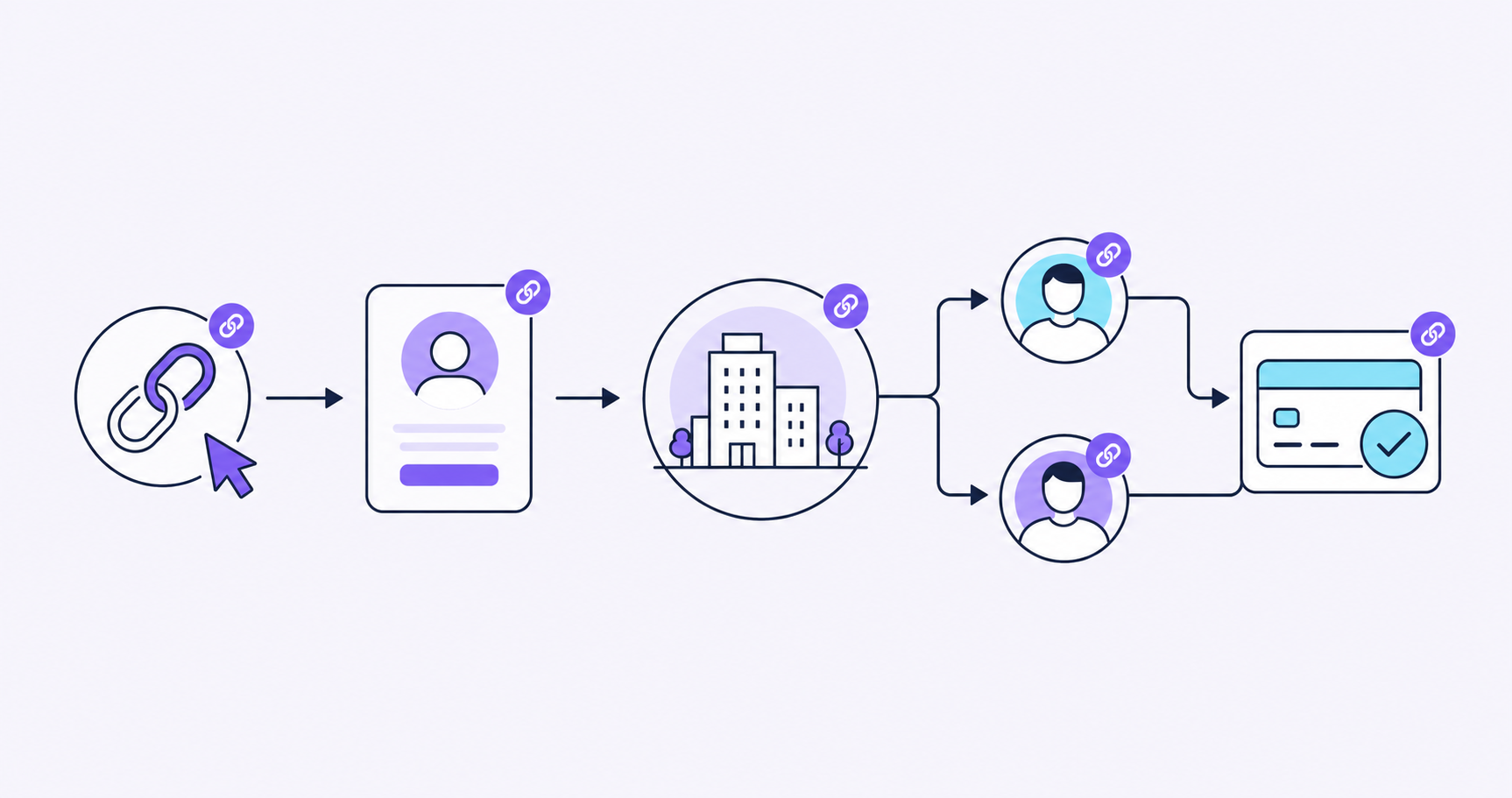
Test delayed purchases against both deadlines, duplicate referrals against credit rules and missing IDs for review.
Server-side tracking requires an explicit identity match.
Commission reconciliation across subscription changes
Calculate commissions on collected revenue, excluding taxes, discounts and pass-through charges under published terms. Define how upgrades and downgrades change eligible amounts, partial refunds reverse commissions and cancellations or failed payments stop accrual.
Maintain a transaction-level commission ledger with pending, approved, reversed and paid states. Link entries to invoices and affiliates, preserving adjustment history.
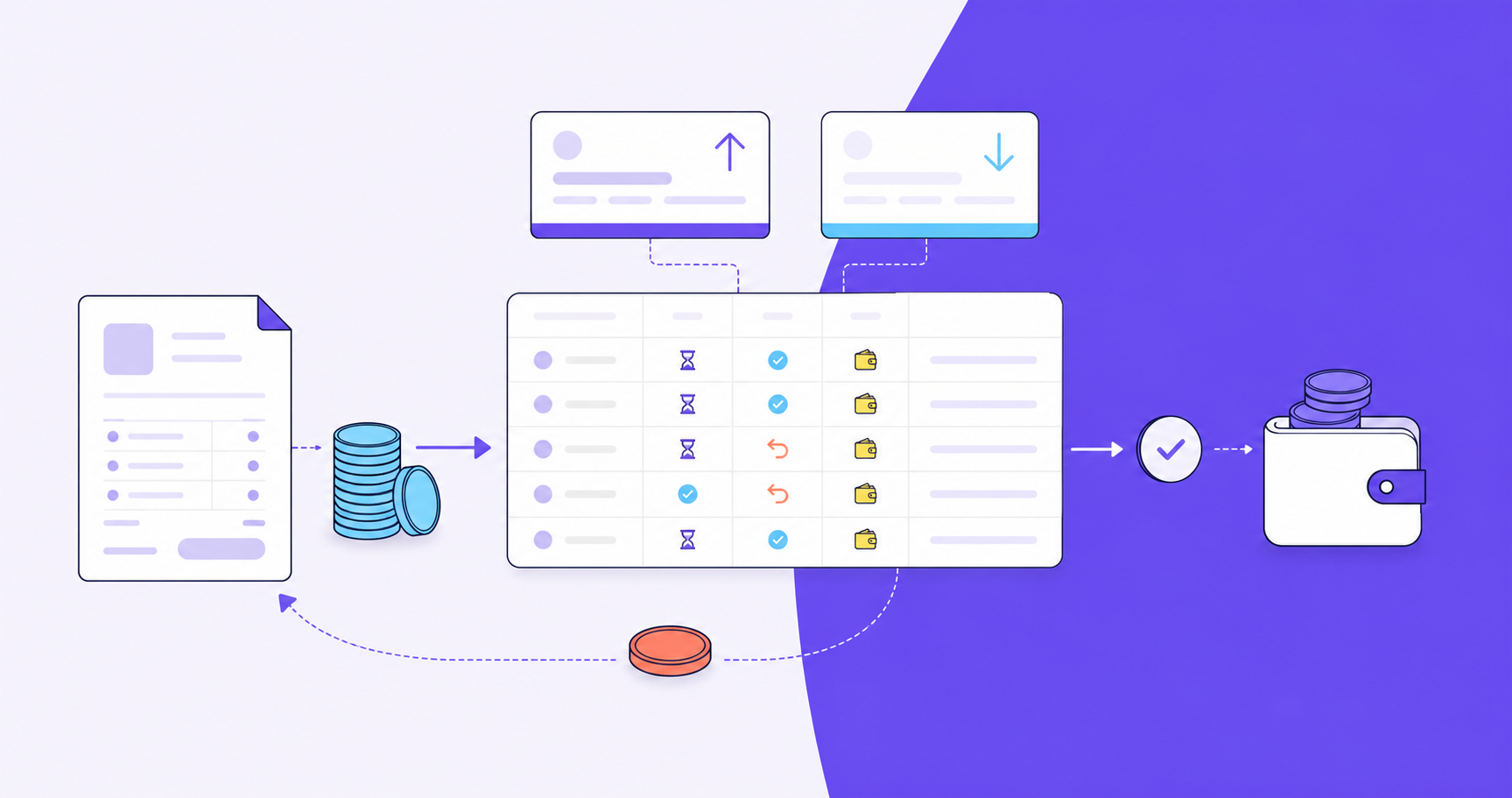
Document payout timing, minimum balances and currency conversion rules. Assign a dispute owner and correction deadline so finance can check obligations against cash collected and payments released.
Program rules that protect buyer trust
A B2B affiliate program agreement should document disclosure requirements, brand-bidding permissions, self-referral exclusions, duplicate-claim resolution and prohibited promotion methods, including unsolicited bulk outreach.
Affiliates who advise buyers should disclose compensation before buyers act and check procurement policies and conflict-of-interest rules. Seek legal review for markets subject to regulatory oversight and cross-border activity; non-cash incentives can still raise compliance concerns.
Require accurate product claims and clear suitability limits so buyers can assess recommendations alongside the affiliate’s financial interest.
Metrics that reveal affiliate program health
Measure B2B affiliate programs with monthly cohorts and explicit denominators. Cello’s affiliate marketing statistics guide explains how to compare acquisition costs and conversion rates across affiliate, partner and user referral programs.
- Active affiliates / affiliates approved that month.
- Qualified opportunities / affiliate leads, after the sales cycle.
- Paid accounts / trials, after trial completion.
- Collected revenue per acquired account over a fixed period.
- Fully loaded acquisition spend / new paying accounts.
- Retained accounts / original paying accounts at equal cohort ages.
Attribution assigns credit; incrementality estimates purchases without affiliates. Test commissions and recruitment against controls, allow sales-cycle delays, report affiliate concentration and flag low-volume uncertainty.
Software requirements and migration checks
Test B2B affiliate program software for attribution persistence, customer relationship management (CRM) associations, billing-event handling, commission adjustments, payout records and data exports, following a full affiliate program tracking guide where helpful.
Spreadsheets suit a limited pilot with manual review. Choose dedicated software when recurring obligations or account-level attribution make manual matching unreliable.
Before migration, verify:
- Affiliate identifiers map correctly.
- Existing links retain credit.
- Historical transactions transfer without duplication.
- Outstanding balances match finance records.
Require finance to sign off on reconciliation before switching systems, a key step in any affiliate program migration.
Where Cello fits alongside an affiliate strategy
Cello brings user and partner referrals into one system, giving teams a way to manage referrals from existing relationships alongside external affiliate acquisition. Product users share referral links and view signups and claimable rewards through the in-app Referral Component. External partners use a separate Partner Portal to access links and track referral progress without needing an account in your product. Reward triggers can connect to collected-payment events through billing integrations such as Stripe and Chargebee, so trial signups do not have to create payout obligations. For sales-assisted conversions where the trial user and purchaser differ, organization-level attribution requires mapping company identifiers across signup and payment records. Use Cello when you want to run user and partner referrals together, and test those identity mappings, reward triggers and partner reporting requirements before replacing existing affiliate software.
Key takeaways
- Use paid conversions and retention, not affiliate count alone, to guide the next round of recruitment.
Should you copy HubSpot’s flat commission rate or Pipedrive’s affiliate tiers when launching your B2B affiliate program?
Start with a single rate like HubSpot’s if you lack affiliate performance data; consider Pipedrive-style tiers once you can set qualification thresholds using paid conversions and retained revenue. A single rate makes early commission costs easier to forecast, while tiers give proven affiliates a reason to increase participation. Model both against your margins before promising higher rates.
Does a ClickUp-style signup bounty make sense if your free trial converts poorly?
A paid-conversion commission is the safer starting point when few trial users become paying customers. With a ClickUp-style acquisition bounty, divide total signup rewards by the paying accounts those signups produce to calculate reward cost per paying customer, then add software and program management costs. Test signup rewards with a small cohort before expanding eligibility.
Can you run user referrals and partner referrals through Cello alongside your B2B affiliate program?
Cello supports user referrals and partner referrals in one system, but it does not supply an affiliate recruitment network. Product users can participate through the in-app referral experience, while external partners use a separate Partner Portal. Before replacing dedicated affiliate software, check your requirements for reporting, commission rules and partner recruitment against Cello’s current capabilities.
Is a B2B affiliate program worth testing if your niche market has long sales cycles?
A small pilot is worth testing when specialist publishers or educators already reach your buyers. Recruit for audience fit, track qualified opportunities and wait for the normal sales cycle before judging paid conversions. Low lead volume alone is not a reason to stop if those leads produce retained customers.
How do you preserve affiliate credit when the trial user and contract signer are different people?
Connect both people to the same company record and carry the affiliate ID into the paid subscription. Store the original click timestamp, link the trial contact to the company and match the purchaser through your customer relationship management system. Send unmatched purchases for manual review before approving commissions.
Should you offer lifetime commissions if your SaaS sells high-value contracts?
Start with time-limited recurring commissions and a maximum reward per customer unless your margins and retention data support a longer commitment. Calculate rewards on eligible collected revenue, then test contribution after commissions, support costs and other acquisition expenses before promising lifetime payments.
What should you do if your buyers see affiliate incentives as a conflict of interest?
Require clear compensation disclosures and exclude arrangements that conflict with buyer purchasing policies. Ask legal counsel whether company-level benefits are acceptable, since non-cash rewards can also create conflicts. Keep product claims factual and make participation optional.
What's a practical way to recruit affiliates when you don't have a dedicated partner manager?
Start with a small shortlist of niche newsletters, industry trainers and consultants whose audiences match your buyers. Request sample content and audience details before approval, then provide approved messaging and product education. Assign one internal owner to send consent-based updates and review which affiliates produce paying accounts
In B2B SaaS affiliate programs, does a longer cookie window extend how long you owe commissions?
A longer cookie window changes attribution eligibility, not the commission earning period. Set the click attribution window, any post-signup purchase deadline and the duration of recurring rewards separately. Test a delayed purchase against each rule before launch.
How do you adjust affiliate commissions when customers upgrade, downgrade or request partial refunds?
Recalculate commissions from eligible collected revenue and record each adjustment against the original invoice. Upgrades and downgrades change the commissionable amount under your published terms, while partial refunds reverse the corresponding share. Keep pending, approved, reversed and paid entries so finance can trace every change.
Who should you pay when two affiliates refer the same company?
Pay according to a published company-level credit rule, such as first eligible referral or last eligible referral. Store both claims with timestamps and apply the rule to the shared company record, even when different contacts signed up. Assign a dispute owner and correction deadline before the first conflict occurs.
How do you switch affiliate software without losing existing links or unpaid commissions?
Map existing affiliate IDs and links to the new system, then check imported unpaid balances against finance records before switching. Preserve earning periods and transaction history, test old links and check for duplicate commission entries. Require finance sign-off before the new system releases payouts.
Are you getting new revenue from affiliates or paying for buyers who would have purchased anyway?
Attribution alone cannot tell you whether affiliates caused a purchase; you need a comparison group to estimate incremental revenue. Test recruitment or commission changes against comparable groups without the change, allowing enough time for deals to close. Compare collected revenue and retained accounts at equal cohort ages, and flag uncertainty when volumes are low.