

Expansion revenue is the additional revenue generated from a company's existing customers through upselling, cross-selling and renewals.
It is a key driver of business growth and profitability. It grows income without the costs tied to new-customer acquisition.
TLDR:
- Expansion revenue is additional income from existing customers via upselling, cross-selling and renewals.
- Track four metrics to measure it: average revenue per customer, churn, renewal rates and expansion revenue rate.
- A positive expansion revenue rate signals effective retention; a negative rate points to customer attrition or weak upsell execution.
- Customer resistance, competition and internal inefficiencies are the main obstacles to growing revenue from your existing base.
- Cello supports expansion revenue by turning existing users into a referral channel through peer-to-peer referral programs.
|
Key Element |
Description |
Optimization Tips |
|---|---|---|
|
Definition |
Additional income from existing customers through repeat purchases, upgrades, cross-sells and renewals, aimed at enhancing customer experience and engagement with the company’s broader offerings. |
Improve the customer experience to support ongoing engagement and broader product usage. |
|
Main Components |
Includes cross-selling, upselling, renewals and customer retention strategies |
Personalizing recommendations, timing offers strategically and improving customer experiences. |
|
Key Metrics |
Include average revenue per customer, customer churn, renewal rates and expansion revenue rate. |
Implement targeted customer engagement strategies, refining renewal processes and continuously monitoring and adapting to customer feedback. |
|
Challenges and Strategies |
Include customer resistance to upselling, competition, resource constraints and misunderstanding customer demands. |
Enhance performance by training the sales team, conducting customer research to match offerings to real needs and monitoring market trends closely. |
Understanding the concept
📈 Expansion revenue is additional income from existing customers via repeat purchases, upgrades, cross-sells and renewals, focusing on enhancing the customer experience to drive ongoing engagement and broader product use.
Maximizing value from existing customers drives business growth. Using these relationships boosts sales and enhances customer loyalty and lifetime value for sustainable growth.
It also reduces churn by consistently providing value and upgrade opportunities, which builds long-term relationships and minimizes revenue loss from customer attrition.
Components of increased revenue from expansion
Several components drive expansion of earnings, including cross-selling, upselling, renewals and customer retention strategies. Upselling encourages customers to upgrade to higher-tier or premium offerings, aligning with their evolving needs and budgets to boost average revenue. Renewals, where customers extend subscriptions or contracts, matter for steady revenue streams.
Another key component is customer retention. This strategy often involves providing exceptional customer service, personalized experiences and ongoing support that keeps customers satisfied.
These elements matter for businesses looking to maintain and increase their financial success over time.
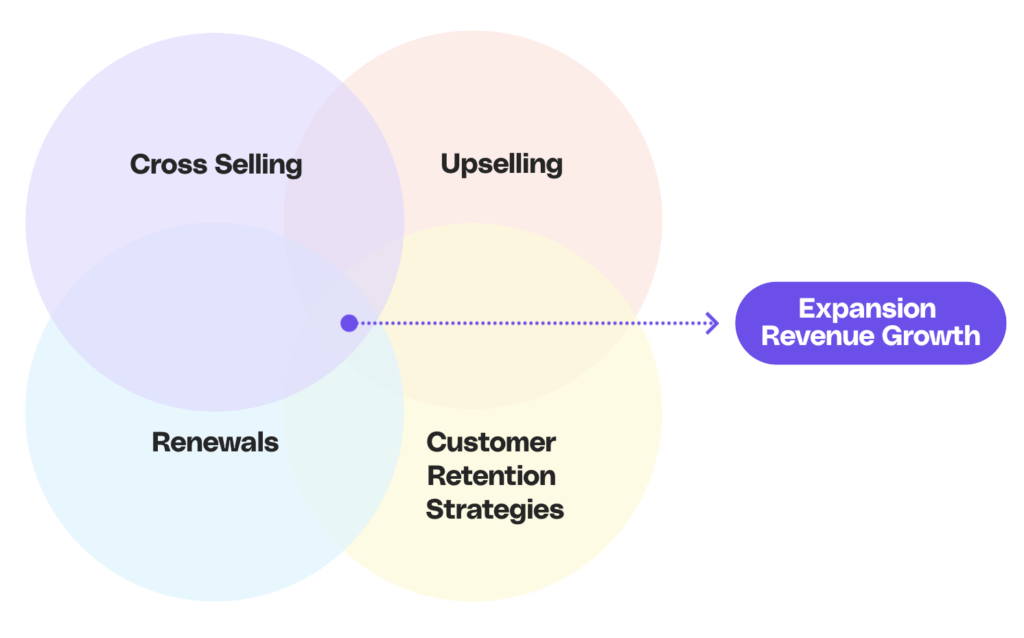
Source: Cello
Cross-selling and its impact
🤝 Cross-selling refers to the selling of complementary products or services to existing customers. By recommending additional offerings that align with their current purchase, businesses can increase the value per customer, resulting in expanded revenue.
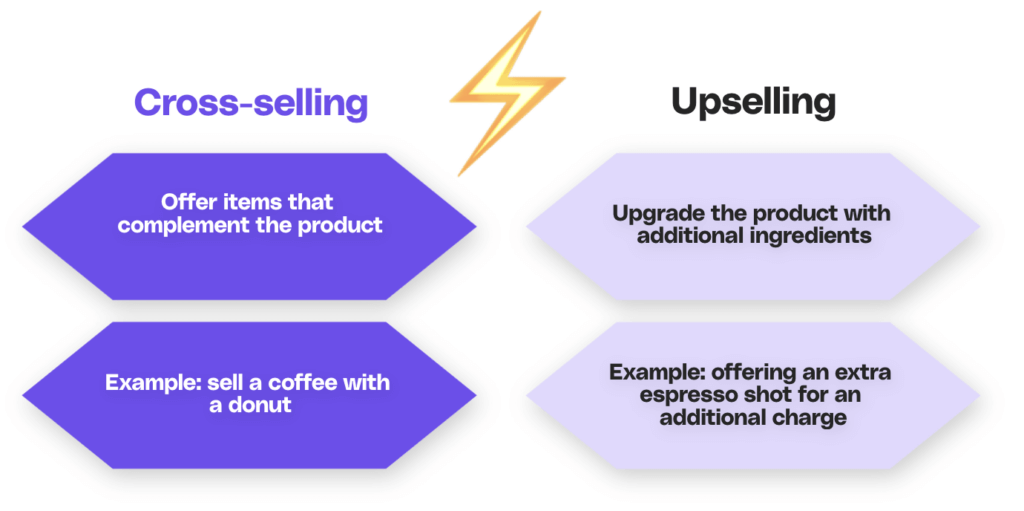
Difference of cross-selling and upselling (Source: Zendesk)
Renewals and their influence
Renewals play a key role in generating revenue increase. By delivering customer satisfaction during their initial subscription period and providing smooth renewal processes, businesses can secure repeat purchases and grow their revenue.
It stabilizes a business’s revenue stream and indicates the level of customer loyalty and satisfaction, which matter greatly for long-term success.
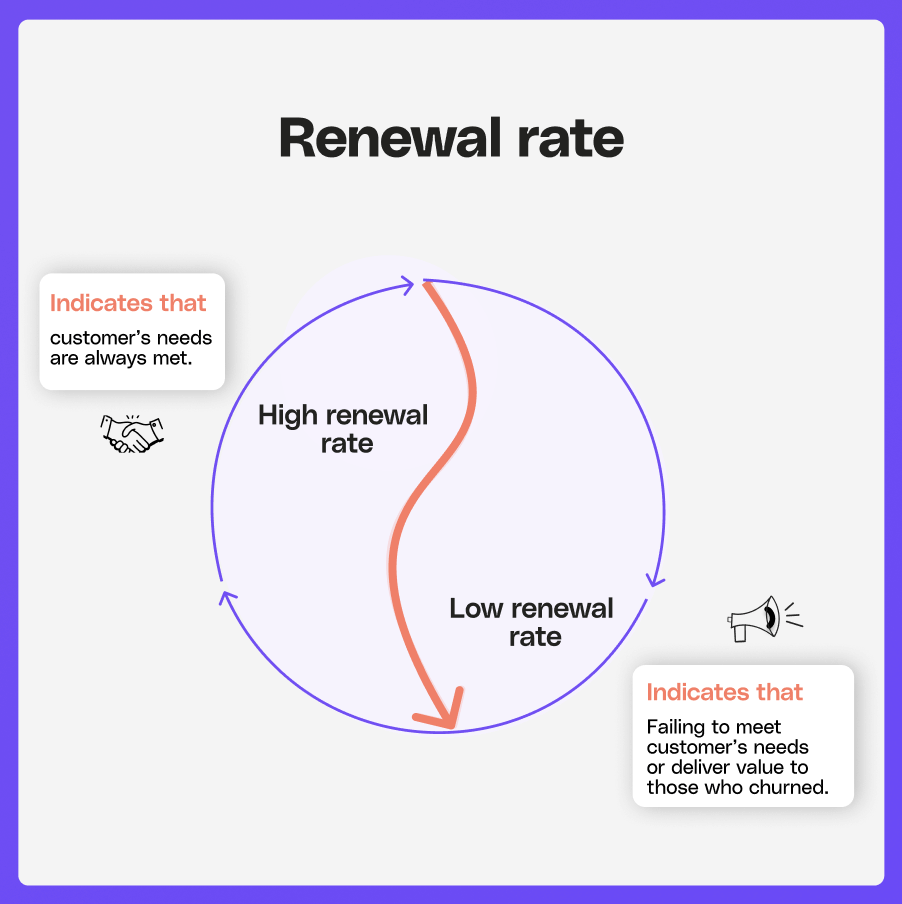
Understanding the renewal rate (Source: CSM Practice)
Calculating revenue growth from expansion
Measuring revenue growth from existing customers requires considering key metrics and understanding the expansion revenue rate.

Source: Cello
Key metrics for determining revenue growth through expansion
Metrics such as average revenue per customer, customer churn, renewal rates and expansion revenue rate are needed for calculating and optimizing expanded revenue. In subscription businesses, the same idea appears as expansion monthly recurring revenue (MRR): the added recurring revenue from upgrades, add-ons and cross-sells on existing accounts (Stripe's expansion MRR explainer).
These metrics provide insights into revenue growth potential within the existing customer base: renewal rates and customer churn point to retention success, while expansion revenue rate points to the effectiveness of upselling and cross-selling efforts.
Closely monitoring these metrics supports data-driven decisions for expansion initiatives, and the same discipline applies when you measure referral program ROI for SaaS.
Understanding the expansion revenue rate
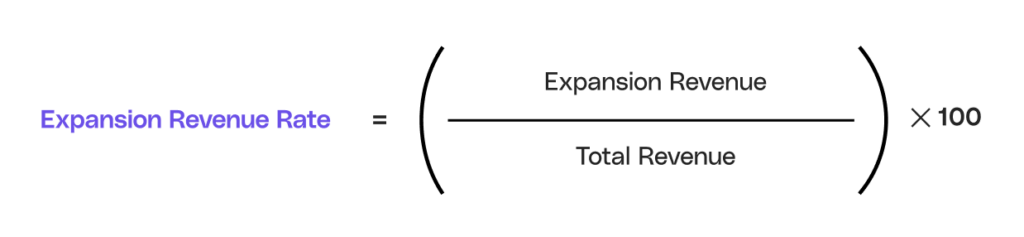
Source: Cello
A positive rate shows increasing revenue from existing customers through upselling, cross-selling, and renewals, reflecting successful growth strategies.
Conversely, a negative rate indicates declining revenue from these efforts, pointing to challenges in customer retention or ineffective sales strategies.
Why expansion revenue matters more in 2026
AI Overviews and zero-click search are compressing organic traffic, and paid CAC keeps rising, so revenue from accounts already acquired is the most reliable growth lever available to most teams. The search engine now owns the answer layer, pulling clicks away before a visitor ever reaches a company's own pages. That shift makes new-customer acquisition through search progressively less predictable and more expensive.
What remains insulated from this shift is the base a company already has: existing customers and the peer trust they carry into every recommendation. Comparing referral versus paid acquisition ROI shows why this base deserves more attention, and understanding referred customers' lifetime value helps justify the investment. Getting the measurement right starts with choosing the right KPIs.
Challenges
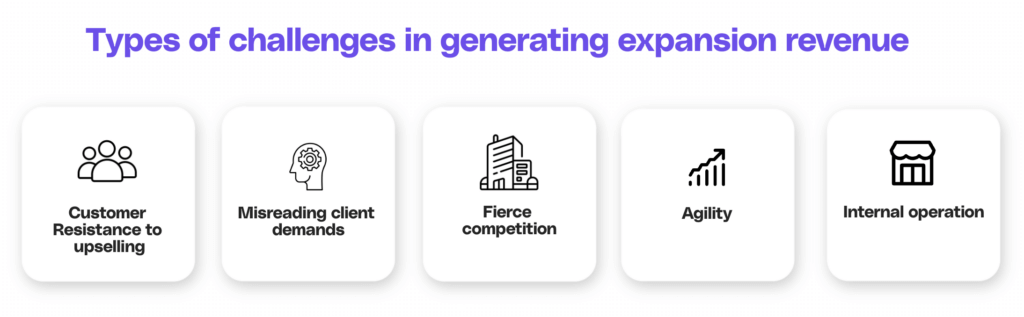
Revenue from expansion comes from upgrades, cross-sells and renewals on accounts already acquired, but businesses may face challenges in effectively generating it.
- Customer resistance to upselling: Due to perceived lack of value or budget constraints.
- Misunderstanding client demands: Hinder the development of compelling upsell opportunities.
- Fierce competition: Challenging to set offerings apart and capture a larger share of the customer’s wallet.
- Agility: Adapting quickly to technological changes and evolving customer preferences matters
- Internal operation: Inefficiencies hinder efforts to implement new revenue-generating strategies.
Source: Cello
Identifying potential obstacles that may hinder generating additional revenue through expansion matters for any team planning its next growth push.
Strategies to overcome challenges
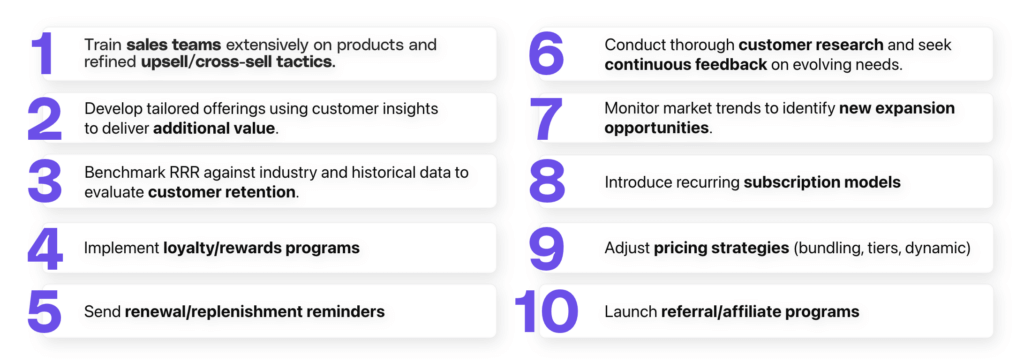
To boost revenue growth from expansion, companies should take several key actions:
- Train the sales team. Teams need practice holding value-based upsell conversations instead of pushing add-ons. Role-playing real scenarios and reviewing call recordings helps reps tie each upgrade to a problem the customer already named.
- Run customer research. Surveys, interviews and usage reviews show which features customers rely on and where gaps remain. Applying customer segmentation to match offers to those real needs keeps upsell pitches relevant instead of generic.
- Time upgrade offers well. Present a higher tier once a customer hits a usage threshold or reaches a clear outcome with the current plan. An offer that lands right after a win feels like a natural next step, not a sales push.
- Build a structured renewal process. Early outreach before the contract end date gives both sides room to resolve concerns and confirm value delivered. A repeatable renewal checklist reduces last-minute scrambling and missed dates.
- Monitor market trends and competitor pricing. Regularly checking how rivals price and package their offerings helps a company keep its own tiers competitive. This also surfaces new angles for bundling or repositioning existing features.
Source: Cello
Expansion revenue grows when teams measure the four metrics above, fix the named obstacles and time offers to customer outcomes.
A better customer experience and stronger relationships open up more revenue growth and profitability over time. Growing the existing base builds loyalty alongside new customer acquisition, not instead of it.
What is expansion revenue and how does it differ from new customer revenue?
Expansion revenue is the additional income generated from existing customers through upselling, cross-selling and renewals, not from acquiring new accounts. The structural difference is that expansion revenue builds on an existing relationship where trust and product familiarity already exist, which typically produces higher conversion rates and lower acquisition costs than new customer acquisition.
How do you calculate expansion revenue rate and what does a negative rate signal?
The expansion revenue rate measures the percentage change in revenue generated from your existing customer base over a given period. A negative rate signals that upselling, cross-selling or renewal efforts are failing to offset customer downgrades or churn, pointing to either retention problems, misaligned offer timing or insufficient value delivery during the initial subscription period.
What metrics should I track to measure expansion revenue performance in my SaaS business?
Track four metrics in parallel: average revenue per customer, customer churn rate, renewal rate and expansion revenue rate. Together these give you a complete picture of where revenue from your existing base is growing, stagnating or declining, and which specific motion (upsell, cross-sell or renewal) is the primary driver or drag.
What are the most common reasons customers resist upselling and how can SaaS teams overcome them?
Customer resistance to upselling typically comes from perceived lack of value or budget constraints instead of product dissatisfaction. The most direct fix is timing: surface upgrade offers after a customer has experienced a specific outcome or hit a usage threshold where the higher tier is visibly relevant, instead of at an arbitrary point in the billing cycle.
How does Cello help SaaS companies grow expansion revenue through existing customers?
Cello turns existing users into a peer referral channel by embedding referral mechanics directly inside the product, so satisfied customers drive new acquisition instead of remaining passive accounts. Companies like tl;dv use Cello's in-product referral program to convert customer satisfaction into measurable referral ARR, adding a compounding acquisition motion that reinforces the same customer relationships that expansion revenue depends on.